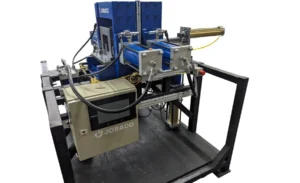
NuCube Energy, a developer of advanced microreactors, and Canadian Nuclear Laboratories (CNL), Canada’s premier nuclear science and technology organization, have officially commenced a critical research and development project. This collaboration aims to validate the sophisticated heat-pipe technology integral to NuCube’s proposed advanced microreactor design. The initiative focuses on generating crucial experimental data and refining computational models to accurately predict heat-pipe performance at temperatures exceeding 1652°F (900°C). This validation is a significant step, as NuCube anticipates the resulting data will substantially bolster the validation database for its proprietary models, thereby supporting the future licensing pathway for its innovative reactor technology.
The Foundational Role of Heat-Pipe Technology
Heat pipes are a cornerstone of NuCube’s reactor architecture, representing a paradigm shift from conventional cooling systems. Unlike traditional nuclear reactors that rely on active coolant pumps and complex piping systems to circulate a fluid (like water or liquid metal) through the core, NuCube’s design leverages the passive, highly efficient thermal transfer capabilities of heat pipes. These devices are sealed structures containing a working fluid that undergoes a continuous evaporation-condensation cycle. Inside the reactor core, heat from the fission process causes the working fluid to evaporate, absorbing latent heat. The vapor then travels to a cooler section, where it condenses, releasing the heat to a power-conversion system. The condensed fluid then returns to the hot section via capillary action or gravity, completing the cycle without any moving mechanical parts.
This reliance on passive heat transfer mechanisms offers several compelling advantages, particularly for advanced microreactors. It significantly enhances inherent safety by eliminating the risk of pump failures or coolant loss accidents. The simplified design reduces operational complexity, lowers maintenance requirements, and contributes to a more compact footprint. For NuCube, this approach is central to its goal of minimizing moving parts within the reactor core, thereby increasing reliability and reducing the potential for component failure in extreme environments.
TRISO Fuel: A Partner in High-Temperature Performance
NuCube’s broader reactor platform is designed around TRISO (TRi-structural ISOtropic) fuel, a type of high-assay low-enriched uranium (HALEU) fuel encapsulated within multiple layers of ceramic materials. TRISO fuel particles are renowned for their exceptional robustness and ability to retain fission products even under severe accident conditions and extremely high temperatures. Each particle, roughly the size of a poppy seed, consists of a uranium oxycarbide or uranium dioxide kernel surrounded by layers of porous carbon, pyrolytic carbon, and silicon carbide. These layers act as tiny pressure vessels, preventing the release of radioactive materials.
The inherent safety characteristics and high-temperature tolerance of TRISO fuel make it an ideal complement to NuCube’s heat-pipe-cooled architecture. Together, these technologies enable the reactor to operate at the elevated temperatures necessary for both efficient electricity generation and the production of high-temperature industrial process heat. This combination is crucial for NuCube’s vision of a versatile microreactor capable of addressing a wider range of energy needs beyond traditional grid power.
The Imperative of High-Temperature Validation: Beyond 900°C
The collaborative project with CNL specifically targets the validation of heat-pipe performance above 900°C (1652°F), with NuCube’s website indicating a target for industrial heat applications reaching up to approximately 1100°C (2012°F). This high-temperature capability is particularly significant for NuCube’s intended industrial applications. Many heavy industrial processes—such as steelmaking, cement production, chemical manufacturing, and hydrogen production—require substantial amounts of heat, often at very high temperatures. Currently, these processes are predominantly fueled by fossil fuels, contributing significantly to global carbon emissions.
An advanced reactor capable of reliably providing both electricity and high-temperature process heat at these levels could revolutionize industrial decarbonization efforts. By offering a clean, constant, and high-temperature energy source, NuCube’s technology could enable these industries to drastically reduce their carbon footprint, aligning with global climate goals. The challenge, however, lies in demonstrating the predictable and reliable performance of critical components like heat pipes under such extreme and sustained thermal conditions. Experimental validation at these temperatures is not merely an engineering exercise; it is a fundamental requirement for proving the safety and operational integrity of the reactor design to regulatory bodies.
Canadian Nuclear Laboratories: A Pillar of Nuclear Expertise
Canadian Nuclear Laboratories (CNL) plays a pivotal role in this research endeavor. As Canada’s national laboratory for nuclear science and technology, CNL possesses extensive expertise, state-of-the-art facilities, and a long history of supporting the development and deployment of advanced nuclear technologies. Their mandate includes conducting research, developing innovative solutions, and providing technical support to the Canadian nuclear industry and global partners.
Under this new collaboration, CNL will qualify existing experimental data related to heat-pipe performance and, critically, benchmark NuCube’s computational models against this data. This benchmarking process involves comparing the predictions of NuCube’s simulations with actual experimental observations, identifying any discrepancies, and refining the models for greater accuracy. This rigorous validation process ensures that the models can reliably predict the behavior of the heat pipes under the extreme temperatures expected during reactor operation. For CNL, supporting advanced reactor developers like NuCube aligns with Canada’s broader Small Modular Reactor (SMR) Action Plan, which seeks to position Canada as a leader in SMR technology and deployment to achieve clean energy goals and foster economic growth.
NuCube’s Methodical Path to Commercialization
The collaboration with CNL is the latest in a series of strategic partnerships and development milestones for NuCube Energy, illustrating a methodical approach to de-risking its technology and advancing towards commercialization. The company has previously engaged with the Idaho National Laboratory (INL), a leading U.S. national laboratory for nuclear energy research. This earlier work focused on computational analysis of high-temperature heat exchangers, another critical component in NuCube’s power conversion system.
Further demonstrating its commitment to advanced research, NuCube has also participated in a Gateway for Accelerated Innovation in Nuclear (GAIN) project with INL and Argonne National Laboratory. This project specifically examined the autonomous operation and remote monitoring capabilities of NuCube’s microreactor, exploring how advanced control systems and artificial intelligence could enhance safety, efficiency, and operational flexibility, particularly for remote deployments.
Beyond research, NuCube has also taken concrete steps towards future deployment. The company signed an agreement with the Utah San Rafael Energy Lab to site and test a microreactor in Orangeville, Utah. This agreement, while subject to necessary development and regulatory steps, signifies NuCube’s intention to move from theoretical design and laboratory validation to real-world testing and eventual commercial operation. Such siting agreements are crucial for demonstrating the feasibility and safety of advanced reactor concepts in a practical environment.
The Microreactor Landscape: Decentralized, Resilient Energy
NuCube’s proposed reactor, the DeccaCell platform, represents a significant departure from conventional nuclear plants primarily in its scale and architecture. Unlike the large, centralized gigawatt-scale reactors that have historically dominated the nuclear industry, NuCube is developing factory-built, transportable microreactors. These units are designed to be installed closer to the end-user, circumventing the need for extensive transmission infrastructure and offering a decentralized energy solution.
Microreactors, generally defined as having an electrical output of less than 10-20 MW, are lauded for their modularity, scalability, and ability to provide reliable power to diverse applications. NuCube’s DeccaCell platform aims to provide up to 15 MW of power, with refueling cycles ranging from seven to 30 years. These long operational periods between refueling further enhance their appeal for remote or mission-critical applications where logistical support might be challenging.
Potential applications for NuCube’s technology are broad and impactful. They include providing resilient and carbon-free power to remote communities, industrial facilities requiring both electricity and process heat, and other locations where grid access is limited or additional reliable power is crucial. The ability to deploy these units rapidly and cost-effectively, coupled with their long operational life, positions microreactors as a transformative solution for energy security, economic development, and decarbonization in diverse geographic and industrial contexts. The global market for SMRs and microreactors is projected to grow significantly in the coming decades, driven by increasing demand for clean energy, grid modernization, and industrial decarbonization.
Navigating the Regulatory Pathway and Financial Milestones
For advanced reactor developers, experimental validation, such as the CNL collaboration, is an indispensable part of the journey from conceptual design to a system that can undergo regulatory review and eventual commercial deployment. Regulatory bodies worldwide, including the Canadian Nuclear Safety Commission (CNSC) and the U.S. Nuclear Regulatory Commission (NRC), require robust evidence demonstrating the safety, performance, and predictability of novel reactor designs. The data generated from projects like the one with CNL will form a critical part of NuCube’s safety case, providing empirical evidence to support its computational models and design choices. This strengthens the technical foundation required for obtaining construction and operating licenses.
Beyond the technical and regulatory milestones, NuCube is also actively pursuing its commercialization strategy through financial channels. In June, the company announced a business combination agreement with Launch Two Acquisition Corp., a special purpose acquisition company (SPAC). This agreement could potentially lead to the combined entity becoming publicly listed on major stock exchanges such such as Nasdaq or the NYSE, provided the transaction closes and applicable conditions are satisfied. A public listing would significantly enhance NuCube’s access to capital markets, providing the necessary funding to continue its research and development, scale up manufacturing capabilities, and accelerate the deployment of its microreactor technology.
Broader Implications for Energy Transition
The research and development project between NuCube Energy and Canadian Nuclear Laboratories is more than just a validation exercise for a single technology; it represents a significant step forward for the broader advanced nuclear industry. By addressing fundamental engineering questions related to high-temperature heat transfer, this collaboration contributes to the collective knowledge base for microreactors and other advanced reactor designs.
The successful validation of heat-pipe technology at extreme temperatures could unlock new possibilities for clean energy applications, particularly in hard-to-abate industrial sectors. It underscores the growing recognition of advanced nuclear power as a vital tool in the global effort to combat climate change, enhance energy security, and foster sustainable economic growth. As NuCube continues its methodical progression through R&D, regulatory engagement, and commercial development, its journey will offer valuable insights into the potential of microreactors to reshape the future of energy.