Researchers at the University of Oxford have achieved a significant breakthrough in quantum physics, successfully creating a new family of quantum superposition states built from highly nonclassical components. This innovation moves beyond traditional methods of generating superpositions, which often rely on coherent states, and opens new avenues for advancing quantum computing, enhancing sensing technologies, and deepening our understanding of the fundamental principles governing quantum reality. The achievement marks a critical step in harnessing the full potential of quantum mechanics, particularly for systems that extend beyond the binary logic of conventional qubits.
Unveiling the Quantum Realm: Superposition and Schrödinger’s Cat
At the heart of quantum mechanics lies the perplexing phenomenon of superposition, a principle that dictates quantum objects can exist in multiple states simultaneously until measured. This concept is perhaps most famously, and paradoxically, illustrated by Erwin Schrödinger’s 1935 thought experiment involving a hypothetical cat sealed in a box with a device that has a 50% chance of releasing a poisonous gas. According to quantum theory, until an observer opens the box, the cat is neither definitively alive nor dead but exists in a superposition of both states. While a fictional construct designed to highlight the counter-intuitive nature of quantum mechanics when applied to macroscopic objects, the core idea of superposition is a well-established and routinely demonstrated reality at the microscopic level.
For decades, scientists have been able to create and manipulate genuine quantum superpositions in laboratory settings. These experiments typically involve placing elementary particles, atoms, or even light photons into multiple quantum states concurrently. The ability to precisely generate, control, and measure these elusive states is not merely an academic exercise; it forms the bedrock for a host of emerging quantum technologies, including ultra-precise atomic clocks that keep time with unprecedented accuracy, and the highly anticipated quantum computers that promise to solve problems intractable for even the most powerful classical supercomputers.
A widely recognized example of superposition in technology is the quantum bit, or qubit. Unlike classical bits that can only be 0 or 1, a qubit can exist as a combination of both 0 and 1 simultaneously, dramatically increasing the computational power available. However, the quantum world is far richer than simple two-state systems. Many physical systems, known as quantum harmonic oscillators, can occupy a vast number of energy levels, offering a significantly expanded repertoire of quantum behaviors. These oscillators are ubiquitous in physics, describing phenomena from the quantized energy of light fields to the vibrations within a crystal lattice and the precisely controlled motion of trapped particles. Scientists have extensively utilized quantum harmonic oscillators to generate various forms of quantum superpositions, with one prominent example being the "cat state." In a cat state, an oscillator exists as a superposition of two distinct wave packets, often moving in opposite directions, representing a macroscopic quantum state. These constituent wave packets, known as coherent states, are considered the closest quantum analogues to classical motion, exhibiting minimal quantum uncertainty.
Building Quantum States from Novel Nonclassical Foundations
The recent work by the Oxford team, detailed in their latest publication, represents a departure from these established methods. Instead of constructing cat-like states from coherent-state wave packets, which, despite their quantum nature, still bear a strong resemblance to classical motion, the researchers developed a sophisticated technique that combines a broad spectrum of quantum components that are inherently and demonstrably nonclassical from the outset. This pioneering approach allows for the creation of an entirely new family of quantum superpositions.
One key aspect of this novelty lies in the use of "squeezed states" as fundamental building blocks. Squeezed states are a type of nonclassical quantum state where the quantum uncertainty (or noise) in one observable property of a system is reduced below the standard quantum limit, at the expense of increased uncertainty in another complementary observable. For example, in light, a squeezed state might have reduced intensity noise but increased phase noise. By employing such intrinsically nonclassical components, the Oxford team is exploring a deeper and more exotic layer of quantum mechanics. In these "squeezed-state superpositions," the quantum uncertainty is distributed in a distinctly different and more intricate manner across each part of the composite state, offering a richer landscape for quantum information processing.
The experimental platform underpinning this achievement is a single trapped ion. Trapped ions are celebrated in quantum research for their exceptional coherence properties and the high degree of control they offer. Crucially, a trapped ion effectively combines two distinct quantum systems within a single, coherent platform. Its internal electronic states can be precisely manipulated to behave as a qubit, while its physical motion acts as a quantum harmonic oscillator, capable of occupying numerous motional quantum states. This unique duality makes trapped ions particularly powerful for generating and controlling complex quantum states that extend well beyond the binary limitations of conventional qubits. Pioneering work in the field of trapped-ion quantum computing by Nobel laureates such as David Wineland has laid the groundwork for such advanced experiments, demonstrating the exquisite control possible over individual atomic systems.
To generate these novel states, the Oxford researchers embarked on a multi-step process. First, they engineered specific interactions that effectively entangled the ion’s internal electronic state (its qubit-like property) with different possible states of its physical motion (its harmonic oscillator property). This entanglement is a crucial quantum resource, linking the fates of the two systems. Following this, they performed a precise "mid-circuit quantum measurement" on the ion’s internal state. This measurement, a fundamental process in quantum mechanics, caused the ion’s motional state to instantaneously "collapse" into the desired superposition of nonclassical components.
Dr. Sebastian Saner, the lead author from the Department of Physics at the University of Oxford, elucidated the precision afforded by their methodology. "This approach gave us a tool to sculpt the quantum superposition into almost any shape," Dr. Saner stated, highlighting the unprecedented level of control achieved in crafting these intricate quantum states. This ability to tailor the characteristics of superpositions opens up exciting possibilities for designing quantum systems with specific, desirable properties for various applications.
Programmable Control and Verification of Exotic Quantum States
A hallmark of the Oxford team’s innovation is the high degree of programmable control they demonstrated over the quantum states produced. By meticulously adjusting various experimental parameters, the researchers could precisely modify the relative size, spatial orientation, and separation of the nonclassical components within the created superposition. This remarkable flexibility enabled them to generate a wide array of unusual and complex motional quantum states, all utilizing the same robust trapped-ion system. This adaptability is a significant advantage, allowing for rapid exploration of different quantum state geometries and properties.
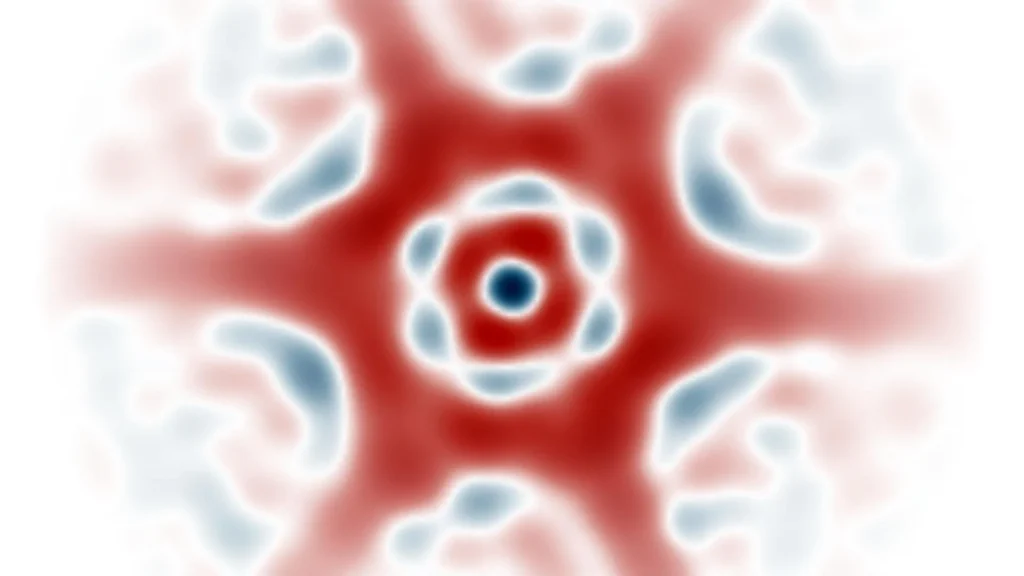
Crucial to any claim of creating novel quantum states is rigorous experimental verification. The researchers meticulously reconstructed the quantum states directly from their measurements. The resulting data revealed clear and compelling evidence of quantum behavior: intricate interference patterns and distinct regions of "Wigner negativity." Wigner negativity is a powerful and definitive signature of nonclassicality, indicating that a quantum state cannot be described by classical probability distributions. It is often associated with the presence of quantum interference effects in phase space, a mathematical representation of a quantum system’s state. These unambiguous observations served as concrete confirmation that the experiment had successfully produced genuine quantum superpositions composed of truly nonclassical motional states, moving beyond classical mixtures.
The team is now actively collaborating with theoretical physicists to further deepen their understanding of these newly created states, particularly in quantifying "how quantum" these exotic superpositions truly are. Dr. Raghavendra Srinivas, who supervised the groundbreaking work at the Department of Physics, University of Oxford, conveyed the excitement surrounding their findings. "We were really encouraged by our colleagues’ reaction when we showed them what we had made," Dr. Srinivas remarked. "We believe we’re still scratching the surface of what’s possible, both for practical applications and for understanding these states at a more fundamental level." This sentiment underscores the vast potential yet to be unlocked from this new frontier in quantum state engineering.
Broader Impact and Implications for Future Quantum Technologies
The implications of this research are far-reaching, pointing towards a future generation of quantum technologies that leverage the full potential of quantum oscillators, rather than being confined to the simpler, two-state behavior of traditional quantum bits. This move towards continuous-variable quantum systems, which encode information in properties like the amplitude and phase of an oscillator, represents a significant paradigm shift.
One of the most promising applications lies in the field of quantum computing. Current quantum computers primarily rely on qubits, which, while powerful, are highly susceptible to errors due to environmental noise and decoherence. The novel nonclassical superpositions demonstrated by the Oxford team may offer inherent advantages in error resilience. These types of states, particularly those built from squeezed light or motional states, are being actively explored for their potential to support more robust and effective quantum error-correction strategies. For instance, specific types of continuous-variable quantum codes, such as GKP (Gottesman-Kitaev-Preskill) states, which are related to superpositions of squeezed states, are theorized to be highly effective at protecting quantum information. By encoding quantum information across multiple energy levels of an oscillator, rather than just two, it may be possible to embed redundancy and make the encoded information less vulnerable to localized errors. This could significantly reduce the overhead required for fault-tolerant quantum computing, a major bottleneck in scaling up quantum processors. Moreover, using quantum harmonic oscillators could potentially allow for higher information density per quantum unit, accelerating computational tasks.
Beyond quantum computing, these advancements hold immense promise for sensing technologies. Quantum metrology, the science of using quantum mechanics to improve measurement precision, stands to benefit greatly. Nonclassical states, particularly squeezed states, are known to reduce noise below the standard quantum limit, enabling ultra-precise measurements. This could lead to the development of even more sensitive sensors for a wide range of applications, including:
- Atomic Clocks: Enhancing the precision of atomic clocks, which are crucial for global positioning systems, fundamental physics experiments, and telecommunications.
- Gravitational Wave Detectors: Improving the sensitivity of detectors like LIGO, potentially allowing for the observation of fainter and more distant cosmic events.
- Medical Imaging: Developing new imaging techniques with unprecedented resolution and sensitivity for diagnostics.
- Navigation and Geophysics: Creating more accurate inertial navigation systems and novel sensors for exploring underground structures.
Finally, this research provides a powerful new experimental platform for investigating one of the most profound and enduring questions in physics: where precisely lies the boundary between the classical world we experience daily and the underlying quantum reality that governs it. The ability to create and manipulate macroscopic superpositions of genuinely nonclassical states allows physicists to probe the limits of quantum coherence and observe how quantum phenomena transition to classical behavior. This exploration is critical for understanding the "measurement problem" in quantum mechanics and the process of decoherence, where quantum states lose their coherence due to interaction with the environment. By pushing the boundaries of what constitutes a "quantum" state, the Oxford team’s work contributes significantly to our fundamental understanding of reality itself, bridging the conceptual gap between the quantum and classical realms.
The global quantum research landscape is highly competitive, with significant investments from governments and private entities across North America, Europe, and Asia. This breakthrough from Oxford firmly places the UK at the forefront of quantum state engineering, demonstrating the nation’s continued strength in fundamental and applied quantum physics. Experts in the field acknowledge that such experimental mastery over complex quantum states is vital for translating theoretical concepts into tangible technologies, pushing the boundaries of what is possible in the quantum domain. The path forward involves continued collaboration between experimentalists and theorists, a deeper dive into the properties of these new states, and a concerted effort to translate these laboratory achievements into practical, world-changing applications.