A Strategic Move in Industrial Automation
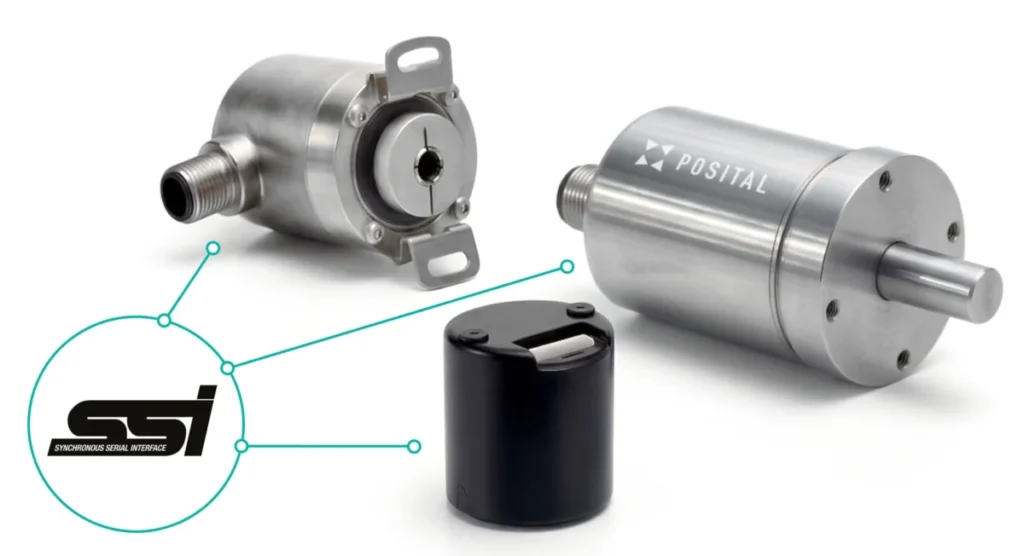
The integration of SSI interfaces into a broader spectrum of IXARC encoders represents a pivotal moment for system designers and engineers operating in an increasingly complex automation landscape. By making SSI widely available, POSITAL addresses a persistent demand for a reliable, straightforward, and cost-effective communication protocol, particularly in smaller to medium-sized control systems where the overhead of more complex industrial Ethernet or fieldbus networks is unwarranted. This expansion encompasses a diverse array of mechanical configurations, catering to various environmental and application requirements. For larger encoder models, SSI interfaces are now offered in compact 36 mm versions, rugged 58 mm variants designed for harsh environments, and specialized 78 mm explosion-proof models that boast ATEX certification, ensuring compliance with stringent safety standards in hazardous locations. Furthermore, in these larger form factors, customers retain the critical choice between magnetic and optical measurement technologies, allowing for optimal sensor selection based on the specific demands of precision, durability, and cost.
Understanding SSI: The Backbone of Reliable Data Transmission
Synchronous Serial Interface (SSI) is a long-established and widely respected communication protocol within industrial sensing. Its enduring popularity stems from its fundamental simplicity and robust nature, making it an ideal choice for point-to-point data transmission between sensors and digital control systems such as Programmable Logic Controllers (PLCs) or microcontrollers. Developed in the 1980s, SSI has proven its reliability over decades, offering a direct, high-speed, and interference-resistant method for transmitting absolute position data.
Unlike more complex fieldbus or industrial Ethernet protocols that manage entire networks of devices and often require extensive configuration and sophisticated software stacks, SSI operates on a straightforward master-slave principle. The master device (e.g., a PLC) generates a clock signal, and the slave device (the encoder) responds by transmitting its data synchronously with this clock. This direct, dedicated connection minimizes latency and simplifies system design, reducing the potential for communication errors. The physical layer of SSI communication is typically based on the RS-422 standard, which specifies balanced differential signaling. This method provides excellent noise immunity, crucial in electrically noisy industrial environments, and allows for impressive transmission distances of up to 1,200 meters without compromising data integrity. Such capabilities make SSI particularly well-suited for applications where sensors are located far from the central control unit, a common scenario in large-scale industrial facilities, material handling systems, and automated warehouses. The widespread adoption and support for SSI by most major PLC manufacturers further underscore its practical advantages, ensuring seamless integration into existing control architectures without requiring specialized hardware or extensive reprogramming.
The IXARC Encoder Family: Precision and Versatility
The IXARC series of absolute rotary encoders stands as a cornerstone of POSITAL’s product portfolio, recognized globally for its robust design, high precision, and adaptability. Absolute encoders, unlike incremental encoders, provide a unique position value immediately upon power-up, eliminating the need for a homing cycle after a power interruption. This characteristic is vital for applications demanding immediate and precise position feedback, such as robotics, machine tools, packaging machinery, and renewable energy systems like wind turbines.
The IXARC line is meticulously engineered to cater to a broad spectrum of industrial needs. The "kit" or modular encoders are designed for integration directly into existing mechanical structures, often within motors or actuators, offering a compact footprint and reducing the overall system complexity and cost. These are particularly valuable in applications where space is at a premium or where the encoder needs to be an integral part of a larger component. Conversely, the industrial encoders are fully enclosed, self-contained units built to withstand the rigors of harsh industrial environments, featuring rugged housings, robust bearings, and high ingress protection ratings.
The introduction of the new 20 mm miniature form factor for both kit and industrial IXARC encoders with SSI is a significant advancement. Miniaturization is a key trend in industrial automation, driven by the increasing demand for smaller, more agile robots, compact medical devices, and highly integrated production lines. These diminutive encoders provide high-resolution absolute position feedback in space-constrained applications, enabling more sophisticated and compact machine designs. For instance, in collaborative robots (cobots) or surgical robotics, where every millimeter counts, a 20 mm encoder can make a substantial difference in design flexibility and overall system footprint.
Beyond the miniature options, POSITAL continues to offer its established range of larger IXARC encoders, each optimized for specific challenges. The 36 mm compact models strike an excellent balance between size and robustness, suitable for general industrial machinery. The 58 mm rugged versions are engineered for extreme durability, often found in heavy-duty applications such as construction equipment, agricultural machinery, and steel mills, where resistance to shock, vibration, and contaminants is paramount. The pinnacle of robust design is represented by the 78 mm explosion-proof models, which carry ATEX certification. This certification is crucial for operations in hazardous areas where explosive atmospheres (gases, vapors, dusts) may be present, such as in petrochemical plants, mining operations, and grain processing facilities. The ability to choose between magnetic and optical measurement technologies in these larger sizes further empowers engineers. Optical encoders generally offer higher resolution and accuracy, making them suitable for ultra-precise positioning tasks. Magnetic encoders, leveraging advanced sensor technology, provide superior resistance to contaminants, shock, and vibration, making them ideal for dirty or harsh environments where optical paths could be obstructed.
Advancements in Sensor Technology: TMR and Wiegand
At the heart of many POSITAL IXARC magnetic encoders lies cutting-edge Tunneling Magnetoresistance (TMR) sensor technology for angular position measurement. TMR sensors represent a significant leap forward from earlier Hall-effect sensors, which have long been a staple in magnetic sensing. The operational principle of TMR involves electrons tunneling through an insulating barrier between two ferromagnetic layers, with the tunneling probability—and thus the electrical resistance—being dependent on the relative magnetization directions of the layers. This quantum mechanical effect allows for extremely sensitive detection of magnetic fields.
The practical advantages of TMR sensors in industrial encoders are substantial and directly translate into improved performance and reliability. Compared to Hall-effect sensors, TMR technology offers:
- Greater Stability: TMR sensors exhibit superior long-term stability, ensuring consistent performance over extended operational periods.
- Lower Temperature Sensitivity: Their reduced susceptibility to temperature fluctuations means more accurate readings across a wider range of operating temperatures, crucial in environments with varying thermal conditions.
- Better Response to Small Changes in Magnetic Fields: The inherent sensitivity of TMR allows for higher resolution and more precise detection of angular changes, leading to greater measurement accuracy.
- Improved Energy Efficiency: TMR sensors typically consume less power, contributing to the overall energy efficiency of the encoder and potentially reducing the burden on the system’s power supply.
For multiturn versions of the IXARC encoders, POSITAL incorporates an ingenious Wiegand energy-harvesting sensor. Multiturn encoders are essential for applications where the shaft rotates more than 360 degrees and the absolute position needs to be tracked across multiple revolutions. The Wiegand effect, discovered in 1974, describes the ability of a specially processed ferromagnetic wire to rapidly switch its magnetic polarity when subjected to an external magnetic field, generating a sharp voltage pulse without external power. POSITAL harnesses this principle to power a rotation counting system. Each rotation of the encoder shaft generates a pulse from the Wiegand sensor, which is then used to increment or decrement a counter. Crucially, this system stores the total number of rotations in non-volatile memory. This means that even if system power is completely lost, the encoder accurately remembers its absolute position, including the number of full turns. The profound benefit of this technology is the complete elimination of backup batteries, which are traditionally required in many multiturn absolute encoders. Batteries introduce maintenance burdens, have finite lifespans, and can be unreliable in extreme temperatures or vibration-prone environments. By removing the battery, POSITAL significantly enhances the reliability, longevity, and maintenance-free operation of its multiturn encoders, providing a truly fit-and-forget solution for critical applications.

Hybrid Measurement Capabilities for Enhanced Flexibility
Recognizing the diverse requirements of industrial control systems, POSITAL also offers IXARC encoders with a unique hybrid communication interface that supports both absolute (SSI) and incremental measurements. This dual functionality provides unparalleled flexibility for control system designers, allowing a single device to fulfill multiple roles within an automation architecture.
Absolute measurement, as provided by SSI, is inherently suited for tasks requiring precise positioning, such as robotic arm articulation, valve control, or the exact placement of components on an assembly line. It offers an unequivocal position reading at all times. Incremental encoders, on the other hand, are primarily used for monitoring rotational speed and direction. They generate a series of pulses as the shaft rotates, and the frequency of these pulses corresponds to the speed, while the phase relationship between two channels indicates direction. Their dynamic response makes them excellent for motor feedback, speed regulation, and velocity control.
The ability to combine both functions in one device streamlines inventory, simplifies procurement, and offers significant adaptability. For instance, a machine might initially use the incremental output for basic speed control, but as its capabilities evolve or its operational requirements become more stringent, the absolute SSI output can be leveraged for precise positioning without needing to replace the encoder. This "future-proofing" aspect is invaluable in industries characterized by rapid technological advancements and evolving operational needs. It empowers designers to build systems that can be easily upgraded or reconfigured, reducing long-term costs and extending the operational life of machinery.
Programmability and User-Centric Design with UBIFAST
In an era where customization and adaptability are paramount, the programmability of industrial components offers a distinct competitive advantage. POSITAL IXARC encoders with SSI interfaces are fully programmable, allowing users to configure a wide array of operating parameters through software updates. This capability is facilitated by POSITAL’s proprietary UBIFAST programming tool.
UBIFAST (Universal BInary FAmily STandard) is a user-friendly software and hardware interface that enables technicians and engineers to easily adjust encoder parameters such such as resolution, direction of counting, and various data formats. This programmability significantly reduces the need for maintaining a large inventory of different encoder models to meet specific application requirements. Instead, a standard programmable encoder can be customized on-site or in the factory, reducing lead times and simplifying logistics. For instance, if a machine builder needs an encoder with 13-bit resolution for one application and 16-bit for another, they can use the same base encoder and simply program it accordingly. This approach not only optimizes supply chain management but also provides a powerful tool for system integrators to fine-tune performance and adapt to changing operational demands without hardware modifications. The ability to update firmware also means that encoders can benefit from future enhancements or bug fixes, ensuring long-term relevance and performance.
Market Context and Industry Trends
This expansion by POSITAL comes amidst a buoyant global market for industrial encoders. Reports from market intelligence firms consistently project significant growth in the industrial encoder market, driven by the relentless march of automation, the proliferation of robotics, and the ongoing adoption of Industry 4.0 and Industrial Internet of Things (IIoT) initiatives. The global industrial encoder market size was valued at approximately USD 2.5 billion in 2022 and is projected to reach over USD 4 billion by 2030, growing at a Compound Annual Growth Rate (CAGR) of around 6% to 7%. Key drivers include the increasing demand for precision and efficiency in manufacturing, the expansion of automated material handling and logistics systems, and the rising investment in renewable energy infrastructure.
POSITAL’s strategy directly aligns with these overarching industry trends. The availability of SSI in miniature form factors addresses the demand for compact, high-performance sensors in advanced robotics and precision machinery. The continued support for robust, ATEX-certified models ensures relevance in traditional heavy industries and hazardous environments. Furthermore, by emphasizing straightforward communication protocols like SSI, POSITAL acknowledges the need for practical, implementable solutions that can be integrated efficiently into existing and legacy systems, alongside supporting more advanced network protocols where required. This balanced approach positions POSITAL strongly in a competitive landscape, offering solutions that span the spectrum of industrial requirements from basic position sensing to sophisticated motion control.
Expert Perspectives and Future Outlook
Industry analysts have lauded POSITAL’s move as a pragmatic and customer-centric approach. "The continued emphasis on established, reliable communication protocols like SSI, alongside the innovation in miniaturization and sensor technology, demonstrates a deep understanding of industrial operational realities," commented a leading analyst specializing in industrial automation. "System integrators often face the challenge of integrating new, high-performance components into existing infrastructures. Offering broad SSI compatibility simplifies this significantly, reducing development time and costs."
A spokesperson for POSITAL underscored the strategic vision behind the announcement, stating, "Our goal is to provide maximum flexibility and performance to our customers. By expanding SSI options across our IXARC line, from the smallest modular units to our most rugged industrial encoders, we are ensuring that engineers have access to robust, precise position feedback with a communication interface they trust and can easily implement. The integration of advanced TMR and Wiegand technologies, combined with programmability via UBIFAST, further solidifies our commitment to innovation that delivers tangible benefits in reliability and ease of use."
The broader impact of such developments is felt across various sectors. In manufacturing, improved encoder performance and simpler integration lead to higher machine uptime, better product quality, and increased throughput. In logistics and material handling, reliable position feedback is critical for the efficiency and safety of automated guided vehicles (AGVs), conveyor systems, and robotic pick-and-place operations. For the renewable energy sector, particularly in wind turbine pitch and yaw control, the durability and precision of IXARC encoders with maintenance-free multiturn capabilities are invaluable for optimizing energy capture and minimizing operational expenses.
Looking ahead, the demand for sophisticated, yet easy-to-integrate, sensing solutions will only intensify as industries move towards higher levels of automation and data-driven operations. POSITAL’s expansion of SSI options is not merely a product update; it is a strategic reinforcement of its position as a key enabler of advanced industrial automation. By marrying proven communication standards with cutting-edge sensor technology and user-friendly configurability, POSITAL continues to empower industries to achieve greater precision, efficiency, and reliability in their motion control applications, paving the way for the next generation of smart factories and intelligent machines.