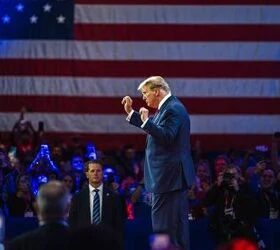
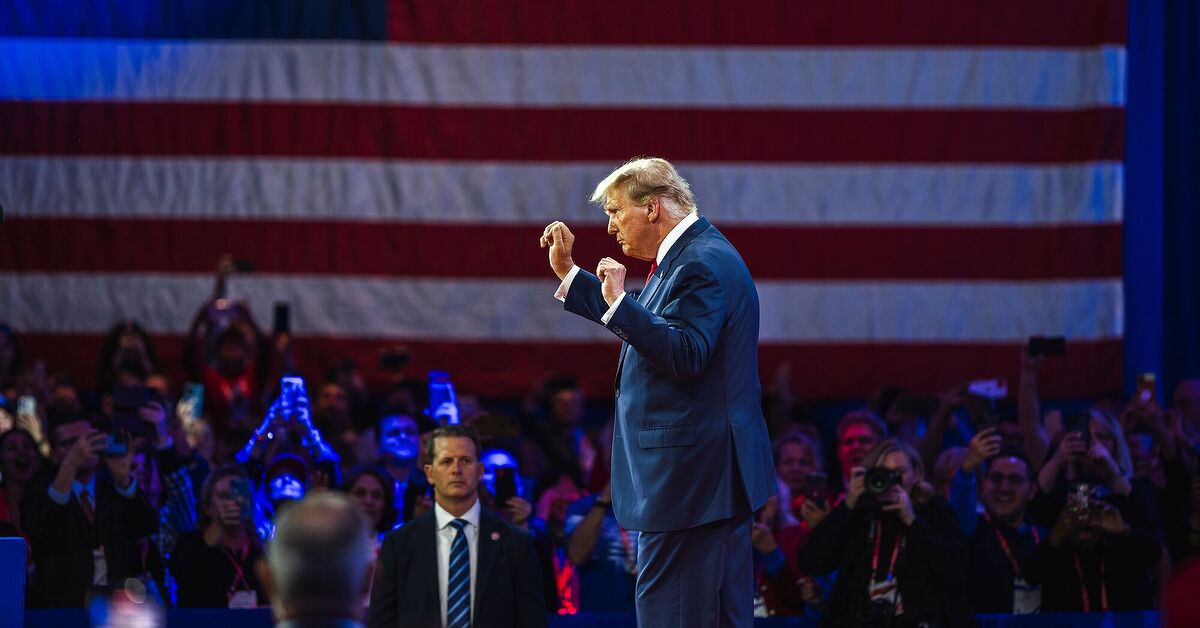
Las Vegas, NV – August 7th, 2026 – During a campaign rally at the Red Rock Casino Resort in Las Vegas, President Donald Trump intensified his vocal opposition to electric vehicles (EVs), directly targeting their owners with disparaging remarks and framing their driving habits as a "disease." His comments come at a time when his administration has enacted significant policy changes aimed at decelerating EV adoption and bolstering traditional fossil fuel industries, a strategy that appears to be influencing market trends.
The President’s address, delivered to a crowd of supporters focused on his administration’s economic agenda, veered into a critique of EV ownership. "You’re driving along in an electric car, they have a disease, you know, it’s a disease," Trump stated, characterizing the common practice of monitoring battery charge levels on longer journeys as a symptom of mental distress. He elaborated on this point by describing motorists who express concern about locating charging stations when their battery indicator still reads 75 percent. "These people are crazy," he declared, eliciting cheers from the audience.
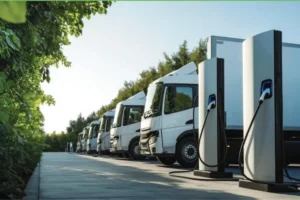
This latest verbal salvo is not an isolated incident but rather an extension of a broader policy framework implemented during Trump’s second term. These actions have demonstrably impacted the domestic EV sector. Key among these policy shifts was the elimination of the $7,500 federal EV purchase tax credit, a significant incentive that had previously driven considerable consumer interest. Concurrently, the administration relaxed Environmental Protection Agency (EPA) tailpipe emissions rules, effectively lowering the regulatory bar for internal combustion engine (ICE) vehicles. Furthermore, federal funding allocations designated for the expansion of a nationwide high-speed charging infrastructure were frozen, stalling critical development efforts.
The cumulative effect of these legislative and regulatory maneuvers has been a palpable deceleration in the growth of U.S. electric vehicle sales. According to industry data for the second quarter of 2026, the market share for battery-electric vehicles has settled at approximately 6 percent. This represents a decline from roughly 7 percent recorded during the same period in the preceding year. In contrast, the adoption of hybrid vehicles has seen a substantial increase, suggesting a consumer shift towards electrification but with a preference for transitional technologies.
While the President’s characterization of EV drivers as "crazy" dismisses the genuine concerns of many, it is undeniable that range anxiety remains a valid consideration for prospective buyers, particularly those residing in or traveling through regions with sparse charging infrastructure. However, advancements in modern EV trip-planning software, coupled with the ongoing expansion of charging networks, have increasingly mitigated these concerns for routine long-distance travel. Many EV owners now find that monitoring battery status for extended journeys has become a standard, albeit sometimes necessary, practice, akin to checking fuel levels in gasoline-powered vehicles.
Energy Independence Rhetoric and Global Reserves
Beyond his direct attacks on EV owners, President Trump also made sweeping assertions regarding U.S. domestic energy reserves during his Las Vegas speech. He proclaimed that the United States controls "60 percent of the world’s oil and gas, including Venezuela," and further asserted that America possesses "a thousand years of gasoline." The inclusion of Venezuelan reserves is particularly noteworthy, given that Venezuela remains a sovereign nation following the early 2026 U.S. military intervention that led to the ousting of Nicolas Maduro. This intervention, while achieving a stated geopolitical objective, has also underscored the complexities and potential economic implications of U.S. foreign policy in energy-rich regions.
The President’s remarks on energy reserves coincide with ongoing fuel price pressures experienced by American consumers. As of August 7th, 2026, the national average for a gallon of regular gasoline, according to AAA, stands at $4.06. This elevated price point is influencing consumer behavior and prompting automakers to recalibrate their production strategies. Many manufacturers are indeed adjusting their product lineups, increasing investment in and production of hybrid and traditional internal combustion engine vehicles, a trend that aligns with the administration’s stated energy priorities.
Chronology of Policy Shifts and Market Reactions
The Trump administration’s stance against EVs has been a consistent theme throughout his second term. The timeline of key policy actions and their perceived market impact can be traced as follows:
- Early 2025: The Trump administration formally announces its intention to review and potentially dismantle Obama-era fuel economy standards and emissions regulations, signaling a shift away from stringent environmental mandates.
- Mid-2025: The $7,500 federal EV purchase tax credit is eliminated through legislative action, removing a key financial incentive for consumers. This move is met with criticism from environmental groups and the automotive industry.
- Late 2025: EPA emissions rules are significantly relaxed, allowing for higher permissible pollutant levels from internal combustion engine vehicles. Simultaneously, federal funding for the expansion of nationwide high-speed charging corridors is frozen, hindering the development of critical EV infrastructure.
- Early 2026: U.S. military intervention in Venezuela leads to a change in leadership, with implications for global oil markets and U.S. energy diplomacy.
- First Quarter 2026: Preliminary reports indicate a slowdown in EV sales growth compared to previous years. Hybrid vehicle sales begin to show a marked uptick.
- Second Quarter 2026: Official sales figures confirm a decline in battery-electric vehicle market share to approximately 6 percent. AAA reports national average gasoline prices hovering around $4.00 per gallon.
- August 2026: President Trump publicly disparages EV drivers during a rally in Las Vegas, framing their concerns as a "disease" and reiterating his administration’s commitment to fossil fuels.
This chronology highlights a deliberate and sustained effort by the administration to reshape the American automotive landscape and energy policy, with a clear preference for traditional energy sources and technologies.
Supporting Data and Industry Analysis
The data emerging from the second quarter of 2026 provides a quantifiable snapshot of the impact of these policies. The shift in market share from approximately 7% to 6% for battery-electric vehicles, while seemingly modest, represents a significant deviation from the projected growth trajectory that many analysts had anticipated prior to the policy changes. This deceleration has broad implications for automotive manufacturers, battery suppliers, and the nascent charging infrastructure sector.
The parallel surge in hybrid vehicle sales is a critical data point. Hybrids, which combine an internal combustion engine with an electric motor and battery, offer a transitional step for consumers who are not yet ready to commit to a fully electric vehicle. Their increasing popularity suggests that consumer interest in electrification remains, but the current policy environment and infrastructure landscape are steering them towards a more familiar, albeit still partially electrified, option. This trend could prolong the dominance of hybrid technology and delay the widespread adoption of fully electric vehicles.
The statements made by President Trump regarding U.S. energy reserves also warrant examination. While the U.S. is indeed a significant producer of oil and natural gas, the claim of controlling "60 percent of the world’s oil and gas" requires careful contextualization. Global energy production is complex, with numerous major players and fluctuating market dynamics. Furthermore, the assertion of possessing "a thousand years of gasoline" is a hyperbolic statement that likely refers to estimated recoverable reserves, rather than immediate accessibility or economic viability. Global energy markets are subject to geopolitical factors, technological advancements, and environmental regulations, all of which influence the actual extraction and utilization of these reserves.
Broader Impact and Implications
The ramifications of President Trump’s rhetoric and policy decisions extend beyond the immediate automotive market. The administration’s focus on fossil fuels, coupled with its efforts to slow EV adoption, raises questions about the United States’ commitment to climate goals and its position in the global transition to cleaner energy.
- Environmental Concerns: Critics argue that the rollback of emissions standards and the discouragement of EVs will have negative consequences for air quality and contribute to greenhouse gas emissions, potentially undermining efforts to combat climate change.
- Economic Competitiveness: A slower adoption of EV technology could impact the competitiveness of U.S. automakers in a global market increasingly prioritizing electric mobility. Investments in EV research, development, and manufacturing may be diverted to countries with more supportive policies.
- Infrastructure Development: The freezing of federal funding for charging corridors could leave significant portions of the country underserved, creating practical barriers to EV ownership and hindering the development of a robust national charging network.
- Consumer Choice: While the administration frames its policies as beneficial for consumers by keeping gasoline prices lower (though current data suggests otherwise), critics contend that it limits consumer choice and access to a wider range of advanced, potentially more efficient, vehicle technologies.
- Geopolitical Strategy: The administration’s emphasis on energy independence and its assertive rhetoric regarding global energy reserves, particularly in the context of the Venezuelan intervention, signal a foreign policy approach that prioritizes resource control and traditional energy dominance.
The divergence between the administration’s policy direction and the global trend towards electrification presents a significant challenge for the future of transportation and energy in the United States. While President Trump’s supporters may view his stance as a defense of American industry and energy security, opponents express concern over the long-term environmental and economic consequences of his approach. The coming years will likely reveal the full extent of these impacts as the nation navigates a complex energy landscape.