Materials scientists at Purdue University have achieved a significant breakthrough, successfully reshaping the internal structure of certain alloys at extremely small scales to dramatically enhance their properties. This innovation, published in Science Advances, specifically addresses the long-standing challenge of brittleness in a promising class of materials known as intermetallics, demonstrating a novel pathway to combine ultra-high strength with substantial plasticity in cobalt aluminum (CoAl) intermetallics at room temperature. This development holds profound implications for critical technologies ranging from aerospace and energy generation to defense and automotive industries, promising to unlock new levels of performance and durability.
The Enduring Promise and Peril of Intermetallics
Intermetallics are solid materials formed from two or more metallic elements that arrange themselves in a highly ordered, precise crystal structure. Unlike conventional alloys, where atoms might mix more randomly, intermetallics possess a distinct stoichiometric composition and an atomic arrangement that grants them unique and often superior properties. Their unusual atomic organization is the source of exceptional strength, remarkably high melting temperatures, and strong resistance to creep – the insidious, slow deformation of a material under prolonged heat and stress. These characteristics make intermetallics incredibly attractive for demanding high-performance applications where extreme conditions prevail.
For decades, engineers and scientists have eyed intermetallics as the "next-generation" materials for components in jet engines, where they could withstand immense temperatures and pressures, and in gas turbines, where efficiency and longevity are paramount. They also show great potential for advanced energy storage systems, nuclear reactors due to their radiation resistance, and high-performance automotive components. Examples of intermetallics already in limited use include nickel aluminides, known for their high-temperature strength, and titanium aluminides, valued for their low density and good high-temperature properties in aerospace applications. However, despite their impressive array of advantages, intermetallics have historically been plagued by a critical flaw: their inherent brittleness. At room temperature, many intermetallics behave more like ceramics than metals, prone to sudden, catastrophic fracture without significant prior deformation. This brittleness severely limits their manufacturability, making it exceedingly difficult to shape them into complex components, and poses a significant risk of sudden failure under operational stresses.
Breaking the Brittleness Barrier: A New Engineering Paradigm
Addressing this fundamental limitation has been a central quest in materials science. Previous efforts to improve the plasticity of intermetallics, particularly CoAl, largely focused on conventional metallurgical approaches. These included altering the material’s chemical composition through alloying, adjusting its microstructure via various heat treatments, or combining it with other materials in composite forms. While some marginal improvements were observed, these methods consistently fell short of achieving the desired balance of high strength and significant room-temperature plasticity. The primary reason for their limited success was the inability to introduce a sufficiently high density of specific atomic-scale defects, known as dislocations, which are crucial for ductile deformation in metals.
The research conducted by engineers at Purdue University, spearheaded by Xinghang Zhang, a professor in the School of Materials Engineering and the corresponding author of the Science Advances paper, represents a significant departure from these traditional approaches. The study, titled "Plasticity in brittle intermetallics enabled by framework of amorphous interfaces and preexisting dislocations," outlines a revolutionary method to engineer plasticity directly into CoAl intermetallics. Co-authors include Haiyan Wang, the Basil S. Turner Professor of Engineering in materials engineering and the Elmore Family School of Electrical and Computer Engineering, and Ke Xu, a postdoctoral researcher in materials engineering and first author.
"Bulk CoAl intermetallics are a high-strength compound with immense potential, particularly for next-generation materials in turbine blades for aeroengines," Zhang explained. "The ability to develop high-strength, plastically deformable CoAl alloys could allow an engine or turbo to spin faster, sustain higher centrifugal forces, and dramatically improve overall performance and fuel efficiency."
The team’s breakthrough hinges on a dual-pronged strategy: first, directly introducing a high density of dislocations during the material’s fabrication, and second, designing a novel internal structural feature called a "framework of amorphous interfaces" (FAIs). Plasticity, in material science terms, refers to a material’s ability to undergo permanent deformation—to change shape—without fracturing or cracking. For demanding industrial applications, this property is invaluable, as it allows materials to be formed into intricate geometries and provides a crucial buffer against sudden failure under stress.
"In this study, we demonstrate that CoAl can exhibit significant plasticity at room temperature, offering a fundamentally new and alternative approach to improve the plastic deformation capability in CoAl," Xu noted, highlighting the significance of overcoming this long-standing hurdle.
Atomic Defects Transformed into an Advantage
The concept of dislocations, often colloquially referred to as "defects," might initially suggest a weakening of a material. However, in the context of metallic ductility, dislocations are anything but. They are microscopic irregularities within a crystal lattice, where atoms are slightly misaligned from their perfectly ordered pattern. When a metal is subjected to stress, these dislocations can move and multiply, allowing the material to deform plastically rather than fracturing. Think of it like shuffling a deck of cards: the individual cards (atomic planes) slide past each other, allowing the overall shape to change without tearing. For CoAl to exhibit plasticity at room temperature, it requires a substantial number of these mobile dislocations.
The Purdue team ingeniously addressed this by directly introducing a high density of dislocations into the CoAl during the fabrication process. More critically, they engineered the framework of amorphous interfaces (FAIs). These FAIs are flexible, internal boundaries within the material that initially lack the same orderly crystal structure as the surrounding CoAl matrix; they are amorphous, meaning their atomic arrangement is disordered. During deformation, a fascinating phenomenon occurs: parts of these amorphous interfaces partially crystallize. This crystallization process acts as a dynamic generator, promoting the nucleation and multiplication of new dislocations within the CoAl intermetallic layers. This intricate interplay between pre-existing dislocations and the FAI-mediated generation of new dislocations is the secret to CoAl’s newfound ductility.
A Novel Manufacturing Pathway: Magnetron Sputtering Deposition
The ability to introduce such a high density of dislocations and precisely engineer the FAIs was made possible by a specialized fabrication technique: magnetron sputtering deposition. This method is fundamentally different from traditional metal casting, which involves melting a material and allowing it to cool and solidify. Casting typically produces materials with a lower density of structural defects and limited control over nanoscale architecture.
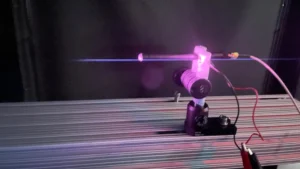
In contrast, magnetron sputtering deposition is a non-equilibrium fabrication method. It involves generating a plasma that bombards a target material (in this case, cobalt and aluminum), causing atoms to be ejected and then condense onto a substrate, forming a thin film or layer. This vapor-to-solid process offers unparalleled control over the material’s microstructure at the nanoscale. It allowed the Purdue researchers to create CoAl with precisely designed amorphous aluminum cobalt binary interfaces and to embed a significantly higher concentration of dislocations than what is achievable through conventional casting.
"This non-equilibrium fabrication approach enables us to fabricate materials from alloy vapor to a solid, introducing a significant number of dislocations in CoAl," Zhang elaborated. "We were able to achieve significant strength and plasticity in CoAl, which simply cannot be realized via traditional casting methods." This technological leap in manufacturing is as crucial as the material design itself, opening new avenues for producing advanced intermetallics.
Unprecedented Performance: Stronger Than Steel, Yet Flexible
The success of this approach was unequivocally demonstrated through rigorous mechanical testing. The combination of pre-introduced dislocations and the dynamic FAI system yielded an exceptionally strong CoAl intermetallic that defied conventional wisdom. Tests revealed that the material achieved an astonishing yield strength of 6 gigapascals (GPa), a unit of stress measurement. To put this into perspective, this is approximately six to ten times higher than the yield strength of high-strength structural steel, a benchmark material for many engineering applications. Yield strength defines the maximum stress a material can withstand before it begins to deform permanently.
Despite this extreme strength, the CoAl material also exhibited remarkable plasticity, sustaining 15% of plastic strain under compression at room temperature. This means it could permanently change its shape by 15% of its original dimension without fracturing. This combination of ultra-high mechanical strength and outstanding plasticity is an unprecedented achievement for intermetallics, a class of materials notorious for their brittleness.
"This combination of ultrahigh mechanical strength and outstanding plasticity makes the current CoAl nanolaminate system one of the best intermetallic systems reported to date," Xu affirmed, underscoring the significance of this milestone in materials science.
Validating the Mechanism: In Situ Observation and Molecular Dynamics
To thoroughly understand and validate the mechanisms behind this extraordinary behavior, the research team employed advanced analytical techniques. They conducted in situ mechanical testing inside a scanning electron microscope (SEM), allowing them to observe the material’s deformation process in real-time and track its behavior with micrometer precision. This direct observation provided crucial empirical evidence of the material’s plastic deformation.
Further insights were gained through a collaborative effort with Professor Yashashree Kulkarni and her PhD student Anand Mathew from the University of Houston. Their contribution involved sophisticated molecular dynamics simulations, which provided an atomic-level view of the processes occurring within the CoAl. These simulations confirmed that the frameworks of amorphous interfaces indeed crystallized during deformation. Crucially, they also revealed the dynamic movement of dislocations from these newly formed crystalline regions at the layer interfaces into the surrounding CoAl layers, providing a compelling explanation for how the material could deform plastically without rapid fracture. This combination of experimental observation and theoretical simulation provided a comprehensive understanding of the material’s transformative behavior.
Voices from the Forefront: Shaping the Future of Engineering
The scientific community is poised to recognize the profound implications of this research. The ability to impart ductility to inherently brittle materials like intermetallics represents a significant advancement in the field of materials engineering, potentially redefining the design paradigms for high-performance components. The researchers at Purdue and Houston have not only demonstrated a remarkable material but also provided a clear mechanistic understanding that can guide future material design.
"Ductile intermetallics will significantly boost our capabilities for designing advanced materials for aerospace and outer space, energy and defense applications," Zhang stated, outlining the vast potential. This sentiment resonates across industries that have long sought materials capable of performing under extreme conditions while retaining structural integrity and reliability. The enhanced strength and flexibility offered by these new CoAl alloys could enable engineers to design components with improved fatigue resistance, higher operational temperatures, and extended service lives, leading to substantial gains in efficiency and safety.
Revolutionizing Industries: Broadening the Horizon for Advanced Materials
The implications of this breakthrough stretch across several critical sectors, promising to usher in a new era of engineering capabilities.
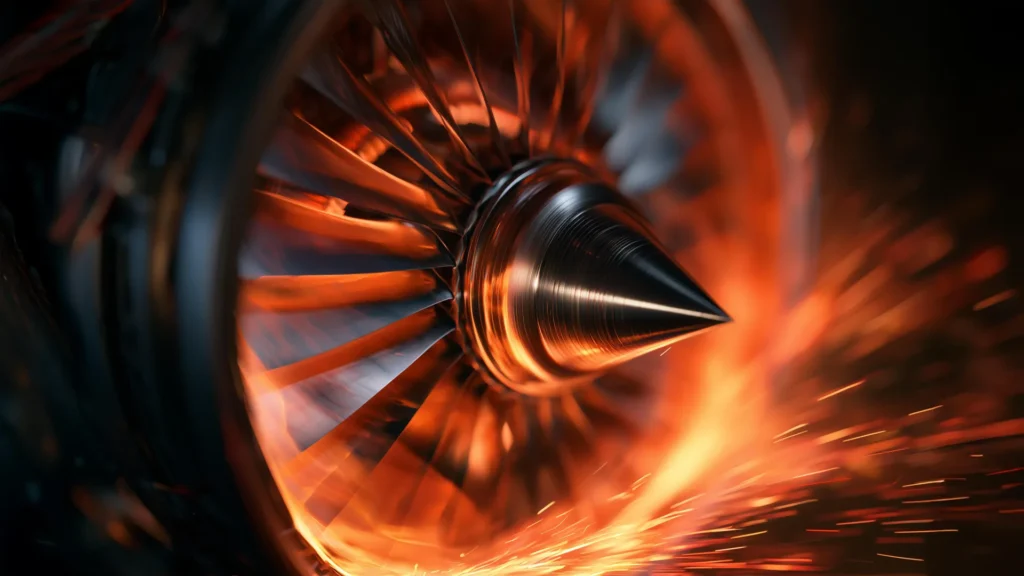
- Aerospace: The most immediate and perhaps impactful application lies in aerospace. Stronger, more ductile intermetallics could lead to the development of next-generation turbine blades for jet engines. Current blades often operate at the very limits of material capability. With CoAl alloys capable of withstanding higher centrifugal forces and temperatures while maintaining flexibility, engines could spin faster, generate more thrust with greater fuel efficiency, and boast extended operational lifespans. This could lead to lighter aircraft, reduced emissions, and lower maintenance costs.
- Energy Generation: Gas turbines used in power generation would similarly benefit from enhanced materials. Improved creep resistance and high-temperature strength would increase efficiency and reduce the need for frequent overhauls. Beyond turbines, advanced intermetallics could find application in high-temperature energy storage systems, crucial for grid stability and renewable energy integration, and potentially in advanced nuclear reactor designs where radiation resistance and mechanical integrity at extreme temperatures are paramount.
- Defense Technologies: The defense sector constantly seeks materials that offer superior performance in harsh environments. From components for hypersonic vehicles and advanced missile systems to lighter, more durable armor and structural elements for next-generation naval vessels or land vehicles, the combination of strength and plasticity is invaluable. These materials could lead to more resilient and agile defense platforms.
- Space Exploration: For materials designed for use in space, where extreme temperature fluctuations, radiation exposure, and vacuum conditions prevail, ductile intermetallics could be a game-changer. Components for satellites, spacecraft propulsion systems, and future lunar or Martian habitats would benefit immensely from materials that are both robust and resistant to brittle fracture.
- Automotive Industry: While perhaps not as immediately obvious as aerospace, advancements in intermetallics could trickle down to high-performance automotive components. Lighter, stronger engine parts, transmission components, and even structural elements could contribute to more fuel-efficient vehicles with improved safety and longevity.
The Road Ahead: Scaling and Generalization
While the current research provides a compelling proof-of-concept, the next crucial steps involve scaling the material for industrial applications. The researchers plan to apply the same fundamental concept to bulk CoAl nanocomposites, which would be more suitable for large-scale production and integration into industrial components. The transition from thin films produced by sputtering to bulk materials presents its own set of engineering challenges, but the foundational understanding of the FAI and dislocation mechanisms provides a clear roadmap.
Furthermore, the team aims to establish the broader applicability of the FAI concept. "We will also be testing the concept using other intermetallics, with the goal of establishing the general applicability of FAIs for improving plasticity in this metal class," Xu confirmed. If successful, this would mean the Purdue breakthrough isn’t just a solution for CoAl, but a universal principle for overcoming brittleness in a wide range of intermetallic compounds.
The ongoing research will be led by Zhang’s Nanometal Group at Purdue, which specializes in combining material synthesis, in situ nanomechanical testing, and advanced atomic-scale microstructure analysis. Their overarching mission is to develop metallic materials that embody the elusive combination of both extreme strength and significant deformability. Zhang’s broader research interests also span nanomaterial synthesis, understanding radiation damage in nanostructured materials, investigating the mechanical behavior of nanostructured metals, and exploring various functional materials.
This pioneering work, primarily funded by the National Science Foundation’s Metals and Metallic Nanostructures program, underscores the critical role of fundamental research in driving technological innovation. By confronting one of the most persistent challenges in materials science, the Purdue team has not only forged a new material but also illuminated a new path forward for designing the advanced materials that will power the next generation of global industries. The era of truly ductile, high-strength intermetallics may now be within reach, promising a future of more robust, efficient, and high-performing technologies.