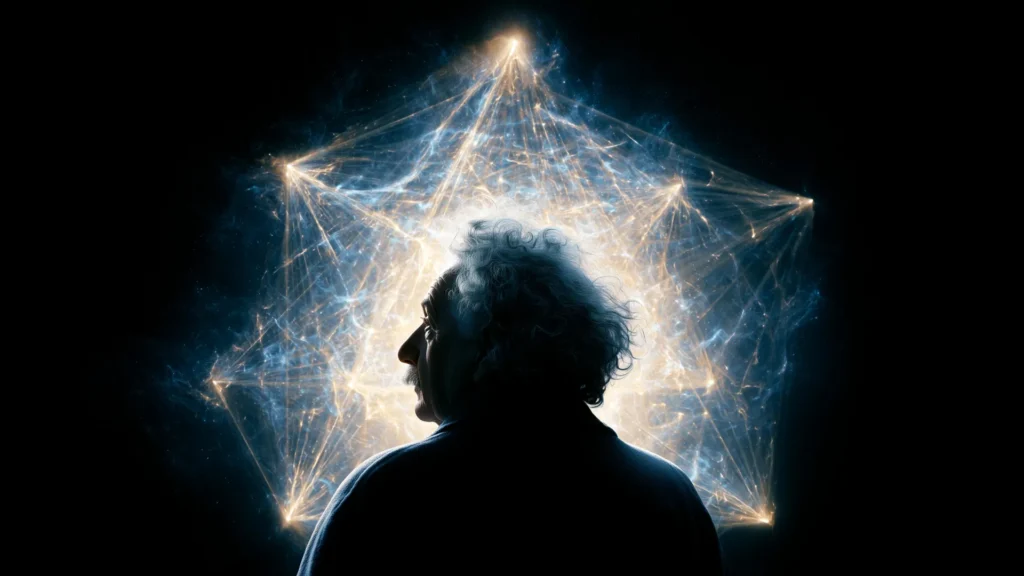
In a landmark achievement for the field of fundamental physics, an international collaboration of researchers, including Nobel laureate Professor Sir Roger Penrose, has reported the first direct observation of a long-theorized gravitational effect within a falling quantum object. The study, published in the journal Science Advances on September 2, confirms that a cornerstone of Albert Einstein’s General Theory of Relativity—the Equivalence Principle—remains robust even when applied to the counterintuitive world of quantum mechanics. This experimental breakthrough was spearheaded by scientists from Ben-Gurion University of the Negev, the University of Ulm, and the University of Oxford, marking a significant step toward reconciling the two disparate pillars of modern physics.
For over a century, the scientific community has grappled with a fundamental schism in its understanding of the universe. On one side stands General Relativity, Einstein’s masterful description of gravity as the curvature of spacetime, which governs the behavior of massive bodies, stars, and the cosmos at large. On the other side is Quantum Mechanics, the framework that describes the behavior of subatomic particles, where objects can exist in multiple states simultaneously and act as both particles and waves. While both theories have been validated with extraordinary precision in their respective domains, they are mathematically incompatible. The search for a "Theory of Everything" that unifies gravity with quantum mechanics remains the greatest challenge in theoretical physics. The recent experiment at Ben-Gurion University explores the interface of these two realms, providing empirical data on how gravity influences a quantum system in free fall.
The Foundation: Einstein’s Equivalence Principle
At the heart of this research is the Equivalence Principle (EP), a concept Einstein famously described as his "happiest thought." The principle posits that the effects of gravity are locally indistinguishable from the effects of acceleration. In practical terms, this means that an observer in a windowless elevator in deep space being accelerated at 9.8 meters per second squared would feel the same "weight" as an observer standing still on Earth. Crucially, the principle implies that in a state of free fall, gravity effectively vanishes for the observer.
Historically, this principle was famously illustrated by Galileo Galilei’s (possibly apocryphal) experiment of dropping two spheres of different masses from the Leaning Tower of Pisa to show they hit the ground at the same time. In the modern era, the Equivalence Principle has been tested using "classical" or macroscopic objects with staggering accuracy, such as through lunar laser ranging and satellite-based experiments like MICROSCOPE. However, testing this principle with quantum objects introduces a layer of complexity that has eluded scientists for decades. Quantum objects do not behave like billiard balls; they exist as "wavefunctions" that can occupy multiple paths at once through a phenomenon known as superposition.
The Quantum Galileo Interferometer: A New Experimental Frontier
To bridge the gap between classical gravity and quantum behavior, the research team developed a sophisticated instrument dubbed the "Quantum Galileo Interferometer." This device was designed to measure the "quantum phase"—a property of a quantum wave—as it is subjected to the pull of gravity.
The experiment was conducted at the Atom Chip Laboratory at Ben-Gurion University of the Negev. The researchers utilized a cloud of rubidium atoms, which were cooled to temperatures just a fraction of a degree above absolute zero. At these temperatures, the atoms move so slowly that their quantum properties become manageable and observable. Using a specialized "atom chip"—a micro-fabricated device that uses tiny gold wires to generate precise magnetic fields—the team was able to manipulate the atoms with unprecedented control.
The experimental process followed a rigorous chronology:
- Superposition Induction: Using microwave pulses, the team placed the ultracold rubidium atoms into a state of quantum superposition. In this state, each atom effectively existed in two different internal states simultaneously, allowing the atomic wave to follow two separate physical trajectories at once.
- Path Separation: The atom chip’s magnetic fields were then used to exert different forces on these two states. One part of the atomic wave was held stationary relative to the laboratory, effectively "anchored" against the pull of gravity.
- The Free Fall: The second part of the wave was launched upward in a ballistic trajectory, similar to a ball being tossed into the air, and then allowed to fall freely under the influence of gravity. This created a scenario where one part of the quantum object experienced the full acceleration of gravity while its counterpart remained a fixed reference point.
- Recombination and Interference: After the falling portion of the wave completed its trajectory, the researchers used another magnetic pulse to bring the two parts of the wave back together.
- Phase Measurement: When the waves were reunited, they "interfered" with one another. By analyzing the resulting interference pattern, the researchers could measure the minute difference in the quantum phase that had accumulated between the stationary wave and the falling wave.
Findings and Supporting Data
The data revealed that the falling quantum object accumulated a specific phase shift that aligned perfectly with the predictions derived from extending Einstein’s Equivalence Principle to the quantum domain. While previous experiments have used quantum particles to measure the strength of gravity, this experiment is distinguished by being the first to directly observe the predicted quantum phase produced specifically by the motion of a freely falling object.
The significance of the "phase" in quantum mechanics cannot be overstated. It is the internal "clock" of a particle. The fact that gravity alters this phase in a manner consistent with General Relativity suggests that even at the microscopic level, the geometry of spacetime dictates the evolution of quantum states. The measurement confirmed that the "gravity-induced phase" is a real, observable signature that bridges the two theories under the conditions tested.
Perspectives from the Research Team
The implications of the study have drawn significant commentary from the international team. Professor Ron Folman, the lead author and head of the Atom Chip Laboratory at Ben-Gurion University, emphasized the dual nature of the achievement. "This is a unique paper in the sense that it combines a hard experiment with a far-reaching theoretical interpretation," Folman stated. "How can gravity and quantum theory be unified into one understanding of the universe? These two pillars of modern physics have so far eluded all attempts at a unified theoretical framework, but this complex experiment gives more hints as to how such a unification may be achieved."
Professor Vlatko Vedral of the University of Oxford, a co-author known for his work in quantum information, noted the resilience of quantum mechanics. "We have no consistent theory telling us why quantum physics should fail," Vedral remarked. "This experiment pushes quantum mechanics into one of its most intriguing frontiers—gravity—and shows that, once again, its predictions hold."
Sir Roger Penrose, whose participation adds significant weight to the study, has long proposed that gravity might actually be the cause of quantum "collapse"—the process by which a quantum object stops being in two places at once and settles into a single state. While the results of this experiment show that quantum mechanics holds firm for rubidium atoms, the experiment also serves as a baseline for future tests of Penrose’s theories.
Analysis of Implications: What This Means for the Future of Physics
The success of the Quantum Galileo Interferometer does not yet provide a "Theory of Quantum Gravity," but it narrows the search space for one. It demonstrates that any future unified theory must respect the Equivalence Principle at the scales currently observable.
One of the most profound aspects of the experiment is what it doesn’t show. It does not prove that gravity itself is quantized (i.e., made of "gravitons"), nor does it disprove the possibility that quantum mechanics might break down at larger scales. In fact, the research team is already looking toward the next horizon: testing heavier objects.
The rubidium atoms used in this study are incredibly small. To truly test the limits of Einstein’s and Penrose’s theories, scientists need to observe the behavior of more massive objects in superposition. The Ben-Gurion team is already preparing experiments involving "nanodiamonds"—tiny crystals containing thousands or millions of atoms. If a nanodiamond can be placed in a superposition and dropped, and if it still follows the Equivalence Principle without the quantum state collapsing prematurely, it would further challenge Penrose’s "objective collapse" model. Conversely, if the state collapses, it could be the first evidence of gravity interacting with quantum mechanics in a way that fundamentally changes the rules of the game.
Technological and Practical Applications
Beyond the lofty goals of theoretical physics, the technology developed for this experiment has immediate practical potential. The high-precision measurement of quantum phases in gravitational fields is the basis for "quantum sensing."
- Geophysics and Resource Exploration: Quantum interferometers can detect minute variations in Earth’s gravitational field caused by underground oil reserves, mineral deposits, or moving water tables.
- Inertial Navigation: Because these sensors are so sensitive to acceleration and gravity, they could lead to navigation systems that do not rely on GPS satellites, which is vital for submarines or deep-space missions.
- Gravitational Wave Astronomy: While current detectors like LIGO use laser interferometry, future quantum-based sensors might allow for the detection of gravitational waves at different frequencies, opening new windows into the early universe.
Conclusion
The publication of this research in Science Advances marks a pivotal moment in the study of gravity. By successfully observing the gravitational phase shift in a falling quantum wave, the international team has reaffirmed that Einstein’s 1915 vision of gravity still holds sway over the subatomic world of the 21st century. As the collaboration moves toward testing larger masses and more complex superpositions, the Quantum Galileo Interferometer stands as a testament to human ingenuity in the face of the universe’s most enduring mysteries. For now, the two pillars of physics remain standing, but the bridge between them is being built, one atom at a time.