When three companies join forces to address an ongoing challenge with new technology, remarkable advancements can emerge. This synergistic approach was powerfully demonstrated when K-Rain, a leading manufacturer of irrigation products, collaborated with Zero Tolerance LLC, Xact Metal, and Reaction Plastics Solutions to overcome a critical cooling issue in one of its injection molds. The innovative solution, leveraging 3D-printed conformal cooling inserts, not only slashed production cycle times but also significantly enhanced part quality, showcasing the transformative potential of advanced manufacturing techniques in traditional industries.
The genesis of this project, as is often the case in the intricate world of moldmaking, stemmed from a customer-driven demand for accelerated production cycles. K-Rain approached Steve Michon, the founder of Zero Tolerance, with a specific challenge: their existing mold’s traditional thermal pins were clustered in a particular area, leading to uneven and inefficient cooling. "Everywhere else in the mold was fine, but this section wasn’t cooling efficiently," Michon explained, highlighting the bottleneck that was hindering overall productivity. This localized heat accumulation was not only slowing down the production process but also contributing to undesirable outcomes such as part warpage and surface defects.
Michon, already a proponent of advanced manufacturing, saw this as an opportune moment to explore a different paradigm: 3D-printed conformal cooling inserts. This approach deviates from conventional methods by creating cooling channels that closely follow the contours of the mold cavity, enabling more uniform and effective heat dissipation. The decision to pursue this cutting-edge solution was further solidified by Michon’s long-standing fascination with metal additive manufacturing. He had previously experimented with outsourcing metal 3D printing but harbored a desire to bring this capability in-house. The emergence of Xact Metal’s compact and accessible metal 3D printers presented the ideal opportunity to realize this ambition.

The Challenge: Addressing a Critical Hot Spot
K-Rain Manufacturing’s predicament was precise: the outer sections of their mold benefited from conventional cooling channels and inserts, providing adequate thermal management around the perimeter and top of the molded part. However, the thin cross-section near the core tip presented a significant hurdle. The confined space severely limited the options for effective cooling, rendering the traditional thermal pins inadequate for managing the intense heat in this critical zone. This resulted in slow cycle times, unacceptable part warpage, and surface imperfections that compromised the quality of the finished product.
The Solution: 3D-Printed Conformal Cooling Inserts
Recognizing the limitations of conventional methods, Zero Tolerance, with the expert guidance of Scott Kraemer, senior sales manager at Xact Metal, embarked on designing and producing 3D-printed conformal cooling inserts. The team opted for Uddeholm’s Corrax stainless steel, a material known for its excellent hardenability, polishability, weldability, and corrosion resistance—a critical factor given the customer’s facility is located in the Dominican Republic, an environment with salty air.
The innovative solution involved replacing the existing core cap with a meticulously designed 3D-printed insert. This insert featured intricate conformal cooling channels engineered to precisely match the geometry of the problematic area. By integrating these channels directly into the insert, the design maximized the use of available space without compromising the structural integrity of the mold component. This approach allowed for a dramatic improvement in cooling efficiency specifically within the hot zone.
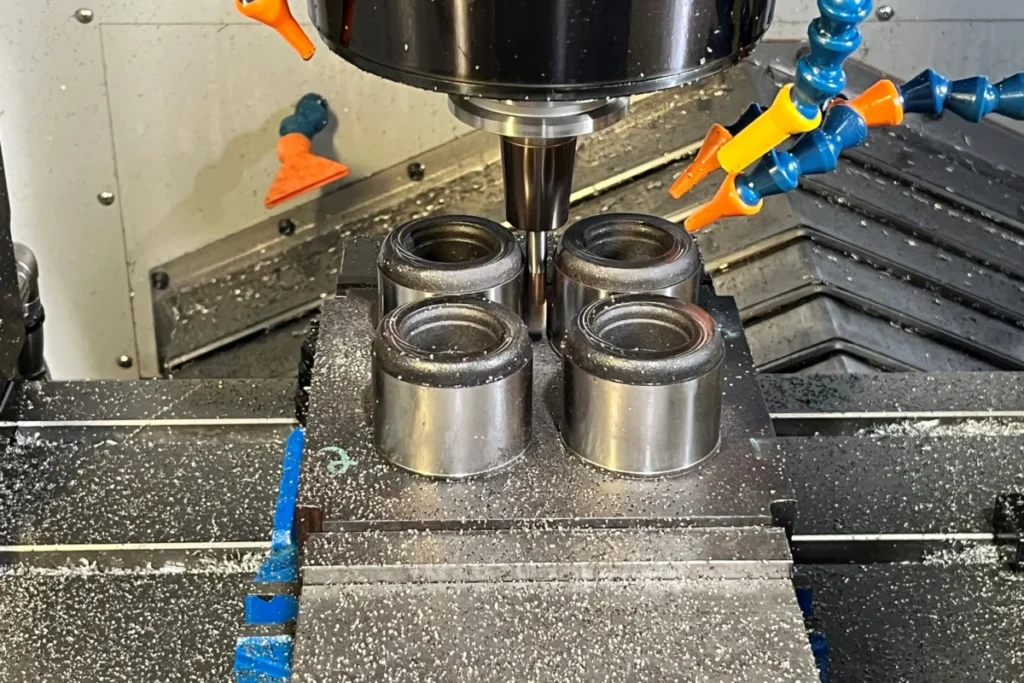
The production process was streamlined and managed entirely in-house by Zero Tolerance. The conformal cooling inserts were printed directly on the metal additive build plate, eliminating the need for extensive support structures. Following printing, the inserts underwent precision machining and electrical discharge machining (EDM) to achieve the required tight tooling tolerances. Finally, they were finished to an A2 polish, meeting K-Rain’s stringent quality specifications. The choice of Corrax proved particularly advantageous due to its ability to withstand the harsh environmental conditions of the customer’s location, ensuring longevity and reliability of the mold components.

Chronology of Innovation
The project unfolded in a series of strategic steps, demonstrating a methodical approach to problem-solving and technological integration:
- Initial Assessment and Customer Need: K-Rain identifies a critical cooling issue in an existing mold, leading to slow cycle times and part defects. They engage Zero Tolerance to develop a solution.
- Problem Definition: Steve Michon of Zero Tolerance diagnoses the inefficiency of traditional thermal pins in a specific mold section due to their clustered placement.
- Exploration of Advanced Solutions: Michon decides to investigate 3D-printed conformal cooling inserts as a potential remedy, drawing upon his interest in metal additive manufacturing.
- Partnership and Technology Acquisition: Zero Tolerance leverages the accessibility of Xact Metal’s compact metal 3D printers to bring this capability in-house.
- Design and Material Selection: Collaborating with Scott Kraemer of Xact Metal, the team designs conformal cooling inserts using Uddeholm’s Corrax stainless steel, considering the environmental needs of the end-user.
- In-House Production: Zero Tolerance undertakes the printing, machining, EDM, and finishing of the conformal cooling inserts, ensuring strict quality control.
- Implementation and Testing: The 3D-printed inserts are installed in K-Rain’s mold, replacing the problematic core cap.
- Performance Validation (Real-World): K-Rain’s modified tool begins production, yielding immediate improvements in cycle time and part quality.
- Simulation and Verification: Reaction Plastics Solutions conducts cooling simulations on the modified tool, using the real-world performance data as a benchmark.
- Analysis and Reporting: The simulation results are compared with the actual performance, confirming the effectiveness of the conformal cooling solution and the accuracy of modern simulation tools.
- Broader Implications and Adoption: The success of this project leads to the implementation of conformal cooling in new molds and highlights the value of additive manufacturing in the tooling industry.
Simulation Meets Reality: Validating the Innovation
A particularly noteworthy aspect of this project was the timing of the simulation conducted by Richard Evans of Reaction Plastics Solutions. Unlike typical workflows where simulation precedes design and manufacturing, in this instance, the simulation was performed after the conformal-cooled inserts had been manufactured and integrated into the mold, and the tool was already in production. This allowed for a direct comparison between virtual predictions and tangible, real-world results.
"The two lined up remarkably well, demonstrating how accurate modern simulation has become," Evans remarked, emphasizing the reliability of the advanced modeling tools. The simulation revealed stark differences in temperature distribution. "With the original thermal pins, temperature mapping showed a large hot spot at 31 seconds into the cycle. With the conformal cooling design, the heat is much more evenly distributed and dissipates faster," Evans elaborated.
This uniform temperature profile directly translated into several tangible benefits:

- Reduced Shrinkage Variation: Consistent cooling minimizes differential shrinkage across the part, leading to more predictable and stable dimensions.
- Elimination of Warpage and Sink Marks: The improved thermal management effectively addressed the issues of part warpage and sink marks that had previously plagued the top section of the molded components.
- Enhanced Part Quality: The overall uniformity of cooling resulted in a superior finished product with fewer defects.
The simulation also provided critical insights into the hydraulic performance of the cooling circuit. It validated the efficiency of the new design, indicating good Reynolds numbers and a manageable pressure drop of approximately 40 PSI. These factors are crucial for the successful operation of multi-cavity tooling, ensuring consistent cooling across all cavities.
Evans further underscored the economic prudence of employing simulation, stating, "Of course, running a project like this without simulation is risky. A simulation might cost a few thousand dollars, while redesigning and re-machining tooling can run far more expensive if things don’t work out." This sentiment highlights how simulation acts as a critical risk mitigation tool, validating the effectiveness of design choices before significant investment in physical tooling.
Measurable Results: A 20% Increase in Efficiency
The impact of the 3D-printed conformal cooling inserts was immediately evident in K-Rain’s production operations. "Once the inserts were built and installed, K-Rain’s new tool ran 10 seconds faster per cycle, dropping from 54 seconds to around 44, an 18-20% improvement," Michon confirmed. While a servo motor upgrade within the injection molding machine contributed approximately two seconds to this gain, the lion’s share of the improvement—approximately 8-10 seconds—was directly attributable to the enhanced cooling efficiency provided by the conformal channels.
This significant reduction in cycle time translates directly into increased throughput, reduced manufacturing costs, and a faster response to market demand. Beyond the speed, the improvements in part quality—the elimination of warpage and sink marks—meant a reduction in scrap rates and a more consistent, high-quality product delivered to K-Rain’s customers. This project established a repeatable process that has since been adopted for use in the design and manufacturing of new molds, signaling a paradigm shift within K-Rain’s tooling strategy.

Broader Impact and Implications for the Industry
This collaborative project serves as a compelling case study for the broader manufacturing industry, particularly in the realm of moldmaking and additive manufacturing. It demonstrates:
- The Power of Collaboration: The successful outcome hinges on the expertise and collaboration of multiple companies, each contributing specialized knowledge and technology.
- The Viability of Metal Additive Manufacturing: The project validates the practical application of metal 3D printing for producing complex, high-performance tooling components.
- The Value of Conformal Cooling: It underscores the significant benefits of conformal cooling in optimizing thermal management within injection molds, leading to tangible improvements in efficiency and quality.
- The Evolving Role of Simulation: The project reinforces the critical importance of simulation in modern product development and tooling design, both as a predictive tool and a validator of real-world performance.
For companies exploring metal additive manufacturing, this project offers several key takeaways:
- Strategic Application: Identify specific pain points in existing tooling where traditional methods fall short. Conformal cooling is particularly effective in areas with complex geometries or limited space for conventional cooling.
- Material Selection is Crucial: Choosing the right material, like Corrax in this case, is vital for meeting the performance and environmental demands of the application.
- In-House Capabilities Enhance Agility: Bringing additive manufacturing in-house, as Zero Tolerance did with Xact Metal’s printers, provides greater control over the design and production process, leading to faster iteration and adaptation.
- Simulation as a Forethought: While this project validated simulation post-production, the lesson learned is that incorporating simulation early in the design phase can de-risk projects and optimize outcomes even further.
Practical Lessons from the Shop Floor
Beyond the technological achievements, the team shared practical insights gleaned from this endeavor:
- Focus on Specific Bottlenecks: Rather than overhauling an entire mold, targeting the specific areas causing the most significant cooling inefficiencies can yield the most impactful results with less investment.
- Material Properties Matter: Understanding the nuances of materials like Corrax—its hardenability, polishability, and corrosion resistance—is essential for successful application in demanding tooling environments.
- Integration is Key: The success of the 3D-printed inserts depended on their seamless integration with the existing mold components, requiring precise machining and finishing.
- The Human Element: The expertise and willingness of individuals like Steve Michon and Scott Kraemer to explore and implement new technologies were instrumental in driving the project forward.
The Future of Moldmaking
What began as a targeted solution for a single cooling challenge has evolved into a powerful demonstration of modern moldmaking capabilities. K-Rain has not only achieved faster production cycles and superior part quality but has also gained newfound confidence in advanced manufacturing processes. For the wider industry, this project serves as a potent reminder that the convergence of cutting-edge technology, collaborative spirit, and practical application can unlock significant progress, making innovation not just a possibility, but a measurable and impactful reality. The successful integration of 3D-printed conformal cooling represents a significant leap forward, paving the way for more efficient, higher-quality, and cost-effective manufacturing solutions in the future.