The rapid integration of generative artificial intelligence into the daily lives of adolescents has reached a critical juncture, prompting a significant shift in how educational institutions approach digital literacy. As chatbots and large language models (LLMs) become ubiquitous, the traditional homework model is facing an unprecedented challenge. In response to this evolving landscape, the Raspberry Pi Foundation and Google DeepMind have announced a collaborative initiative to launch a research-informed curriculum designed to transition students from passive users of AI to strategic, critical thinkers. The new unit, titled "Using LLMs strategically for learning," targets students aged 13 to 16, providing them with the conceptual tools necessary to navigate a world where the boundary between human and machine-generated content is increasingly blurred.
The initiative emerges at a time when data indicates a massive shift in student behavior. Recent longitudinal studies, including a 2026 report from Pew Research, reveal that more than half of all teenagers in the United Kingdom and the United States now utilize AI tools to assist with school assignments. Perhaps more startling is the finding that one in ten students admits to using chatbots for the vast majority of their academic workload. While these tools offer efficiency, educational psychologists and researchers are sounding the alarm regarding "cognitive offloading"—a phenomenon where the outsourcing of mental tasks to technology leads to the atrophy of higher-order thinking skills such as problem-solving, creativity, and critical analysis.
The Evolution of the AI Classroom: A Brief Chronology
The journey to this curriculum launch began in late 2022 with the public release of advanced generative AI models, which caught the global education sector largely off guard. Throughout 2023 and 2024, the initial reaction from many school districts was one of prohibition, with several major jurisdictions attempting to ban AI tools on campus networks. However, by 2025, a consensus began to form among educators that prohibition was an ineffective strategy.
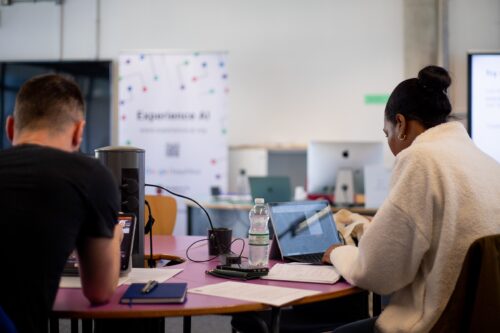
Recognizing the permanence of AI in the modern workforce, the Raspberry Pi Foundation began developing "Experience AI" in partnership with Google DeepMind. The project underwent rigorous testing phases throughout late 2025 and early 2026. This period involved pilot programs across a diverse range of educational environments, including schools in South Africa, Nigeria, Kenya, the United Kingdom, and India. The feedback from these international pilots was instrumental in refining the curriculum to ensure it was culturally adaptable and platform-agnostic, meaning the skills taught could be applied to any LLM, regardless of the specific provider.
Addressing the Crisis of Cognitive Offloading
The primary objective of the new unit is to combat the uncritical use of AI. When a student uses a chatbot to generate an entire essay or solve a complex mathematical proof without engagement, they bypass the "productive struggle" necessary for neural development and long-term retention. The Raspberry Pi Foundation’s research suggests that if this trend continues unchecked, a generation of learners may graduate with diminished capacities for independent thought.
To mitigate this, the curriculum focuses on five core lessons that emphasize learner agency. Instead of teaching students how to get the "right" answer from an AI, the lessons teach them how to use the AI as a scaffolding tool. This involves a shift from "answer-seeking" to "process-enhancement." By understanding the underlying mechanics of how LLMs predict the next token in a sequence, students learn to view AI outputs as probabilistic suggestions rather than objective truths.
Pedagogical Pillars: Feedback Literacy and Strategic Prompting
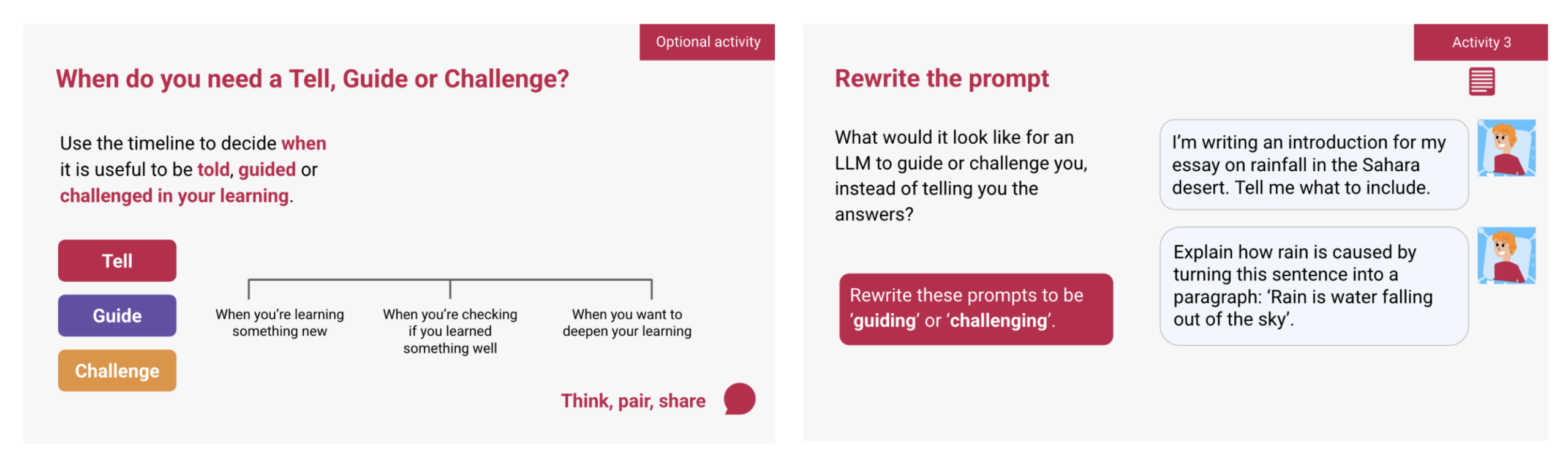
Central to the new framework is the concept of "feedback literacy." In an educational context, this refers to the ability of a learner to actively interpret and apply information to improve their performance. The curriculum identifies three distinct types of AI-generated feedback:

- Tell: The AI provides the direct answer or completes the task entirely. While convenient, this offers the lowest educational value.
- Guide: The AI provides hints, outlines, or step-by-step instructions that require the student to perform the actual work.
- Challenge: The AI acts as a Socratic tutor, questioning the student’s logic or providing counter-arguments to deepen their understanding.
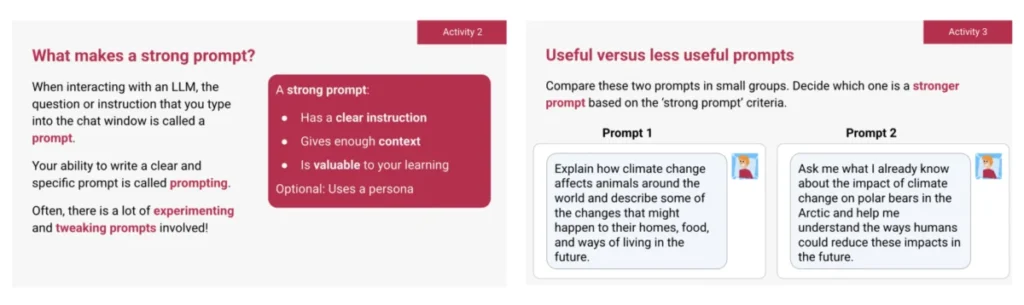
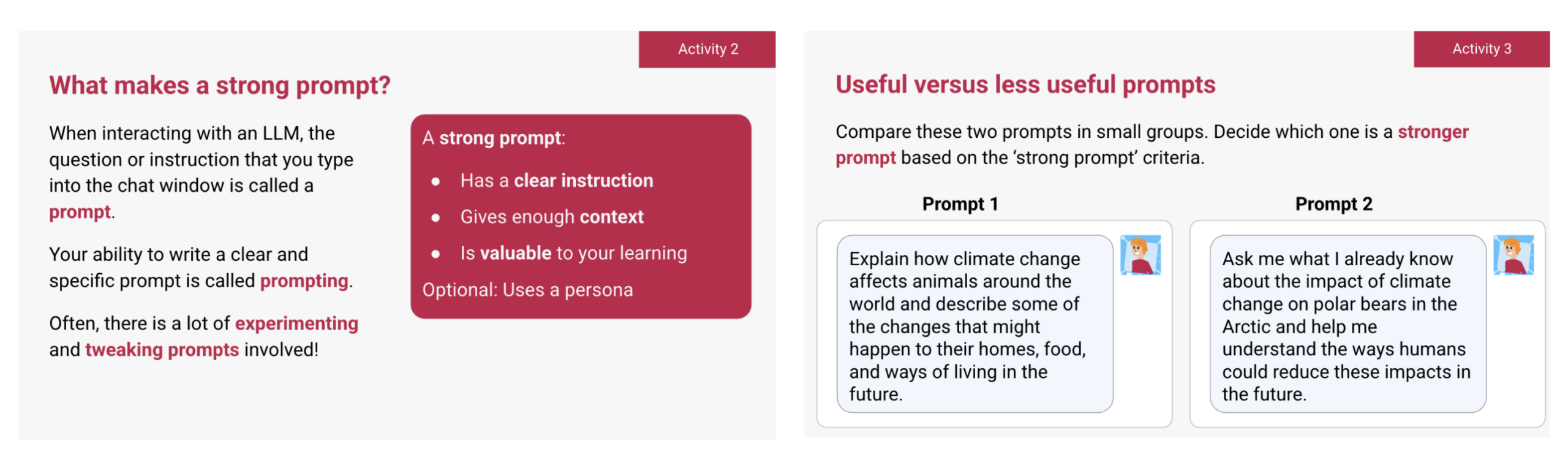
Students are taught that while LLMs default to the "Tell" format, the most significant cognitive gains are found in the "Guide" and "Challenge" formats. To facilitate this, the unit introduces learning-centered prompt engineering. Unlike corporate prompt engineering, which seeks maximum efficiency, learning-centered prompting focuses on creating a dialogue that keeps the human student in the "driver’s seat" of the intellectual process.
Furthermore, the curriculum avoids the use of trendy acronyms for prompting, which can often become obsolete as software updates occur. Instead, it focuses on the logic of instruction—teaching students how to define their role, set the context, and specify the desired pedagogical interaction.
Investigating the Architecture of Bias and Training Data
A significant portion of the "Experience AI" unit is dedicated to the transparency of AI training sets. Many young users currently view LLMs as more advanced versions of search engines, assuming that the information provided is fact-checked and authoritative. The curriculum deconstructs this misconception by exploring the origins of training data.
By examining the role of social media platforms like Reddit and Facebook in training models, students are encouraged to participate in classroom-wide discussions regarding the quality of information. This leads to critical inquiries into:
- Factuality: Why an AI might "hallucinate" or present popular opinions as facts.
- Representation: Whose voices and cultures are prioritized in the data, and which linguistic or cultural perspectives are marginalized.
- Bias: How historical prejudices present in internet data can be amplified by AI algorithms.
This segment of the course aims to foster a healthy skepticism, ensuring that students do not just use AI, but also audit it.
Future-Proofing Skills in a Changing Job Market
The shift toward AI literacy is backed by various industry reports, including the World Economic Forum’s "New Economy Skills" analysis. As automation takes over routine cognitive tasks, the value of uniquely human skills—communication, collaboration, and metacognition—is projected to rise. Metacognition, or "thinking about thinking," is a recurring theme in the Raspberry Pi Foundation’s new resources.
By asking students to reflect on when an LLM supports their learning and when it hinders it, the curriculum builds a sense of intentionality. Industry experts suggest that the most successful professionals of the next decade will not be those who can use AI the fastest, but those who understand the limits of the technology and know when to rely on their own human judgment.
Global Reactions and Implications for Policy
The release of these resources has garnered attention from educational policymakers worldwide. In the UK, proponents of the curriculum argue that AI literacy should be as fundamental as traditional literacy and numeracy. In emerging economies like Nigeria and Kenya, the focus on AI literacy is seen as a way to leapfrog traditional educational barriers, provided the digital divide in hardware access can be addressed.
The collaborative nature of the project—combining the educational outreach expertise of the Raspberry Pi Foundation with the technical depth of Google DeepMind—serves as a model for future public-private partnerships in education. Educators who participated in the pilot programs have noted that students who engage with the strategic LLM unit show a marked improvement in their ability to articulate their own learning processes.
Conclusion: The Imperative of Human Agency
As the "Alex" scenario described in the curriculum highlights, the temptation for quick answers is powerful. However, the ultimate goal of the "Using LLMs strategically for learning" unit is to ensure that the "Alexes" of the world do not become mere editors of machine-generated thoughts.
The philosophy underpinning this initiative is clear: the person who does the thinking is the person who does the learning. By equipping 13- to 16-year-olds with a deep understanding of LLM mechanics, the Raspberry Pi Foundation and Google DeepMind are not just teaching technology; they are safeguarding the future of human intellect. As AI continues to evolve, the most vital skill for the next generation will be the ability to remain actively involved in their own cognitive development, ensuring that technology serves as a catalyst for growth rather than a substitute for thought.
The complete unit is now available for free to educators globally via the Experience AI website, marking a significant step toward a standardized, research-based approach to AI in the classroom.