Quantum computers today represent a frontier of scientific endeavor, yet their operational demands are notoriously stringent, presenting significant hurdles to widespread adoption and practical deployment. Most contemporary quantum systems necessitate extreme cryogenic conditions, often approaching absolute zero, or approximately -459 degrees Fahrenheit (-273 degrees Celsius), to sustain the incredibly fragile quantum states—such as superposition and entanglement—that are indispensable for computation and communication. This requirement for ultra-low temperatures translates directly into monumental infrastructure costs, immense energy consumption, and substantial physical footprints, confining these groundbreaking technologies largely to specialized, highly-funded laboratories and data centers. The very essence of quantum advantage, therefore, remains encased within an expensive, energy-intensive shell, hindering its transition from theoretical marvel to practical utility.
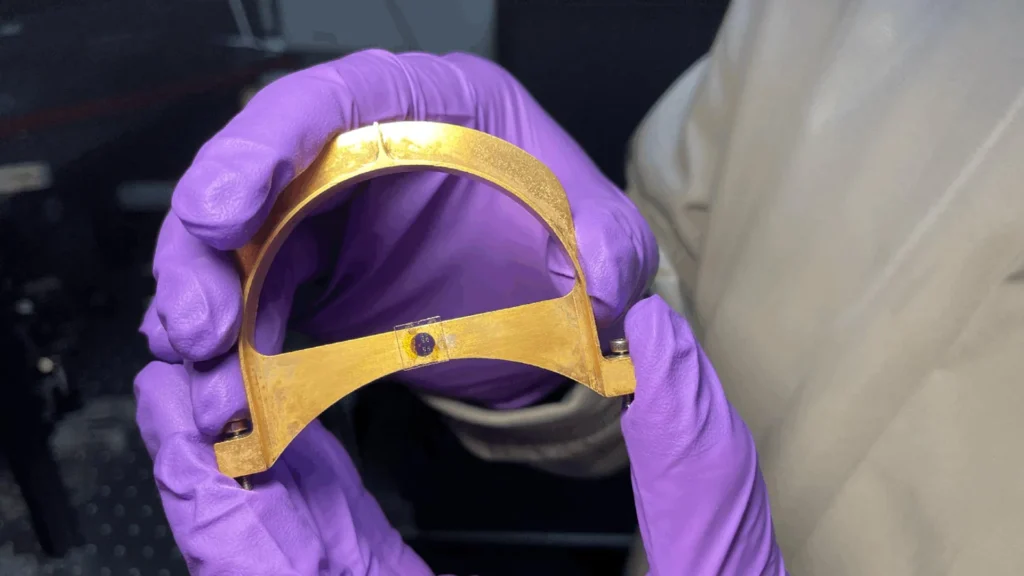
Now, a significant advance emerges from Stanford University, promising to dismantle one of these formidable barriers. Researchers there have engineered a nanoscale optical device capable of functioning robustly at room temperature, a monumental leap forward. This innovative device achieves the critical feat of linking the quantum properties of light (photons) and electrons, a fundamental prerequisite for many envisioned quantum technologies. This breakthrough holds the potential to dramatically alter the trajectory of quantum development, paving the way for smaller, more cost-effective quantum technologies that could, crucially, transmit information over long distances without the need for cumbersome and prohibitively expensive cooling systems. The implications for quantum communication, in particular, are profound, offering a pathway to robust, secure networks previously thought to be decades away from practical implementation.
Bridging the Quantum-Classical Divide at Room Temperature
The core innovation lies in the device’s ability to facilitate entanglement between photons, the elementary particles of light, and electrons. Entanglement, often described by Albert Einstein as "spooky action at a distance," is a quantum phenomenon where two or more particles become linked in such a way that they share the same fate, regardless of the distance separating them. Measuring the property of one entangled particle instantly influences the property of the other, making it a cornerstone for secure quantum communication and powerful quantum computation. Until now, maintaining such delicate quantum connections outside of extreme cryogenic environments has been a formidable scientific challenge, often leading to rapid decoherence – the loss of quantum information due to interaction with the environment.
Jennifer Dionne, a professor of materials science and engineering at Stanford and the senior author of the study published in Nature Communications, emphasizes the nuanced nature of their discovery. "The material in question is not really new, but the way we use it is," Dionne explains. "It provides a very versatile, stable spin connection between electrons and photons that is the theoretical basis of quantum communication. Typically, however, the electrons lose their spin too quickly to be useful." This statement highlights that while the constituent materials might be familiar, the ingenuity lies in their novel configuration and the precise control achieved over their quantum interactions. The ability to stabilize electron spin, a property crucial for encoding quantum information (qubits), at room temperature marks a pivotal moment in the quest for practical quantum systems.
The Architecture of Innovation: Twisted Light and Spin Transfer
At the heart of this groundbreaking device is a sophisticated combination of materials and nanostructuring. It integrates a thin, intricately patterned layer of molybdenum diselenide (MoSe2) with a nanopatterned silicon substrate. Molybdenum diselenide belongs to a class of materials known as transition metal dichalcogenides (TMDCs), which have garnered significant attention in the scientific community for their exceptional optical and quantum properties. These materials exhibit strong light-matter interaction and possess unique electronic band structures, making them ideal candidates for optoelectronic and quantum applications.
The silicon nanostructures play a critical, active role in the device’s functionality by generating what the researchers term "twisted light." Feng Pan, a postdoctoral scholar in Dionne’s lab and the paper’s first author, elaborates on this mechanism: "The silicon nanostructures enable what we call ‘twisted light.’ The photons spin in a corkscrew fashion, but more importantly, we can use these spinning photons to impart spin on electrons that are the heart of quantum computing." This "twisted light" carries orbital angular momentum, a property that can be precisely controlled and transferred to the electrons within the MoSe2 layer. This transfer of angular momentum is what enables the crucial entanglement between light and matter at room temperature, overcoming the rapid spin decoherence that has plagued previous attempts.
Dionne underscores the astonishing scale of these engineered components. "The patterned nanostructures are imperceptible to the human eye, about the size of the wavelength of visible light," she adds. These incredibly small dimensions, on the order of hundreds of nanometers, allow for exquisite control over the interaction between light and the material. "But they help us manipulate photons very precisely to make them spin—to twist them—in a specific direction, for example, up or down," Dionne concludes. This precise manipulation is key to creating and maintaining the quantum states necessary for information processing and transmission.
From Cryogenic Chambers to Everyday Devices: A Simpler Path to Quantum
The ability to use twisted light to entangle with electron spins is fundamental to creating qubits, the basic building blocks of quantum information systems. Unlike classical bits, which can only exist as a 0 or a 1, qubits leverage quantum mechanical phenomena like superposition (being both 0 and 1 simultaneously) and entanglement to process and transmit information in entirely new ways, offering the potential for exponential speedups in computation and unbreakable security in communication.
One of the most persistent and significant challenges facing the development of quantum technologies has been the maintenance of stable quantum states. The delicate nature of quantum information means that even slight interactions with the surrounding environment can cause decoherence, leading to the loss of this valuable information. In many existing quantum systems, extreme cooling is the primary method employed to minimize these environmental interactions, effectively isolating the quantum bits from thermal noise and other disturbances. This necessity for cryogenic temperatures—often below 1 Kelvin, requiring expensive and bulky dilution refrigerators—has been a major impediment to the widespread adoption and scaling of quantum technologies.
Because the new Stanford device operates efficiently at room temperature, it bypasses one of the most formidable obstacles that has limited the widespread use and miniaturization of quantum technologies. This eliminates the need for complex, energy-intensive cooling infrastructure, significantly reducing the operational costs and physical footprint associated with quantum systems. The researchers also highlight the compact design of their device, noting that it is relatively inexpensive and practical compared with many current quantum systems. This dual advantage of room-temperature operation and compact design positions the technology as a strong candidate for future integration into more accessible and deployable quantum devices.
Why the Material Matters: The Power of TMDCs
The selection of TMDC materials, particularly molybdenum diselenide, was a deliberate and critical choice by the research team. These materials are celebrated for their unusual quantum characteristics, which include strong exciton binding energies, direct bandgaps in monolayer form, and valley-spin coupling. These properties make TMDCs highly efficient in converting light into electrical signals and vice versa, and in preserving quantum information encoded in electron spins. The Stanford team collaborated with experts in TMDC materials, Fang Liu and Tony Heinz, to leverage their specialized knowledge and optimize the material’s integration into the device.
"It all comes down to this material and our silicon chip," Pan reiterates, emphasizing the synergy between the two components. "Together, they efficiently confine and enhance the twisting of light to create a strong coupling of spin between photons and electrons. This stabilizes the quantum state that makes quantum communication possible." This powerful combination allows light and matter to interact more strongly and coherently than previously achievable at ambient temperatures, helping to preserve the quantum properties needed for sophisticated communication and computing tasks. The enhanced light-matter interaction effectively creates a protected quantum environment even without the extreme cold, mitigating the effects of decoherence.
Towards Future Quantum Networks and Everyday Applications
The implications of this room-temperature quantum device extend far beyond the laboratory. If further developed and scaled, this technology could contribute to transformative advances across several critical domains. In secure communications, quantum entanglement offers the potential for theoretically unhackable encryption, where any attempt to eavesdrop on a quantum channel would fundamentally alter the quantum state, immediately alerting the communicating parties. This would revolutionize cybersecurity for governments, financial institutions, and individuals.
Beyond communication, the technology could underpin advanced sensing applications, enabling unprecedented precision in medical diagnostics, environmental monitoring, and navigation. In high-performance computing, while this device is primarily focused on communication, the ability to maintain quantum states at room temperature is a stepping stone towards more accessible quantum processors. Furthermore, its potential impact on artificial intelligence could be profound, allowing for the development of quantum machine learning algorithms that can process vast datasets and solve complex optimization problems far more efficiently than classical computers. The global quantum technology market is projected to grow significantly in the coming decade, with analysts estimating it could reach tens of billions of dollars by the early 2030s. Innovations like Stanford’s room-temperature device are crucial for unlocking this market’s full potential by reducing barriers to entry and accelerating practical applications.
The researchers are not resting on their laurels. They are actively engaged in refining the device, exploring additional TMDC materials, and investigating various material combinations that could deliver even better performance and expand its functionalities. A particularly exciting avenue of ongoing research is whether these room-temperature systems might reveal entirely new quantum capabilities that are currently not feasible or even observable under cryogenic conditions.
A longer-term, yet highly ambitious, goal is the seamless integration of devices like this into larger quantum networks. Achieving this vision will necessitate parallel advancements and improvements in a host of supporting technologies, including more efficient light sources, high-speed modulators, ultra-sensitive detectors, and robust quantum interconnects that can link multiple quantum nodes across distances.
Ultimately, the aspiration is to miniaturize quantum components to such an extent that they could be incorporated into everyday electronics, making quantum technology ubiquitous and accessible. While that future remains many years away, requiring continued dedicated research and engineering, the work represents a monumental step toward making quantum technology more practical, affordable, and broadly applicable. Pan’s closing remark, delivered with a smile, encapsulates this long-term vision: "If we can do that, maybe someday we could do quantum computing in a cell phone. But that’s a 10-plus-year plan." This blend of scientific ambition and realistic timelines underscores the profound impact of the Stanford team’s achievement, pushing the boundaries of what is possible in the quantum realm and bringing the promise of a quantum future closer to reality.