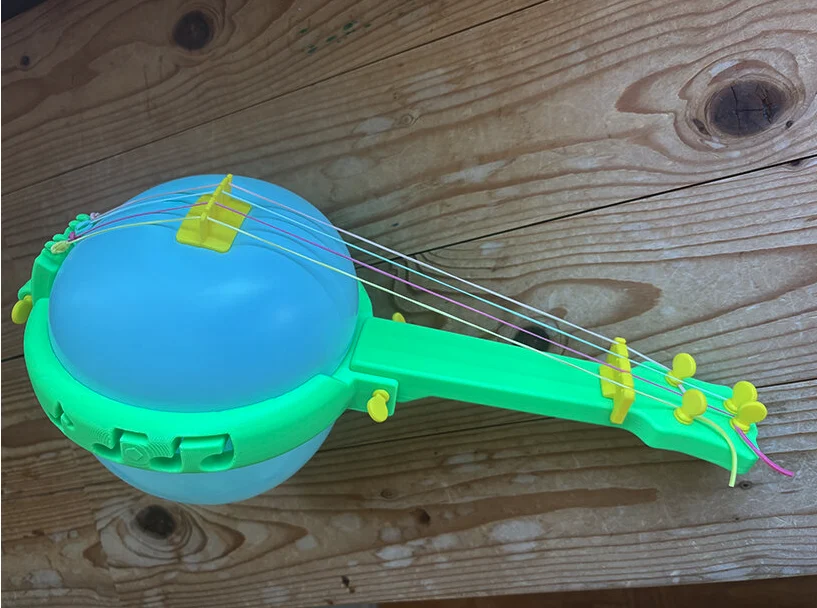
The world of 3D-printed musical instruments continues to expand, with creators pushing the boundaries of what’s possible. While 3D-printed guitars, ukuleles, and violins have graced headlines and stages, a new innovation from Singapore-based design firm Co:Creation Lab introduces a unique twist on a classic string instrument: the Balloon Banjo. This inventive creation reimagines the traditional banjo’s soundbox, replacing the conventional drum-like head with an inflated party balloon, offering a fascinating exploration into the physics of sound and resonance.
This development follows a growing trend of additive manufacturing being employed to create playable musical instruments. Previous notable examples include Olaf Diegel’s intricate "Xenomorph" guitar, a testament to the aesthetic and structural possibilities of 3D printing, and various other stringed instruments demonstrating the technology’s versatility. However, the Balloon Banjo stands out not just for its 3D-printed components but for its innovative approach to acoustic design, integrating an everyday object – a balloon – to fundamentally alter the instrument’s sonic character. This project moves beyond mere replication, venturing into experimental territory to understand how pliable air cavities influence tonal quality.
Understanding the Banjo’s Anatomy
To appreciate the Balloon Banjo’s innovation, it’s helpful to understand the fundamental differences between a banjo and its more common stringed counterpart, the guitar. Banjos typically feature five strings, a distinctive characteristic that contributes significantly to their unique timbre. Unlike a guitar where all strings are attached to the headstock, the banjo’s fifth string originates from the middle of the neck, often secured by a peg located at the fifth fret. This specific string arrangement and its tuning are crucial to producing the bright, ringing sound synonymous with bluegrass and folk music.
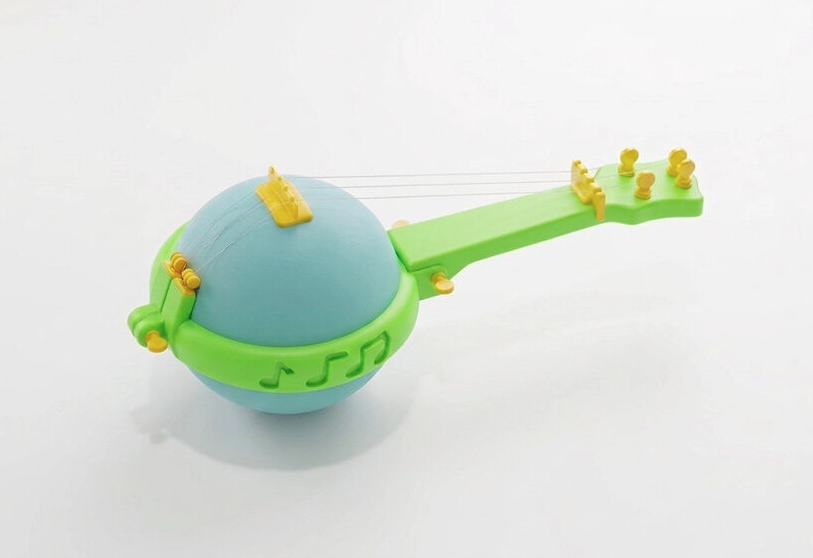
Furthermore, a traditional banjo’s soundboard, or head, is usually made of stretched animal skin or a synthetic material, akin to a drumhead. This taut membrane vibrates when the strings are plucked, amplifying the sound and giving the instrument its characteristic percussive quality. The Balloon Banjo departs from this convention entirely, eschewing traditional materials for a construction that prioritizes experimentation with acoustic principles.
Acoustic Exploration Through 3D Printing and Air
The Balloon Banjo is a DIY instrument constructed from 3D-printed PLA components, an inflated balloon, and strings made from either nylon or fishing line. Co:Creation Lab’s intention was not to create a competition-ready instrument but rather a tangible educational tool for exploring acoustics and the science of resonance. The project’s description highlights the direct relationship between the air within the balloon and the instrument’s sound: "Pluck a string and the note rings inside the balloon. Two things change the sound: how much you inflate the balloon, and how tight you pull the strings. Change the volume of air, change the resonance – and you can feel it happen in your hands." This hands-on approach allows users to directly manipulate acoustic variables and observe their impact on the generated sound.
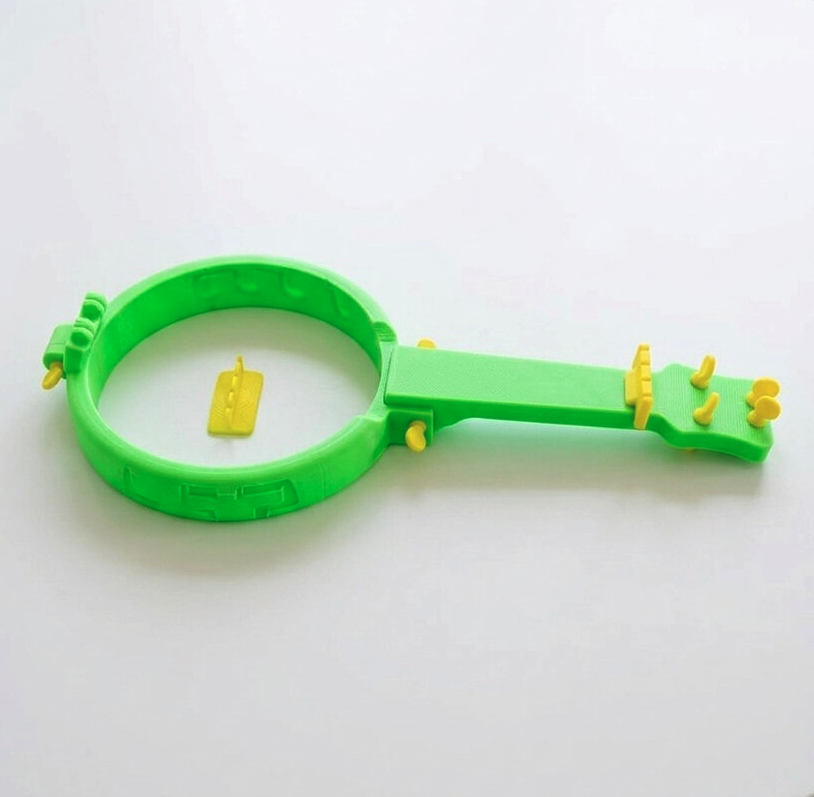
The design of the Balloon Banjo is remarkably modular. It comprises 19 individual pieces, with seven specifically 3D printed. These include the neck, left and right flanges that connect the neck to the soundbox structure, two bridge components that support the strings, and seven pegs along with their corresponding sockets for tuning. The engineering behind these components emphasizes ease of assembly and disassembly, reflecting its experimental nature.
Assembly Without Hardware: A Testament to 3D Printing’s Precision
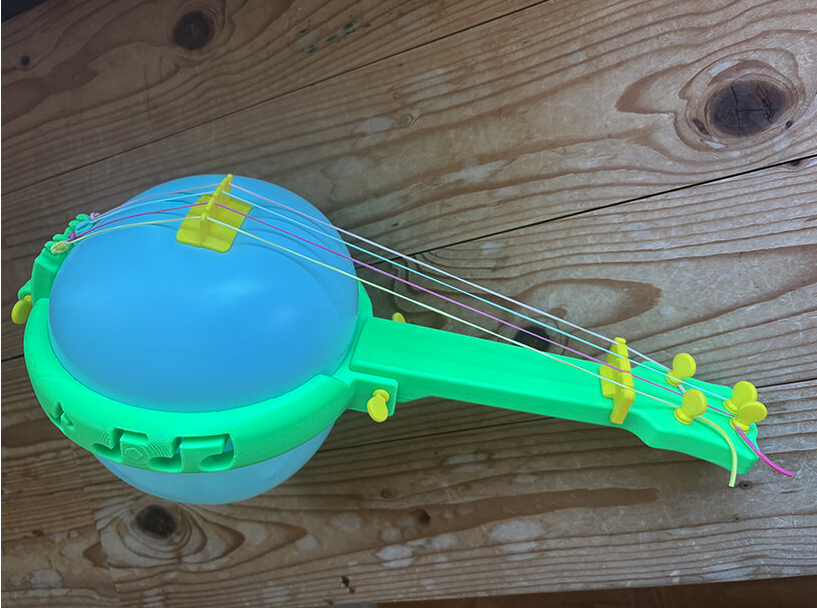
A significant aspect of the Balloon Banjo’s design is its reliance on snap-fit connections, eliminating the need for traditional adhesives or metal hardware. The plastic components are engineered to interlock securely, allowing for a tool-free assembly process. Hand-turned plastic screws facilitate the attachment of the peg sockets to the instrument’s body. This approach not only simplifies construction but also reinforces the instrument’s identity as a reconfigurable scientific toy, intended for repeated assembly, modification, and reassembly. This modularity is a direct benefit of precise 3D printing, enabling complex geometries and interlocking features that would be difficult or impossible to achieve with conventional manufacturing methods.
Technical Specifications and Printing Considerations
For those interested in replicating or modifying the Balloon Banjo, Co:Creation Lab provides a comprehensive technical instruction manual, available in both English and Japanese. The printing process for the PLA components requires approximately 11 hours, with recommended settings including a 0.4 mm nozzle, a 0.2 mm layer height, and 15% infill. However, the pegs and their sockets demand a finer layer height of 0.16 mm. This detail is critical for achieving the necessary fit tolerance. As explained by the creators, printing these specific parts at a coarser resolution could result in them being too tight to assemble or too loose to securely hold the strings, thus compromising the instrument’s playability and tuning stability.
The orientation of the printed neck is also crucial for structural integrity. It is recommended to print the neck flat. This ensures that the layer lines run parallel to the direction of the string tension. If printed upright, the neck could potentially snap along a layer line under the stress of the strings, leading to instrument failure. This attention to detail in printing guidelines underscores the practical engineering involved in the design.
The Science of Sound Amplified
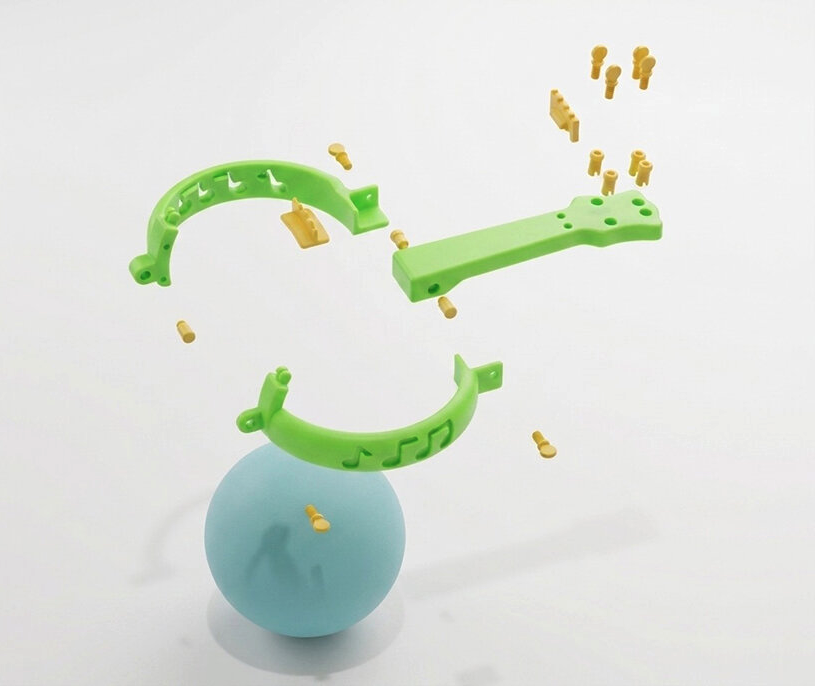
Once assembled, the Balloon Banjo transforms into a dynamic acoustic laboratory. When a string is plucked, the vibrations travel through the bridge and into the 3D-printed frame, ultimately resonating within the inflated balloon. The balloon’s air volume acts as a variable acoustic chamber. By increasing or decreasing the inflation level, users can directly alter the resonance and, consequently, the instrument’s tone. Similarly, adjusting the tension or thickness of the strings provides another avenue for sonic manipulation. This direct correlation between physical adjustments and audible changes makes the Balloon Banjo an engaging tool for understanding fundamental principles of acoustics. As the creators aptly put it, "Change the air, change the sound – a 3D-printable science toy you can actually play."
Target Audience and Accessibility
Co:Creation Lab has positioned the Balloon Banjo as an accessible educational tool, recommending it for children aged six and older. The project’s affordability further enhances its appeal. The design files, instruction manual, and recommended print settings are available for purchase for a modest $7. This low entry cost democratizes access to this innovative educational instrument, making it a viable option for schools, families, and hobbyists interested in STEM education and creative exploration. The inclusion of printable components and digital instructions aligns with the growing ecosystem of accessible maker projects facilitated by readily available 3D printers and digital design resources.
Broader Implications for Musical Instrument Design and Education
The Balloon Banjo represents a significant step in the intersection of digital fabrication, acoustics, and music education. Its design challenges conventional notions of instrument construction by incorporating unconventional materials and emphasizing user-driven experimentation. This approach not only fosters an understanding of scientific principles but also encourages creativity and problem-solving.
The success of such projects could inspire further innovation in the design of musical instruments, particularly for educational purposes. By leveraging 3D printing, it becomes possible to create instruments that are not only customizable and affordable but also designed to teach specific scientific or musical concepts. The Balloon Banjo, for instance, provides a tangible and interactive way to explore wave physics, resonance, and material properties.
Furthermore, the modular and reconfigurable nature of the Balloon Banjo aligns with principles of sustainable design. The ability to print, assemble, disassemble, and modify components reduces waste and extends the lifespan of the product. As 3D printing technology continues to advance, we can anticipate more sophisticated and diverse musical instruments emerging from this exciting field, blurring the lines between art, science, and technology. The Balloon Banjo stands as a testament to the potential of open-source design and additive manufacturing to democratize creativity and learning.
The implications extend beyond mere entertainment or education. Projects like the Balloon Banjo can contribute to a broader understanding of acoustic engineering. By experimenting with different shapes, sizes, and materials for the soundbox – even beyond balloons, perhaps incorporating other flexible or resonant materials – designers and acousticians can gather valuable data on how air cavities influence sound propagation and amplification. This research could, in turn, inform the design of more efficient and sonically richer traditional instruments or even lead to entirely new classes of sound-producing devices. The collaborative and iterative nature of such DIY projects, often shared through online platforms, fosters a rapid cycle of innovation and knowledge dissemination within the maker community and the scientific world.