
The horological landscape is awash with a dizzying array of certifications, accolades, and seals of approval, each vying to imbue luxury timepieces with an aura of prestige, precision, and inherent value. From the venerable COSC chronometer certification and the esteemed Geneva Seal to more contemporary benchmarks like the METAS Master Chronometer, the quest for validation has become a cornerstone of marketing and brand identity in the high-end watch industry. However, a closer examination reveals a complex ecosystem where genuine quality assurance often intertwines with marketing strategies, leading to a landscape that can be both confusing and, at times, questionable for the discerning consumer.
The Proliferation of Quality Marks
The pursuit of external and internal validations has become a defining characteristic of the luxury watch sector. These marks serve as a promise of superior craftsmanship, technical prowess, and aesthetic excellence. Brands invest significant resources in obtaining these certifications, not only to underscore the legitimacy of their products and manufacturing processes but also to differentiate themselves in an increasingly competitive market. The spectrum of these endorsements is broad, encompassing:
- External Certifications: These are typically awarded by independent third parties based on rigorous testing of a watch’s performance, accuracy, or design. Examples include the Contrôle Officiel Suisse des Chronomètres (COSC) for chronometer accuracy, the Geneva Seal (Poinçon de Genève) for finishing and craftsmanship, and design awards like the Red Dot Design Award. Competitions such as the Grand Prix d’Horlogerie de Genève (GPHG) also serve as external validation through their awards.
- Internal Certifications: Many brands have developed their own proprietary seals of quality, essentially bringing the validation process in-house. These internal standards aim to reflect the brand’s unique philosophy and commitment to excellence. Notable examples include Rolex’s "Superlative Chronometer" designation and Patek Philippe’s "Patek Seal," which replaced the brand’s earlier "Quality Hallmark."
Historical Context and Evolution of Standards
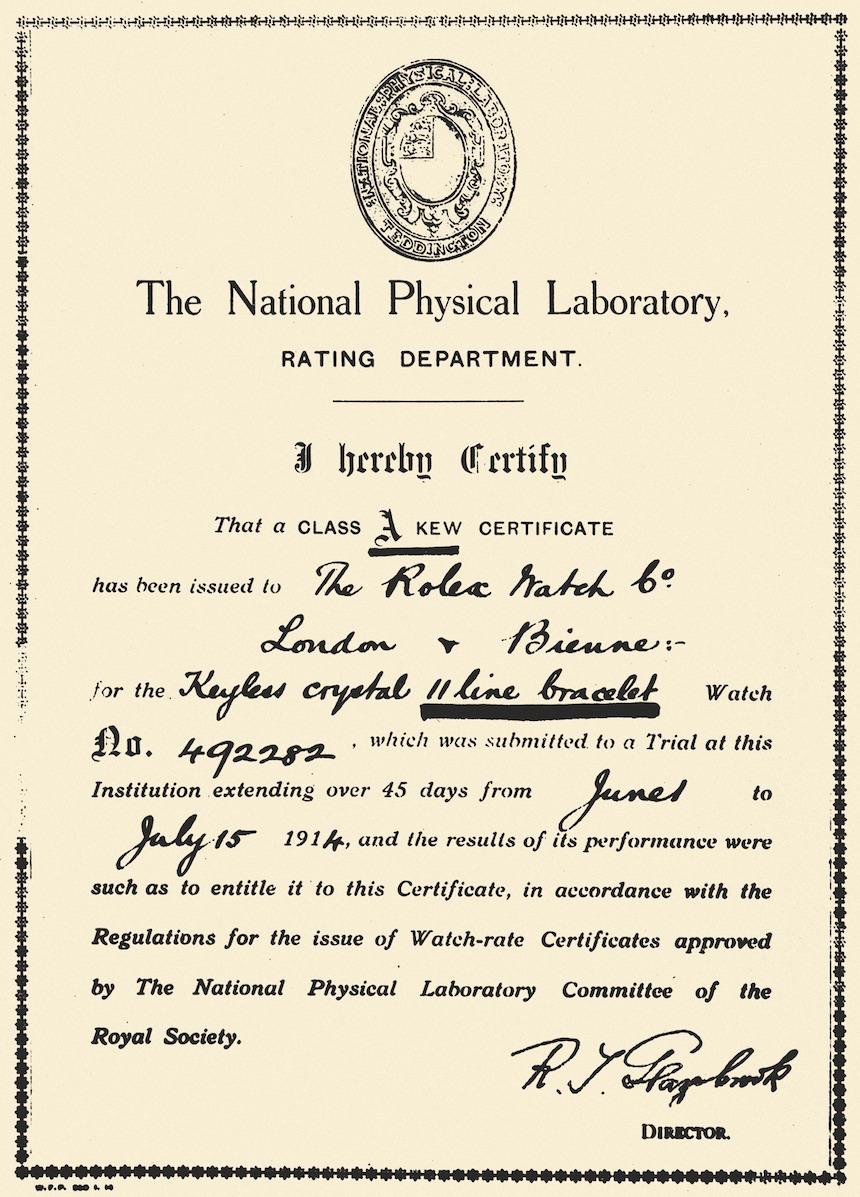
The need for reliable watch certifications emerged as wristwatches transitioned from niche curiosities to widely adopted personal accessories. In the early 20th century, the quest for accuracy was paramount, especially for timepieces used in navigation and scientific observation. Observatories across the globe, such as the Kew Observatory in England, conducted stringent tests to award "chronometer" certificates, a practice that laid the groundwork for modern standards.

The establishment of COSC in 1973 consolidated the efforts of several national chronometer testing bureaus in Switzerland. COSC mandates that tested movements must achieve an average daily rate within -4 to +6 seconds. This standard, while respected, has remained largely unchanged for decades, leading some to question its continued relevance in an era of advanced watchmaking.
The Geneva Seal, with its origins tracing back to 1886, historically focused on the meticulous finishing and assembly of movements and watches manufactured within the canton of Geneva. Its criteria have evolved over time, and while it continues to represent a high level of artisanal skill, its application and interpretation have also been subjects of discussion.
More recently, the industry has seen the emergence of more comprehensive and demanding certifications. The METAS Master Chronometer certification, introduced by Omega in 2014, represents a significant leap forward. It subjects not only the movement but also the cased-up watch to a battery of tests, including extreme magnetic resistance (up to 15,000 gauss), water resistance, power reserve, and automatic winding efficiency, all while maintaining chronometric precision.
Critiques and Controversies in the Certification Arena
Despite the ostensibly noble intentions behind these certifications, the watch industry’s reliance on them has not been without its critics. A recurring theme is the perception that some certifications have become more about marketing than about objective, meaningful quality assurance.
The Grand Prix d’Horlogerie de Genève (GPHG): A "Pay-to-Play" Model?
The GPHG, often dubbed the "Oscars of Watchmaking," is frequently cited as an example of a system where financial considerations can overshadow merit. Critics suggest that the high entry fees and the sheer volume of nominations from a single brand can skew the judging process, creating an environment where participation, rather than pure excellence, is rewarded. The practice of brands submitting multiple entries for the same watch or category, alongside instances of judges having close ties to participating brands, has fueled skepticism about the impartiality of the awards. This has led to a perception among some observers that the GPHG functions less as a pure competition and more as a promotional event where "everyone becomes a winner."
Auction Houses and Brand Manipulation
The role of auction houses in validating watch values has also come under scrutiny. Reports suggest that some luxury watch brands may have discreetly purchased their own timepieces at auction. This practice, if true, could artificially inflate the perceived value and desirability of certain models, thereby bolstering their market standing and the perceived prestige of their certifications. The author’s personal anecdote of encountering a Breguet pocket watch in the brand’s archives, which had previously sold for a significant sum at auction, highlights this concern, suggesting that the high price might have been influenced by the brand’s own market manipulation rather than solely by external demand.
The Patek Philippe Seal: An Internal Benchmark’s Reception
Patek Philippe’s decision to introduce its own "Patek Seal" in 2009, replacing the brand’s long-standing quality hallmark, was met with considerable debate. While Patek Philippe asserted that its internal seal represented a higher standard than the Geneva Seal, the move was viewed by some as an assertion of brand authority over independent verification. The Patek Seal aims to guarantee the brand’s commitment to excellence across all aspects of its watches, from design and production to after-sales service. However, the inherent subjectivity of an internal standard, regardless of its stringency, invites questions about its ultimate impartiality compared to third-party certifications.
The Geneva Seal’s Evolving Role
The Geneva Seal, or Poinçon de Genève, has historically been a mark of exceptional quality and craftsmanship, particularly concerning the finishing and decoration of watch components. Established in 1886, its criteria have been revised to adapt to modern watchmaking techniques and industry practices. However, a key aspect of its certification process involves random sampling. While this method ensures that a representative sample of watches meets the required standards, it means that not every watch bearing the seal is individually inspected. This detail, often unknown to the average consumer, can lead to a misunderstanding of the extent of the guarantee. The author posits that only a minority of consumers are aware of this nuance, which can diminish the perceived robustness of the certification.

The Diminishing Edge of Established Certifications
COSC: A Standard Under Pressure
The COSC chronometer certification, once the undisputed benchmark for accuracy, is facing increasing criticism for its perceived stagnation. The testing protocols, which focus solely on the movement before it is cased, have remained largely the same for decades. This means that a movement could receive COSC certification and then experience issues with accuracy once it is assembled into the final watch, due to factors like magnetic interference or mechanical stress. Furthermore, the fact that only approximately 39% of all exported mechanical watches receive COSC certification, according to COSC data from 2025, suggests that it is not a universally adopted standard, even among high-end manufacturers. The significant proportion of Rolex watches that are COSC-certified (over half of the 2.1 million certified watches in 2025) highlights the brand’s commitment to this standard, but it also underscores that many other luxury brands do not prioritize it.
Red Dot Design Award: A Cautionary Tale
The Red Dot Design Award, while intended to recognize excellence in product design, has also become a point of contention. The author expresses a personal disillusionment with the award, citing a proliferation of "hideous coffee machines, no-name computer mice, and other such nonsense" bearing the Red Dot logo. This suggests that the award may have become too broad in its scope, diluting its prestige and leading consumers to view its presence not as a mark of quality but as a potential red flag, a sentiment that brands seeking to leverage the award may find counterproductive.

The Shining Example: METAS Master Chronometer
In contrast to the perceived shortcomings of older certifications, the METAS Master Chronometer standard has emerged as a strong contender for modern, trustworthy validation. Introduced by Omega and subsequently adopted by a few other brands, this certification offers a more holistic and stringent approach.
Key Features of METAS Certification:
- Comprehensive Testing: METAS subjects the fully assembled watch, not just the movement, to rigorous testing.
- Magnetic Resistance: A standout feature is the certification’s requirement for extreme resistance to magnetic fields, up to 15,000 gauss. This is crucial in today’s technologically saturated environment where magnetic interference is increasingly common.
- Performance Metrics: Tests include accuracy under various conditions, power reserve, water resistance, and the performance of the automatic winding system.
- State-Operated Institution: METAS is a Swiss federal institution, lending an air of official authority and impartiality to its certifications, a contrast to self-imposed brand seals.
- Random Sampling and Process Certification: Similar to the Geneva Seal, METAS certifies the quality control process of the brand, with random checks of randomly selected watches ensuring ongoing adherence to standards. This offers a balance between efficiency and thoroughness.
The METAS Master Chronometer certification is seen by many as a contemporary standard that aligns with the expectations of today’s consumers for robust, transparent, and technologically relevant quality assurance. Its adoption, though still relatively limited in quantity, signals a potential direction for the industry.
The Power of Narrative: Storytelling Over Seals
Beyond technical certifications, the marketing power of a compelling narrative cannot be overstated in the watch industry. Brands often leverage the stories behind their timepieces – their historical significance, their association with specific events or individuals, or their intended purpose – to create an emotional connection with consumers.

Omega’s "Moonwatch," for instance, has achieved iconic status not solely due to its technical specifications or certifications, but because of its storied association with the Apollo missions. Even with subsequent iterations featuring different movements, cases, or dials, the powerful narrative of lunar exploration continues to drive sales. This highlights a fascinating aspect of consumer psychology: for many, the story and the aspirational connection to a historical event or a specific use case can be more persuasive than a technical certification. The question then arises: do modern buyers of these watches truly care about the minutiae of their certifications, or are they primarily buying into the legend?
The Road Ahead: Modernization and Transparency
The current landscape of luxury watch certifications presents a mixed bag. While genuine efforts are made to guarantee quality, the proliferation of marks, coupled with perceived marketing overreach and a lack of transparency in some cases, can lead to confusion and skepticism.
The industry faces a critical juncture:
- Modernizing Standards: Existing certifications, like COSC, need to evolve to reflect contemporary technological advancements and the demands of modern watch wearers, particularly concerning magnetic resistance and comprehensive testing of the cased-up watch.
- Enhancing Transparency: Brands and certification bodies must prioritize clear communication about what each certification entails, including its limitations and testing methodologies. Consumers should not have to be horological experts to understand what a particular seal signifies.
- Balancing Marketing and Substance: While marketing is an indispensable component of the luxury watch business, it should not overshadow the fundamental integrity of the certifications themselves. Awards and accolades should genuinely reflect merit, and internal seals must be demonstrably rigorous and consistently applied.
- Embracing Independent Verification: The adoption of robust, independent, and transparent certifications like the METAS Master Chronometer could serve as a model for the future, offering consumers a tangible and trustworthy assurance of quality.
Ultimately, for the Swiss watch industry to maintain its esteemed position, a concerted effort towards greater clarity, integrity, and forward-thinking standards in its certification processes will be essential. The aim should be to build enduring trust with consumers, ensuring that the seals of approval on luxury timepieces are not merely decorative emblems but genuine reflections of unparalleled craftsmanship and enduring value.