A pioneering study led by researchers from the Massachusetts Institute of Technology (MIT) and the University of Texas Southwestern Medical Center has fundamentally reshaped the understanding of how airborne infectious diseases, particularly tuberculosis (TB), spread in indoor environments. Published in mSphere, the findings highlight that the specific, localized patterns of airflow—rather than merely the overall ventilation rate—are pivotal in predicting and controlling the transmission of respiratory pathogens. This breakthrough offers crucial insights for public health strategies, building design, and the future of infectious disease research, addressing a significant gap in current prevention paradigms.
The Enduring Global Threat of Tuberculosis
Tuberculosis remains a formidable global health challenge, consistently ranking as a leading cause of death from a single infectious agent. According to the World Health Organization (WHO), TB claims over 1.3 million lives annually, with an estimated 10.6 million people falling ill with the disease in 2022 alone. The bacterium Mycobacterium tuberculosis typically attacks the lungs but can affect other parts of the body, such as the kidney, spine, and brain. The disease spreads through the air when people with active pulmonary TB cough, sneeze, or speak, expelling tiny droplets containing the bacteria into the environment. While often treatable with a six-month course of antibiotics, the emergence of drug-resistant strains, particularly multidrug-resistant TB (MDR-TB) and extensively drug-resistant TB (XDR-TB), presents a growing crisis, complicating treatment and increasing mortality rates. Asymptomatic spreading, where individuals may carry and transmit the bacteria without displaying overt symptoms, further exacerbates the challenge of containment, making the precise mechanisms of transmission an urgent area of scientific inquiry.
Despite its pervasive threat, the nuanced influence of environmental factors, especially airflow dynamics, on TB transmission has remained largely enigmatic. Prior research into infectious disease transmission has predominantly concentrated on broad population-level epidemiological assessments or detailed individual immune responses. While valuable, these approaches have often overlooked the critical intermediary—the physical environment—and how elements like air movement and mixing within enclosed spaces directly facilitate or impede pathogen spread. This lacuna in understanding has hindered the development of targeted, physics-informed interventions.
A Novel Interdisciplinary Approach Illuminates Transmission Pathways
To bridge this knowledge gap, an interdisciplinary consortium, bringing together expertise in fluid physics, computational modeling, microbiology, and animal transmission studies, embarked on an ambitious project. The team, featuring researchers from MIT’s Fluid Dynamics of Disease Transmission Laboratory and the University of Texas Southwestern Medical Center, meticulously combined animal transmission experiments with advanced quantitative particle tracking and sophisticated flow modeling. Their objective was to unravel how specific laboratory environments either inadvertently promote or effectively mitigate the spread of respiratory infectious diseases like TB.
The study’s most significant revelation centers on the primacy of local airflow patterns over generalized ventilation rates. Key factors such as the design of a space—including the precise locations of air leakage, inflow, and outflow points—and even the subtle forces generated by an infected individual’s exhalations were identified as decisive in predicting infectious transmission. This discovery challenges conventional wisdom that often prioritizes overall air changes per hour (ACH) as the sole metric for assessing indoor air quality and infection risk.
Lydia Bourouiba, the Japan Steel Industry Chair Professor at MIT and faculty lead of the Fluid Dynamics of Disease Transmission Laboratory within the Institute for Medical Engineering and Science (IMES), underscored the profound implications of these findings. "The local airflow patterns turn out to be pivotal," Professor Bourouiba stated. "Our team’s findings provide some of the clearest evidence I’m aware of showing the importance of accounting for [airflow] inhomogeneity and its effects when designing for airflow detailed patterns. This insight is critical when building or retrofitting an indoor space to mitigate airborne transmission, or when designing an airborne transmission study." Her remarks highlight a paradigm shift, advocating for a granular understanding of air movement rather than a superficial one.
This research represents a crucial step in bridging the divide between highly controlled laboratory infectious disease studies and the complex realities of pathogen spread in the real world. The team expresses optimism that their insights will transcend their specific model system, demonstrating the universal importance of flow physics in architectural and engineering designs aimed at preventing the indoor dissemination of airborne diseases.
Resistance to Change and the Need for Empirical Evidence
Despite the stark lessons learned from recent global pandemics and epidemics, there has been a notable reluctance to systematically integrate airflow dynamics into routine infectious disease prevention protocols. Professor Bourouiba observed, "Despite recent pandemics and epidemics, there is still resistance to incorporating airflow in routine infectious disease prevention tools. Infrastructure could be retrofitted at relatively low cost, but the paucity and difficulty of gathering direct evidence prevents broader adoption of flow physics as a tool for indoor health. This study helps provide such evidence." This underscores the critical need for robust, empirically derived data, such as that provided by this study, to overcome inertia and drive policy changes.
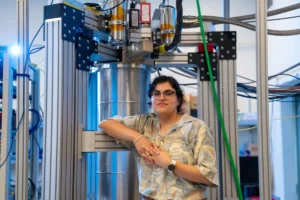
The interdisciplinary team behind this landmark paper included Yash Kulkarni, a postdoc at IMES, who spearheaded the fluid and aerosol physics components; Kubra Naqvi, the lead author and a postdoc at UT Southwestern; Michael Shiloh, a professor at UT Southwestern, who led the multiyear effort to reestablish a classic tuberculosis transmission model; Hui Ouyang, an assistant professor of aerosol engineering at UT Dallas; and several other talented PhD students, research associates, instructors, and professors from UT Southwestern and the University of Minnesota. Their collaborative effort exemplifies the power of combining diverse scientific disciplines to tackle intractable public health challenges.
Opening the "Black Box" of Host-to-Host Transmission
The process of disease transmission begins when an infected individual exhales, talks, coughs, or sneezes, launching a plume of tiny microdroplets and bioaerosols into the air. These microscopic particles, if laden with pathogens, can remain suspended for extended periods, traveling significant distances and potentially infecting others who inhale them. The survival and infectivity of these pathogens in the air are intricately influenced by environmental factors such as temperature, humidity, and, critically, ventilation.
The historical understanding of TB transmission has evolved over centuries. In 1882, the German physician and microbiologist Robert Koch famously identified Mycobacterium tuberculosis as the causative agent of TB, laying the groundwork for the germ theory of disease and establishing an animal model for studying TB pathogenesis. Decades later, researchers built upon Koch’s legacy, definitively demonstrating the airborne transmission of tuberculosis between humans and animals. These seminal experiments, conducted in simpler, less controlled environments, were foundational.
However, replicating these early experiments in today’s highly regulated, biosafety-grade facilities has proven exceedingly difficult. Modern containment and ventilation requirements, while essential for safety, inadvertently introduce complex airflow dynamics that can dramatically alter experimental outcomes, masking the true mechanisms of transmission. Professor Bourouiba characterized this challenge as a "black box," stating, "Host-to-host transmission is an obligatory evolutionary phase of respiratory pathogens, yet it has been considered too intractable or complex to be amenable to systematic investigation, hence is commonly relegated to a black box. Our work opens that black box."
To systematically quantify the impact of local airflow patterns on infectious disease transmission, the researchers meticulously redesigned and modeled the historical studies for contemporary high-containment laboratory facilities. This involved a precise characterization of every aspect of the experimental environment, including the seal integrity of compartments, the precise locations of air inflow and outflow, and the pathways for exhaust. They then quantified the release and dispersal of tracer particles and bacteria-laden particles. In their experimental setup, tracer particles and live bacteria were released into one compartment, and their recovery was measured from air sampled in an adjacent compartment under varying airflow rates, distinct design configurations, and controlled leak scenarios.
The MIT team performed extensive computational fluid dynamics (CFD) simulations, which were rigorously benchmarked against the real-world particle release experiments. The results were striking, revealing the profound importance of seemingly minor details, such as the presence and location of leakage paths. Yash Kulkarni elucidated this critical finding: "Even a small leak could short-circuit the airflow by drawing fresh air directly toward the exhaust, rather than drawing contaminated air across the containment chambers." This phenomenon, known as short-circuiting, can create localized zones of high pathogen concentration despite an overall high ventilation rate, rendering conventional ventilation metrics misleading.
Advancing Tuberculosis Research and Broader Public Health Implications
The systematic definition of how airflow and environmental design influence biological exposure has had immediate and profound implications for TB research. "By systematically defining how airflow and design influence biological exposure, we were ultimately able to restore transmission and create a system that can now be used to ask fundamental questions about the bacterial, host, and environmental factors that determine tuberculosis spread," said Kubra Naqvi. This restored experimental fidelity allows scientists to delve deeper into the complex interplay between pathogen, host, and environment, opening new avenues for understanding TB pathogenesis and developing novel interventions.
The journey to reestablish this critical animal model was a testament to scientific perseverance. Michael Shiloh recounted the challenges: "I began working to reestablish this seminal TB animal transmission model nearly 10 years ago, and it proved far more challenging than I anticipated. I hope this work serves as a reminder that meaningful scientific advances often require patience and perseverance." His experience underscores the arduous nature of pioneering research and the dedication required to push the boundaries of scientific understanding.
Professor Bourouiba emphasized the broader implications for scientific collaboration and standardization. "This work illustrates how crucial it is to support synergistic collaborations integrating complementary disciplines to tackle research bottlenecks—and to standardize reporting norms across laboratories," she stated. She further elaborated on the potential for variability: "If different labs have varying airflow patterns from uncontrolled leaks or seal details, that physical variability can overwhelm the biological signals researchers seek. Beyond its foundational impact for TB transmission studies, our work shows that opening the black box of transmission provides mechanistic insights: Detailed airflow pattern control can enhance or mitigate airborne transmission—making it exploitable as a prevention measure in crowded gathering spaces."
Transforming Indoor Environments for Health and Safety
The findings from this study are poised to trigger a significant reevaluation of indoor air quality guidelines and architectural design principles. For decades, the focus on "sick building syndrome" and general indoor air quality has often revolved around carbon dioxide levels and overall air changes. This research pivots that focus towards the intricate dance of air particles and pathogens, advocating for a more sophisticated, physics-informed approach.
Implications for Public Health and Policy:
- Hospitals and Healthcare Facilities: Particularly critical for TB and other airborne diseases, these findings could lead to redesigned isolation rooms, waiting areas, and operating theaters, ensuring that air movement actively dilutes and removes pathogens rather than recirculating them.
- Schools and Universities: High-density environments where children and young adults spend significant time. Improved airflow design could reduce outbreaks of common respiratory illnesses, including influenza, RSV, and future pandemics.
- Workplaces and Public Spaces: Offices, concert halls, transportation hubs, and commercial establishments could implement targeted airflow strategies to enhance safety for occupants. This might involve intelligent HVAC systems that adapt to occupancy levels and real-time air quality data.
- Residential Buildings: While more challenging to implement on a large scale, principles of optimal local airflow could inform ventilation guidelines for multi-unit dwellings, particularly in areas with high infectious disease burdens.
- Global Health Initiatives: For countries grappling with high TB prevalence, this research provides a cost-effective pathway to mitigate transmission through intelligent infrastructural improvements, potentially saving millions of lives.
Impact on Architecture and Engineering:
- Building Codes and Standards: The study provides a scientific basis for updating building codes to incorporate specific local airflow pattern requirements, moving beyond generic ventilation rates.
- HVAC System Design: Engineers will need to design heating, ventilation, and air conditioning systems with a deeper understanding of fluid dynamics, considering not just temperature and humidity but also pathogen dispersal.
- Retrofitting Existing Structures: Many existing buildings can be retrofitted with relatively low-cost modifications, such as strategically placed fans, improved sealing, or redesigned vents, to optimize local airflow patterns.
- Sustainable Design: Integrating these principles into sustainable building design can create healthier environments without necessarily increasing energy consumption, through smart air management.
Future Research Directions:
- Other Airborne Pathogens: The methodology developed can be applied to study the transmission of other respiratory viruses, including coronaviruses (SARS-CoV-2), influenza viruses, and common cold viruses, providing a universal framework for understanding airborne spread.
- Real-world Validation: Future studies will likely focus on validating these lab-based findings in real-world settings, using sensors and modeling to monitor airflow in diverse public spaces.
- Personalized Protection: Understanding individual-level airflow dynamics around a person could lead to more effective personal protective equipment (PPE) design and usage guidelines.
This monumental research was made possible, in part, by the generous support of the National Institutes of Health, the National Science Foundation, the Burroughs Wellcome Fund, MathWorks, and the Translational Research Institute for Space Health. Their investment in fundamental scientific inquiry has yielded insights that promise to reshape our approach to infectious disease prevention and create healthier, safer indoor environments for communities worldwide. The "black box" of airborne transmission has been opened, revealing a path forward grounded in the intricate physics of air, offering a powerful new tool in the ongoing battle against infectious diseases.