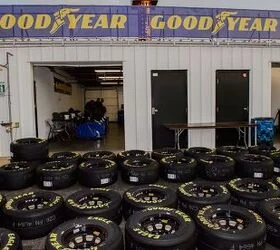
The landscape of the North American tire manufacturing industry is undergoing a profound transformation, marked by a wave of factory closures and operational ramp-downs by prominent global players. This strategic recalibration, driven by shifting market demands, economic pressures, and evolving automotive technologies, is reshaping the competitive dynamics and prompting questions about the future of domestic tire production. Major companies including Goodyear, BFGoodrich, Bridgestone, Michelin, Sumitomo, and Yokohama have all announced or implemented the closure of production facilities across North America, signaling a significant departure from past manufacturing strategies.
This trend, first highlighted in a recent report by Automotive News, suggests a broader industry-wide pivot away from traditional, high-volume manufacturing towards a more specialized and premium-focused market. The underlying causes are multifaceted, encompassing the rise of budget-friendly tire brands, primarily from Asia, and the changing priorities of both automakers and consumers.
The Shifting Sands of Consumer Demand and Automaker Priorities
For decades, established tire brands built their reputations on quality, performance, and brand recognition, often adorning new vehicles straight from the factory floor. However, the economic realities of recent years have amplified consumer price sensitivity. A significant segment of the driving public, not necessarily automotive enthusiasts, prioritizes cost savings over nuanced performance metrics like cross-climate grip or advanced compound technology. These consumers, seeking to minimize expenditure, are increasingly opting for more affordable tire alternatives, a trend exacerbated by prevailing economic conditions.
This consumer behavior directly impacts how tire manufacturers allocate resources. While premium tires offer superior performance, durability, and technological advancements—often the result of substantial investment in research and development—their higher price point makes them less accessible to a broad market segment. Consequently, many legacy brands find themselves in a precarious position: their traditional customer base is shrinking, while new competitors are successfully capturing the lower end of the market with aggressive pricing strategies.
Automakers, meanwhile, are also driving changes in tire specifications. The relentless pursuit of regulatory compliance, particularly concerning fuel efficiency and emissions standards, necessitates tires with exceptionally low rolling resistance. Furthermore, the increasing prevalence of electric vehicles (EVs) presents unique challenges. EVs, with their substantial weight and instant torque, demand tires capable of handling increased loads while maintaining low rolling resistance to maximize range. This complex interplay of requirements often pushes automakers towards specialized, high-performance tires, further influencing the production strategies of tire manufacturers.
A Chronicle of Closures and Strategic Realignment
The recent wave of plant closures is not an isolated phenomenon but rather a culmination of evolving market forces. While specific dates and detailed reasons vary, the overarching narrative points to a strategic decision by major tire companies to streamline operations and refocus their manufacturing capabilities.
- Goodyear: The company has been a notable example, with its CEO Mark Stewart publicly addressing the closure of its Fayetteville, North Carolina, plant. Stewart indicated that the profit margins on budget tires for mainstream vehicles were insufficient, leading Goodyear to pivot towards higher-margin segments such as all-terrain, oversized, and performance tires. This strategic shift aligns with a broader industry trend of prioritizing specialized applications over mass-market production.
- Michelin: While Michelin has historically enjoyed strong profitability, even this industry giant has not been immune to market pressures. The company, along with others, has experienced declines in business partly due to reduced vehicle production by automakers and supply chain disruptions stemming from regional conflicts. Michelin’s strategy, like Goodyear’s, appears to be leaning more heavily into premium and specialized tire segments.
- Bridgestone, BFGoodrich, Sumitomo, and Yokohama: These companies have also contributed to the tally of North American plant closures or announced operational downsizing. Yokohama, for instance, closed its Salem, Virginia, facility, citing declining demand for smaller-diameter tires and the site’s outdated infrastructure. Despite reporting stable growth and record profit margins, the company’s decision underscores the ongoing rationalization of production capacity.
The timeline of these closures, spanning the last two years, indicates a sustained period of strategic reassessment within the industry. This period has seen a marked increase in announcements of facility shutdowns or gradual phase-outs.
The Rise of Specialized Tires and Regulatory Influence
The evolution of tire technology has been significant. Today’s budget tires often surpass the performance of premium tires from a generation ago. However, the gap between mid-tier and top-tier products has widened considerably, largely due to sustained R&D investments by leading manufacturers. This has led many premium brands to concentrate their efforts on the high-performance and specialty tire markets.
This focus on specialization is further amplified by evolving regulations. In California, for example, the Energy Commission is considering new rules that would mandate replacement tires to possess the same low rolling resistance as the original equipment (OE) tires. While ostensibly aimed at reducing emissions, such regulations inherently favor the manufacturers of the original tires, potentially creating a protected market for these specialized products. This dynamic incentivizes tire companies to develop and produce advanced, low-rolling-resistance tires for OE applications, often at the expense of the broader replacement market.
The elimination of spare tires by many automakers has also played a role. As vehicle designs prioritize weight reduction and space optimization, the traditional spare tire is becoming increasingly rare. This shift means that tire manufacturers are losing a significant segment of their replacement market, forcing them to adapt by focusing on tires for new vehicles and the burgeoning EV market.
Economic Pressures and Global Competition
The tire industry operates within a globalized economy, making it susceptible to a range of economic factors. Beyond the direct competition from Asian manufacturers, several other economic forces are at play:
- Global Supply Chain Disruptions: Regional conflicts and geopolitical tensions have led to significant disruptions in global supply chains, impacting the availability and cost of raw materials essential for tire production.
- Automaker Production Slowdowns: Fluctuations in new vehicle sales, driven by factors like consumer demand, economic uncertainty, and production constraints (e.g., semiconductor shortages), directly affect the volume of OE tires required by automakers.
- Inflationary Pressures: Rising costs of labor, energy, and raw materials put pressure on manufacturers to either absorb these costs, leading to reduced profit margins, or pass them on to consumers, potentially alienating price-sensitive buyers.
These economic headwinds create a challenging environment for tire manufacturers, compelling them to seek efficiencies and optimize their operational footprints. The closure of North American plants can be seen as a response to these pressures, allowing companies to consolidate production, reduce overhead, and focus on more profitable market segments.
National Security Blind Spots: The Case of Domestic Tire Production
While the U.S. government frequently highlights the strategic importance of domestic production in sectors like semiconductors, battery manufacturing, and advanced data collection, the issue of tire manufacturing appears to have received less attention. This is particularly noteworthy given the historical significance of tire production. During World War II, rubber rationing was a critical concern, underscoring the strategic nature of this industry.
The current reliance on imported tires or components, coupled with the dwindling number of domestic manufacturing facilities, raises questions about national resilience. Should geopolitical events or widespread supply chain disruptions occur, the ability of the United States to meet its domestic tire needs could be compromised. This potential vulnerability, despite being framed as a matter of national security in the past, seems to be a "blind spot" in current policy discussions.
The Path Forward: High Margins or Market Saturation?
The future of the North American tire industry hinges on the ability of manufacturers to navigate these complex dynamics. The prevailing strategy of focusing on higher-margin, specialized tires appears to be the preferred route for many legacy brands. This approach allows them to leverage their R&D capabilities and cater to the demands of premium vehicle segments and emerging technologies like EVs.
However, this strategy comes with its own set of challenges. By vacating the lower end of the market, these companies are ceding ground to upstart competitors who are adept at serving price-sensitive consumers. If the automotive industry continues its trajectory of lower production volumes and higher profit margins, premium tire brands will need to right-size their operations accordingly. The alternative—attempting to compete directly in the increasingly saturated budget tire market—presents a formidable and potentially less profitable challenge.
The ongoing consolidation and strategic shifts within the North American tire industry underscore a fundamental reevaluation of manufacturing priorities. The era of high-volume, mass-market tire production in the region may be drawing to a close, replaced by a more targeted approach focused on specialized products and higher profit margins. The long-term implications for consumers, the broader automotive ecosystem, and national industrial resilience remain to be seen.