XPeng’s robotics division has achieved a significant financial milestone, raising over $900 million in a funding round that values the unit at more than $6.3 billion. The Chinese electric vehicle (EV) manufacturer announced this achievement today, touting it as the largest single-round private financing event in the history of China’s embodied artificial intelligence (AI) industry. This substantial investment is earmarked to accelerate the mass production of XPeng’s advanced IRON humanoid robot, with a target launch by the end of 2026. This ambitious timeline positions XPeng to potentially outpace competitors, including Tesla’s ongoing development of its Optimus robot.
A Landmark Funding Round and Strategic Restructuring
The substantial financing round was spearheaded by IDG Capital, a prominent venture capital firm. The investment also saw participation from Gaorong Ventures and received strategic backing from tech giants Tencent and Alibaba. XPeng has framed this funding as a definitive endorsement of its "leadership in Physical AI" and its "ability to scale production." Of the total funds raised, approximately $600 million originates from external investors, with an additional $200 million contributed by an XPeng subsidiary and $100 million from the company’s leadership.
This capital infusion coincides with a strategic corporate restructuring. Over the next 18 months, XPeng plans to spin off its robotics assets, intellectual property, and personnel into a distinct, standalone subsidiary. While XPeng will maintain approximately 82% ownership of this new entity, allowing it to remain consolidated on the group’s financial statements, the move grants the robotics division a separate market valuation. This strategic maneuver underscores the perceived value and future potential of XPeng’s AI and robotics ventures. In a related development, XPeng CEO He Xiaopeng assumed direct oversight of the robotics business in June 2026, signaling a heightened focus and commitment from the top leadership.

Understanding the XPeng IRON Humanoid Robot
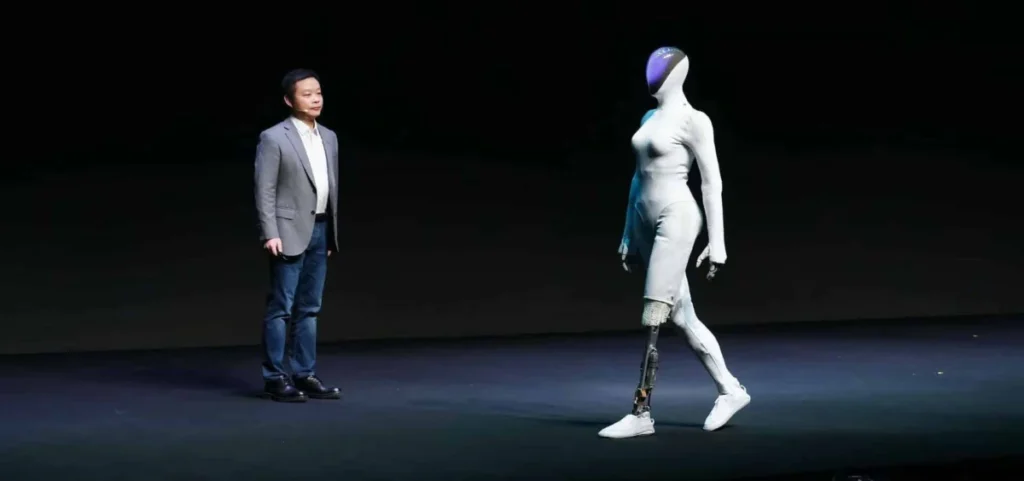
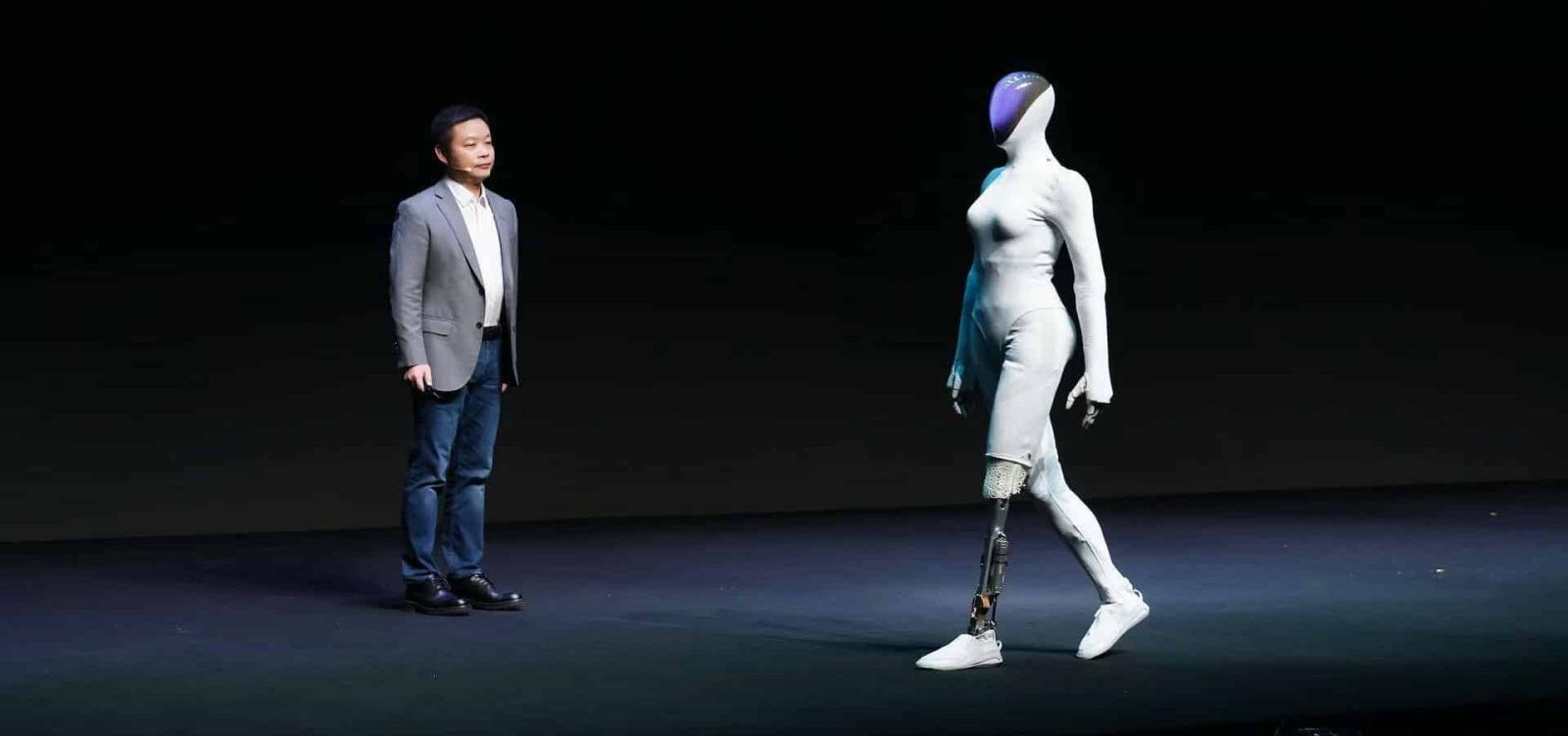
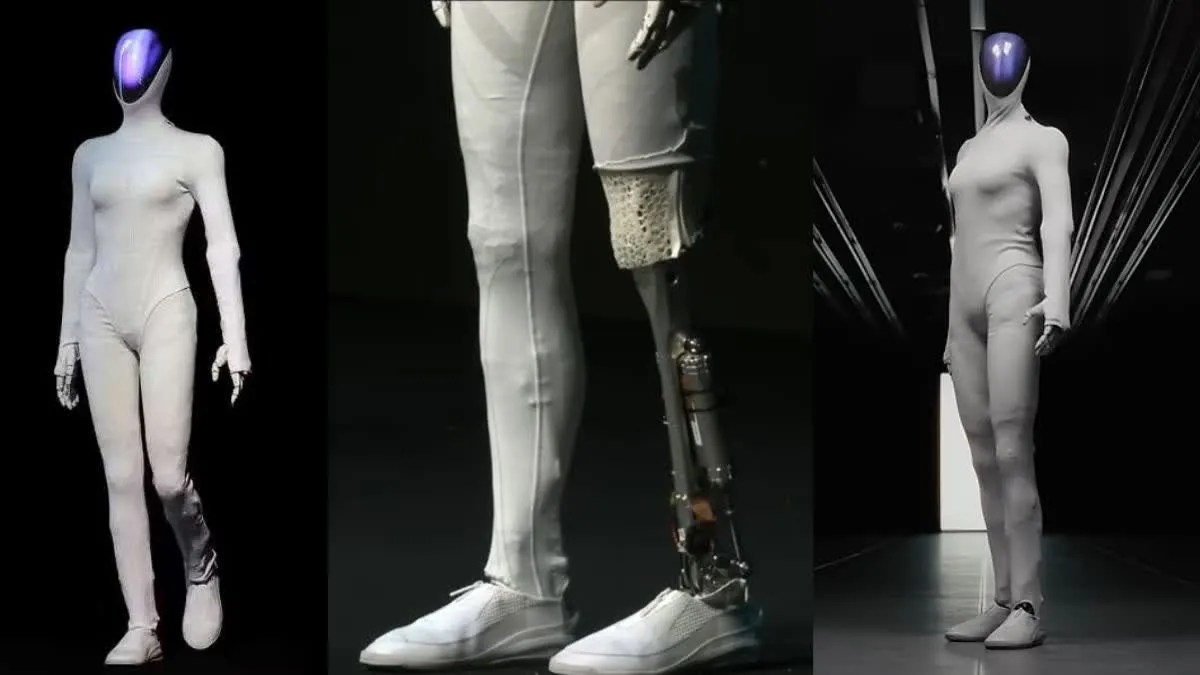
The XPeng IRON humanoid robot was first unveiled at the company’s AI Day event in November 2025. During its debut, the robot’s exceptionally fluid and human-like gait captivated audiences, leading some online viewers to speculate that a person was hidden within a costume. In a dramatic demonstration to counter these claims, CEO He Xiaopeng publicly revealed the intricate wiring beneath the robot’s leg, showcasing the sophisticated engineering involved.
The hardware underpinning the IRON robot is demonstrably ambitious. It boasts an impressive 76 degrees of freedom throughout its body, with each hand equipped with 21 degrees of freedom. This extensive articulation is encased within what XPeng describes as a "fully enclosed flexible lattice structure." This advanced synthetic skin is engineered to strike a critical balance between ensuring the robot’s safety and achieving a natural, human-like aesthetic.
On the computational front, the IRON robot is powered by three of XPeng’s proprietary Turing AI chips, collectively delivering a processing power of 2,250 TOPS (Trillions of Operations Per Second). This formidable computing capacity enables the robot to run XPeng’s cutting-edge "Physical AI" foundation model directly on-device. According to XPeng, this integration allows the IRON robot to "autonomously perform complex tasks without remote operation." This claim of on-device autonomy is particularly noteworthy, as many competing humanoid robot demonstrations rely on human teleoperation. The ability of IRON to operate independently will be a key area of scrutiny and validation once the robots are deployed in real-world scenarios.
Leveraging Automotive Expertise for Robotics Manufacturing
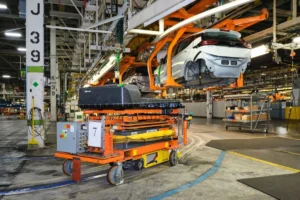
A central tenet of XPeng’s strategy is its assertion that it can apply "automotive-grade quality standards and large-scale mass production" methodologies to the manufacturing of humanoid robots. This advantage is derived from the established supply chain and manufacturing infrastructure that XPeng has meticulously developed for its electric vehicle production.
XPeng’s recent performance in the automotive sector provides a strong basis for this claim. In the second quarter of 2026, the company reported vehicle deliveries totaling 103,295 units, representing a significant 64.8% increase compared to the previous quarter. This demonstrates XPeng’s current capability in scaling hardware production at volume. The robotics division is reportedly targeting a monthly production capacity exceeding 1,000 IRON units. Furthermore, XPeng has articulated an ambitious long-term goal of producing 1 million humanoid robots by 2030.
The roadmap for the IRON robot’s market entry is clearly defined. Mass production is slated to commence by the end of 2026, with initial deployments expected within XPeng’s own retail stores and corporate campuses. Following this internal rollout, an official public launch is anticipated in 2027, with deliveries commencing in both domestic Chinese markets and select international territories.
The Broader Implications of XPeng’s Bold Move
XPeng’s substantial investment and aggressive timeline for its humanoid robot program signal a significant shift in the company’s strategic focus, extending beyond its core electric vehicle business. The success of this venture could have far-reaching implications for the broader robotics industry, particularly in the burgeoning field of embodied AI.
By leveraging its existing automotive manufacturing prowess, XPeng aims to circumvent common production bottlenecks that have plagued other advanced robotics projects. The ability to scale production efficiently and maintain rigorous quality control, honed through years of EV manufacturing, could provide XPeng with a critical competitive edge. This approach suggests a pragmatic, industrialized pathway to bringing complex humanoid robots to market, potentially accelerating their adoption across various sectors.
The significant funding secured from major investment firms and strategic partners like Tencent and Alibaba highlights the immense market confidence in XPeng’s vision. This financial backing not only fuels the research and development necessary for advanced robotics but also validates the potential for embodied AI to become a significant economic driver. The focus on on-device autonomy for the IRON robot, if successfully realized at scale, could redefine the capabilities and applications of humanoid robots, moving them from novelties to indispensable tools.
The comparison with Tesla’s Optimus program is inevitable and instructive. While both companies are pursuing similar technological frontiers, XPeng’s announcement of a substantial funding round and a concrete mass production timeline suggests a potentially faster pace of development and market entry. This competitive dynamic is likely to spur further innovation and investment across the entire embodied AI landscape.
The implications for the workforce and various industries are profound. As humanoid robots like IRON become more capable and accessible, they are poised to impact manufacturing, logistics, healthcare, and potentially even domestic assistance. The successful mass production of such robots by a company with deep manufacturing roots could herald a new era of human-robot collaboration and automation, transforming how tasks are performed and economies function.
A Deep Dive into the Technology and Vision

The technical specifications of the IRON robot underscore XPeng’s commitment to pushing the boundaries of humanoid robotics. The 76 degrees of freedom in its body allow for a remarkably natural range of motion, mimicking the complex movements of the human form. The 21 degrees of freedom in each hand are particularly crucial for dexterity and the ability to perform intricate manipulation tasks. The development of a "fully enclosed flexible lattice structure" as synthetic skin is a sophisticated engineering feat, addressing both safety concerns for human interaction and the aesthetic demand for a lifelike appearance. This approach moves beyond rigid exoskeletons, aiming for a more integrated and less intimidating robotic presence.
The choice of XPeng’s in-house Turing AI chips is a strategic decision that emphasizes vertical integration and control over key technological components. The 2,250 TOPS of combined processing power are substantial, providing the necessary computational horsepower for complex AI algorithms. The ability to run the "Physical AI" foundation model directly on the robot, without reliance on external servers for real-time decision-making, is a significant advantage. This on-device processing capability is critical for achieving true autonomy and enabling rapid responses in dynamic environments. It mitigates latency issues inherent in cloud-based processing and enhances the robot’s reliability in situations where network connectivity might be compromised.
XPeng’s emphasis on "Physical AI" suggests a focus on developing AI models that are not only capable of understanding and processing information but also of interacting with and manipulating the physical world effectively. This holistic approach to AI development, from foundational models to embodied execution, is key to unlocking the full potential of humanoid robots.
The company’s projection of a monthly capacity of over 1,000 units, with a long-term goal of 1 million units by 2030, is an exceptionally aggressive target for such advanced technology. Achieving this scale will require not only significant manufacturing investment but also robust supply chain management, efficient assembly processes, and rigorous quality assurance protocols. If successful, it would represent a monumental leap in the industrialization of humanoid robotics, making these machines far more accessible than current limited-production prototypes.
The phased rollout plan, starting with internal deployments before a broader market launch, is a prudent strategy. It allows XPeng to refine the robot’s performance, gather user feedback, and address any unforeseen issues in controlled environments before a full commercial release. The planned expansion into international markets signifies XPeng’s global ambitions for its robotics division, positioning it as a potential leader on the world stage.

The financial markets and technology industry will be closely watching XPeng’s progress. The successful execution of this ambitious plan could set a new benchmark for the development and commercialization of humanoid robots, accelerating the transition of these advanced machines from research labs to practical applications across society. The substantial investment, coupled with XPeng’s proven track record in scaling complex manufacturing, suggests that the company is well-positioned to make a significant impact in the embodied AI revolution.