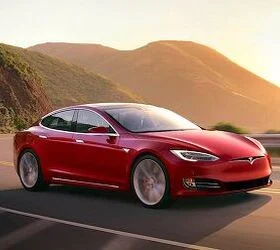
The long-held assumption that high mileage on a used car inevitably translates to escalating repair costs and diminished reliability is being challenged by a groundbreaking study focusing on electric vehicles (EVs). Traditionally, a six-figure odometer reading on a pre-owned vehicle has served as a significant red flag, signaling potential wear and tear on numerous mechanical components. However, new research suggests that this ingrained bias, developed over decades of internal combustion engine (ICE) vehicle ownership, may not accurately reflect the durability of their electric counterparts. A comprehensive analysis of millions of vehicle inspection records in the United Kingdom indicates that electric cars with substantial mileage are less likely to fail roadworthiness tests compared to their gasoline-powered equivalents, potentially reshaping the landscape of the used car market.
The BVRLA Study: Unpacking the Data
The British Vehicle Rental and Leasing Association (BVRLA), a prominent trade body representing the vehicle rental and leasing industry in the UK, recently commissioned a large-scale study to investigate the real-world durability of high-mileage electric vehicles. The findings, released on September 24th, 2026, are poised to influence consumer perceptions and purchasing decisions. The study meticulously analyzed 47.4 million annual roadworthiness inspection records, known as MOT tests, for vehicles in the UK. This extensive dataset, unmatched in many other countries, allowed researchers to conduct a robust comparison between electric and internal combustion engine vehicles across a vast array of models and mileage brackets.
The MOT test, a mandatory safety inspection for vehicles over a certain age in the UK, scrutinizes critical safety components such as the braking system, suspension, tires, lights, and steering. While the study’s findings are significant, it is crucial to note a key limitation: the MOT test does not assess battery health or capacity degradation. Therefore, the study’s conclusions pertain specifically to the mechanical and safety-related aspects of vehicle durability, not the longevity or remaining range of the battery pack. Conflating mechanical resilience with battery performance would be an oversimplification of the research.
A Divergence in Durability: When Mileage Starts to Matter
The research, conducted by the transport research organization New AutoMotive on behalf of the BVRLA, directly compared the failure rates of electric and gasoline versions of the same vehicle models wherever possible. The results revealed that in the early years of a car’s life, and at lower mileages, the performance of EVs and ICE vehicles was remarkably similar. Failure rates tracked closely, with age and distance being the primary determinants. However, a discernible divergence began to emerge after approximately 40,000 miles.
As vehicles accumulated more mileage, the gap in failure rates widened. By the time EVs reached around 60,000 miles, their failure rates stabilized at approximately 16 percent. In contrast, petrol and diesel cars continued to exhibit an upward trend in failure rates. This disparity became even more pronounced at higher mileages. For vehicles aged between three and eight years, accumulating between 90,000 and 120,000 miles, EVs recorded a failure rate of 16.5 percent, significantly lower than the 22.1 percent observed in their petrol counterparts. This translates to EVs in this mileage band failing their MOT tests approximately a quarter less often than equivalent internal combustion engine vehicles.
The trend continued at the upper echelon of the odometer. Beyond 120,000 miles, EV failure rates remained around 16 percent, while gasoline vehicles saw their failure rates climb to 23.5 percent. The study’s graphical representation of this data shows a leveling off of the failure curve for EVs as they age, in stark contrast to the upward trajectory for combustion engine vehicles.
The Simplicity Advantage: Mechanical Ingenuity of EVs
The researchers attribute this notable durability advantage primarily to the inherent mechanical simplicity of electric powertrains. An electric motor, coupled with a single-speed reduction gear, replaces the complex array of components found in an internal combustion engine, including the engine itself, a multi-speed transmission, exhaust systems, and numerous other wear-prone parts. By eliminating a significant number of these components, electric drivetrains inherently reduce the potential points of failure over time. This mechanical efficiency not only contributes to higher pass rates in roadworthiness tests but also translates into lower running costs for EV owners.
Data from Argonne National Laboratory corroborates this, estimating maintenance costs at six cents per mile for battery-electric vehicles, compared to ten cents per mile for internal combustion vehicles. This cost differential is largely a consequence of fewer moving parts, reduced fluid requirements, and less frequent scheduled maintenance.
Emerging Quirks: Tire Wear and Brake Considerations
While the study paints a largely positive picture for EV durability, it also candidly highlights areas where electric cars exhibit different wear patterns. A significant finding is that EVs experience considerably more tire wear than their gasoline counterparts. The researchers attribute this phenomenon to the increased weight of battery packs, which place greater demands on tires. For prospective buyers of used EVs, this implies a need to budget for more frequent tire replacements compared to similar ICE vehicles.
An equally counterintuitive observation relates to brake performance. The study indicated that older, low-mileage EVs were more prone to brake faults. The likely explanation lies in the widespread use of regenerative braking. This system, which uses the electric motor to slow the vehicle and recapture energy, significantly reduces the reliance on conventional friction brakes. While this is beneficial for brake pad longevity in terms of wear, it can lead to corrosion of brake components from disuse, particularly in vehicles that have primarily utilized regenerative braking. Thus, brake failures in these instances stem from a lack of use and subsequent corrosion rather than wear and tear.
A common concern regarding the weight of EVs – that it might lead to increased suspension problems – was not borne out by the study’s findings. Despite the added mass, the research found no statistical evidence to suggest that EV weight contributes to a higher incidence of suspension failures. The impact of the weight appears to be primarily absorbed by the tires.
Geographical and Temporal Caveats: Context is Key
It is imperative to acknowledge the geographical and temporal limitations of the study. All vehicles included in the BVRLA analysis were registered and operated within the United Kingdom. Consequently, the findings may not directly translate to other markets, such as the United States, where vehicle fleets, driving patterns, and regulatory inspection requirements can differ significantly. For instance, the EV market in the US tends to comprise different models and may be used in distinct ways. Moreover, the US lacks a nationwide annual safety inspection system that generates the same volume of comparable data as the UK’s MOT. While the underlying principle of mechanical simplicity is universal, the specific failure rates observed might not be replicated elsewhere.
Furthermore, the study acknowledges the influence of early EV adopters. These individuals may exhibit different driving habits and maintenance behaviors compared to the average car owner. Often, EVs are purchased as a second vehicle in a household, and their usage might be more gentle and less demanding than a primary vehicle. While the study’s large scale helps to mitigate such factors, it cannot entirely eliminate their potential influence.
The report also underscores the rapid pace of technological advancement in the electric vehicle sector. Early battery-electric vehicles were, by many accounts, less reliable than their combustion engine counterparts. The favorable reliability figures observed in this study reflect the significant progress made in EV technology, enabling newer models to achieve comparable lifespans and, according to this evidence, surpass them in terms of roadworthiness test performance. The current positive reliability picture is a testament to evolution, not an inherent characteristic of the earliest EVs.
Implications for the Used Car Market and Consumer Advice
The implications of this research for the used car market are substantial. For consumers considering a pre-owned electric vehicle, the study provides a compelling reason to reconsider the automatic dismissal of vehicles with high odometer readings. A six-figure mileage on an EV should no longer be viewed as an immediate deal-breaker, provided the vehicle has a documented history of maintenance and passes a thorough inspection.
For prospective buyers, the advice is to adjust their inspection priorities to align with the specific characteristics of electric vehicles. Budgeting for more frequent tire replacements is a practical consideration. When inspecting the brakes, particularly on lower-mileage vehicles that have relied heavily on regenerative braking, a specific check for corrosion rather than wear is recommended. Crucially, as the MOT test does not assess battery health, a separate, independent battery health check is strongly advised. A car that excels in mechanical safety inspections can still possess a degraded battery, which is the primary factor determining its long-term value and usability.
For markets outside the UK, the findings should be interpreted as a strong hypothesis rather than a definitive verdict. The universal principle of drivetrain simplicity that underpins the study’s conclusions is applicable globally, but localized data is essential for precise decision-making.
Future Outlook and Industry Reactions
The BVRLA’s findings are likely to be met with considerable interest from automakers, leasing companies, and consumer advocacy groups. As the used EV market continues to mature, accurate data on durability and long-term ownership costs will be crucial for building consumer confidence and driving wider adoption. Industry players may leverage this research to refine their used car valuation models and to highlight the long-term cost benefits of electric vehicles.
While direct quotes from manufacturers were not immediately available, the general sentiment within the automotive industry has been shifting towards acknowledging the improving reliability of EVs. This study provides robust data to support that evolving narrative. The research serves as a powerful testament to the engineering advancements in electric vehicle technology and offers a more nuanced understanding of how these vehicles age and perform over time. The traditional fears associated with high mileage may indeed be a relic of a bygone era, increasingly irrelevant in the age of electrification.