The rapidly evolving landscape of additive manufacturing continues to drive innovation across diverse sectors, with recent developments highlighting its impact on defense, space exploration, healthcare, and even animal welfare. This week’s 3D Printing News Briefs showcase advancements from companies like Titomic USA, NESST Srl, and researchers at the Rochester Institute of Technology (RIT), alongside a heartwarming project involving engineering students designing mobility devices for a rescue dog.
Titomic USA Accelerates Defense Production with Rapid Component Manufacturing
Titomic, an Australian leader in cold spray additive manufacturing (AM) and advanced manufacturing solutions, has announced a significant achievement through its U.S. subsidiary, Titomic USA. The company successfully completed a critical production order for EOS Defense Systems USA, a prominent defense contractor based in Huntsville, Alabama. This collaboration underscores Titomic’s growing commitment to supporting the U.S. Defense Industrial Base, a strategic focus for the company over the past several years.
The production order involved rapid manufacturing modifications for a vital component essential to a U.S. government defense production program. Demonstrating the agility and efficiency of its cold spray technology, Titomic USA delivered the required modifications in less than a week. This swift turnaround was crucial for expediting the delivery of an important production article, directly impacting the readiness and operational capabilities of a defense application. The successful completion of this project serves as a powerful testament to Titomic’s ability to provide integrated manufacturing solutions that address urgent needs within the defense sector.
"Supporting our defense customers when schedule, quality, and mission readiness matter most is exactly what Titomic was built to do," stated a company spokesperson. "Titomic’s ability to provide integrated manufacturing solutions that help keep vital defense production programs moving gives customers added options to meet high demand schedules with superior quality results." This rapid response capability is a key differentiator in the defense industry, where lead times and supply chain reliability are paramount. The integration of advanced AM technologies like cold spray offers a compelling alternative to traditional manufacturing methods, enabling faster production cycles, reduced material waste, and the potential for enhanced component performance.
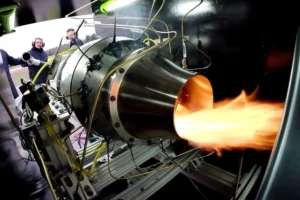
Titomic’s strategic expansion into the U.S. market, including its facility in Huntsville, Alabama, positions it to directly serve the burgeoning demand for advanced manufacturing solutions within the American defense sector. The company’s focus on cold spray technology, which allows for the deposition of metal powders at relatively low temperatures, is particularly well-suited for repairing and enhancing existing components, as well as manufacturing new parts with superior material properties. This capability is invaluable for extending the lifespan of critical defense assets and improving their operational effectiveness.
High-Performance Polymers from Roboze Revolutionize CubeSat Manufacturing
In the realm of space exploration, the pursuit of lighter, more robust, and cost-effective satellite components is a constant driver of innovation. NESST Srl (New Era Smart Solutions and Technologies), an Italian startup specializing in 3D aerospace manufacturing, has achieved a significant milestone by successfully validating the use of high-performance polymers from Roboze for the fabrication of a primary 3U CubeSat structure. This achievement is part of a larger project funded by the Italian Space Agency (ASI) and the European Space Agency (ESA), aimed at exploring advanced additive manufacturing techniques for next-generation space missions.
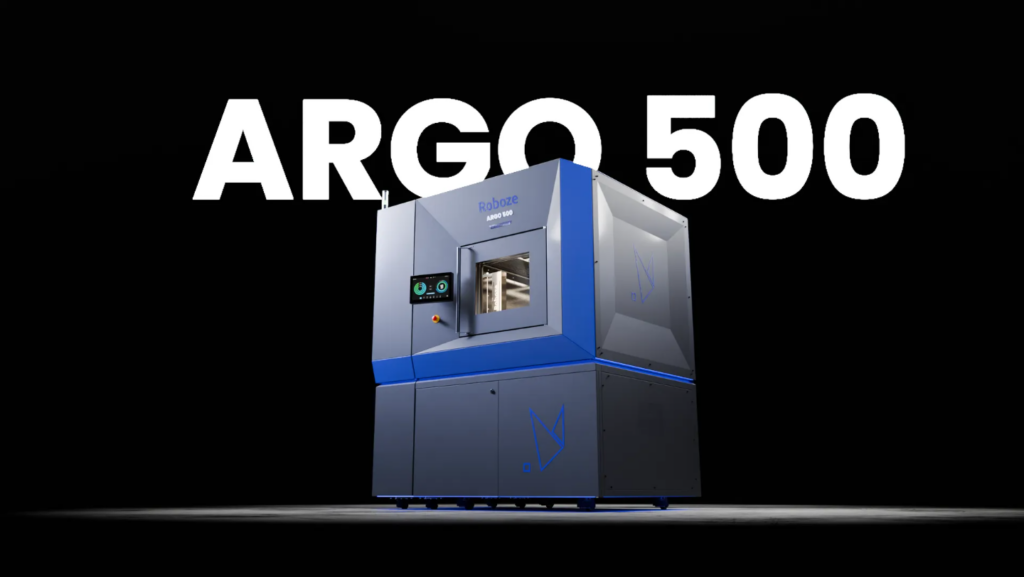
The project’s initial phase focused on designing, 3D printing, and validating the CubeSat structure using Roboze’s ARGO 500 HYPERSPEED platform and its proprietary Carbon PEEK material. The results of the extensive testing and material characterization conducted by NESST Srl have been highly promising. The study revealed that Roboze’s Carbon PEEK can deliver mechanical performance comparable to traditional aluminum alloys, which have long been the standard for satellite structures. This is a crucial development, as aluminum, while robust, is relatively heavy and can be expensive to machine into complex shapes.
Furthermore, the Carbon PEEK material demonstrated excellent compatibility with the harsh space environment, meeting stringent outgassing requirements defined by ECSS-Q-ST-70-02C. Outgassing, the release of volatile compounds from materials in a vacuum, can contaminate sensitive optical instruments and affect the performance of spacecraft. The validation of Carbon PEEK’s suitability for space applications opens up new possibilities for lightweight and highly functional satellite components. Roboze provided critical support throughout the project, assisting NESST Srl in defining optimal print parameters to ensure the highest quality and performance of the printed structures.
"Proving that FFF-processed polymers can rival traditional aluminum alloys marks a significant shift in how we conceive satellite manufacturing," stated Francesco Lucia, Technical Manager at NESST Srl. "This project validates our core vision: additive manufacturing is a strategic enabler for extreme structural customization and cost-efficiency." He further elaborated on the future trajectory of their work, stating, "We are already focusing on Phase 2 of the project, where we will leverage this design freedom to increasingly functionalize the CubeSat structures, directly integrating elements such as harnesses, electronics, microfluidics, etc." This forward-looking approach highlights the potential for additive manufacturing to create highly integrated and multifunctional satellite components, further reducing mass and complexity.
The implications of this research are substantial. CubeSats, being miniaturized satellites, are increasingly being deployed for a wide range of scientific research, Earth observation, and telecommunications applications. Their lower cost and faster deployment cycles make them ideal for rapid prototyping and testing of new technologies. By enabling the use of advanced polymers, this project can lead to more capable and affordable CubeSats, democratizing access to space and accelerating the pace of space-based innovation. The validation of Carbon PEEK by NESST Srl and the ESA/ASI funded project represents a significant step towards widespread adoption of additive manufacturing in the satellite industry.
RIT Researchers Develop Advanced Prosthetics Using Bioprinting, Sensors, and Hybrid Materials
In the field of biomedical engineering, the quest for more functional, comfortable, and personalized prosthetic devices is a continuous endeavor. Researchers at the Rochester Institute of Technology (RIT), with contributions from both its U.S. and Dubai campuses, have made significant strides in improving finger and hand prosthetics through a multidisciplinary approach combining expertise in new materials, smart sensors, and bioprinting technologies. Their work, published in the journal MDPI, focuses on creating sensitive, flexible, and biocompatible prosthetics that more closely mimic human capabilities.
The collaborative team, comprising four faculty researchers, leveraged their specialized knowledge to develop a comprehensive prosthetic system. The core of their innovation lies in the use of hybrid materials for the prosthetic structure, including biodegradable thermoplastics and heat-resistant silicone. This combination allows for both structural integrity and a degree of flexibility, enhancing user comfort and adaptability.
A key breakthrough involves the integration of "smart" sensors designed to provide a more refined sense of touch. These sensors utilize piezoelectric principles, converting mechanical pressure into electrical signals, allowing the prosthetic to detect and respond to tactile stimuli. This advancement is critical for restoring a semblance of natural hand function, enabling users to interact with their environment with greater precision and confidence.
Advanced 3D printing techniques played a pivotal role in realizing the prosthetic design. The researchers utilized AM to incorporate the hybrid materials, optimize extrusion processes, and enhance overall performance. This capability also allows for the creation of highly customizable prosthetics, tailored to the unique anatomy and functional requirements of individual users. The ability to produce patient-specific devices is a significant advantage over traditional manufacturing methods, which often struggle with the complexity and customization demands of prosthetic limbs.
The integration of electromechanical systems further contributes to more natural usage, enabling seamless control and intuitive operation. The outcome of their research is an affordable, customizable prosthetic design prototype that holds substantial potential for commercialization.
"One of the greatest needs in prosthetics is the ability to produce patient-specific devices that closely match an individual’s anatomy, mechanical properties, and functional requirements," explained Ahasan Habib, assistant professor of mechanical and mechatronics engineering technology at RIT’s College of Engineering Technology. "Traditional manufacturing methods often have limitations in producing complex, customized structures. Our approach has the potential to improve comfort, performance, accessibility, and ultimately the quality of life for prosthetic users."
He further emphasized the collaborative nature of the project and its technological underpinnings: "As we talk about the future of prosthetics, there are two components that need to be involved. The first was to bring together multi-material printing, so it’s not like the whole prosthetic should be printed with one material. The second was to make it smart, so it can be used not only for gripping but other functions. Capability-wise, we are there. We all have very good capabilities in each of our labs. I also think that we all share the same DNA as an RIT family of researchers."
The research team includes Krittika Goyal and Jun Han Bae, both assistant professors in RIT’s College of Engineering Technology, and Salman Pervaiz, an RIT Dubai engineering professor and director of materials and advanced manufacturing research. Their combined expertise has yielded a promising solution that addresses critical needs in the field of prosthetics, with the potential to significantly enhance the lives of individuals with limb loss. The affordability and customizability of their design make it a strong candidate for wider adoption and impact.
University of Oklahoma Students Design Mobility Devices for Three-Legged Rescue Dog
In a heartwarming demonstration of engineering applied for social good, first-year engineering students at the University of Oklahoma (OU) participated in the Engineering Summer Bridge program, where they were tasked with designing mobility devices for a three-legged rescue dog named Duck. The program, designed to provide a supportive transition for incoming engineering students, blends academic learning with hands-on, real-world problem-solving.
Duck, a young dog rescued in Oklahoma, was born with only three legs and found refuge at the Free to Live Animal Sanctuary. While she navigates her environment adeptly, sanctuary staff noted that prolonged walks could be tiring for her. This challenge was presented to the OU students as a practical engineering project, encouraging them to apply their nascent technical skills to address a specific need.
Over the summer, multiple teams of four students delved into research on canine anatomy, Duck’s unique mobility requirements, and existing assistive devices for animals. This foundational research informed their design process, which involved utilizing CAD software to conceptualize their ideas and subsequently 3D printing components to build functional prototypes. The integration of electronic circuits was also a key aspect of their design considerations, aiming to create devices that were not only supportive but also responsive.
The students engaged in an iterative design process, refining their prototypes based on feasibility, functionality, and Duck’s specific needs. The culmination of their efforts involved presenting their work to an audience, showcasing their engineering ingenuity and problem-solving capabilities. While the most promising designs will undergo further refinement for Duck’s direct benefit, the project served a broader purpose: to provide incoming students with an early and impactful engineering experience.
The Engineering Summer Bridge program offers a comprehensive introduction to college life and the engineering discipline. Participants live on campus, take a mathematics course, foster connections with faculty and peers, and tackle challenging engineering projects. Corporate partners, including ExxonMobil and ConocoPhillips, provided crucial support through guest speakers, site visits, project funding, and mentorship, enriching the students’ learning experience.
Brandon Abbott, Director of the Engineering Summer Bridge program, highlighted the program’s philosophy: "We want students to leave with a broader definition of engineering than the one they came in with. Technical skill is the foundation, but engineering is a service discipline. The problems worth solving belong to people and students who understand that early become better engineers for it." This ethos underscores the program’s commitment to developing well-rounded engineers who are not only technically proficient but also socially conscious and driven by a desire to make a positive impact.
The program’s popularity is evident in its competitive application process, with a record 160 students applying for the 2026 cohort, of which 40 were ultimately selected. This high level of interest reflects the growing recognition of the value of early, hands-on engineering education and its potential to inspire the next generation of innovators. The project for Duck exemplifies how engineering principles, when applied with empathy and creativity, can lead to tangible improvements in the lives of both humans and animals.