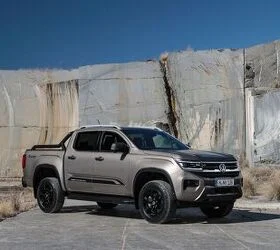
The automotive landscape is witnessing a curious resurgence of interest in the compact pickup truck segment, a niche that has seen significant evolution and some notable departures over the past few decades. Among the latest to cast a discerning eye on this revitalized market is Volkswagen. The German automotive giant, which previously offered a small pickup in the United States based on its popular Rabbit compact, a model that ceased production in 1983, is now reportedly exploring a return. This potential re-entry into the U.S. market, particularly with a compact offering, comes at a time when Volkswagen is also navigating significant global workforce adjustments.
A History of Compact Utility and a Lingering Legacy
Volkswagen’s history with compact pickups in the U.S. is a brief but memorable chapter for some enthusiasts. The Rabbit pickup, also known as the Caddy in other markets, was a practical and affordable option for those seeking utility in a smaller, more maneuverable package. Its departure in 1983 left a void, and while Volkswagen has flirted with the idea of a return for years, most notably with the Tarok concept vehicle, concrete production plans for the U.S. have remained elusive. The Tarok, first unveiled in 2016 and subsequently updated, has been a consistent teaser of VW’s potential aspirations in the segment, showcasing a modern take on a compact utility vehicle.
However, recent discussions and reports suggest a new, more focused contender: a compact model tentatively dubbed the "Tukan." This name, if adopted, would signify a distinct product line, potentially separate from the more adventurous Tarok concept. The Tukan, as it is being discussed, is envisioned as a direct competitor to the burgeoning segment of compact, car-based pickup trucks that have recently captured significant consumer attention. This includes highly successful models like the Ford Maverick, which has exceeded sales expectations and demonstrated a strong market appetite for this type of vehicle.
Strategic Ambitions Amidst Global Restructuring
The timing of Volkswagen’s reported exploration into the compact pickup market is particularly noteworthy. The company has publicly acknowledged plans to reduce its global workforce by up to 100,000 jobs over the next few years. This significant restructuring is part of a broader strategy to streamline operations, improve efficiency, and invest heavily in electrification and digital technologies. In this context, the ambitious pursuit of a new vehicle segment, especially one that requires dedicated production lines and market development, might appear counterintuitive to some observers.
However, within the automotive industry, profitability remains a primary driver, and the compact pickup segment, as evidenced by the success of rivals, represents a potentially lucrative opportunity. The economic rationale for entering this market lies in its ability to attract a wider range of consumers than traditional, larger trucks. These buyers are often looking for fuel efficiency, affordability, and the versatility of a pickup bed for everyday tasks, rather than the heavy-duty capabilities of full-size models. Volkswagen, with its established global manufacturing footprint and brand recognition, is well-positioned to capitalize on this demand if it chooses to proceed.
The Evolving Compact Pickup Segment: A Market Ripe for Entry?
The resurgence of the compact pickup truck segment is a fascinating development in the automotive industry. For years, the market was dominated by larger, body-on-frame trucks like the Toyota Tacoma and Chevrolet Colorado, and even larger full-size offerings from Ford, Chevrolet, and Ram. However, a shift began to occur as consumer preferences evolved and the economic realities of vehicle ownership came into sharper focus.
The introduction of the Ford Maverick in 2021 marked a significant turning point. Based on a unibody platform shared with the Bronco Sport and Escape SUVs, the Maverick offered a compelling combination of affordability, fuel efficiency (especially with its hybrid powertrain), and practical utility. It quickly became a runaway success, demonstrating that a substantial market existed for a smaller, more accessible pickup truck. Toyota, a long-standing player in the truck market, has also been rumored to be considering a compact pickup based on its TNGA-C platform, potentially a successor or alternative to the defunct Toyota Hilux in the U.S. market.
This success has undoubtedly caught the attention of other manufacturers. Volkswagen, with its history in the segment and its extensive portfolio of platforms and powertrains, is a logical contender to enter this space. The proposed "Tukan" would likely aim to replicate the formula of its successful competitors: a unibody construction for a more car-like ride and better fuel economy, a range of efficient engine options (potentially including hybrid or even electric variants in the future), and a price point that appeals to a broader demographic than traditional trucks.
Potential Product Positioning and Market Impact
Should Volkswagen decide to bring the Tukan to market, its positioning would be critical. The company would need to differentiate itself from established players like the Ford Maverick, as well as potential future entrants. Key areas of differentiation could include:
- Design: Volkswagen’s design language has often been characterized by clean lines and a sophisticated, understated aesthetic. A Tukan could offer a European-inspired design that stands out from the more rugged styling of some competitors.
- Interior Quality and Technology: Volkswagen has a reputation for producing interiors with a premium feel and advanced technology. This could be a significant advantage, offering a more refined cabin experience compared to some rivals.
- Powertrain Options: While the Maverick has found success with its hybrid powertrain, Volkswagen’s expertise in turbocharged gasoline engines and its growing investment in electric vehicle technology could offer unique powertrain solutions. A fuel-efficient gasoline engine would likely be standard, with hybrid or even a fully electric variant being potential future offerings.
- Pricing and Value Proposition: To compete effectively, the Tukan would need to offer a competitive price point. Volkswagen’s ability to leverage its global manufacturing scale could be a key factor in achieving this.
The introduction of a Volkswagen compact pickup could also have broader implications for the segment:
- Increased Competition: More competition would likely benefit consumers through greater choice and potentially more aggressive pricing.
- Further Platform Development: The success of compact, car-based pickups could encourage further investment in these platforms by other manufacturers, leading to more specialized and capable offerings in the future.
- Diversification of VW’s U.S. Lineup: A compact pickup would add a new dimension to Volkswagen’s U.S. product portfolio, which currently focuses heavily on sedans, SUVs, and the all-electric ID.4.
Challenges and Uncertainties Ahead
Despite the apparent market opportunity, Volkswagen faces several challenges in bringing a new compact pickup to the U.S. market. The aforementioned global job cuts highlight the company’s current focus on efficiency and cost reduction. Investing in a new vehicle program requires significant capital expenditure, and the company will need to ensure a clear path to profitability.
Furthermore, the U.S. market has its own unique demands and preferences when it comes to trucks. While the Maverick has proven the appetite for compact utility, established players like the Ford Ranger (though it has transitioned to a mid-size offering in its latest iteration), Toyota Tacoma, and Chevrolet Silverado hold strong brand loyalty and deep market penetration. Volkswagen would need to overcome these entrenched positions and build trust and recognition within the truck-buying community.
The exact specifications, pricing, and launch timeline for any potential Volkswagen compact pickup remain speculative. The "Tukan" is currently a placeholder name, and the final production model could differ significantly from early concepts or rumors. However, the persistent exploration of this segment by a major global automaker like Volkswagen underscores the significant potential that industry observers see in the compact pickup truck market. The question for consumers will ultimately be whether a Volkswagen offering can carve out a compelling niche amidst an increasingly competitive and evolving landscape.