The Mystery of Island-Bound Tidal Vortices
For decades, oceanographers have observed peculiar tidal patterns around specific landmasses. While most wave vortices, or amphidromic points, occur at nodal points where the wave amplitude vanishes in open water, a distinct class of vortices forms specifically around islands. In these instances, the wave intensity remains finite and often peaks at the boundary of the island, creating a circulating "hill" of water rather than a void. This phenomenon is most notably observed in the M2 (principal lunar semi-diurnal) ocean tides surrounding New Zealand, Madagascar, Iceland, and Svalbard.
Until now, the specific conditions governing why these vortices appear around some islands but not others remained elusive. The new study utilizes a statistical approach to analyze random two-dimensional wavefields, simulating the chaotic nature of the ocean and other wave environments. By introducing "defects" or islands into these theoretical models, the researchers were able to quantify the likelihood of vortex emergence based on two primary variables: the size of the island relative to the wavelength and the strength of the Coriolis parameter, which represents the effect of the Earth’s rotation.
Statistical Theory and Experimental Validation
The research team developed a statistical theory to calculate the probabilities of vortices with different topological charges. A topological charge, in this context, refers to the number of times the phase of the wave wraps around the island. The study found that in non-rotating systems, the probability of an island-bound vortex emerging is unexpectedly high, approaching 50%. However, when the Coriolis effect—the force that deflects moving objects to the right in the Northern Hemisphere and to the left in the Southern Hemisphere—is introduced, the probability jumps to nearly 100%.
The researchers tested their mathematical models experimentally, using wave tanks and numerical simulations to verify that the theory holds across different physical scales. One of the most striking findings of the study is the "sweet spot" for island size. The data suggests that vortex formation is most significantly enhanced when the island is "subwavelength," specifically around 0.1 of the characteristic wavelength of the system. At this size, the island acts as a powerful catalyst for phase singularities, forcing the surrounding wavefield into a rotational state that would not occur in a homogeneous, island-free environment.
Chronology of Topological Wave Research
The journey to understanding these vortices has spanned over a century of physics and oceanography:
- Late 19th Century: Early oceanographers identify amphidromic points in the North Sea, where tidal ranges are zero and the tide rotates around a central point.
- 1974: Michael Berry and John Nye introduce the concept of "dislocations in wave trains," laying the groundwork for the study of singular optics and wave topology.
- 1990s – 2000s: Satellite altimetry provides high-resolution maps of global tides, confirming the existence of island-bound vortices around Madagascar and New Zealand that did not fit standard nodal point models.
- 2010s: The study of "topological insulators" and "topological photonics" gains momentum, prompting physicists to look for similar phase-locking behaviors in classical wave systems.
- July 17, 2026: Konstantin Bliokh and his team submit the definitive statistical theory for island-bound vortices, providing the first predictive model for these phenomena.
Supporting Data and Technical Analysis
The study provides rigorous data regarding the relationship between island diameter ($D$) and wavelength ($lambda$). When $D/lambda approx 0.1$, the local wave intensity at the island’s edge is maximized, and the topological stability of the resulting vortex is at its highest.
In rotating systems, the Coriolis parameter ($f$) acts as a symmetry-breaker. The researchers observed that:
- In the absence of rotation ($f=0$), the system is time-reversal symmetric, and vortices of positive and negative charges are equally likely, leading to a 50% net probability of a vortex being present.
- In rotating systems ($f neq 0$), the symmetry is broken. The rotation of the Earth biases the phase gradient, effectively "trapping" a vortex around the island.
- For large islands ($D > lambda$), the island begins to act more like a coastline, and the probability of a localized vortex decreases as the system transitions into a boundary-wave regime.
This explains why massive islands like Madagascar, which are large but still small relative to the global scale of the M2 tidal wave (which has a wavelength of thousands of kilometers), are such effective "vortex anchors."
Implications for Nanophotonics and Engineering
While the study takes its primary inspiration from ocean tides, the implications extend far beyond oceanography. The researchers emphasize that their results establish a "general mechanism for generating localized high-intensity vortices around defects in diverse wave systems."
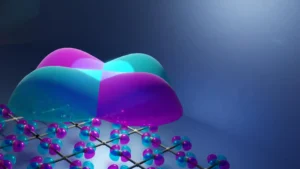
In the field of nanophotonics, this could lead to the design of new types of optical traps and sensors. By placing subwavelength "islands" or pillars within a random light field, engineers can predictably create high-intensity optical vortices. These vortices could be used to manipulate nanoparticles or to enhance the interaction between light and matter at the nanoscale.
Furthermore, the research has potential applications in renewable energy. Understanding how islands concentrate tidal energy into vortices could inform the placement of tidal turbines. If a subwavelength island naturally enhances the rotational intensity of the water, it effectively acts as a natural concentrator of kinetic energy, making the waters surrounding such islands prime locations for sustainable power generation.
Expert Reactions and Scientific Impact
The scientific community has reacted with significant interest to the submission. Dr. Elena Marov, a fluid dynamics specialist not involved in the study, noted the elegance of the statistical approach. "For a long time, we treated these island-bound tides as local anomalies or products of specific coastal geometries," Marov stated. "Bliokh’s work shows that this is actually a universal statistical property of waves. It’s not just about the shape of Madagascar; it’s about the fundamental physics of how waves interact with holes in a rotating frame."
In the realm of theoretical physics, the paper is seen as a major contribution to the study of "random wavefields." These fields are often used to model everything from the distribution of galaxies in the early universe to the behavior of quantum waves in chaotic cavities. The discovery that a small defect can fundamentally reorganize the topology of a random field provides a new tool for physicists across multiple disciplines.
Future Research Directions
The team’s findings open several new avenues for investigation. One immediate question is how these vortices behave in the presence of non-linear effects, such as those found in high-amplitude storm surges or non-linear optical media. Additionally, the researchers suggest that their theory could be expanded to three-dimensional systems, where "islands" become "filaments" or "tubes" of defects.
As climate change alters sea levels and potentially shifts tidal resonances, understanding the stability of these island-bound vortices becomes a matter of coastal importance. If an island’s effective "size" relative to the tidal wavelength changes due to depth variations, the 100% probability of a vortex might shift, leading to sudden changes in local tidal ranges and current patterns.
The work of Bliokh and his colleagues serves as a reminder that even in the most well-studied systems, such as the tides that wash against our shores, there are deep topological secrets waiting to be uncovered through the lens of statistical physics. The transition of this theory from the vast scale of the Indian Ocean to the microscopic scale of nanophotonic chips marks a significant milestone in the unification of classical and modern wave science.