Washington State University (WSU) researchers have achieved a significant breakthrough in additive manufacturing, utilizing artificial intelligence (AI) to dramatically accelerate and reduce the cost of 3D printing a high-performance metal alloy. This innovative approach bypasses the need for exhaustive manual testing of over 100 million potential printing configurations, a process that was previously considered prohibitively time-consuming and expensive. The development has profound implications for the aerospace industry and holds promise for democratizing the production of advanced materials across various sectors.
A Paradigm Shift in Material Processing
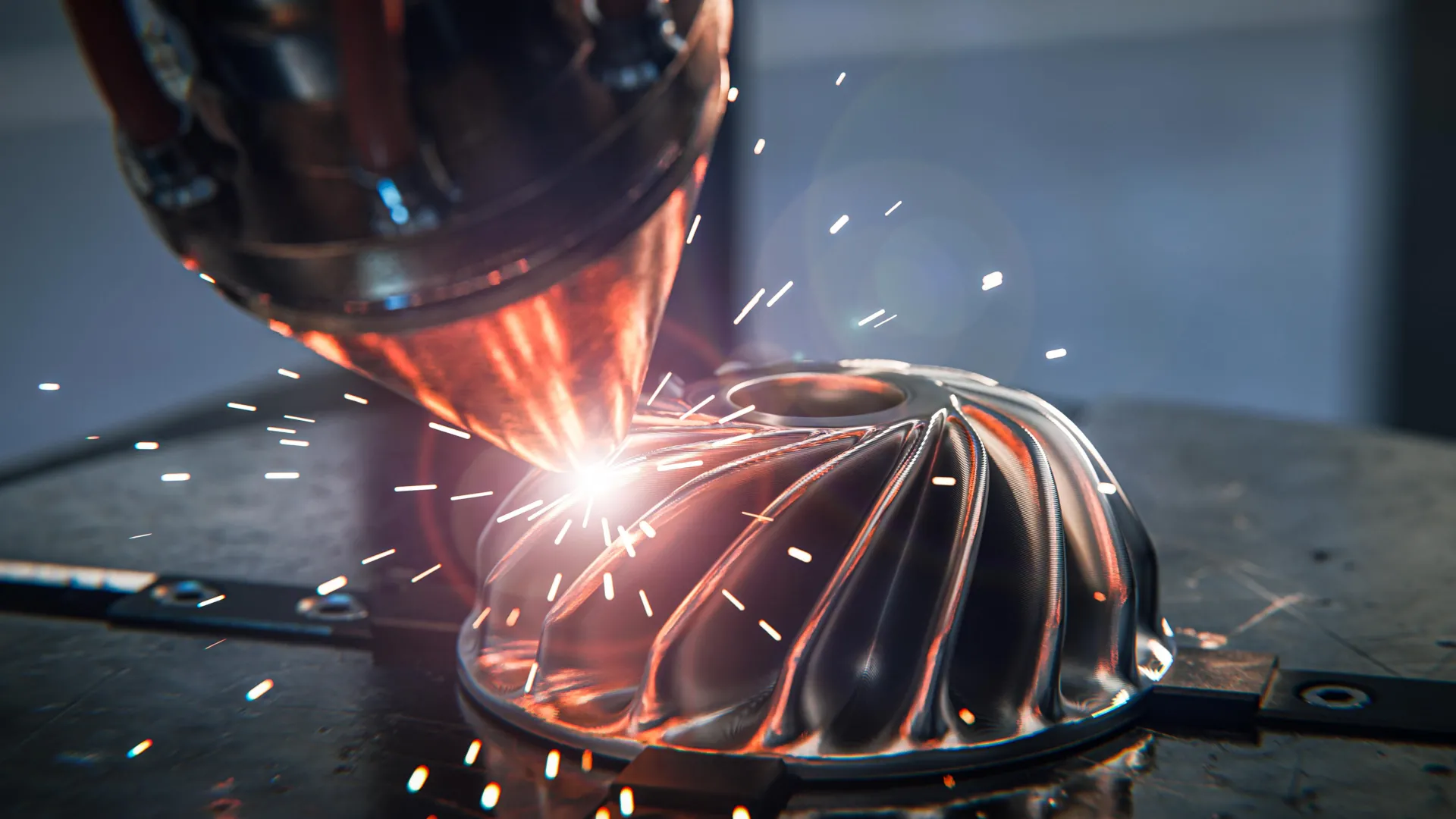
The core of this advancement lies in the application of sophisticated AI algorithms to overcome the inherent complexities of 3D printing GRCop-42, a specialized copper alloy developed by NASA. GRCop-42 is engineered for extreme environments, offering exceptional heat resistance and superior thermal conductivity. These properties make it indispensable for critical aerospace applications, such as the combustion chambers of liquid rocket engines, where the ability to withstand immense heat and efficiently dissipate it is paramount to operational success and safety.
Historically, printing GRCop-42 has presented substantial hurdles. The alloy demands considerable laser power and energy to achieve successful solidification and structural integrity. Consequently, its production has been largely confined to specialized, high-power industrial 3D printers, rendering it inaccessible to a broader range of institutions and industries. Attempts to adapt its printing parameters for more common, lower-wattage commercial equipment had consistently failed.
The Computational Challenge: A Needle in a Haystack
The sheer number of variables involved in 3D printing a metal alloy like GRCop-42 is staggering. Factors such as laser power, scan speed, layer thickness, hatch pattern, and powder characteristics all interact in complex ways, creating an enormous parameter space. Researchers estimated that there were over 100 million distinct combinations of printing settings to explore. Manually testing even a fraction of these possibilities would require an inordinate investment of time, resources, and material. Each experimental print could cost hundreds of dollars, consume valuable raw materials, necessitate specialized equipment, and demand days of meticulous analysis of the resulting sample.
"Ninety percent of commercial printers cannot print this metal alloy," stated Jana Doppa, Huie-Rogers Endowed Chair Professor of Computer Science and Berry Distinguished Professor in Engineering at WSU, who led the research. "Given that we were able to find these feasible process parameters, it allows us to use those commercial printers, and we are essentially democratizing the printing of this alloy."
Azza Fadhel, a PhD student in computer science and the first author of the published paper, elaborated on the impracticality of traditional methods. "Sometimes they printed a certain configuration, and the product just melted. It wasn’t really printable, and even with time and money, they wouldn’t be able to try all 100 million options. What we were doing in our collaboration is to apply the AI so that we efficiently choose candidates from this very large search space."
The AI-Powered Discovery Process: A Chronology of Innovation
The WSU research team, comprising experts from the School of Electrical Engineering and Computer Science and the School of Mechanical and Materials Engineering, embarked on their project with a strategic approach. Their work was recently published in the prestigious Proceedings of the AAAI Conference on Artificial Intelligence, where the project also garnered the Innovative Deployed Application Award, underscoring its significant impact and practical utility.
The process began with a foundational dataset comprising results from 37 previously failed printing configurations. This initial set of "negative examples" provided crucial insights into the boundaries of successful printing parameters. Leveraging this data, the researchers developed an AI model capable of estimating the probability of a successful print for any given, untested combination of settings.
This AI model was designed to operate efficiently, balancing two key objectives. It would identify and recommend configurations that showed a high likelihood of success, thereby accelerating the discovery of viable printing parameters. Simultaneously, it strategically explored less certain regions of the vast parameter space. This exploration was vital for gathering new information that could refine and improve the AI model’s predictive capabilities, enabling it to learn from both successes and failures.
The collaborative nature of the project was crucial. Nathaniel Zuckschwerdt, Susmita Bose, and Amit Bandyopadhyay from the School of Mechanical and Materials Engineering played a pivotal role in conducting the physical printing experiments based on the AI’s recommendations and rigorously evaluating the printed samples. Aryan Deshwal from the University of Minnesota also contributed to the collaborative effort.
"They would give me back the results, and I liked all of them – even if they failed – because every result improved our AI model," Fadhel remarked, highlighting the iterative learning process that powered the AI’s advancement.
Quantifiable Success: From Millions to Dozens
The AI’s ability to navigate the immense search space was put to the test over a three-month period. Despite the daunting odds of finding successful parameters in such a vast landscape, the team achieved remarkable results. They identified six distinct configurations that successfully printed GRCop-42 across various laser power levels.
Crucially, this was accomplished with a significantly limited number of physical experiments – a total of just 40. This represents an extraordinary reduction in experimental effort compared to the millions of possibilities that would have been required through traditional trial-and-error methods.
For the first time, the researchers demonstrated the successful 3D printing of GRCop-42 using a laser power of 500 watts. This is a substantial reduction from the higher power requirements previously deemed necessary, opening the door for its use with more accessible printing technologies.
"It’s a very challenging case for AI," Doppa admitted. "Every time you try, you basically get a binary success or failure signal, and you are trying to minimize the number of tries that you have so that you get to those successful needles very quickly." The successful outcome, he added, "was very surprising that we were able to do this so well."
Broader Implications: Democratizing Advanced Materials
The ability to print GRCop-42 with reduced laser power carries a cascade of benefits. Energy consumption during the printing process would decrease, leading to lower operational costs and a reduced environmental footprint. Furthermore, less demanding power requirements translate to reduced wear and tear on printing equipment, extending the lifespan of machines and minimizing maintenance expenses. The post-processing of printed parts, which can be a significant cost and time factor, may also become more efficient.
Perhaps the most impactful consequence of this breakthrough is the potential for broader accessibility. Universities, smaller research laboratories, and innovative companies that lack access to the specialized, high-power additive manufacturing systems previously required for GRCop-42 can now potentially adopt this advanced material. This "democratization" could foster new avenues of research and development, leading to novel applications and accelerating innovation across multiple industries.
A Versatile Tool for Scientific Exploration
The AI-driven methodology developed by the WSU team is not limited to the printing of GRCop-42. The researchers are confident that their approach can be adapted to identify optimal processing conditions for a wide array of other metal alloys and additive manufacturing systems. This signifies a significant step forward in the field of materials science and engineering, providing a powerful tool for accelerating the discovery and implementation of new materials.
Beyond manufacturing, the researchers envision their AI-guided strategy as a valuable asset for tackling complex scientific problems where successful outcomes are rare, the number of potential experimental variables is vast, and exhaustive testing is economically or logistically unfeasible. This could include areas such as drug discovery, where identifying effective compounds involves sifting through enormous chemical libraries, or in optimizing chemical reactions.
"There’s always uncertainty when you are deploying something where real people, materials, and physical costs are involved," Doppa reflected. "We didn’t know whether we would succeed or not, and there is always that risk. There are real stakes." The success of this project underscores the transformative potential of AI in overcoming long-standing scientific and engineering challenges, paving the way for more efficient, cost-effective, and accelerated innovation.