India’s Objectify Technologies Acquires Roboze ARGO 500 HYPERSPEED, Providence Medical Technology Receives FDA 510(k) Clearance for CORUS PCSS 3D-T, SprintRay Unveils Expanded Digital Dentistry Platform, UdeM Initiative Transforming Plastic 3D Printer Waste into New Filament, and Drzach&Suchy Launch Creator App for Shattie Cubes
The additive manufacturing landscape is witnessing significant advancements and strategic expansions this week, with key developments spanning industrial applications, medical breakthroughs, digital dentistry, sustainable practices, and innovative consumer-level 3D modeling. Italian additive manufacturing leader Roboze has bolstered its global reach by partnering with India-based Objectify Technologies, which has acquired a high-performance Roboze ARGO 500 HYPERSPEED system. In the medical sector, Providence Medical Technology has achieved a crucial FDA 510(k) clearance for its CORUS PCSS 3D-T posterior cervical implant, signaling a significant step forward in 3D printed spinal fusion solutions. Meanwhile, SprintRay is redefining dental workflows with an expanded, connected digital dentistry platform, aiming to streamline the entire process from scanning to post-processing. Demonstrating a commitment to sustainability, the University of Montreal (UdeM) has launched an initiative to recycle 3D printer waste into usable filament, addressing a growing environmental concern within academic and research institutions. Rounding out the week’s news, Swiss design studio Drzach&Suchy has introduced a user-friendly creator app for personalized 3D models, the "Shattie Cubes," offering a novel way for individuals to design and produce custom optical illusion art.
Roboze Expands Global Footprint with Strategic Indian Partnership
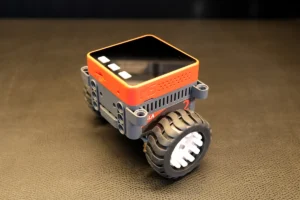
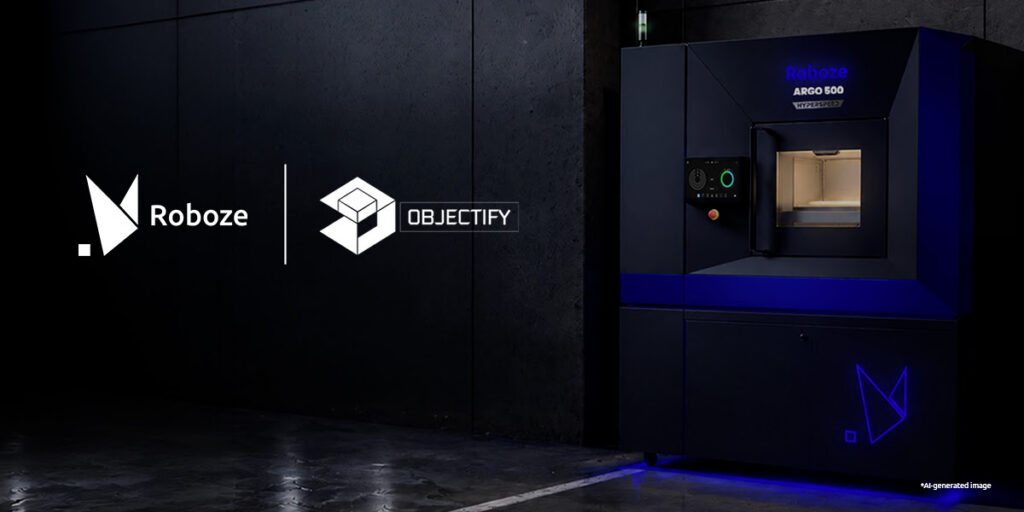
Roboze, an Italian firm at the forefront of additive manufacturing (AM) and focused on building the "Physical AI backbone for autonomous manufacturing," has announced a significant expansion of its international manufacturing network through a strategic partnership with Objectify Technologies, a prominent AM service provider in India. Objectify Technologies has made a substantial investment by acquiring a Roboze ARGO 500 HYPERSPEED system. This advanced machine is engineered for the production of high-performance polymer and composite components, critical for demanding industrial sectors such as automotive, aerospace and defense, energy, and space exploration.
The integration of the Roboze ARGO 500 HYPERSPEED into Objectify Technologies’ capabilities is poised to significantly broaden the range of applications they can address for their clientele. This expansion is particularly vital for clients in industries where stringent process control, exceptional material performance, and unwavering repeatability are non-negotiable. For Roboze, this collaboration represents a key milestone in its global expansion strategy, enabling its cutting-edge technology to reach customers in India, thereby fostering more localized and resilient production capabilities within the region.
Alessio Lorusso, Founder and CEO of Roboze, emphasized the strategic importance of this partnership: "This partnership is an important step in expanding access to advanced manufacturing capabilities across Aerospace, Defense, Energy and other critical industries in India. Objectify brings deep manufacturing expertise, engineering capabilities and a strong understanding of the local industrial ecosystem. By combining these capabilities with Roboze technology, we can support companies in producing high-performance components closer to the point of need, reducing supply-chain complexity and accelerating the transition toward more autonomous and resilient manufacturing."
This move aligns with a broader trend of additive manufacturing companies establishing localized production hubs to serve global markets more effectively. The ability to produce critical components closer to the point of use reduces lead times, transportation costs, and the vulnerability of supply chains to geopolitical or logistical disruptions. The ARGO 500 HYPERSPEED, known for its precision and ability to process advanced materials like PEEK and Carbon PEEK, is particularly suited for applications demanding high strength-to-weight ratios and resistance to extreme environments.
Providence Medical Technology Secures FDA Clearance for 3D Printed Spinal Implant
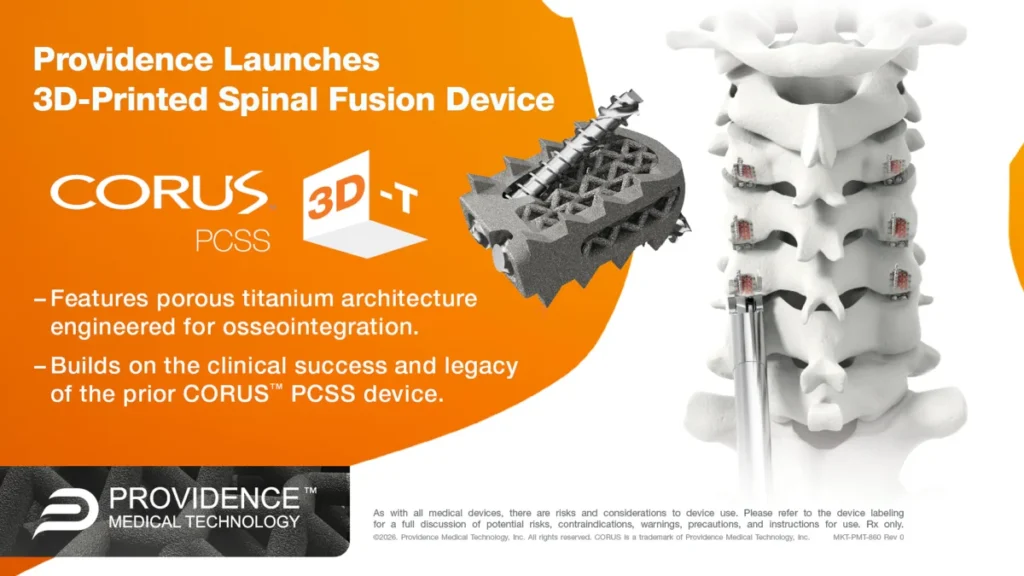
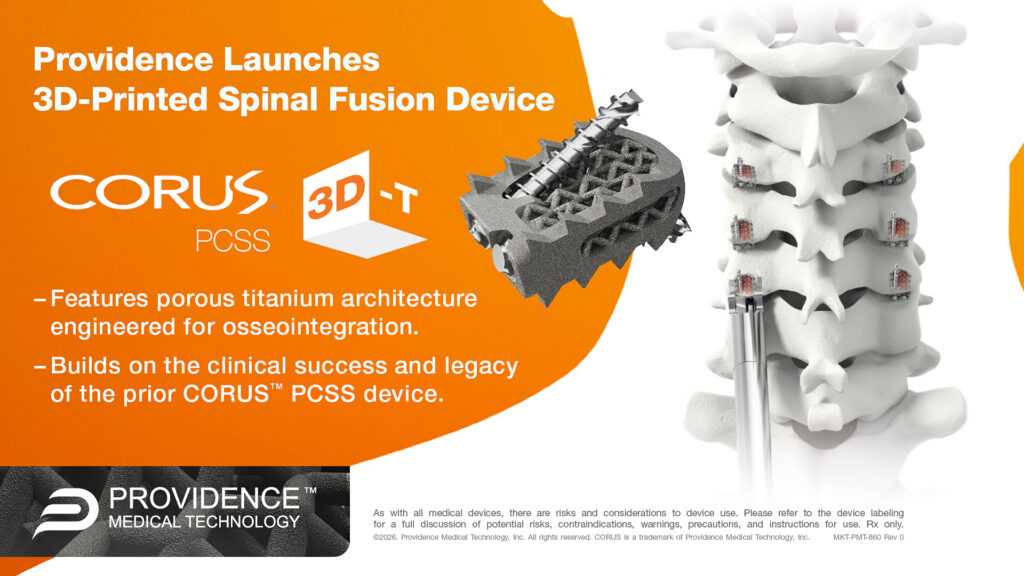
In a significant development for the medical device industry and spinal surgery, Providence Medical Technology has announced that its CORUS Posterior Cervical Stabilization System 3D-T (CORUS PCSS 3D-T) has received FDA 510(k) clearance. This clearance marks a pivotal moment for the company, integrating advanced 3D printing technology into its established spinal fusion platform.
The CORUS PCSS 3D-T is a next-generation posterior cervical implant designed to enhance spinal stability and promote bone fusion. It features a unique 3D-manufactured porous titanium architecture, meticulously engineered to encourage robust bone ingrowth. This porous structure mimics the natural cancellous bone, providing an optimal environment for fusion. The implant is integrated with the clinically proven CORUS PCSS design and includes screw fixation, offering a comprehensive solution for stabilizing the posterior cervical spine.
The efficacy and safety of the CORUS PCSS 3D-T are supported by a Level 1 randomized clinical trial (NCT04229017), a high standard of evidence in medical research. The implant is indicated for use in patients suffering from cervical degenerative disc disease, helping to immobilize and stabilize affected spinal segments, often in conjunction with posterior cervical fusion (PCF) surgery. The intricate 3D printed titanium lattice is shaped to precisely match patient anatomy, ensuring optimal fit and load distribution. It not only provides structural support during surgery but also securely holds the packed bone graft in place, a critical factor for successful fusion.
This achievement by Providence Medical Technology is part of a growing trend of 3D printed medical devices receiving regulatory approval. The company’s innovation in spinal implants is a testament to the increasing adoption of additive manufacturing for creating patient-specific or anatomically optimized medical solutions. The FDA’s 510(k) clearance process involves demonstrating that a new medical device is "substantially equivalent" in safety and effectiveness to a legally marketed device.
Lane Major, President and CEO of Providence Medical Technology, commented on the clearance: "Clearance of CORUS PCSS 3D-T is an important milestone for Providence and for the surgeons who rely on our platform. CORUS is backed by Level 1 evidence that’s rare in spine, and 3D-T brings the porous titanium surgeons increasingly expect to that proven foundation. It’s the next step in our commitment to Total Segmental Fusion and to helping surgeons deliver predictable fusion with fewer revision surgeries for their patients."
The medical sector’s embrace of 3D printing continues to expand, driven by the technology’s ability to produce complex geometries, customize implants for individual patient anatomy, and utilize biocompatible materials like titanium. This allows for implants that can potentially offer improved osseointegration and long-term patient outcomes, reducing the need for complex revision surgeries.
SprintRay Revolutionizes Digital Dentistry with Integrated Platform
SprintRay, a key player in dental technology, has unveiled a significantly expanded and interconnected digital dentistry platform at its recent 3DNext 2026 event in Miami Beach. This comprehensive offering moves beyond standalone 3D printers to encompass the entire dental workflow, from initial design and scanning to intricate post-processing, aiming to enhance efficiency and precision within dental practices.
The centerpiece of this expanded platform is SprintRay’s new Foundation intraoral scanner. Designed as a full-color, wireless device, it seamlessly integrates with the company’s ScanOS software layer and cloud dashboard. This integration simplifies the digital workflow by consolidating scanning, design, and production processes within a single, intuitive interface. This unification is expected to reduce the learning curve and operational friction for dental professionals.
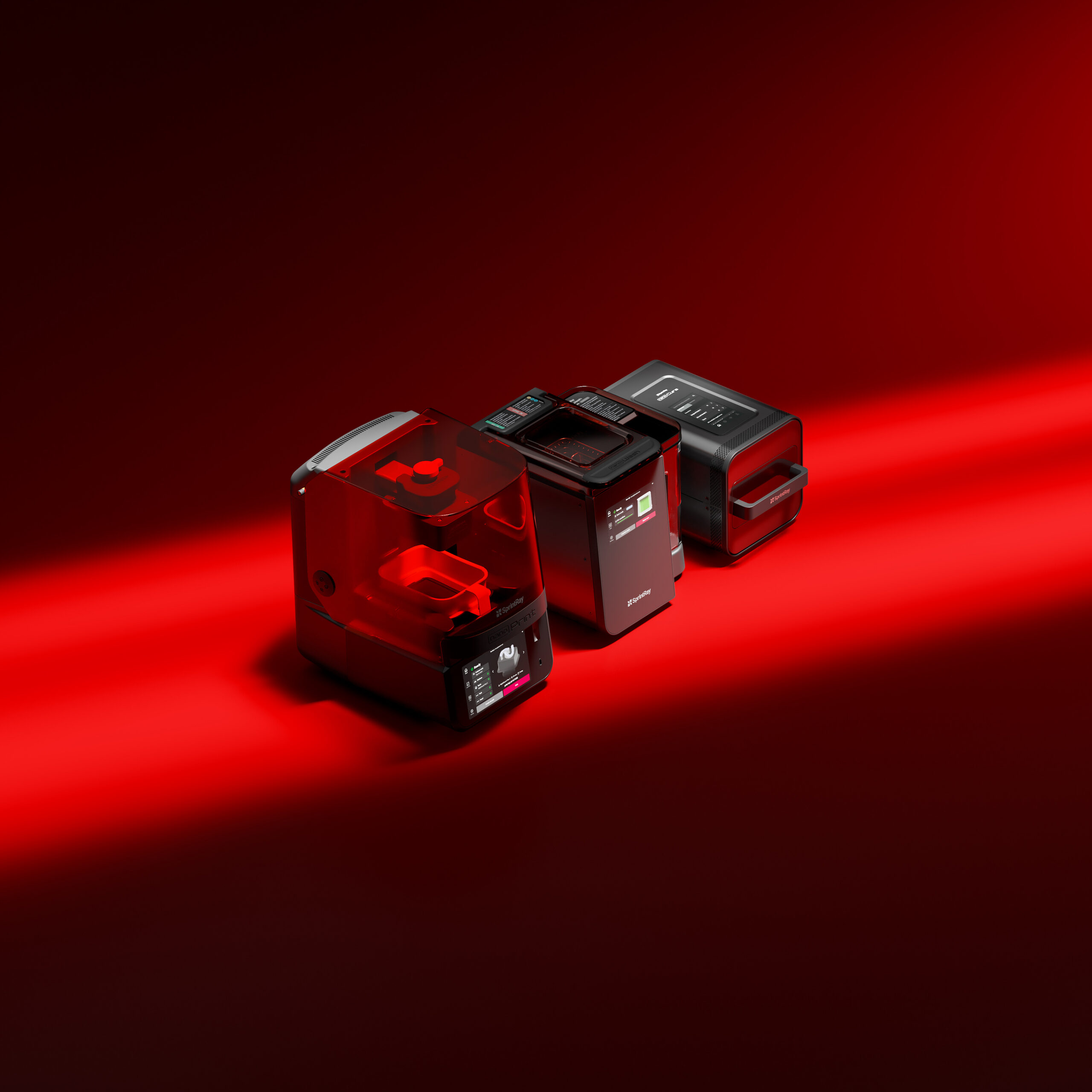
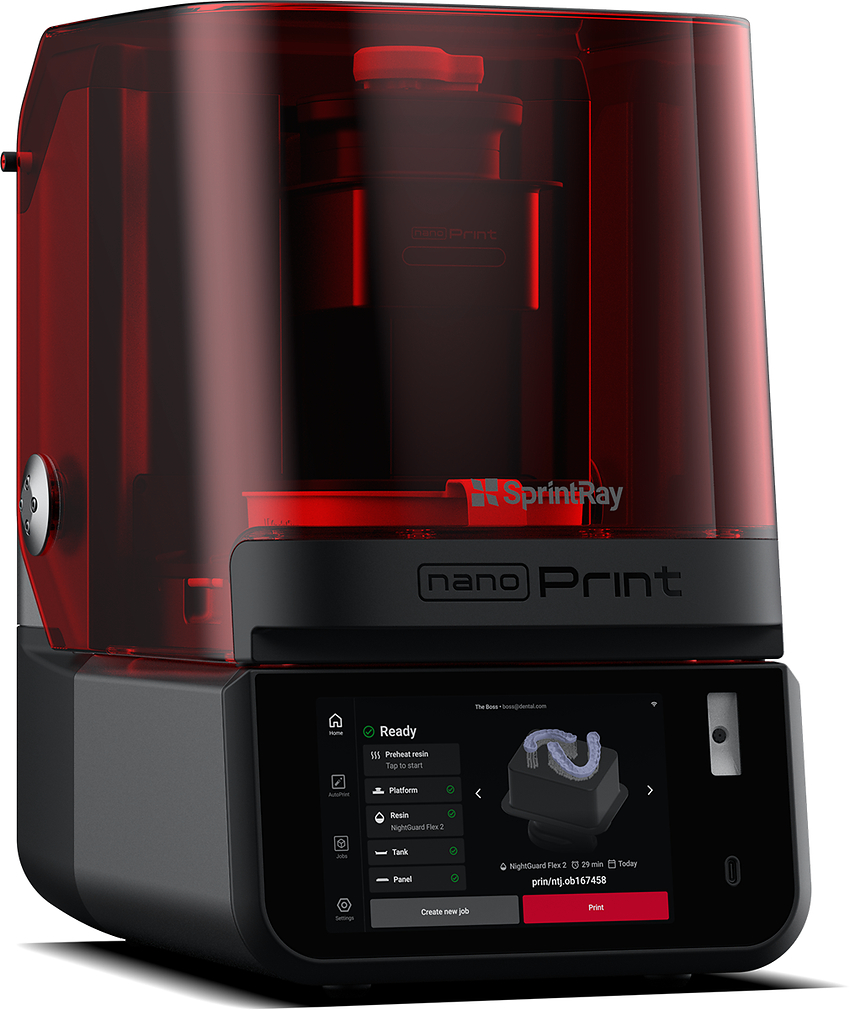
Complementing the scanner is the new Nano Series, specifically engineered for compact, chairside workflows. Drawing upon SprintRay’s extensive experience in producing over 20 million dental parts, this series is built to optimize the printing, washing, and curing stages directly within the dental operatory. The series commences with the NanoPrint printer, featuring an advanced 385 nm light engine for high-resolution printing. Post-processing is automated with NanoWash for efficient washing and drying, followed by NanoCure for precise final curing. The platform further enhances workflow continuity through AutoPrint and Job Handoff features, which manage the transfer of information and settings between different stages of the digital process.
In a strategic move to broaden material options, SprintRay also announced an expanded materials partnership with GC Corporation. This collaboration has led to the launch of GC GRADIA® PREMi, a new hybrid ceramic restorative resin specifically designed for the SprintRay Midas Digital Press workflow, offering dentists advanced material choices for aesthetic and durable restorations.
Amir Mansouri, Ph.D., Co-Founder and CEO of SprintRay, highlighted the platform’s design philosophy: "For years, we connected scanning and printing through third-party integrations, but the experience still required practices to move between systems. ScanOS makes scanning a native part of the SprintRay workflow, and Foundation is the first intraoral scanner built for it. With Nano Series, we have designed the print, wash and cure experience around the way chairside dentistry actually works."
The dental industry has been a significant adopter of 3D printing, utilizing the technology for producing dental models, surgical guides, crowns, bridges, and orthodontic aligners. SprintRay’s integrated platform addresses a critical need for seamless, end-to-end digital solutions that can be implemented efficiently in a clinical setting, potentially leading to faster turnaround times for restorations and improved patient care.
University of Montreal Tackles 3D Printing Waste with Innovative Recycling Initiative
The growing prevalence of 3D printing in academic and research environments has brought with it an increasing challenge: the accumulation of plastic waste from failed prints and support structures. The University of Montreal (UdeM) is proactively addressing this issue through its FilUM initiative, a program dedicated to transforming plastic waste generated by its 3D printers into new filament.
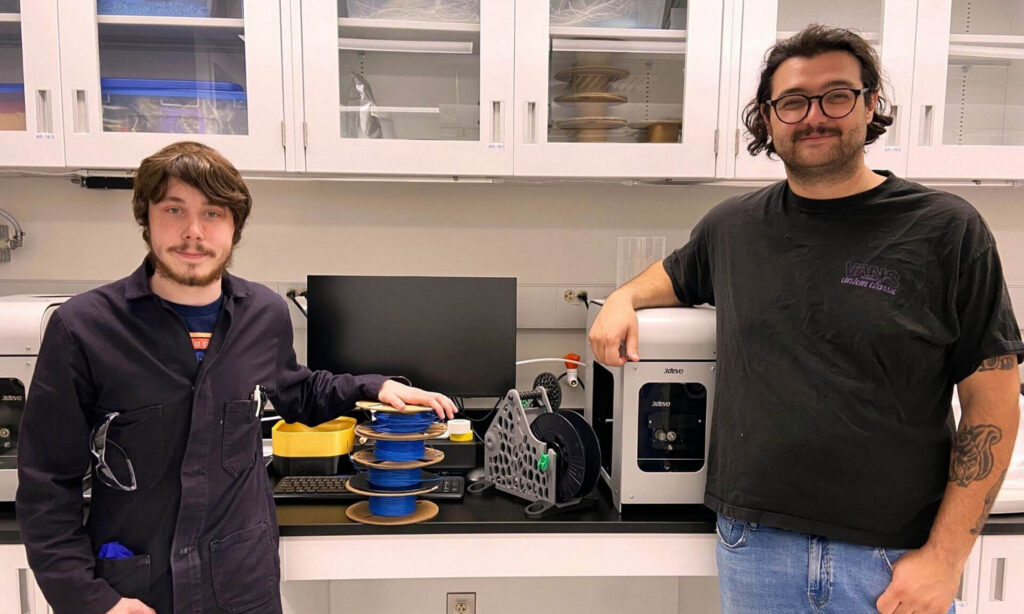
UdeM’s research laboratories and library digital fabrication workshops have seen a substantial increase in the use of 3D printing technologies. Historically, the resulting scrap material has been stored in boxes, posing a logistical and environmental concern. The FilUM initiative, launched last year, redirects this waste to the laboratory of Audrey Laventure, a professor in the Department of Chemistry. Here, the plastic is meticulously recycled and reprocessed into usable 3D printing filament.
The project received initial backing from the Office of the Vice-Rector for Research and Innovation’s environmental responsibility research fund. This year, it secured a grant from the Royal Society of Chemistry’s Sustainability Fund, providing further impetus and resources for its expansion. While Polylactic Acid (PLA), a common 3D printing material, is technically compostable, its decomposition requires specialized industrial composting facilities, which are scarce in Quebec.
Through the FilUM initiative, the university has successfully collected over 40 kilograms of printer scraps via its library system, which have then been recycled. Beyond filament production, the team also innovatively reuses empty filament spools. These spools are rewound with the recycled filament and redistributed within the university, primarily for prototyping purposes.
The cost of the specialized extruders and shredders required for filament recycling presented a significant barrier, potentially making the investment unjustifiable for a single laboratory. However, by consolidating 3D printing waste from across the entire campus, the FilUM initiative has made the investment economically viable and environmentally impactful.
Stéphanie Poirier, a research advisor and a key member of the FilUM project team, explained the rationale behind the campus-wide approach: "With a campus-wide initiative, we can collect enough scraps to produce full spools of filament, which makes FilUM’s equipment cost-effective." This collaborative model not only solves a waste problem but also promotes a circular economy within the university, reducing reliance on virgin materials and fostering a more sustainable research ecosystem.
Drzach&Suchy Launches Creator App for Personalized 3D Illusion Art
Swiss design studio Drzach&Suchy, known for its innovative integration of art and technology, has introduced a new DIY creator app that empowers individuals to design personalized 3D models. The app, centered around "Shattie Cubes," is based on the studio’s earlier work with shadow-casting panels (SCP) and shadow clouds, offering a unique way to create visual illusions through 3D printed objects.
Drzach, an architect, and Suchy, a cryptographer software engineer, have previously explored techniques that allow a single physical object to display multiple images or create intricate shadow projections. The Shattie Cube builds upon this foundation by enabling users to embed three distinct images within a single 3D cube. The principle behind it is an optical illusion: as the cube is rotated or viewed from different angles, specific details align to reveal a hidden image. Furthermore, when a light source is directed through the cube, it projects these hidden images onto a surface behind it, functioning akin to a miniature projector.
The newly launched creator app is designed for user-friendliness and accessibility. Users can upload their desired images, adjust parameters such as the granularity and darkness of each image to control the visual effect, and then initiate the creation process by clicking "Build Shattie Cube." Once satisfied with the preview, users can purchase their personalized 3D printed creation directly through the app.
The app is available for download, and Drzach&Suchy has activated a promotional discount code, "ShattieCube-3DPrint.com," offering a 25% discount on all Shattie Cube models ordered through the end of the current month. This initiative democratizes the creation of sophisticated optical illusion art, making it accessible to a broader audience and encouraging creative exploration with 3D printing technology. The studio’s approach highlights the potential of additive manufacturing not just for functional or industrial applications, but also for novel artistic and personalized consumer products.