In a landmark achievement for the fields of condensed matter physics and materials science, researchers in Japan have successfully captured an extraordinarily fast electronic transformation within a metal-organic framework, observing both a fleeting intermediate state and the subsequent "hidden" state within a window of just 30 femtoseconds. This discovery, spearheaded by a collaborative team from the Institute of Science Tokyo (Science Tokyo), Tohoku University, and the Nagoya Institute of Technology, represents a significant leap forward in our understanding of how light interacts with matter at the most fundamental temporal scales. By combining state-of-the-art ultrafast laser spectroscopy with sophisticated theoretical modeling, the researchers have exposed a previously invisible stage of molecular evolution, providing a blueprint for the future development of high-speed, light-controlled electronic devices.
The study, recently published in the prestigious journal Physical Review Letters, addresses one of the most enduring challenges in modern physics: the observation and control of photoinduced phase transitions. These transitions occur when a material, upon absorbing photons, shifts from its ground state into a new "photoinduced" state with physical, electronic, or magnetic properties that differ radically from its original form. While scientists have long known that light can be used to "switch" material behaviors, the sheer speed at which these changes occur—often measured in quadrillionths of a second—has historically kept the underlying mechanisms shrouded in mystery.
The Frontier of Metal-Organic Frameworks
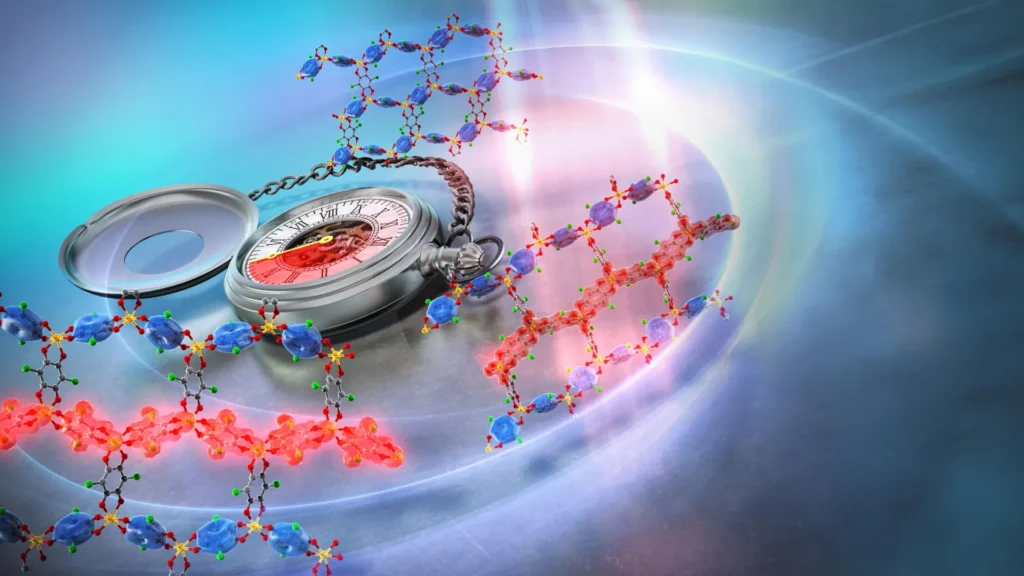
To conduct their investigation, the research team focused on metal-organic frameworks (MOFs). MOFs are a class of crystalline materials composed of metal ions or clusters coordinated to organic ligands to form one-, two-, or three-dimensional structures. Often described as "molecular LEGOs," MOFs are highly prized for their extreme porosity and the ability to tune their chemical and physical properties by swapping out different metal or organic components.
While MOFs are widely known for applications in gas storage, carbon capture, and catalysis, their electronic properties have recently become a focal point for researchers interested in next-generation optoelectronics. Because the structure of a MOF is a delicate balance between metal centers and organic bridges, even minor perturbations—such as those caused by a pulse of light—can trigger massive shifts in how electrons are distributed across the framework.
In this specific study, the team sought to understand the "hidden states" of MOFs. These are metastable configurations that do not exist under thermal equilibrium (standard heating or cooling) but can be accessed through light excitation. Capturing the birth of such a state is akin to photographing a chemical reaction in mid-air; it requires a shutter speed so fast that it can freeze the motion of electrons themselves.
The Femtosecond Challenge: Measuring the Immeasurable
The primary obstacle in observing these transformations is the timescale. A femtosecond (fs) is one-millionth of a billionth of a second. To put this in perspective, if one second were stretched to last 31.7 million years, a single femtosecond would represent just half a minute of that duration. The initial electronic movements that dictate the path of a phase transition happen within this incomprehensible window.
To overcome this, the team, led by Assistant Professor Tadahiko Ishikawa from Science Tokyo’s Department of Chemistry, utilized time-resolved reflectance spectroscopy. This technique employs "pump-probe" methodology: a first, ultra-short laser pulse (the pump) excites the material, and a second pulse (the probe) measures the change in the material’s reflectance.
The researchers utilized laser pulses lasting only six femtoseconds. By varying the delay between the pump and the probe with sub-femtosecond precision, they were able to create a "movie" of the material’s electronic response. This level of temporal resolution allowed them to see not just the starting and ending points of the transformation, but the chaotic, high-energy transition period in between.
Discovery of the Bond-Order Wave Intermediate
The most significant finding of the study was the identification of a previously unknown intermediate electronic state that acts as a bridge between the ground state and the final photoinduced hidden state. Within the first few femtoseconds after the MOF absorbed the light pulse, the researchers observed a dramatic shift in the reflectance spectrum, signaling the emergence of a new optical absorption band.
Through rigorous theoretical calculations performed in tandem with the experimental measurements, the team identified this intermediate phase as a "bond-order wave" state. In this configuration, the electronic bonds between neighboring sites in the MOF crystal lattice began to alternate between stronger and weaker intensities in a rhythmic, repeating pattern.
"We found that the photoinduced hidden state forms within 30 fs through a previously unknown intermediate electronic state," Assistant Professor Ishikawa noted. This bond-order wave is essentially a temporary reorganization of the electron density that precedes any physical movement of the atoms. It represents a purely electronic "scouting party" that prepares the material for the structural changes to follow.
From Electronic Waves to Structural Shifts
The chronology of the transformation revealed by the team follows a precise three-step sequence:
- Excitation (0–5 fs): The material absorbs the 6-fs laser pulse, injecting energy into the electronic system.
- Intermediate Phase (5–20 fs): The system enters the bond-order wave state. Electrons rearrange themselves into alternating patterns of high and low density, creating a transient electronic symmetry.
- Hidden State Formation (20–30 fs): The shifted electronic landscape forces the heavier atomic nuclei to move. These structural adjustments stabilize the material into the photoinduced hidden state.
Theoretical models further suggested that this final hidden state possesses polar characteristics. In a polar state, positive and negative electrical charges are distributed unevenly, creating an internal electric dipoles. If these polar states can be generated and stabilized at room temperature, it opens the door to creating materials that can be switched from non-polar to polar—and thus from non-conductive to conductive or from non-magnetic to magnetic—using nothing but light.
Implications for the Future of Technology
The ability to observe and eventually manipulate these 30-femtosecond windows has profound implications for several high-tech industries. The most immediate impact is expected in the realm of optical computing and high-speed communications.
Current electronic devices rely on the movement of electrons through semiconductors, a process limited by heat generation and the physical speed of charge carriers. Light-based switching, however, operates at the speed of the photons themselves. By utilizing the "hidden states" discovered by the Japanese team, future engineers could design transistors and memory cells that switch states in a fraction of a picosecond, potentially increasing processing speeds by thousands of times while drastically reducing energy consumption.
Furthermore, the discovery of the polar nature of the hidden state suggests applications in "ferroelectric" memory. Ferroelectric materials can retain their electrical polarization even when power is removed, making them ideal for non-volatile storage. The ability to "write" this polarization using ultrafast lasers would allow for data storage densities and speeds currently unattainable with magnetic or flash-based systems.
A New Methodology for Material Design
Beyond the specific findings regarding MOFs, the research establishes a powerful new methodology for the broader scientific community. By proving that theoretical calculations can accurately reconstruct the "invisible" steps of a transformation when paired with ultrafast spectroscopy, the team has provided a new toolkit for material design.
"By revealing intermediate states, our method could help design materials that can be efficiently controlled using light," Ishikawa explained. This suggests a shift from "discovery by trial-and-error" to "discovery by design," where scientists can predict the intermediate electronic pathways of a material before even synthesizing it in the lab.
The collaboration between Science Tokyo, Tohoku University, and the Nagoya Institute of Technology highlights the importance of multi-institutional synergy in tackling complex quantum phenomena. Each institution brought a specific expertise—from laser physics and chemical synthesis to advanced computational chemistry—required to bridge the gap between abstract theory and physical observation.
The Path Forward
While the discovery of a 30-femtosecond transformation is a breakthrough, the researchers emphasize that this is only the beginning. The next phase of research will likely involve exploring how these hidden states can be prolonged. Currently, these states are fleeting, existing only for as long as the laser-induced energy persists. For practical application in consumer electronics, scientists must find ways to "trap" these states or make them more stable at higher temperatures.
Future studies are also expected to apply this ultrafast 6-fs laser technique to other classes of materials, such as high-temperature superconductors and topological insulators. Understanding the intermediate steps in those materials could solve long-standing mysteries regarding how superconductivity emerges or how "lossless" electricity might be achieved at room temperature.
As the scientific community moves closer to the dream of "optical control of matter," the work of Ishikawa and his colleagues serves as a critical milestone. They have shown that even in the blur of a quadrillionth of a second, there is a logical, observable, and ultimately controllable order to the universe. By uncovering the hidden states of metal-organic frameworks, they have lit the way toward a new era of technology where light is no longer just a tool for observation, but the primary driver of material function.