New research from the University of Portsmouth is challenging long-held assumptions about the timeline of planet formation, suggesting that the fundamental ingredients for rocky planets may have been present as early as 100 million years after the Big Bang. This groundbreaking finding, if substantiated, places the very beginnings of planetary development remarkably close to the dawn of the Universe, preceding even the full emergence of the first galaxies. For decades, the scientific consensus has been that planet formation required a significantly longer cosmic timescale, with substantial planetary systems not taking shape until billions of years into the Universe’s history. This latest work indicates that the necessary conditions for constructing worlds like Earth could have materialized far sooner.
The Universe’s First Nurseries: Stellar Explosions as Planet-Maker Factories
The key to this accelerated timeline lies in the life cycles of the Universe’s very first stars. These primordial celestial bodies, known as Population III stars, were extraordinarily massive and short-lived. Their existence was dramatic, culminating in violent stellar explosions, or supernovae, that served as the Universe’s initial cosmic alchemists. These cataclysmic events were instrumental in scattering heavier elements – such as carbon, oxygen, and iron – which are the essential building blocks for terrestrial planets.
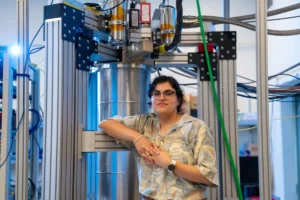
"These stellar blasts spread large quantities of elements such as carbon, oxygen and iron into the surrounding gas," explains Dr. Daniel Whalen, a lead researcher from the University of Portsmouth’s Institute of Cosmology and Gravitation. "Known as ‘Pop III supernovae’, these explosions acted as the Universe’s first major sources of the heavier elements required to make planets and, eventually, life."
The research, which involved extensive computer simulations, modeled the conditions in the early Universe. The simulations demonstrated that even around low-mass, long-lived stars that formed in the aftermath of these first explosive events, the necessary precursors for terrestrial planets could coalesce. This process occurred within the enriched debris ejected by the Pop III supernovae, approximately 100 million years after the Big Bang.
"Our new paper, in which my PhD student Chris Jessop ran the first part of the simulation chain, shows that the precursors of terrestrial planets can form around low-mass, long-lived stars in the debris of the first cosmic explosions 100 million years after the Big Bang," Dr. Whalen stated. "To put this into perspective, the Universe is about 13.8 billion years old, so this is remarkably early in cosmic history." This timescale is particularly astonishing when contrasted with the age of our own solar system, which is approximately 4.6 billion years old. The implication is that the potential for planetary development was present in the Universe’s infancy, long before the structures we recognize as galaxies began to take their familiar forms.
The Power of Pair-Instability Supernovae in Shaping Planetary Disks
Further analysis within the study highlights the role of a particularly energetic type of Pop III supernova: the pair-instability supernova. These events are exceptionally powerful, capable of ejecting more than 100 times the Sun’s mass in heavy elements in a single, monumental explosion. The sheer volume of enriched material released by such an event could dramatically alter the composition of nearby gas clouds.
As gravity begins to pull these enriched clouds together, they can collapse and begin to rotate, forming flattened disks of gas and dust. These protoplanetary disks are the birthplaces of planets, analogous to the disk from which our own Solar System eventually formed.
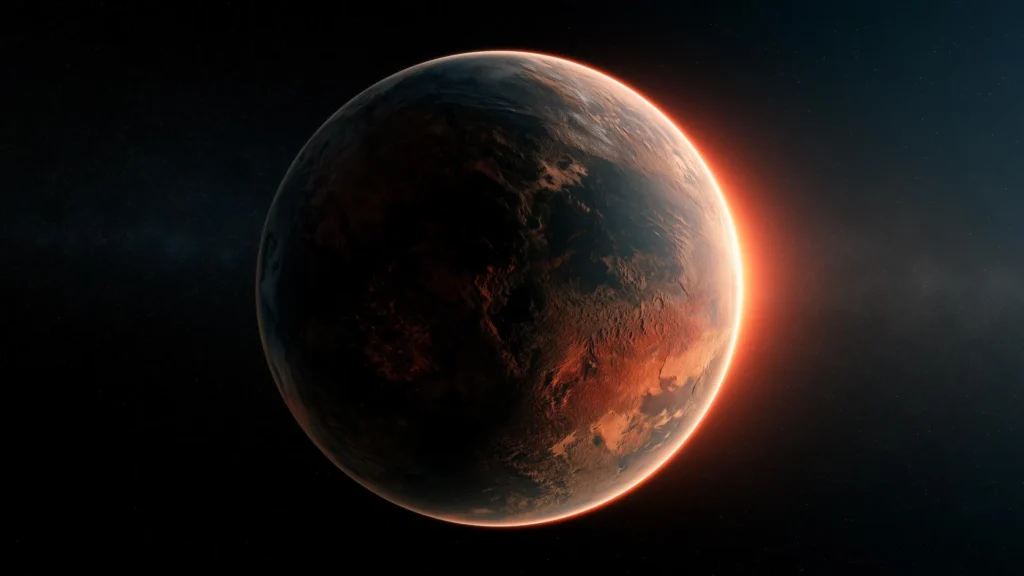
"In our computer simulations of the early Universe, we found one such disk around a young star about 70 percent as massive as the Sun," Dr. Whalen elaborated. "Within that disk, enough solid material accumulated to create several Earth-masses’ worth of planetary building blocks at roughly the same distance from the star as Earth is from the Sun." The simulations are sophisticated enough to track the accumulation of dust grains, their aggregation into larger bodies, and the gravitational dynamics within these nascent planetary systems. The data suggests that not only were the heavy elements present, but they were also concentrated in regions conducive to planet formation.
A Surprisingly Familiar Ingredient: The Presence of Water
Perhaps one of the most startling revelations from the research is the discovery of a substantial water supply within these early protoplanetary disks. The simulations indicated that the disks contained significant amounts of water, with abundances only a few times less than what was present during the formation of our own Solar System.
This finding has profound implications for the potential habitability of these early worlds. Earth is believed to have acquired a significant portion of its water from icy material that was incorporated into the planet during its formation. The presence of water in these early disks suggests that any planets forming in these primordial systems could have received water through similar processes.
"Most surprisingly, the disk also contained substantial amounts of water, only a few times less than what was available when our own Solar System formed," Dr. Whalen noted. "This means that any planets forming there could potentially have received water in a similar way to Earth, which is thought to have gained much of its water from material left over during the planet-building process."
Implications for the Search for Extraterrestrial Life
The confluence of heavy elements, rocky material, and water in the early Universe paints a picture of potentially habitable worlds emerging much sooner than previously imagined. If rocky planets, and indeed worlds with the essential ingredients for life, could have formed within the first few hundred million years of cosmic history, then the timeline for the emergence of life itself may also be dramatically re-evaluated.
"Our findings suggest that the conditions for planet formation may have existed much earlier than previously thought," Dr. Whalen concluded. "If that’s the case, it raises an intriguing question: could potentially habitable worlds have appeared far earlier in the Universe’s history as well?" This opens up new avenues of inquiry for astrobiologists and cosmologists alike, prompting a reconsideration of where and when to search for signs of life beyond Earth. It suggests that the Universe may have had billions of years more opportunity to host life than current models allow.
A New Chronology of Cosmic Evolution
To understand the significance of these findings, it’s helpful to place them within a broader cosmic timeline:
- 0-100 Million Years After the Big Bang: The Universe is a hot, dense plasma. The first atoms of hydrogen and helium form. Massive Population III stars begin to ignite.
- ~100 Million Years After the Big Bang: The first massive stars explode as supernovae, scattering heavier elements. Simulations suggest that around some of these stars, protoplanetary disks rich in these elements, and even water, begin to form. The "precursors of terrestrial planets" start to accumulate.
- Hundreds of Millions to a Few Billion Years After the Big Bang: Galaxies begin to form and evolve. Subsequent generations of stars (Population II and Population I) form from the enriched interstellar medium, leading to more widespread planet formation, including the formation of planetary systems similar to our own.
- ~4.6 Billion Years Ago: Our own Solar System forms from a cloud of gas and dust.
- ~13.8 Billion Years Ago: The Big Bang occurs, marking the beginning of the observable Universe.
This new research pushes the potential start of planetary development to the very earliest stages of this timeline, a period previously thought to be dominated by the formation of the first stars and the initial expansion of the Universe.
Supporting Data and Methodologies
The research is underpinned by sophisticated computational modeling. Scientists utilized advanced astrophysical simulations that model the complex interplay of gravity, radiation, and chemical evolution in the early Universe. These simulations are crucial for understanding processes that cannot be directly observed due to the immense distances and timescales involved.
Key parameters in the simulations included:
- Initial Chemical Composition: The simulations started with the primordial abundance of hydrogen and helium, and then incorporated the enrichment from Pop III supernovae.
- Stellar Evolution Models: The life cycles and explosion mechanisms of massive Pop III stars were modeled to accurately predict the composition and distribution of heavy elements.
- Disk Formation and Evolution: The simulations tracked the gravitational collapse of gas and dust clouds, the formation of rotating disks, and the subsequent accretion of solid material into planetesimals and protoplanets.
- Water Abundance Modeling: The presence and distribution of water molecules within the simulated disks were specifically modeled, taking into account chemical reactions and temperature gradients.
The paper, published in The Astrophysical Letters Journal, represents a significant step forward in our understanding of cosmic evolution and the origins of planetary systems.
Broader Impact and Future Research
The implications of this research extend far beyond the field of astrophysics. If rocky planets and the ingredients for life were available so early in the Universe’s history, it dramatically expands the potential cosmic real estate where life could have arisen. This could influence strategies for searching for extraterrestrial intelligence (SETI) and the design of future space telescopes aimed at detecting exoplanets.
Future research will likely focus on:
- Refining Simulations: Increasing the resolution and complexity of simulations to better understand the precise conditions under which planet formation could occur.
- Observational Verification: While direct observation of these early planetary systems is currently impossible, future telescopes with advanced capabilities might be able to detect indirect evidence of their existence or their chemical signatures.
- Theoretical Exploration: Further theoretical work will be needed to explore the full range of planet types and potential evolutionary pathways that could have occurred in such early cosmic epochs.
This work from the University of Portsmouth provides a tantalizing glimpse into a Universe that may have been more dynamic and hospitable to the formation of worlds much earlier than we ever believed. It challenges our fundamental timelines of cosmic history and invigorates the ongoing quest to understand our place within the vastness of space and time.