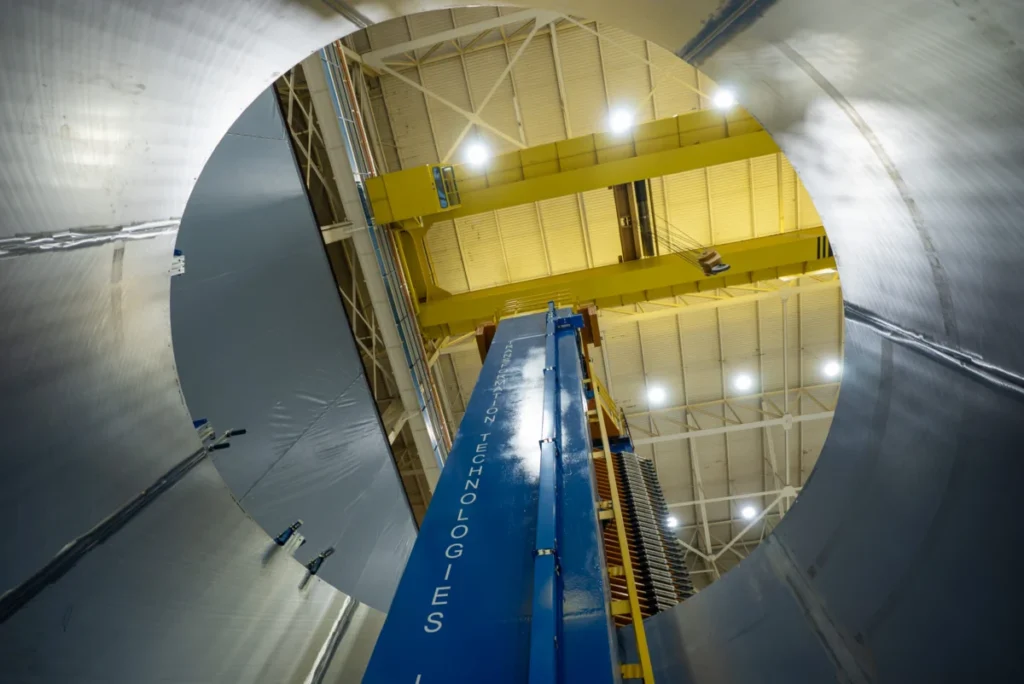
Inside a cavernous, multi-story warehouse at NASA’s Marshall Space Flight Center in Huntsville, Alabama, a massive metal cylinder, the vital spacer for an upcoming Artemis mission, is meticulously being machined. A powerful cutting tool whirs and sparks, shaving away material at a steady pace, leaving a fragrant trail of metallic dust. Engineers, their faces illuminated by the glow of multiple computer monitors, closely observe the process, tracking the precise measurements of approximately 13 centimeters per minute. This deliberate operation, requiring four full rotations to complete the cut, marks a critical juncture in NASA’s accelerated approach to lunar exploration, driven by a strategic pivot for the Artemis III mission.
This newly fabricated spacer is destined for orbit next year, serving as a crucial component in the upper stage of the Space Launch System (SLS) rocket for Artemis III. Its creation is a direct result of NASA’s February decision to reconfigure Artemis III from its initial objective of the program’s inaugural lunar landing to a demonstration mission in low-Earth orbit. This revised plan will see an SLS rocket propel four astronauts in an Orion capsule to practice complex rendezvous and docking maneuvers with test articles of Blue Origin’s Blue Moon and SpaceX’s Starship lunar landers. This ambitious undertaking has necessitated ingenuity and swift action from NASA engineers.
"We’ve managed to come up with some flight hardware in a very short amount of time," Brent Gaddes, the adapter and spacer lead at NASA Marshall, stated during an on-site visit. The Artemis III mission, now scheduled for 2027, does not require the full thrust of the Interim Cryogenic Propulsion Stage (ICPS), the original upper stage designed to send Orion on a trajectory to lunar orbit. Consequently, NASA opted in April to substitute the ICPS with the spacer for Artemis III. This strategic swap allows the final ICPS to be reserved for Artemis IV, thereby bolstering the timeline for the program’s crucial lunar landing mission, now targeted for 2028. Concurrently, NASA is pursuing standardization of the SLS design, opting to adapt existing commercial upper stage technology rather than developing a bespoke, long-planned upgrade. This pragmatic approach aims to streamline production and enhance launch cadence.
A "Hodgepodge" Rocket for an Accelerated Artemis III
The current development efforts at NASA Marshall are largely focused on adapting and repurposing existing hardware and test articles to ensure the Artemis III mission remains on its expedited schedule. This has led to what John Blevins, NASA’s chief engineer for SLS, candidly described as a "hodgepodge" rocket configuration for Artemis III.
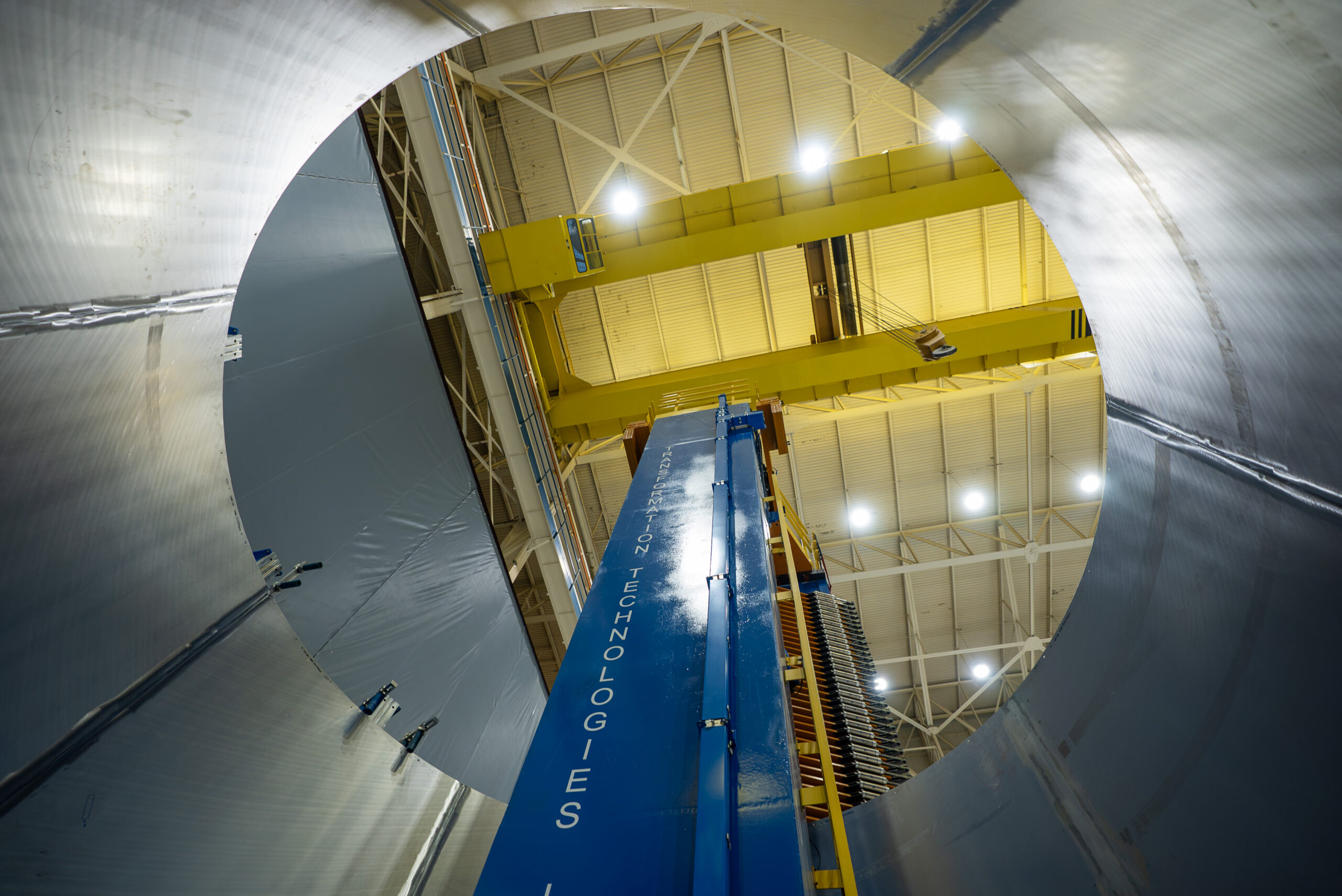
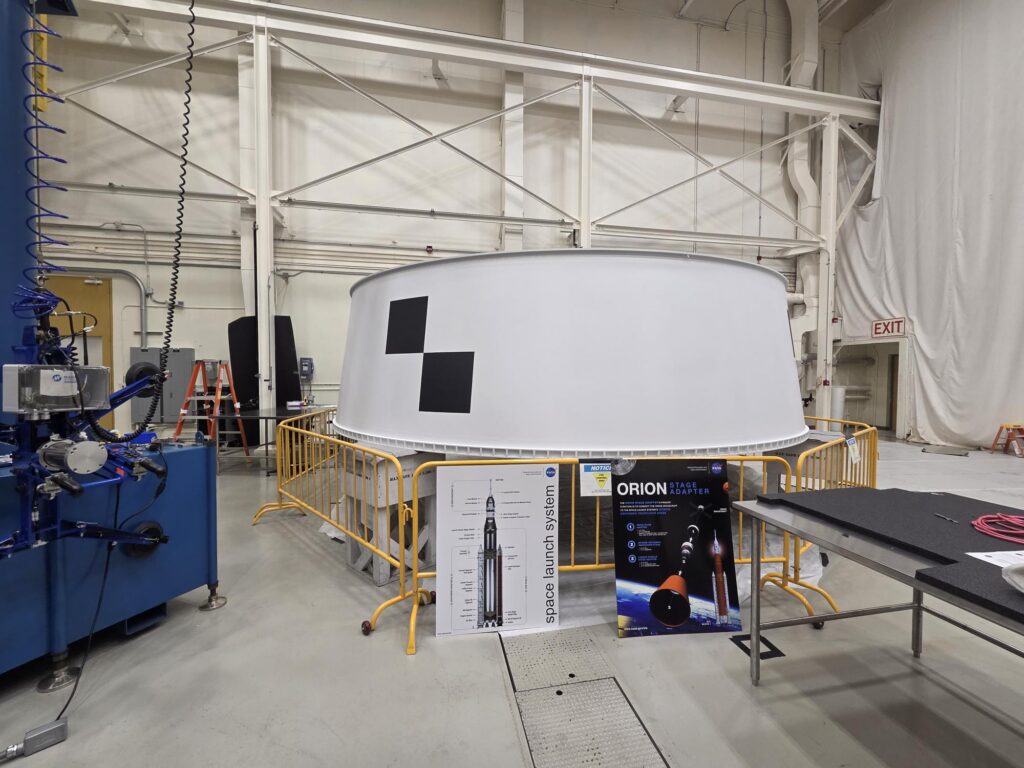
For the critical spacer component, engineers designed a "barrel" shape. "With two flanges to mimic the barrel of the ICPS," explained Patrick Hull, the engineering lead for the center’s Spacecraft/Payload Integration and Evolution Office. "The outer mold line and interfaces will remain the same." To expedite the process and circumvent lengthy waits for new materials, NASA engineers ingeniously turned to legacy components. "We found old material – 30-year-old material – and studied it, inspected it, measured it and cleaned it up," Hull elaborated. The primary material for the spacer is sourced from the external tanks of the Space Shuttle program. Further enhancing this resourceful approach, a ring forging, a remnant from the canceled Ares program, was procured from NASA’s extensive "boneyard" of retired hardware.
The timeline for this rapid fabrication is remarkable. "We started this work in April, and here we are in August. We have a barrel built. We have rings built, and we are aiming for a December completion date," Hull confirmed. "This will be a total of an eight-month build for flight hardware." This accelerated manufacturing schedule underscores the urgency and adaptability of the Artemis program.
In parallel with the upper stage modifications, engineers at the SLS Systems Integration Lab are conducting extensive launch simulations. This facility, equipped with mock-up hardware and actual flight software, allows for rigorous testing of the revised rocket configuration. The lab’s massive semicircular rack, roughly the width of the SLS core stage, houses representative avionics and flight computers. While the setup is technically inverted to provide easier access for engineers, it accurately replicates the flight environment. Dustin Baker, the facility’s testing lead, and Ariel Kramer, the lab manager, are focused on validating the minimal changes introduced for Artemis III compared to the Artemis II mission. "The testing that we’re going to focus on is the changes from Artemis II," Baker noted. "There are very few of those, and they’re all centered on the spacer configuration." Having completed development testing and dry runs, formal verification testing is slated to commence in October.
The adapters required to connect the new spacer with the core stage below and the Orion capsule above are also being repurposed. Blevins confirmed that structural test articles, originally built and tested for Artemis I in 2022, are being utilized. This strategic reuse preserves the flight-ready Orion Stage Adapter (OSA) and Launch Vehicle Stage Adapter (LVSA) designed for the ICPS, ensuring they are available for Artemis IV. The LVSA test article, which Blevins admitted they "never really expected to use," has been deemed suitable for Artemis III. "We let it earn its way in," he stated, with the decision to incorporate it made "literally just weeks ago." The OSA test article, being "more overbuilt," was a more confident candidate for repurposing from the outset. Gaddes provided a glimpse into the cleanroom where the OSA had recently undergone preparations before being moved to the paint shop for its exterior coating.
Even the diaphragm within the OSA, a critical protective component for Orion, is a testament to NASA’s resourcefulness. Composite materials left over from the canceled Block 1B SLS upgrade, which was to feature a new Exploration Upper Stage (EUS), were preserved in a freezer due to their finite shelf life. Marshall engineers have ingeniously repurposed this material to fabricate a new diaphragm, which has been precisely machined and is ready for installation. Despite this unique amalgamation of hardware, Hull observed that "if you’re a ways away, the rocket’s going to look like Artemis I and Artemis II," maintaining a consistent external appearance for the uninitiated observer.
A Choreographed Dance of Lunar Landers
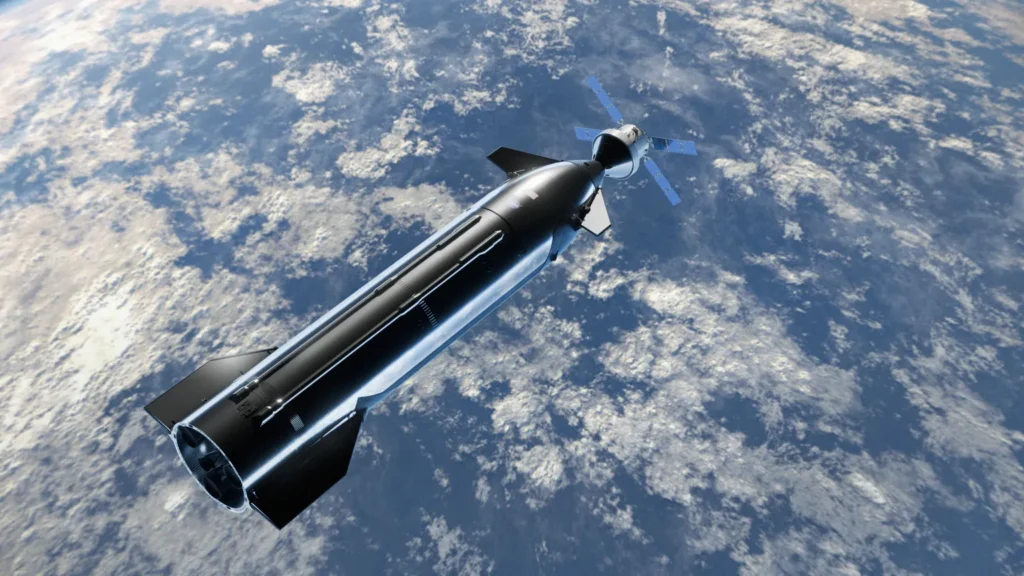
Artemis III’s primary objective beyond the SLS demonstration is to validate the operational capabilities of the Human Landing Systems (HLS) in orbit. While Blue Origin and SpaceX have conducted extensive ground testing of their respective lander docking systems, Artemis III will mark their inaugural orbital deployment. The mission, projected to last approximately two weeks, will see Orion first dock with a Blue Moon Mark 2 test article. This maneuver will allow up to two crew members to enter the lander’s cabin, a crucial step in demonstrating operational readiness. Following this, Orion will rendezvous and dock with the Starship test lander, though astronauts will not enter this vehicle.
Kent Criswell, lead systems engineer for the Human Landing Systems program, expressed confidence in the progress of both lander developers. "For Blue, [the work is] to build their lunar crew module," he stated. A Blue Origin spokesperson indicated that recent collaborations with NASA Marshall have concentrated on testing the BT-7 thrusters vital for their lander’s descent and ascent.
For SpaceX, Criswell explained, "They’re going to pull one of those Starships off the [production] line, then they’re going to actually modify it with the docking adapter, so they’re on track." While SpaceX did not provide a direct comment, NASA Administrator Jared Isaacman indicated earlier this month that the company had "already started cutting hardware for that test vehicle," signaling tangible progress. The remaining milestones for the lander development include multiple design reviews, with a significant focus on how each company’s testing will verify that their hardware meets NASA’s stringent requirements.
During a mid-August press conference at Kennedy Space Center, Isaacman echoed this optimism regarding lander development and the Artemis III timeline. He emphasized the significant risk reduction that will be achieved prior to Artemis IV by the invaluable data gathered from this mission.
Standardizing the Space Launch System for Increased Cadence
Isaacman’s overarching goal is to elevate the SLS launch cadence to at least once annually, commencing with Artemis III. To achieve this, NASA has contracted with United Launch Alliance (ULA) to replace the ICPS with the Centaur V upper stage, a component utilized in ULA’s Vulcan Centaur rockets. This standardized upper stage configuration is slated for its debut on Artemis V, targeted for late 2028.
The Centaur V offers enhanced capabilities. "Centaur V will be able to send bigger payloads deeper than ICPS," Blevins explained, although he noted it is "not as big and not as capable as the EUS design that was on paper." The Centaur V is equipped with two RL10 engines, compared to the ICPS’s single engine, and possesses slightly larger dimensions. "We’re in the process now of designing new adapters to accommodate a Vulcan stage," Gaddes added.
The Block 1B upgrade had envisioned the SLS flight computers being housed within the EUS. However, with the adoption of the Centaur V, NASA intends to retain the flight computers within the core stage, aligning with the original configuration. "ICPS was always temporary," Blevins reiterated. "That’s not the intent for the Centaur, and so we’ll work more closely with the software developers in United Launch Alliance, as well as NASA, in order to provide some key things that are good for crew safety." A ULA spokesperson expressed their eagerness to collaborate and continue their support.
Wind tunnel testing of the Centaur V is actively underway at NASA’s Ames Research Center. "This week [they’re] doing some of the most key testing" to determine optimal flight parameters for the new stage. Blevins indicated that while the design is "strategically complete," NASA anticipates making modifications based on the ongoing testing results. He concluded by highlighting the consistent core stage design, stating, "Honestly, I think we’re a long way toward that standardization. Certainly, the Centaur will be the final piece that helps achieve the mission standardization." This focus on standardization is crucial for enabling a more frequent and reliable cadence of deep space missions, paving the way for sustained human presence beyond Earth orbit.