The European Space Agency (ESA) is extending an unprecedented invitation to European researchers and companies: the chance to deploy and test their cutting-edge software directly in the harsh environment of deep space aboard ESA’s Hera mission. This unique opportunity, set to unfold millions of kilometers from Earth, represents a significant step forward in fostering European innovation in space technology and autonomy.
A New Mission for Hera: From Planetary Defense to Flying Lab
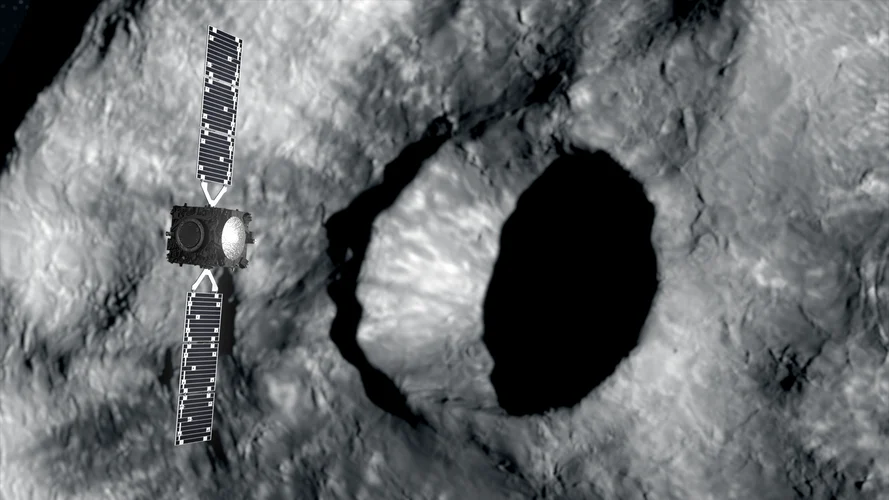
Originally tasked with critical planetary defense objectives, ESA’s Hera mission is scheduled to complete its primary goals around the Didymos and Dimorphos asteroids in mid-2027. However, its journey will not end there. Following its scientific investigation of these celestial bodies, Hera will pivot to a groundbreaking new role: serving as a sophisticated, in-flight software laboratory. Positioned approximately 150 million kilometers from Earth, this distant vantage point offers a challenging yet invaluable environment for testing next-generation space technologies.

The core of this initiative is to empower European innovators to rigorously test advanced onboard intelligence, sophisticated image processing algorithms, and AI-driven operational capabilities directly on a functioning spacecraft. This real-world testing ground, far beyond the controlled conditions of Earth-based simulations, promises to accelerate the development and validation of technologies crucial for future space exploration and operations.
Pushing the Boundaries of Onboard Intelligence
Dietmar Pilz, ESA’s Director of Technology, Engineering and Quality, emphasized the significance of this initiative. "This is an exceptional opportunity that will help accelerate European innovation, enabling researchers and industry to push the boundaries of onboard intelligence and autonomy," Pilz stated. "We invite Europe’s innovators to shape the next generation of intelligent, robust and autonomous space missions."
He further elaborated on the specific focus of the call for proposals: "We are looking for targeted, innovative experiments that push onboard intelligence beyond today’s procedural boundaries, while running safely alongside Hera’s flight-critical systems in a protected ‘sandbox’ environment. These ideas will help ESA mature technologies that reduce reliance on ground control, increase mission resilience, and enable more capable future exploration missions."

The concept of a "sandbox" environment is critical. It ensures that experimental software, while operating in a real space mission context, remains isolated from Hera’s core flight systems. This protected space is designed to prevent any potential disruptions to the spacecraft’s primary functions, guaranteeing the safety and success of its ongoing scientific and operational objectives.
Strengthening Europe’s Leadership in Space Systems
By opening its mission infrastructure to external innovators, ESA aims to create a dynamic ecosystem for technology development. This strategy is designed to accelerate the maturation of crucial technologies and, in doing so, bolster Europe’s position as a leader in the global space sector. The initiative underscores ESA’s commitment to collaborative innovation and its proactive approach to identifying and nurturing future space capabilities.
A Comprehensive Timeline and Key Milestones
The journey to this deep-space software testing phase involves several critical stages, illustrating the meticulous planning and execution required for such ambitious projects.

- 2024: ESA’s Hera mission is launched.
- Late 2026: Hera is scheduled to complete its primary planetary defense objectives around the Didymos and Dimorphos asteroids.
- Mid-2027: Hera transitions into its role as a flying software laboratory.
- October 2026: ESA will select the winning ideas for software experiments.
- May 31, 2027: Deadline for the submission of the full implementation packages and source code for selected teams.
- August 2027: A one-month period dedicated to executing the selected software experiments in deep space.
From Asteroid Investigation to Cutting-Edge Software Testing
Hera’s primary mission has its roots in the groundbreaking DART mission conducted by NASA. Launched in 2024, Hera is currently en route to its targets. Its scientific objective is to conduct a detailed post-impact investigation of Dimorphos, the small asteroid moonlet that was intentionally struck by NASA’s Double Asteroid Redirection Test (DART) spacecraft in 2022. This impact famously altered Dimorphos’s orbit around its parent asteroid, Didymos, marking the first successful kinetic impact test to modify the trajectory of a Solar System object.
Upon arrival in autumn 2026, Hera will perform an unprecedented close-up "crash scene investigation." It will meticulously gather data on the asteroid’s composition, the ejected material, and the precise nature of its orbital change. This detailed analysis is crucial for understanding the mechanics of asteroid deflection and for refining our strategies for planetary defense – a vital aspect of safeguarding Earth from potential asteroid threats. The data collected by Hera will resolve key scientific questions that lie at the heart of understanding how to mitigate asteroid impact risks.
Redefining Spacecraft Operations
Ian Carnelli, Hera mission manager, highlighted the transformative potential of this new phase. "Usually, we operate precious deep-space missions based on carefully validated procedures and frequent ground control oversight," Carnelli explained. "But in this case, we are inviting European innovators to work in a real mission environment to help redefine how spacecraft might think, decide and operate in the future."

He further clarified the objective: "The goal is not to hand over control of Hera, but to safely test ideas that could light the way towards more capable, more autonomous and more resilient spacecraft operations." This distinction is crucial; the experiment is not about relinquishing mission control but about leveraging the spacecraft’s operational capabilities to test novel autonomous functionalities.
A Safe and Robust Testing Environment
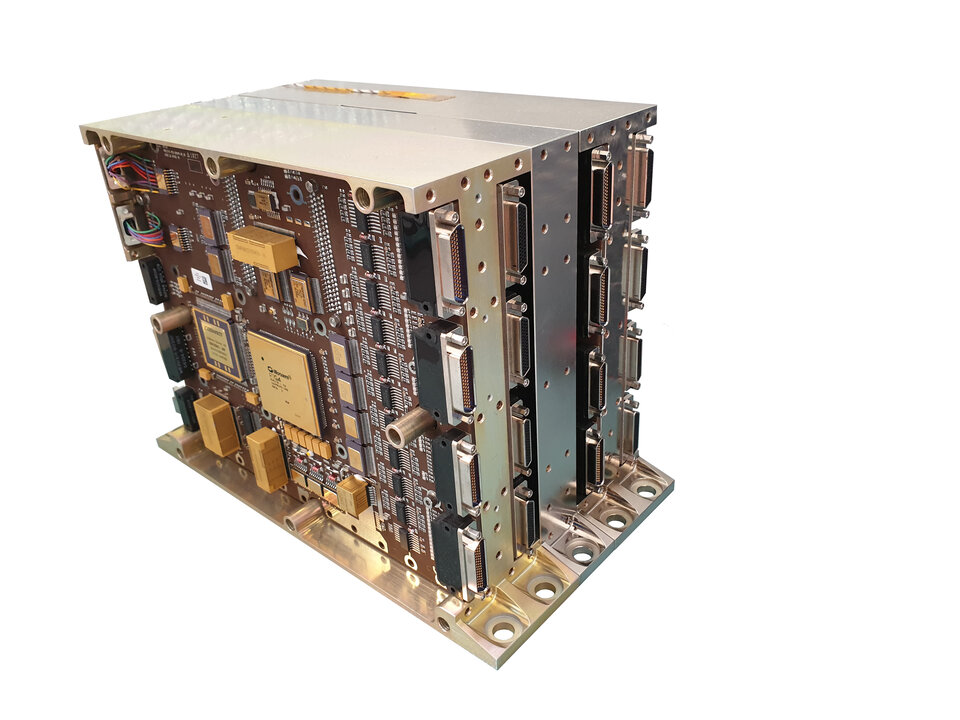
Ensuring the safety and integrity of Hera’s operations is paramount. ESA’s software engineer for Hera, Jorge Lopez Trescastro, detailed the technical safeguards in place. "Our priority is to perform these experiments in an entirely safe way, so we are taking advantage of the fact that Hera’s onboard computer runs on a European-developed dual-core LEON3 processor," Trescastro stated.
He elaborated on the architecture: "One core will operate the actual spacecraft, while the other has a safe sandbox environment that has been optimized to host guest software. Access to spacecraft instruments and subsystems will be fully facilitated, while the hosted software will only run for two to three hours at a time, and be shut off immediately if any problems are identified." This layered safety protocol is designed to allow for robust testing without compromising the mission’s core functions.

The technical challenges in setting up this dual-core processing and isolated execution environment have been significant. However, Trescastro expressed optimism: "Setting all this up to execute in a safe and reliable way has been really challenging, but now we are ready, and really excited to see what ideas the community brings forward!"
Call for Ideas: The Open Space Innovation Platform
The mechanism for submitting innovative software concepts is ESA’s Open Space Innovation Platform (OSIP). This dedicated online portal serves as a gateway for external partners to propose groundbreaking ideas. Potential participants are required to submit an outline form for an initial evaluation by ESA.
Submit Your Ideas Here: https://ideas.esa.int/core/servlet/hype/IMT?documentTableId=8527279057944083272&userAction=Browse&templateName=&documentId=76590fb19b5e6424d8862a329c2884b1
Following the initial evaluation and selection of winning ideas in mid-October 2026, the chosen teams will be invited to provide their complete implementation packages and source code for detailed validation. The final deadline for submitting the full implementation is May 31, 2027, ensuring ample time for thorough review and integration before the planned August 2027 testing period.
ESA’s Track Record in In-Orbit Technology Demonstration
Hera’s role as a flying software laboratory is part of a long-standing ESA tradition of in-orbit technology demonstration. This approach has been instrumental in de-risking future missions and accelerating the adoption of new technologies. ESA has a proven history of utilizing its spacecraft for experimental purposes, including the Proba family of satellites. The current Proba-3 mission, for example, showcases advanced formation flying capabilities.
Furthermore, ESA has previously provided opportunities for software developers to test their applications in space. The OPS-SAT CubeSat, a flying laboratory, famously allowed developers to run standard software, including, in one notable instance, the classic video game Doom. This demonstrates ESA’s willingness to explore unconventional applications and foster a broad spectrum of innovation.

The Henon CubeSat, a planned mission for deep-space exploration, also exemplifies ESA’s commitment to pushing the envelope. These initiatives collectively contribute to Europe’s ability to test new technologies directly in the unforgiving environment of space, reduce development risks for future ambitious programs, and facilitate a rapid transition of innovations from terrestrial laboratories to operational space missions.
Hera’s software laboratory initiative builds upon this legacy, offering an even more advanced and challenging platform for experimentation. It represents a forward-thinking strategy to leverage existing, high-profile missions for broader technological advancement, inviting the European space community to contribute to the future of autonomous and intelligent space exploration. The success of this program will not only advance specific technologies but also cultivate a more agile and innovative European space sector.