September unfurls a celestial tapestry for stargazers, presenting a rich lineup of astronomical events designed to captivate both seasoned astronomers and casual observers. From the dazzling brilliance of Venus to the symbolic transition of the autumnal equinox, this month offers a consistent stream of cosmic wonders. The Moon, our ever-present celestial companion, will serve as an invaluable guide, leading viewers to the heart of the Milky Way and highlighting the graceful dance of distant planets.
Guiding Lights: The Moon’s Journey Through the Night Sky
Throughout the latter half of September, specifically between the 14th and the 20th, the Moon transforms into an astronomical roadmap. Approximately an hour after sunset, observers are encouraged to direct their gaze southward. As the Moon traverses its orbit, its position relative to the more distant stars will shift nightly, providing a dynamic celestial spectacle. This lunar journey offers a unique opportunity to locate and appreciate several prominent celestial features.
Early in this period, the Moon will grace the vicinity of Antares, a star renowned for its striking reddish hue. Antares, often referred to as the "heart of the Scorpion," marks the most prominent star in the constellation Scorpius. Its vivid color and significant brightness make it a readily identifiable beacon in the southern sky, especially as twilight deepens.
Following its passage by Antares, the Moon’s path will lead observers toward the constellation Sagittarius. Within this region of the sky lies an easily recognizable asterism known as the "Teapot." This pattern of stars, with its distinct handle, lid, and spout, offers a charming celestial analogy that resonates with many. For those fortunate enough to be under exceptionally dark skies, a faint, ethereal band of light may become visible, seemingly emanating from the Teapot’s spout like a wisp of steam. This hazy glow, upon closer examination and tracing towards its densest region, points directly towards the galactic center of the Milky Way. This phenomenon, the core of our galaxy, is a profound reminder of our place within the vast cosmic structure, a dense concentration of stars and gas that is otherwise obscured by interstellar dust from our vantage point. The Milky Way’s core is approximately 26,000 light-years away, and its light, traveling for millennia, offers a glimpse into the ancient history of our galaxy.
Venus: A Dazzling Display of Planetary Brilliance
On September 18th, the western sky will be dominated by the planet Venus, which is set to reach its peak brilliance for its current evening appearance. Venus, often called the "morning star" or "evening star" due to its proximity to the Sun, will be an unmissable sight. Not long after sunset, it will emerge as an intensely bright point of light, positioned low above the western horizon. Its luminosity will far surpass that of any surrounding stars, making it a clear and unmistakable celestial object. To fully appreciate this dazzling display, an unobstructed view of the western horizon is essential, as Venus will eventually dip below it as the night progresses.
Venus’s remarkable brightness is a consequence of several factors. Firstly, it is the second planet from the Sun, meaning it receives a significant amount of solar radiation, which it reflects. Secondly, Venus is almost as large as Earth, and its dense atmosphere, composed primarily of carbon dioxide, is covered in thick clouds of sulfuric acid. These highly reflective clouds, known as the cloud tops, bounce back a substantial portion of the sunlight that reaches the planet, contributing to its extraordinary albedo. The planet’s orbital position also plays a crucial role; when Venus is on the same side of the Sun as Earth, it appears to us as a brilliant "evening star" or "morning star," depending on whether it is setting after the Sun or rising before it. During this September appearance, Venus is in its crescent phase as seen through a telescope, which, paradoxically, makes it appear larger and brighter from Earth due to its proximity and the way its illuminated surface is presented.
International Observe the Moon Night: A Global Celebration of Our Lunar Neighbor
September 19th marks a special occasion for lunar enthusiasts worldwide: International Observe the Moon Night. This global event encourages people from all corners of the Earth to dedicate time to observing our closest celestial companion. It is an opportunity not only to marvel at the Moon’s ever-changing phases and surface features but also to delve into the fascinating realm of lunar science, explore the history of lunar exploration, and understand the Moon’s profound influence on Earth’s tides, climate, and even human cultures throughout history.
Initiated by NASA’s Goddard Space Flight Center, International Observe the Moon Night has grown into a significant global outreach program. The event aims to foster a sense of connection to the cosmos and inspire curiosity about space exploration. Participants are encouraged to share their observations and experiences, creating a collective global experience. Resources and information on how to participate, including finding local events or organizing personal observations, are available through NASA’s dedicated portal, go.nasa.gov/ObserveTheMoon. This initiative underscores the Moon’s enduring appeal and its role as a gateway to understanding our solar system and beyond. The Moon’s gravitational pull is instrumental in stabilizing Earth’s axial tilt, which in turn contributes to a more stable climate, a crucial factor for the development and sustenance of life.
The September Equinox: A Celestial Marker of Seasonal Transition
On September 22nd, the Earth reaches a pivotal point in its orbit around the Sun, marking the September equinox. For those in the Northern Hemisphere, this day signifies the official commencement of autumn, while residents of the Southern Hemisphere will welcome the arrival of spring. The equinox is a celestial event that occurs twice a year, around March 20th and September 22nd. On these dates, the Sun is positioned directly above Earth’s equator.
This alignment results in nearly equal lengths of daylight and darkness across most of the planet. As the equinox passes, the Northern Hemisphere will begin to experience progressively shorter days and longer nights, as it tilts further away from the Sun. Conversely, the Southern Hemisphere will see an increase in daylight hours as it tilts towards the Sun. The precise moment of the equinox for 2023 is at 02:04 UTC on September 23rd, meaning the exact moment of astronomical fall begins for the Northern Hemisphere. This seasonal shift has profound implications for ecosystems, agriculture, and human activities worldwide, influencing everything from plant growth cycles to migratory patterns of animals. The equinox also represents a time of balance, a brief period where day and night are in equilibrium before the dominance of one over the other begins for the coming season.
The Harvest Moon: A Celestial Dance with Saturn and Neptune
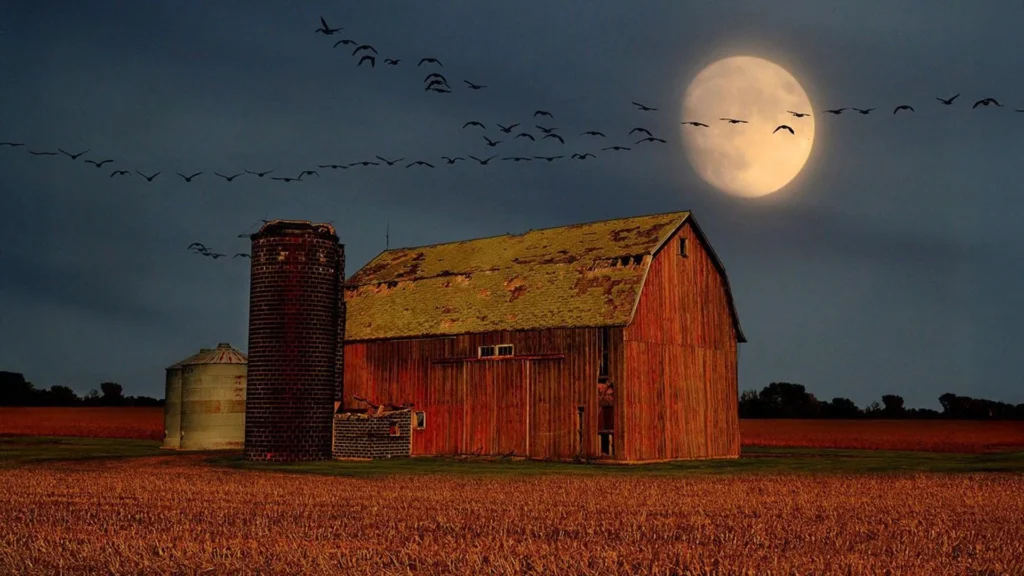
Concluding the month’s astronomical highlights is the appearance of the Harvest Moon on September 26th. This full moon, traditionally the closest full moon to the autumnal equinox, will rise in the eastern sky shortly after sunset, offering a spectacular visual. Adding to the spectacle, the ringed planet Saturn will be a visible companion, appearing in close proximity to the Moon. Furthermore, the much fainter planet Neptune will form a broad triangle with Saturn and the Moon, presenting a more challenging, yet rewarding, observational target.
Saturn, with its prominent rings, is a readily observable object even with the naked eye, appearing as a bright, steady point of light. Its magnitude typically ranges from +1.0 to +2.0, making it easily distinguishable from stars. Neptune, however, is a more elusive celestial body. At an average apparent magnitude of around 8.0, it is far too dim to be seen without optical assistance. Binoculars or a telescope are essential for spotting Neptune. Its faintness is due to its immense distance from Earth, being the eighth planet in our solar system, approximately 2.8 billion miles away. Even with appropriate equipment, clear, dark skies free from light pollution and favorable atmospheric conditions are crucial for its detection. The orbital path of Neptune is vast, taking approximately 165 Earth years to complete a single revolution around the Sun. Observing Neptune alongside the Moon and Saturn offers a unique opportunity to appreciate the relative positions and vast distances within our solar system.
The Harvest Moon gets its name from its association with the harvest season, as it traditionally rose around sunset, providing farmers with extra light to continue their work during the autumn harvest. Historically, it was a crucial source of illumination for agricultural activities. The timing of the Harvest Moon varies each year, depending on the date of the autumnal equinox.
A Month of Cosmic Wonders: Broader Implications and Future Prospects
September’s astronomical offerings serve as a potent reminder of the dynamic and ever-changing nature of our universe. These events not only provide opportunities for aesthetic appreciation but also foster scientific curiosity and understanding. The visibility of planets like Venus and Saturn, the grandeur of the Milky Way, and the predictable cycles of the equinox and lunar phases all contribute to our ongoing exploration and comprehension of the cosmos.
The International Observe the Moon Night, in particular, highlights the importance of public engagement in astronomy. By encouraging widespread observation and learning, such initiatives cultivate a greater appreciation for space science and inspire future generations of scientists and explorers. As technology advances, our ability to observe and study celestial phenomena continues to improve, promising even more breathtaking discoveries and insights into the universe’s mysteries. The continued study of planets like Venus, with its extreme atmospheric conditions, offers valuable insights into planetary evolution and the potential for life beyond Earth. Similarly, the study of outer planets like Neptune helps us understand the formation and dynamics of gas giants and the outer reaches of our solar system. September’s celestial calendar offers a rich educational experience for all, bridging the gap between scientific inquiry and public wonder.