In a period marked by relentless innovation and profound inquiry, the global scientific and engineering communities have recently unveiled a series of groundbreaking discoveries and technological advancements that promise to redefine our understanding of the cosmos, reshape computational paradigms, and offer novel solutions to pressing global challenges. From the microscopic realm of DNA-based computing to the cosmic dance of dark matter and the ambitious engineering feats addressing environmental concerns, these developments underscore a vibrant era of human ingenuity and persistent scientific pursuit.
Revolutionizing Computation and Fundamental Physics
A notable stride in unconventional computing involves the development of a first-of-its-kind DNA computer. This pioneering device demonstrates the ability to solve complex mathematical problems without the need for traditional wires or continuous external power, marking a significant departure from conventional silicon-based processors. Utilizing intricate biochemical reactions and the inherent self-assembly properties of DNA molecules, this system operates on principles fundamentally different from electronic circuits. The research highlights its potential for ultra-low-power, highly parallel computation, opening doors for applications in areas like advanced biosensing, intelligent drug delivery systems, and embedded diagnostics where miniaturization, biocompatibility, and energy efficiency are paramount. Experts suggest that the inherent self-replication capabilities of DNA could lead to computing elements seamlessly integrated into biological systems or operating autonomously in challenging, remote environments.
In theoretical physics, intriguing new insights continue to push the boundaries of established knowledge. A physicist has recently provided theoretical proof that Star Trek’s iconic warp speed combat maneuver, the Picard Maneuver, could theoretically work. This analysis delves into advanced relativistic physics and spacetime manipulation, examining the conditions under which such a maneuver – involving an apparent instantaneous shift to warp speed to appear in multiple locations simultaneously – might be plausible within the framework of current theoretical understanding. While requiring hypothetical technologies far beyond our present capabilities, this work reignites discussions on the ultimate limits of propulsion and the potential for exotic spacetime engineering, drawing renewed interest from both the scientific community and science fiction enthusiasts.
Further challenging fundamental theories, a new study involving exotic cold atoms is testing Einstein’s theory of gravity. By cooling atoms to temperatures near absolute zero and precisely measuring their quantum properties in gravitational fields, scientists aim to detect subtle deviations from the predictions of General Relativity. These ultra-cold atom interferometry experiments, conducted with unprecedented precision, are crucial for probing the interface between quantum mechanics and gravity. Any observed discrepancies could potentially reveal new physics beyond the Standard Model, offering invaluable clues to the nature of dark energy, the existence of extra dimensions, or a unified theory of quantum gravity. The successful execution of such high-precision experiments represents a significant technological triumph in the field of atomic physics.
The enigmatic realm of quantum mechanics also saw a significant observation as scientists at the Large Hadron Collider (LHC) spotted spooky quantum entanglement in Z bosons. Z bosons are fundamental particles that mediate the weak nuclear force and are incredibly short-lived. The detection of entanglement – where particles remain interconnected regardless of distance – in these massive, high-energy particles provides new experimental data on the universality of quantum mechanics and its implications for particle interactions at extreme scales. This finding contributes to our fundamental understanding of the Standard Model of particle physics and could inform future theories attempting to unify fundamental forces within a quantum framework.
The persistent quest to comprehend the universe’s composition received a boost with a new study aimed at enhancing the search for the invisible substance that makes up 85% of the universe’s total matter – dark matter. Despite decades of intensive research and numerous dedicated experiments, dark matter remains one of the greatest mysteries in cosmology. This new initiative, involving advanced detector technologies and sophisticated analytical techniques, is designed to refine the sensitivity of current dark matter experiments and explore new theoretical candidates for dark matter particles, such as WIMPs (Weakly Interacting Massive Particles) or axions. Scientists believe that a definitive detection would revolutionize cosmology and particle physics, explaining the observed gravitational anomalies in galaxies and galaxy clusters that ordinary matter cannot account for.
Advancements in Engineering, Technology, and Infrastructure
The relentless pursuit of miniaturization and efficiency in electronics continues to yield breakthroughs. Taiwanese researchers have developed an atomic-scale ‘primer coat’ that prevents leakage in next-gen transistors. As transistors shrink to atomic dimensions, parasitic current leakage becomes a critical challenge, severely hindering performance and increasing power consumption. This innovative primer coat, applied with atomic layer deposition techniques, creates a more stable and insulating interface between the transistor’s gate and channel. This breakthrough significantly reduces leakage, paving the way for even smaller, more powerful, and energy-efficient electronic devices crucial for future computing, artificial intelligence, and mobile technologies. This could extend the lifespan of Moore’s Law well into the future.
In the domain of sensing and navigation, Sandia National Laboratories has built a tiny quantum sensor using just 5 milliwatts of power for navigation. This ultra-low-power device harnesses the quantum properties of light and atoms to achieve extreme precision, offering a robust alternative to GPS in environments where satellite signals are unavailable, unreliable, or subject to jamming. Its compact size and minimal power requirements make it ideal for integration into small autonomous systems, drones, and future wearable technologies, promising enhanced accuracy and resilience in navigation for both civilian and defense applications.
The need for robust computational power for engineering research is being met with new infrastructure. Sweden has recently unveiled Arrhenius, a 60-petaflop supercomputer designed specifically for engineering research. Named after the renowned Swedish scientist Svante Arrhenius, this high-performance computing (HPC) system provides unparalleled processing capabilities for complex simulations across various engineering disciplines. Its applications range from advanced fluid dynamics, materials science, and structural analysis to climate modeling and sophisticated manufacturing process optimization. Arrhenius is expected to significantly accelerate research and development cycles in Sweden and Europe, fostering innovation in critical industrial sectors and scientific discovery.
Addressing the intricate challenges of nuclear waste management, scientists are turning to the familiar London Tube map to showcase how nuclear fuel can be recycled. This innovative visualization uses the topological structure and color-coded lines of the Tube map to illustrate the complex chemical pathways and processes involved in reprocessing spent nuclear fuel. The analogy aims to make the concept of closed nuclear fuel cycles more accessible and understandable to the public, policymakers, and industry stakeholders. The goal is to highlight the feasibility and benefits of reprocessing, which can significantly reduce the volume and radiotoxicity of nuclear waste, extract valuable reusable materials (like plutonium and uranium), and enhance global energy security through more efficient fuel utilization.
China has achieved a significant environmental and industrial milestone with a world-first plant that turns 5.56 million tons of mine waste into iron each year. Located in a major mining region, this large-scale industrial facility represents a triumph of the circular economy, transforming vast quantities of what was previously considered industrial byproduct into a valuable resource. The advanced metallurgical processes employed at this plant not only recover substantial amounts of iron but also significantly reduce landfill waste and mitigate the severe environmental impact associated with traditional mine tailings. This technology sets a new benchmark for sustainable resource management and waste valorization in heavy industries globally.
Furthering the fusion of quantum mechanics and high-performance computing, JION, a trapped-ion quantum computer, has been introduced in Germany for hybrid quantum-HPC computations. Developed through a collaborative effort, JION aims to integrate the unique strengths of quantum computing (for specific, computationally intractable problems) with the proven power of classical supercomputing (for broader data processing and simulation tasks). This hybrid architecture is anticipated to tackle problems currently beyond the reach of either classical or pure quantum computers alone, accelerating advancements in fields such as drug discovery, advanced materials science, and complex financial modeling.

Medical technology is also experiencing a revolution, with a ‘world-first’ AI-backed ultrasound robot completing congenital heart surgery in China. This groundbreaking robotic system, guided by advanced artificial intelligence algorithms, is capable of performing intricate and delicate cardiac procedures with enhanced precision and minimally invasive techniques. The integration of AI allows for real-time image analysis, precise guidance, and adaptive control during surgery, potentially improving patient outcomes, reducing recovery times, and making complex congenital heart interventions safer and more accessible, especially in regions with limited specialist surgeons.
In maritime operations, the US Navy’s robotic system has successfully transferred 400 gallons of fuel to an unmanned vessel at sea. This pioneering autonomous refueling capability is a critical step towards enhancing the endurance and operational flexibility of unmanned surface vessels (USVs). By enabling USVs to autonomously refuel without human intervention in potentially hazardous or remote environments, the system significantly extends mission durations. This development has substantial implications for naval logistics, long-range maritime surveillance, reconnaissance, and other autonomous missions, reducing risk to personnel and increasing efficiency.
Environmental Insights and Ancient Discoveries
Understanding and mitigating natural disasters is a continuous scientific endeavor. Recent research has uncovered the hidden chain reaction behind the 2026 Nepal-China flooding disaster. This detailed study provides a comprehensive analysis of the complex and cascading environmental factors that contributed to the catastrophic event. Scientists identified interconnected triggers, including rapid glacial melt due to climate change, intense and localized heavy precipitation events, and potentially underlying seismic activity that destabilized mountain slopes. By elucidating these complex interactions, researchers aim to significantly improve early warning systems and develop more effective disaster preparedness and mitigation strategies for vulnerable Himalayan regions, where such events are predicted to increase in frequency and intensity.
The rapidly changing Arctic environment is also under close scrutiny. Air-dropped acoustic sensors could provide early warning of dangerous Arctic ice changes, according to new research. By deploying an array of specialized acoustic sensors that detect and analyze vibrations from "icequakes" – seismic events within the ice sheets and glaciers – scientists can monitor the structural integrity, dynamics, and fracturing patterns of these massive ice bodies. This innovative technology offers a crucial tool for understanding the accelerating pace of Arctic melt, predicting potential ice shelf collapses, and assessing its impact on global sea levels and broader climate patterns. The data collected will be vital for refining climate models and informing policy decisions.
Addressing the longevity and environmental footprint of construction materials, a Swiss study has shown that moisture drives concrete corrosion 100 times faster than previously understood, particularly in low-CO2 concrete formulations. This accelerated corrosion, primarily carbonation-induced, has significant implications for the long-term lifespan and structural safety of infrastructure built with these "greener" materials, which are increasingly adopted for their environmental benefits. The findings necessitate a critical re-evaluation of design standards, protective coatings, and maintenance protocols for sustainable concrete structures, ensuring their long-term durability and performance in varying environmental conditions.
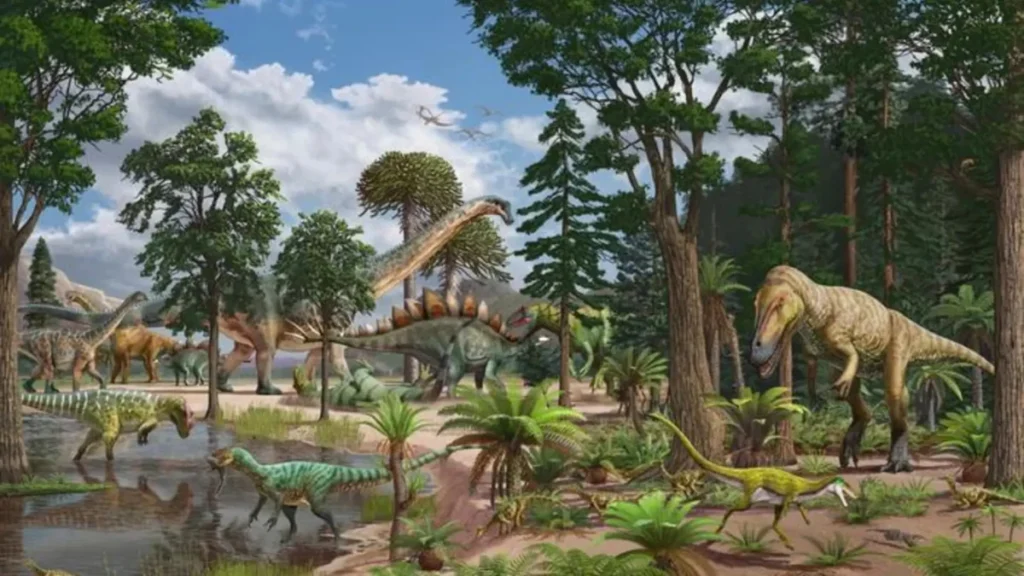
Beyond contemporary challenges, science continues to illuminate Earth’s deep past. A remarkable paleontological discovery involves 66-million-year-old dung preserving the rarest dinosaur-era feather ever found. This extraordinary fossil, likely from the Late Cretaceous period, offers unprecedented insights into the plumage, evolutionary biology, and even potential coloration of dinosaurs. The feather, exceptionally preserved within coprolite (fossilized feces), provides direct evidence of feather structures and micro-structures that can be analyzed using advanced imaging techniques. This unique taphonomic window into ancient ecosystems offers invaluable clues about the diets of prehistoric creatures and the broader paleoenvironment.
Pushing the Boundaries of Materials and Energy
In materials science, a US lab’s 500-times brighter X-rays can track material’s defect formation in real time. Utilizing a state-of-the-art synchrotron facility, this advanced X-ray imaging capability allows researchers to observe dynamic processes, such as crack propagation, phase transitions, and atomic rearrangements, with unprecedented resolution and speed. This powerful tool is invaluable for developing new materials with enhanced properties, understanding failure mechanisms at the nanoscale, and optimizing manufacturing processes across diverse industries, from aerospace and automotive to energy and semiconductors. The ability to monitor these processes in real-time accelerates material discovery and engineering.
Another innovation in materials and fabrication comes from a study on a laser that breaks repeating patterns to reshape semiconductor design. Traditional semiconductor manufacturing relies heavily on highly ordered, repeating patterns created through photolithography. This new laser technology, however, can create intricate, non-repeating, and quasi-periodic structures at the nanoscale with high precision. This offers a novel approach to designing electronic circuits and photonic devices. This breakthrough could lead to the development of entirely new classes of devices with unique optical, electronic, or quantum properties, potentially pushing beyond the current limits of conventional lithography techniques and opening new avenues for device functionality.
Finally, in a significant clarification regarding theoretical energy sources, MIT researchers have definitively stated that neutrino lasers are impossible inventions, explaining why. While the concept of a neutrino laser has been a staple of science fiction and theoretical speculation for decades, detailed analysis based on the fundamental principles of physics, particularly the weak nuclear interaction (which governs neutrino behavior) and the extremely low cross-section of neutrinos with matter, demonstrates that generating a coherent, directed beam of neutrinos is physically unfeasible. This definitive statement helps to guide future research away from unpromising avenues and reinforces the constraints imposed by the immutable laws of nature.
The Enduring Spirit of Scientific Inquiry
These diverse breakthroughs, spanning the breadth of scientific disciplines and engineering applications, exemplify the iterative, rigorous, and often challenging nature of scientific progress. Each discovery, whether a fundamental insight into the universe’s fabric or a practical technological solution for industry or medicine, is meticulously built upon a foundation of countless experiments, robust data analysis, and stringent peer scrutiny. The journey from hypothesis to validated knowledge is frequently fraught with failures, necessary revisions, and unexpected turns, yet it is through this persistent and self-correcting process that our understanding evolves and reliable advancements emerge.
The continuous stream of innovations from institutions and laboratories worldwide highlights the profound interconnectedness of modern research. Factors such as diverse funding structures, international collaborative networks, and the global exchange of ideas all play crucial roles in shaping the scientific agenda and accelerating progress. While some findings translate rapidly into tangible technologies or actionable policies, others lay essential groundwork for future generations of discovery, their full impact only realized years or decades later. The unwavering commitment to reproducibility, data quality, and critical evaluation ensures that scientific consensus is earned through compelling evidence, rather than being merely declared by authority. As we navigate an increasingly complex and rapidly changing world, these scientific and engineering milestones offer not only solutions to existing challenges but also a profound testament to humanity’s enduring curiosity and boundless capacity for innovation. The future, undoubtedly, holds even more remarkable revelations, propelled by this ceaseless pursuit of knowledge.