Industrial Light & Magic (ILM), the legendary visual effects division of Lucasfilm, has spent nearly half a century defining the visual language of modern cinema. From the pioneering motion-control photography of the original Star Wars trilogy to the groundbreaking digital water effects in Pirates of the Caribbean, the studio has consistently pushed the boundaries of the possible. Yet, some of the company’s most meticulously crafted environments are not intended for the silver screen. Hidden within the corridors of their San Francisco headquarters are the "Rebel Hideout" and "Calypso"—two immersive, employee-built themed lounges that serve as both functional meeting spaces and living museums of cinematic history.
These rooms represent a unique intersection of corporate culture, fan devotion, and high-end engineering. Built primarily by staff volunteers during their off-hours, the lounges utilize authentic, screen-used props that would otherwise remain in deep storage or be discarded. The result is a pair of highly detailed environments that foster creativity and preserve the physical legacy of the films ILM helped create.
The Rebel Hideout: A Secret Bastion of the Resistance
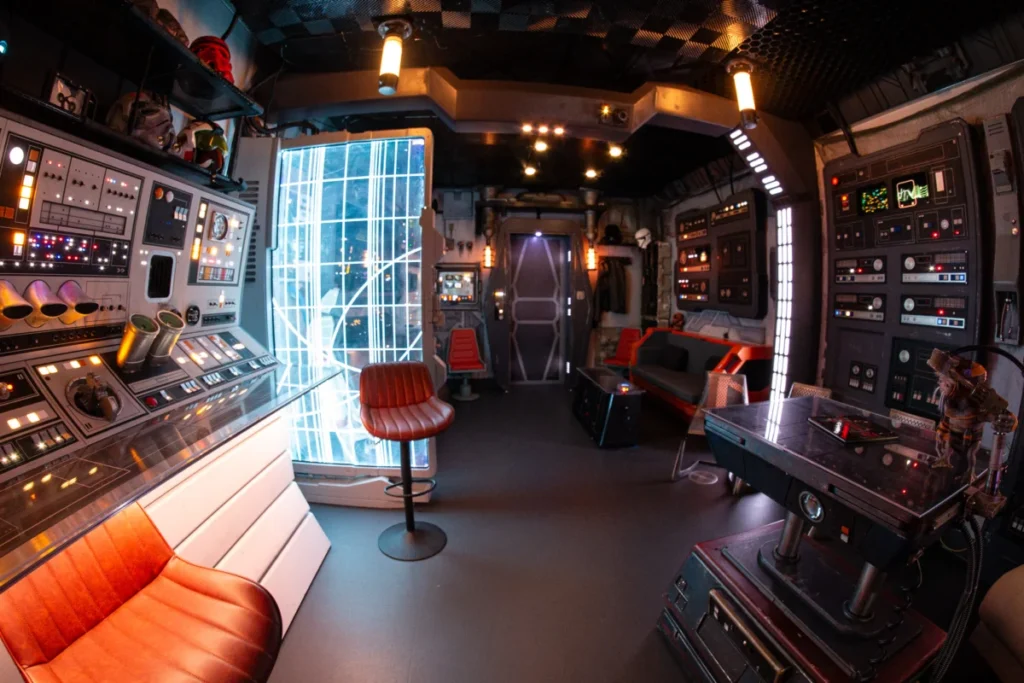
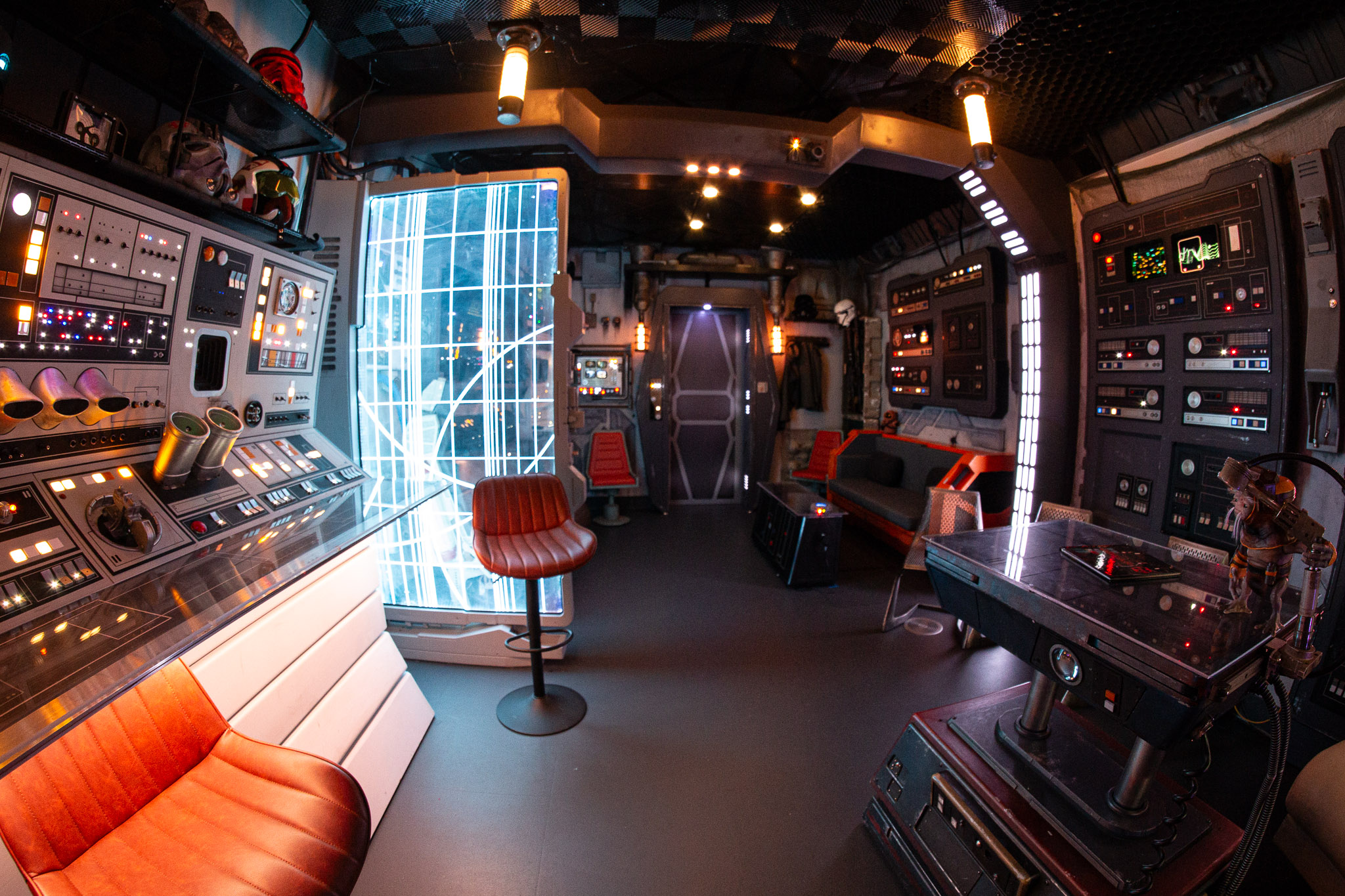
The "Rebel Hideout" is the most recent addition to ILM’s themed portfolio. Disguised behind a floor-to-ceiling recruitment poster featuring Darth Vader, the entrance is designed to be overlooked by the uninitiated. To the casual observer, the poster is merely part of the office decor; to those in the know, it is a sliding portal into a meticulously realized Star Wars environment.

The project was the brainchild of Staff R&D Engineer Mike Jutan and Head of Computer Graphics Michael DiComo. While the duo had advocated for a themed lounge for decades, it was the global pandemic and a subsequent office remodel that provided the necessary window of opportunity. The room was officially added to the construction plans, often flying under the radar of corporate oversight as a standard "conference room" or "break area."
Authentic Provenance and the "Goldmine" PDF
What distinguishes the Rebel Hideout from a high-end fan build is its access to the Lucasfilm archives. As various Star Wars productions concluded—including Rogue One: A Star Wars Story, Solo: A Star Wars Story, Andor, and Star Wars: Episode IX – The Rise of Skywalker—the production teams were faced with the logistical challenge of storing massive, practical set pieces.

The archives team provided the ILM lounge crew with a PDF catalog of available items. This document contained low-resolution thumbnails and technical descriptions of props that had occupied soundstages in Pinewood and beyond. The team eventually curated a selection of roughly 30 pieces, including:
- The Millennium Falcon’s navigation console from Solo.
- Radar screens and tactical displays from Rogue One.
- A prototype Death Trooper helmet.
- Babu Frik’s workbench from The Rise of Skywalker.
Engineering the Immersive Experience
The Rebel Hideout is not a static display. Every element is networked and interactive, requiring a sophisticated backend of hardware and software. Systems engineer Trent Bateman and a team of volunteers from the internal "ILM Electronics Club" spent months reverse-engineering film props that were originally built to function for only a few seconds on camera.

Many of the props arrived with "dead" LEDs, non-functional switches, and tangled, unlabeled wiring. The team developed custom Printed Circuit Boards (PCBs) to standardize the control systems across the room. These boards allow the various panels to communicate via Open Sound Control (OSC), a protocol for networking sound and media devices. A Mac Mini running QLab serves as the "brain" of the room, managing a complex web of lighting cues, video loops, and high-fidelity audio.
The audio experience is particularly immersive, utilizing ambient engine hums and mechanical sounds pulled directly from the official Lucasfilm sound library. This attention to detail ensures that the room feels like a pressurized starship compartment rather than a carpeted office.

One of the most technically impressive pieces is the coffee table, which was repurposed from Babu Frik’s workbench. During the retrofitting process, engineers discovered the prop was built around a motorized wheelchair base. Principal graphics engineer Lutz Latta tracked down the original German manuals for the motor system, enabling the team to restore its radio-controlled functionality. After some trial and error with the motor’s speed—which initially threatened the safety of the room’s occupants—the workbench was tuned to deliver drinks at a stately, safe pace.
Calypso: The Pirate Captain’s Quarters
Adjacent to the sci-fi aesthetics of the Rebel Hideout lies "Calypso," a room that transports occupants to the Age of Sail. Marked by a hand-carved wooden cephalopod sign, Calypso is designed to resemble the interior of a wrecked pirate ship that has been converted into a captain’s quarters.

The history of Calypso is a testament to the nomadic nature of the visual effects industry. The room was originally conceived in 2012 by Steven Knipping at Pacific Data Images (PDI), a studio then owned by DreamWorks. When PDI closed, the room’s components were moved to Visceral Games (a division of EA), where Knipping worked on Star Wars titles. Following the closure of Visceral, the room went into private storage until Knipping joined ILM. Recognizing the success of the Rebel Hideout, ILM leadership sanctioned the reconstruction of Calypso in a nearby conference space.
A Legacy of the High Seas
Given ILM’s extensive work on the first four Pirates of the Caribbean films, the room has become a repository for artifacts from that franchise. The walls are lined with screen-used gunport lids, and the room features yardarms from a large-scale model ship.

Notable artifacts in Calypso include:
- A lighting calibration bust of Davy Jones, used by VFX artists to reference how light would hit the character’s complex, tentacled skin during filming.
- A barnacle-encrusted skeleton from Indiana Jones and the Dial of Destiny.
- A collection of donated "pirate-themed" items from staff members, ranging from tiki mugs to replica swords.
Interactive "Escape Room" Mechanics
Calypso incorporates "practical effects" through a series of analog and digital puzzles. During company events, the room functions as a mini-escape room. One puzzle involves a "Mastermind" style game where participants must identify the correct combination of "poison" and "antidote" bottles to "survive." Another puzzle uses a balance scale mechanic to determine which bottle "contains a soul," with the weight of the bottles changing based on digital triggers.

Unlike the Rebel Hideout, which is designed as a deep-immersion lounge, Calypso maintains a more traditional conference room layout, featuring a large central table. This makes it one of the most frequently booked meeting spaces at the San Francisco campus, as it provides a creative atmosphere without sacrificing the utility required for production meetings.
The Broader Impact on Corporate Culture and Innovation
The creation of these rooms at ILM serves several strategic purposes beyond mere aesthetics. In an industry characterized by high-pressure deadlines and intense digital labor, these physical "maker" projects provide a necessary creative outlet for staff.

The Value of Physicality in a Digital World
ILM’s core business is digital, but its roots are firmly planted in the "shop" culture of the 1970s. The process of building the Rebel Hideout—which involved table saws, soldering irons, and physical weathering techniques—connects modern digital artists with the tactile history of the company. Rebecca Forth, a Senior Look Development Technical Director, led a team of volunteers to "grime up" the rooms, applying cinematic aging techniques to ensure that the new construction matched the "lived-in" look of the original Star Wars props.
Recruitment and Retention
In the competitive landscape of Silicon Valley and the global VFX industry, the physical environment of a studio is a significant factor in employee satisfaction. The existence of "secret" themed rooms reinforces the idea that ILM is a place where creativity is celebrated and where fans of the craft can interact with the history of cinema.

Preservation of Production Assets
The film industry has a long history of discarding sets and props once production concludes. By integrating these pieces into their office environment, ILM and Lucasfilm are practicing a form of "functional archiving." Rather than rotting in a crate, the Millennium Falcon’s console remains a working piece of technology, maintained by the very engineers who helped bring the ship to life on screen.
Conclusion: A Living Legacy
The Rebel Hideout and Calypso are more than just themed lounges; they are physical manifestations of the "ILM way." They represent a refusal to let the magic of cinema end when the credits roll. As the team continues to add new "Easter eggs"—including a planned day/night lighting cycle for Calypso and projection mapping for the Davy Jones bust—these rooms will continue to evolve.

For the employees of Industrial Light & Magic, these spaces serve as a daily reminder of the impact of their work. Whether they are discussing the next generation of real-time rendering in a pirate’s cabin or taking a coffee break in a secret Rebel base, they are surrounded by the tangible history of the stories they help tell. In an era where visual effects are increasingly ethereal and digital, ILM has proven that there is still immense power in the physical, the practical, and the secret.