The UK Bebras Challenge, the nation’s preeminent computational thinking competition, has officially launched its latest cycle, inviting primary and secondary schools across the United Kingdom to participate in an initiative that has become a cornerstone of modern computer science education. Following a record-breaking year in which more than 526,000 students engaged with the program, the challenge continues to expand its reach, offering a platform for young minds to explore complex logic and problem-solving without the barrier of traditional programming syntax. Organized with the support of the Raspberry Pi Foundation and Oxford University, the challenge is designed to be accessible, inclusive, and rigorous, aiming to bridge the digital skills gap by fostering foundational cognitive skills in students aged 6 to 19.
The Evolution of Computational Thinking in the UK Curriculum
The UK Bebras Challenge is the British arm of an international movement that began in Lithuania in 2004. Since its inception, the "Bebras" (the Lithuanian word for "beaver") model has spread to over 50 countries, creating a global community dedicated to informatics and fluency in digital logic. In the United Kingdom, the challenge has seen exponential growth over the last decade, transitioning from a niche academic exercise to a mainstream educational event that mirrors the rising importance of STEM (Science, Technology, Engineering, and Mathematics) in the national curriculum.
Computational thinking—the core focus of the challenge—is defined by four key pillars: decomposition, pattern recognition, abstraction, and algorithmic thinking. Unlike traditional computer science courses that may focus heavily on coding languages like Python or Java, Bebras prioritizes the logic that precedes the code. This approach ensures that students from all backgrounds, including those in schools with limited computing resources, can demonstrate their innate potential for analytical reasoning.
Structure and Accessibility of the 2024-2025 Challenge
The challenge is structured as a 45-minute online assessment, consisting of a series of interactive puzzles that increase in difficulty. These tasks are categorized by age group, ensuring that the content remains developmentally appropriate while still providing a significant cognitive "stretch." The categories typically include:
- Kits (Ages 6-8): Focuses on basic logic and sequence identification.
- Castors (Ages 8-10): Introduces more complex pattern recognition.
- Juniors (Ages 10-12): Explores introductory algorithmic concepts.
- Intermediates (Ages 12-14): Moves into advanced problem-solving and data representation.
- Seniors (Ages 14-16) and Elite (Ages 16-19): Challenges students with high-level abstraction and complex system analysis.
A standout feature of the UK Bebras Challenge is its commitment to inclusivity. The organizers have developed a tailored version of the challenge specifically for secondary students with severe sight impairments, ensuring that the visual nature of the puzzles does not act as a barrier to participation. This commitment to accessibility reflects a broader push within the UK tech sector to ensure that the future workforce is diverse and representative of the entire population.
New Incentives: Digital Badging and School Milestones
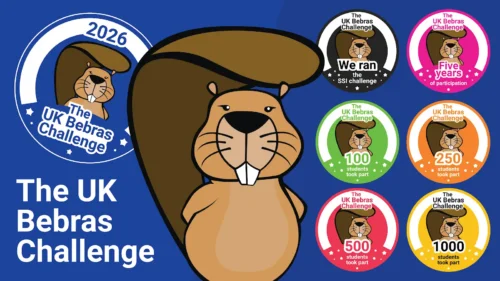
In a significant update for the current year, the UK Bebras Challenge has introduced a new digital badging system to recognize the commitment of participating institutions. While students have long received certificates for their performance—ranging from participation and "Best in School" to the prestigious Gold certificates for those in the top 10% nationally—the new system focuses on the schools themselves.
Schools can now earn digital badges based on participation milestones, such as reaching specific numbers of participating students or maintaining engagement over a five-year period. These badges are designed to be displayed on school websites and social media platforms, serving as a "mark of excellence" in computer science provision. This gamification of school-level involvement is expected to drive even higher participation rates, as schools compete to demonstrate their dedication to digital literacy.
Integration with Ada Computer Science Platform
To deepen the educational impact of the challenge, Bebras has integrated its tasks with the Ada Computer Science platform. Ada Computer Science is a free, high-quality online learning resource developed by the Raspberry Pi Foundation and the University of Cambridge. Under the new integration, every Bebras puzzle is linked to a specific topic on the Ada platform.
Once the live challenge concludes, teachers and students can access detailed explanations of the computer science theories underpinning each task. For example, a puzzle involving a delivery route might link to a lesson on "Shortest Path Algorithms," while a task about sorting colored blocks might lead to a module on "Big O Notation" and efficiency. This bridge between a "fun puzzle" and "formal theory" transforms the challenge from a one-off event into a continuous learning journey, providing teachers with a wealth of enrichment material for the remainder of the academic year.
Educational Perspectives and Official Responses
Educators across the country have lauded the challenge for its ability to engage students who might otherwise feel intimidated by computer science. Jonathan Phillips of Hereford Cathedral School noted that the challenge provides an engaging way for students to apply problem-solving skills in a competitive yet fun environment. He emphasized that the initiative complements the existing coding curriculum by encouraging the critical thinking skills necessary for high-level programming.
Similarly, Sharon Pendreigh from Brownedge St Mary’s Catholic High School highlighted the versatility of the Bebras resources. She noted that the challenges are designed to push students to think creatively, developing essential problem-solving skills that are applicable both inside and outside the classroom. The sentiment among the teaching community suggests that Bebras has successfully reframed "computing" as a creative and intellectual pursuit rather than just a technical one.
Case Study: The "Park Walk" and Graph Theory
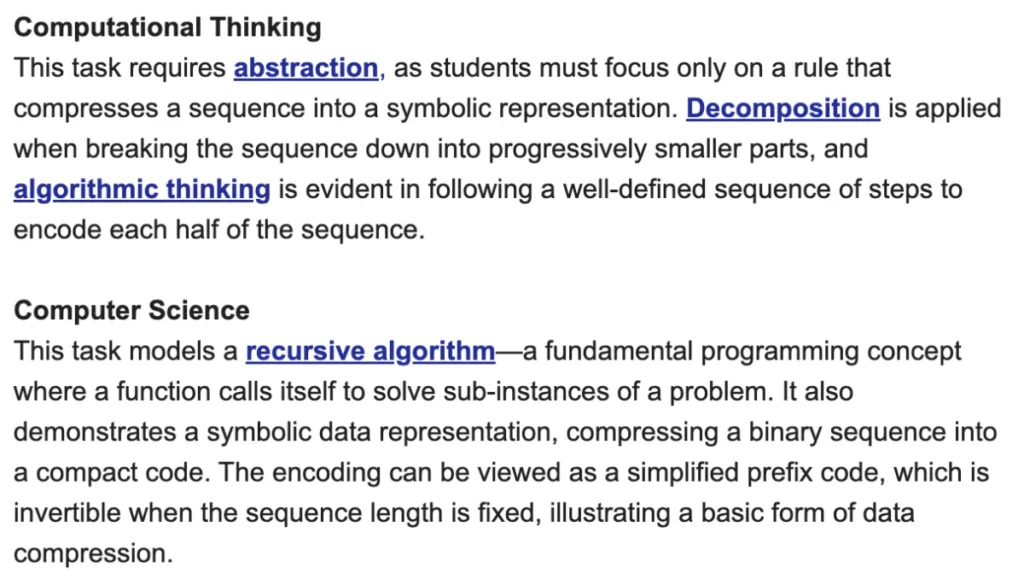
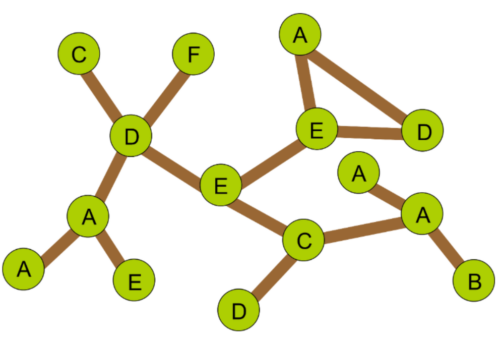
To understand the rigor of the challenge, one can look at past tasks such as the "Park Walk" puzzle, which was presented to the Junior age group. The task involves navigating a map of trees (vertices) and paths (edges). Students are given the routes of two families and must determine how many times they meet at a specific tree, given that they move at the same speed.
While the puzzle appears to be a simple exercise in tracking, it is actually an introduction to Graph Theory. This branch of mathematics, pioneered by Dénes Kőnig in the 1930s, is the foundation of modern networking, GPS technology, and social media algorithms. By solving the "Park Walk," a 10-year-old student is effectively engaging with the same logic used by software engineers at Google or Meta to optimize data flow across global networks. The explanation provided by the Bebras team clarifies that the sequences of letters in the walk are "unambiguous" because the neighbors of each tree are labeled differently—a fundamental concept in data representation and symbolic logic.
Economic and Societal Implications
The continued success of the UK Bebras Challenge comes at a critical time for the British economy. According to various industry reports, the UK continues to face a significant digital skills gap, with thousands of roles in software development, data science, and cybersecurity remaining unfilled. By capturing the interest of students as young as six, Bebras plays a vital role in the "talent pipeline," demystifying technology and encouraging more students to pursue Computer Science at the GCSE, A-Level, and University levels.
Furthermore, the challenge addresses the "gender gap" in computing. By focusing on logic and puzzles rather than "gaming" or "hardware," Bebras has historically seen higher engagement from female students compared to traditional coding clubs. This early-stage intervention is crucial for changing the perception of the tech industry as a male-dominated field.
Chronology of the Challenge Cycle
The UK Bebras Challenge follows a structured annual timeline:
- Registration (Open Now): Teachers register their schools and set up student accounts.
- Practice Period: Schools gain access to an archive of previous years’ questions, allowing them to run practice sessions and integrate puzzles into lesson starters.
- The Challenge Fortnight: Typically held in November, this is the window during which the live 45-minute challenge is administered under supervised school conditions.
- Results and Certification: Following the challenge, results are processed, and certificates are issued. Digital badges are then distributed to schools based on their participation metrics.
- Enrichment Phase: Teachers use the links to Ada Computer Science to review the tasks and explain the underlying concepts, using the challenge as a springboard for the spring and summer terms.
Conclusion
As the UK Bebras Challenge enters its new season, it remains a vital instrument in the democratization of computer science education. By removing the barriers of cost and prior technical knowledge, it ensures that every child in the UK has the opportunity to discover their potential as a logical thinker. With the addition of digital badges and deeper integration with pedagogical platforms like Ada Computer Science, the initiative is set to reach new heights, reinforcing the United Kingdom’s position as a leader in digital education and innovation. Schools are encouraged to register early to take full advantage of the preparatory resources available, ensuring their students are ready to tackle the puzzles that define the next generation of computational thinkers.