In a landmark move poised to revolutionize one of the world’s most carbon-intensive industries, Google has announced a significant partnership with Swedish green industrial company Stegra. This collaboration aims to accelerate the operational launch of what is being heralded as the world’s first large-scale, near-zero emissions steel plant, situated in Boden, Sweden. This initiative marks a crucial step in decarbonizing the hard-to-abate steel sector, leveraging green hydrogen technology to drastically cut greenhouse gas emissions.
The traditional process of steel manufacturing is a major contributor to global carbon emissions, relying heavily on coking coal as a reducing agent for iron ore within blast furnaces. This method is responsible for approximately 7-9% of global CO2 emissions annually. Stegra’s innovative approach, however, sidesteps this carbon-intensive tradition by utilizing renewable electricity to produce green hydrogen. This hydrogen then reacts with iron ore in a direct reduction process, yielding iron without the need for fossil fuels. Stegra estimates that by eliminating coal from its manufacturing process, the Boden plant can reduce emissions by up to 95% compared to conventional blast furnace operations, aligning with the International Energy Agency’s (IEA) stringent definition for near-zero emissions steel production.
The Urgent Need for Green Steel
The steel industry produces roughly two billion metric tons of crude steel each year, underpinning virtually every sector of the modern economy, from construction and automotive to infrastructure and consumer goods. Its colossal scale and reliance on a centuries-old production method have made it a formidable challenge in the global fight against climate change. Decarbonizing steel is not merely an environmental imperative but an economic necessity for nations and corporations committed to achieving net-zero emissions targets.
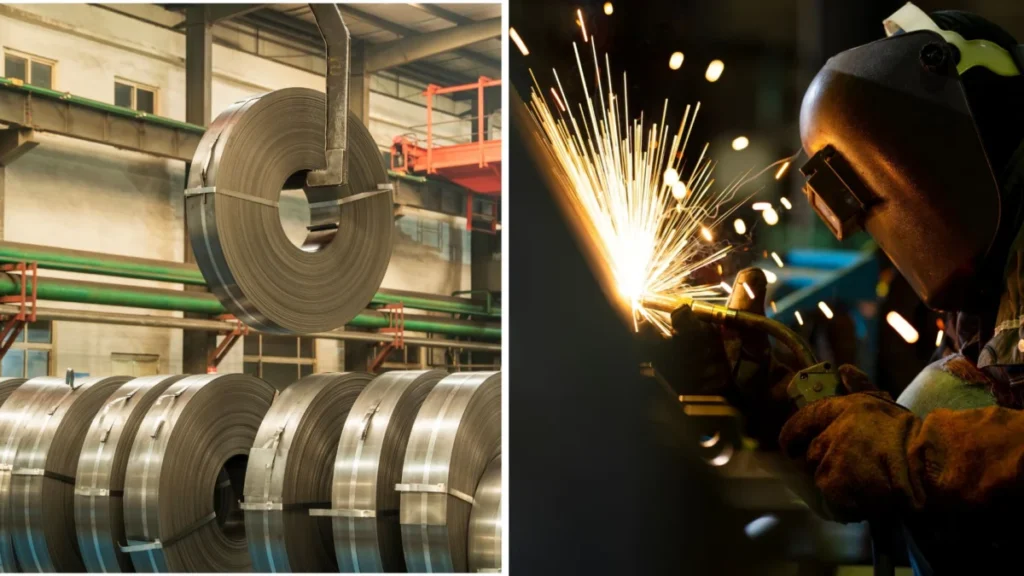
Traditional steelmaking involves several energy-intensive steps: mining iron ore and coal, preparing the raw materials, and then smelting the iron ore in a blast furnace at extremely high temperatures using coking coal. This process produces molten iron, which is then refined into steel. A byproduct of this chemical reaction, where carbon acts as the reducing agent, is a massive release of carbon dioxide. For every ton of steel produced conventionally, nearly two tons of CO2 are emitted. The sheer volume of global steel demand means that even incremental reductions in emissions per ton can have a profound impact.
Stegra’s Innovative Green Hydrogen Technology
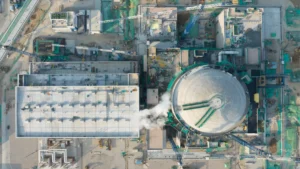
Stegra’s plant in Boden, located in northern Sweden, capitalizes on the region’s abundant access to renewable energy sources, primarily hydropower and wind power. This clean electricity is critical for the electrolysis process, which splits water into hydrogen and oxygen. The resulting "green hydrogen" is then fed into a direct reduced iron (DRI) facility. In the DRI process, iron ore pellets are exposed to the hot hydrogen, which removes oxygen from the iron ore, leaving behind pure iron—known as sponge iron—without generating CO2. This sponge iron can then be melted in an electric arc furnace (EAF) to produce high-quality steel. If the electricity for the EAF also comes from renewable sources, the entire process can achieve near-zero emissions.
The choice of Boden is strategic. Northern Sweden boasts one of Europe’s most robust and cost-effective renewable energy grids, alongside a skilled workforce and established industrial infrastructure. This geographical advantage minimizes the carbon footprint associated with energy sourcing and provides a stable foundation for large-scale industrial operations. Stegra’s commitment to fully integrated green hydrogen production on-site further distinguishes its approach, ensuring a truly localized and sustainable supply chain for its critical energy input.
Google’s Strategic Investment and Environmental Attribute Certificates (EACs)
Google’s involvement goes beyond a simple purchase agreement; it represents a strategic investment in scaling nascent green technologies. Under the new agreement, Google will receive Environmental Attribute Certificates (EACs) tied to a portion (up to 91,000 metric tons) of the steel produced during Stegra’s first year of commercial production. EACs are a mechanism for companies to support the development and deployment of sustainably produced materials, even if they are not directly procuring the physical product.
These certificates serve multiple purposes:
- Driving Demand: They signal strong corporate demand for low-carbon industrial products, encouraging further investment and innovation in the sector.
- Addressing Embodied Emissions: For companies like Google, which have ambitious sustainability targets, EACs offer a verifiable way to account for and mitigate the "embodied carbon" in their supply chains and construction projects—the emissions associated with the materials used to build their data centers and offices.
- Scaling and Financing: The financial commitment associated with purchasing EACs provides crucial early-stage capital and market certainty for pioneering companies like Stegra, helping to de-risk investment in new clean technologies that often face higher initial costs compared to conventional methods.
As Google stated, "We’re partnering with Stegra to help bring the world’s first large-scale, green hydrogen-based, near-zero emissions steel plant online. The steel is designed to meet the International Energy Agency’s (IEA) definition for near-zero emissions steel production, marking an important step toward addressing the impact of the hard-to-decarbonize steel industry." This partnership underscores Google’s broader commitment to sustainability, extending its influence beyond its direct operational footprint to catalyze decarbonization across its value chain.
Statements and Industry Reactions
Henrik Henriksson, CEO of Stegra, highlighted the significance of Google’s partnership: "There are some players globally that can help move markets towards decarbonized products in an impactful way. Google is naturally one such player. Beyond the call to action to increase the supply of sustainably produced steel, we are also grateful that the team at Google chose to work with Stegra and support our first years of operations in this way." His statement reflects the critical role that major corporations with significant purchasing power can play in creating a market for green industrial products that are currently more expensive than their high-emission counterparts.
While specific reactions from other parties were not detailed in the initial announcement, the broader industry and environmental communities are likely to view this partnership as a highly positive development. Environmental advocacy groups would laud the concrete steps taken to decarbonize heavy industry. Industry analysts would recognize the potential for market disruption and the creation of new supply chains for sustainable materials. Governments committed to climate goals, particularly those in the EU with ambitious Green Deal targets, would see this as a validation of policies supporting green hydrogen and industrial innovation. The European Union, for instance, has set a target to produce 10 million tons of green hydrogen domestically and import another 10 million tons by 2030, making projects like Stegra’s central to achieving these aims.
The Broader Implications for Hard-to-Decarbonize Sectors
The success of the Stegra-Google partnership has far-reaching implications beyond the steel industry. Many other "hard-to-decarbonize" sectors, such as cement, chemicals, and shipping, face similar challenges in reducing their carbon footprint due to their reliance on fossil fuels for high-temperature processes or as chemical feedstocks. The green hydrogen model pioneered by Stegra offers a scalable blueprint for these industries.
For instance, green hydrogen can replace natural gas in industrial boilers, serve as a feedstock for green ammonia production (a crucial component for fertilizers and shipping fuel), or be used in direct heat applications for various chemical processes. By demonstrating the commercial viability and environmental benefits of green hydrogen at a large scale, Stegra and Google are paving the way for a broader industrial transition. This partnership signals to investors, policymakers, and other industrial players that the future of heavy industry is intertwined with sustainable practices and clean energy solutions.
Google’s Internal Sustainability Goals and Future Outlook
Google’s commitment to green steel aligns with its aggressive internal sustainability goals. The company aims for 24/7 carbon-free energy across all its data centers and campuses by 2030, and it has been actively seeking ways to reduce embodied carbon in its infrastructure. "By supporting innovative technologies and partnering with coalitions like the Sustainable Steel Buyers Platform, we hope to bring more green building materials to market and increasingly incorporate them into our own operations," Google stated.
The company has already made tangible progress in this area. In 2025 alone, Google successfully integrated low-carbon concrete, steel, or a combination of both in over 20 construction projects. They estimate that this can reduce the embodied carbon emissions from data center infrastructure by up to 40%. The partnership with Stegra provides a direct avenue to further this objective, securing access to near-zero emissions steel for future data center builds and other infrastructure projects. This internal demand acts as a powerful market signal, accelerating the adoption of green materials across the construction sector.
Challenges and the Path Forward
While the outlook for green steel is promising, challenges remain. Stegra acknowledges that near-zero emission steel will initially be available in limited volumes and at fewer locations. The initial cost premium for green steel, driven by the higher capital expenditure for new facilities and the current cost of green hydrogen production, is a significant hurdle. However, as technology scales and renewable energy costs continue to fall, the economics of green hydrogen and green steel are expected to become increasingly competitive.
Infrastructure development is another key factor. The production and distribution of green hydrogen require new pipelines, storage facilities, and electrolyzer manufacturing capabilities. Policy support, including carbon pricing mechanisms, incentives for green technologies, and supportive regulatory frameworks, will be essential to overcome these early-stage barriers and accelerate the transition. Initiatives like the Sustainable Steel Buyers Platform, mentioned by Google, are crucial for aggregating demand and creating a stable market for these innovative products.
The partnership between Google and Stegra is more than just a commercial agreement; it is a testament to the power of cross-industry collaboration in addressing global climate challenges. It demonstrates how technological innovation, coupled with strategic corporate leadership and robust market signals, can drive fundamental shifts in even the most entrenched industrial sectors. As the Boden plant comes fully online, it will serve as a beacon, illuminating a viable path toward a decarbonized future for steel and beyond, proving that economic progress and environmental stewardship can indeed go hand-in-hand.