The automotive industry last week found itself in a state of heightened speculation following the emergence of reports suggesting that electric vehicle (EV) startup Lucid Motors had engaged the services of AlixPartners, a prominent financial consulting firm. The association of AlixPartners with companies, particularly those facing significant financial headwinds, has historically been a strong indicator of potential bankruptcy proceedings, thus igniting a flurry of concerned discussions and a palpable sense of unease within the sector.
The Genesis of Speculation
The initial whispers began to circulate early last week, painting a picture of a company potentially grappling with severe financial difficulties. The engagement of a firm like AlixPartners, which specializes in restructuring and turnaround management, often implies that a company is exploring significant financial maneuvers, including, in some cases, the difficult path towards bankruptcy protection. This perception, while not always accurate, carries substantial weight in the financial markets and among industry observers, especially for a relatively young and capital-intensive enterprise like Lucid Motors.
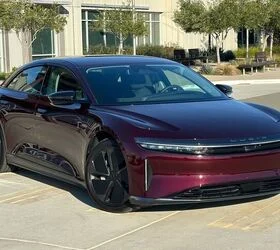
Lucid Motors, a relatively new entrant in the fiercely competitive EV market, has garnered significant attention for its ambitious technological advancements and its luxury-oriented Air sedan. The company has positioned itself as a premium competitor to established luxury automakers and other EV pioneers. However, the journey of an EV startup is fraught with immense financial demands, from research and development to manufacturing scale-up and global distribution. The high cost of battery production, the complexity of automotive manufacturing, and the need for extensive charging infrastructure all contribute to a substantial capital requirement. This inherent financial pressure makes any indication of financial instability particularly sensitive for companies like Lucid.
Lucid’s Swift Rebuttal and Market Reaction
In response to the escalating rumors, Lucid Motors’ leadership acted swiftly to quell the growing concerns. The company issued a series of direct denials, asserting that the engagement with AlixPartners was not indicative of any impending bankruptcy filing. It is crucial to acknowledge that AlixPartners’ expertise extends beyond merely guiding companies through bankruptcy. The firm also offers a wide range of advisory services, including operational efficiency improvements, strategic planning, and financial restructuring aimed at fostering growth and sustainability. Therefore, the engagement could, in theory, be for a variety of strategic purposes.
Following these official pronouncements and a period of intense market scrutiny, the immediate panic surrounding Lucid Motors appeared to subside. The company’s stock price, which had likely experienced a dip in the wake of the rumors, began to show signs of recovery. This rebound suggests that investors, at least temporarily, found the company’s reassurances sufficient to mitigate the immediate fears. However, the underlying concerns within the automotive world regarding the viability of new EV manufacturers remain deeply entrenched.
The Perilous Path of New EV Makers
The history of the automotive industry, particularly in recent decades, is littered with the cautionary tales of promising EV startups that, despite innovative products and substantial initial funding, ultimately failed to achieve sustainable success. Companies that aimed to disrupt the market with cutting-edge electric vehicles have, time and again, succumbed to the immense financial and operational challenges inherent in the automotive sector. The list of such ventures, characterized by ambitious visions and considerable investment, is regrettably long. Many of these companies navigated multiple rounds of public denials and reassurances before eventually filing for bankruptcy, leaving behind a legacy of what-ifs and unrealized potential.
This historical context is vital in understanding the sensitivity of any news related to the financial health of emerging EV companies. The capital expenditure required to bring an automobile from concept to mass production is staggering. It involves extensive investment in research and development, the construction and equipping of manufacturing facilities, the establishment of supply chains, and the creation of a robust sales and service network. Furthermore, in the competitive EV market, companies must continually innovate to stay ahead of established automakers and other startups, requiring ongoing investment in battery technology, software, and vehicle design.
The Dual Question: Lucid’s Survival and the Next Casualty
The recent events surrounding Lucid Motors have refocused attention on a fundamental question that looms large over the entire nascent EV sector: Will Lucid Motors ultimately achieve long-term sustainability? The company has demonstrated impressive technological prowess with its Lucid Air sedan, which has received critical acclaim for its range, performance, and luxury features. However, translating technological excellence into profitable mass production and sustained sales is a monumental task. The company’s ability to navigate the complex challenges of scaling production, managing costs, and effectively competing in a rapidly evolving market will be critical determinants of its future.
Beyond Lucid’s immediate prospects, the situation also raises a broader question about the future of the EV startup landscape: Will another new EV maker falter in the near future? The current market conditions present a formidable test for all players. Established automakers are aggressively investing in their own EV programs, leveraging their existing manufacturing capabilities, brand recognition, and financial resources. This competitive pressure, coupled with potential shifts in consumer demand, regulatory landscapes, and the ongoing global economic climate, creates a challenging environment for companies that lack the scale and experience of legacy manufacturers.
Supporting Data and Market Context
To better understand the precariousness of the EV startup landscape, it is helpful to examine some relevant data points and market trends. The initial public offering (IPO) boom for EV companies, particularly in the late 2010s and early 2020s, saw many startups achieve substantial market valuations based on future potential rather than current profitability. However, as production realities and competitive pressures set in, many of these valuations have faced significant corrections.
For instance, companies like Fisker Inc., another EV startup that has faced its own set of production and financial challenges, highlight the difficulties in scaling manufacturing and securing consistent sales. Fisker has recently been reported to be exploring various strategic options, including potential partnerships and financing rounds, to ensure its continued operation. The struggles of such companies underscore the capital-intensive nature of the industry and the steep learning curve involved in automotive manufacturing.
Lucid Motors, for its part, has made significant strides in production. As of its most recent reports, the company has been working to ramp up production of its Air sedan. However, achieving profitability requires not only increased production volume but also efficient cost management throughout the manufacturing process. The average cost of producing an electric vehicle, particularly in the premium segment, remains a significant factor in achieving healthy profit margins.
Broader Implications for the Electric Vehicle Sector
The scrutiny over Lucid Motors, while perhaps unsettling for the company and its investors, is symptomatic of a broader recalcitrant period for the EV industry. While the long-term outlook for electric vehicles remains positive, driven by environmental concerns and government mandates, the path to widespread adoption is not without its hurdles.
For established automakers, the transition to EVs presents a complex strategic challenge. They must balance investment in new EV platforms with the need to manage their legacy internal combustion engine (ICE) businesses, which still generate substantial revenue. This dual-track approach requires careful financial allocation and a delicate balancing act to avoid cannibalizing existing profits prematurely.
For EV startups, the situation is even more challenging. They often lack the established brand loyalty, dealer networks, and manufacturing expertise of legacy players. Their success hinges on technological differentiation, rapid scaling, and securing continuous access to capital. The engagement with a firm like AlixPartners, even if for non-bankruptcy reasons, serves as a stark reminder of the financial tightrope these companies walk.
The automotive world is a dynamic and unforgiving arena. While Lucid Motors has demonstrated remarkable innovation, its journey ahead will undoubtedly be closely watched. The outcome of its current challenges, and indeed the fate of other emerging EV players, will shape the future landscape of electric mobility for years to come. The industry’s capacity to support innovation while ensuring financial stability will be a critical factor in determining the pace and direction of the global transition to electric vehicles. The question of whether Lucid can navigate these turbulent waters and emerge as a sustainable force, and which other new entrant might face headwinds, remains a central point of discussion and analysis within the automotive community.