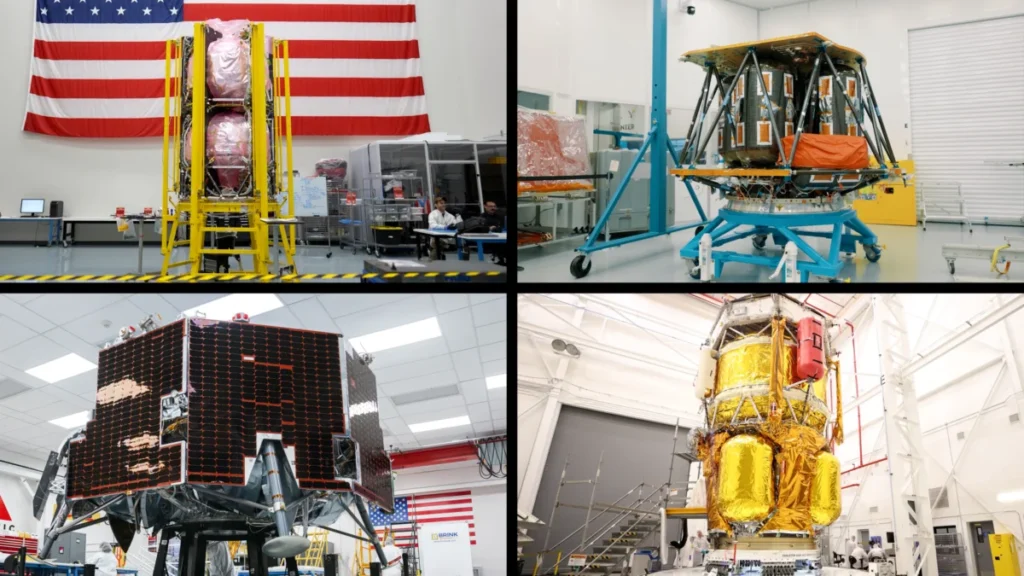
Before astronauts once again set foot on the Moon’s surface as part of NASA’s ambitious Artemis program, the very hardware that will sustain them must first prove its resilience against the Moon’s unforgiving environment. At NASA’s Johnson Space Center in Houston, a dedicated team of engineers within the Lunar Development and Test Facility is confronting one of the most significant challenges to lunar exploration: the pervasive and insidious nature of Moon dust, scientifically known as lunar regolith. This finely pulverized material, a byproduct of billions of years of micrometeorite impacts, poses a formidable threat to both human health and the integrity of critical equipment.
The stark contrast between Earth’s familiar terrestrial sand and the abrasive, electrostatically charged particles of lunar dust cannot be overstated. Lunar dust is exceptionally sharp, akin to microscopic shards of glass, due to the lack of atmospheric erosion and weathering processes that smooth out particles on Earth. This abrasive quality allows it to infiltrate seals, abrade surfaces, and degrade the performance of moving parts. Furthermore, its tendency to cling electrostatically to nearly everything means it can easily coat spacesuits, solar panels, scientific instruments, and even the internal mechanisms of habitats and vehicles. Without robust mitigation strategies, this omnipresent lunar contaminant could lead to premature equipment failure, compromised astronaut safety, and significant setbacks in the long-term objectives of lunar habitation and scientific research. Understanding and effectively mitigating the detrimental effects of lunar dust is therefore not merely a technical hurdle but an absolute imperative as humanity prepares to establish a sustained presence on the lunar surface, embarking on a new era of scientific discovery and potential resource utilization.
Simulating the Lunar Gauntlet: A Facility Engineered for Extremes
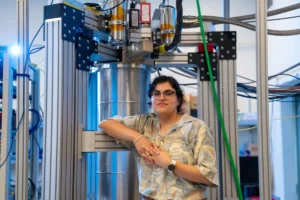
The Lunar Development and Test Facility, strategically situated within the Energy Systems Test Area at NASA’s Johnson Space Center, serves as a crucial proving ground for the technologies destined for lunar missions. Managed by experienced NASA engineers, this facility is meticulously designed to replicate the harsh and alien conditions of the Moon, allowing for rigorous development and testing of hardware. Engineers meticulously evaluate systems and subsystems within precisely controlled vacuum chambers, employing lunar regolith simulants that accurately mimic the physical and chemical properties of actual lunar dust. This meticulous approach provides invaluable insights into how spacesuits, the intricate components of spacecraft, and vital mechanisms incorporating moving parts and articulating joints will perform under the relentless stresses of the lunar environment. The data gathered is instrumental in refining designs, identifying potential failure points, and ensuring the reliability of equipment that astronauts will depend on for their survival and mission success.
The specialized systems that enable these realistic lunar simulations were developed by NASA Johnson’s Propulsion and Power Division. The facility boasts a comprehensive suite of testing capabilities, including a dedicated dust containment and preparation laboratory designed for ambient testing of materials and components. This area allows for initial characterization and handling of lunar simulants in controlled atmospheric conditions before introducing them into more extreme environments. At the heart of the facility are its vacuum chambers. A 3-foot cube vacuum chamber provides a contained environment for testing smaller components and subsystems, allowing for precise control over pressure and temperature. For more comprehensive testing of larger systems and integrated hardware, a more substantial 15-foot thermal vacuum chamber is employed. This larger chamber is capable of simulating not only the vacuum of space but also the extreme temperature fluctuations characteristic of the lunar surface, which can range from scorching highs under direct sunlight to frigid lows in shadowed regions.
The Science of Survival: Testing Under Simulated Lunar Skies
Within these sophisticated chambers, engineers subject hardware to the full spectrum of realistic lunar conditions, utilizing carefully selected lunar regolith simulants. These simulants are not mere approximations; they are engineered to replicate the specific particle size distribution, chemical composition, and electrostatic properties of actual lunar dust collected during past Apollo missions and from lunar meteorites. The chambers are equipped with advanced environmental control systems, including a closed-loop nitrogen system. This system meticulously recreates the extremely low-pressure, oxygen-depleted environment of the Moon, ensuring that the tests accurately reflect the challenges that equipment will face. By operating within these simulated conditions, NASA engineers can observe how materials degrade, how seals fail, how lubricants are affected, and how electronic components perform when exposed to the combined stressors of vacuum, extreme temperatures, and the abrasive particulate matter of lunar dust.
Mike Salinas, Deputy Chief of the Propulsion and Power Division branch, emphasized the facility’s critical role in advancing lunar exploration. "The facility helps develop and test technologies needed for long-duration lunar exploration," Salinas stated. His remarks highlight the broader strategic importance of the work being conducted. Beyond simply ensuring the survival of hardware, the facility is also a nexus for innovation in resource utilization. "Engineers are advancing techniques to extract resources from lunar regolith," Salinas added, "which can be turned into oxygen for astronauts and liquid oxygen for rocket propellant." This forward-looking research into in-situ resource utilization (ISRU) is a cornerstone of NASA’s long-term vision for sustainable lunar presence. The ability to "live off the land" by extracting vital resources like oxygen from the lunar regolith would dramatically reduce the cost and complexity of future missions, enabling longer stays, more extensive exploration, and the establishment of a permanent lunar outpost. The simulants used in the facility are not only for testing dust mitigation but also for developing and refining these ISRU technologies, such as electrolysis processes that can split water ice into hydrogen and oxygen, or methods to extract oxygen directly from lunar minerals.
A Legacy of Exploration Embodied: Art and Innovation Converge
The spirit of exploration that drives NASA’s endeavors is not confined solely within the sterile, high-tech confines of the Lunar Development and Test Facility. Its exterior serves as a vibrant testament to this very spirit. A large-scale mural, a striking visual narrative, adorns the building, depicting astronauts actively engaged in lunar surface exploration beneath a breathtaking vista of the cosmos. Completed in 2024 by the artist Sebastian Boileau, this artwork is more than just decoration; it is a deliberate celebration of the innovation, ingenuity, and relentless pursuit of discovery that are hallmarks of the work conducted within its walls every single day. The mural serves as a constant reminder of the ultimate goal: pushing the boundaries of human knowledge and capability beyond Earth.
The mural’s presence underscores the multifaceted nature of space exploration, which encompasses not only rigorous scientific and engineering pursuits but also the inspiring power of art to communicate these ambitious endeavors to the public. It symbolizes the fusion of cutting-edge technology with the enduring human desire to explore the unknown. The artwork connects the technical challenges being addressed inside with the grand vision of humanity’s future among the stars, making the abstract concepts of lunar exploration tangible and inspiring for all who see it.
Unveiling the Future: A Virtual Gateway to Lunar Preparedness
Recognizing the importance of public engagement and accessibility, NASA has opened the doors of the Lunar Development and Test Facility to the world through an innovative new offering. Anyone, from anywhere on the globe, can now step inside and witness firsthand the groundbreaking work being done. NASA has launched a comprehensive 3D virtual tour of the Lunar Development and Test Facility. This immersive online experience allows visitors to navigate the various sections of the facility, observe the specialized equipment, and gain a deeper understanding of the complex processes involved in preparing for lunar missions.
The virtual tour provides an unprecedented glimpse into the heart of NASA’s lunar preparedness efforts. It showcases the advanced testing chambers, the meticulous handling of lunar simulants, and the collaborative environment where engineers are developing the technologies that will support this "Golden Age of exploration and innovation," as described by NASA. This initiative democratizes access to scientific and technological advancements, fostering a greater appreciation for the dedication and expertise required to return humans to the Moon and establish a sustainable presence. By offering this virtual gateway, NASA is not only educating the public but also inspiring the next generation of scientists, engineers, and explorers who will undoubtedly play a role in shaping humanity’s future beyond Earth. The tour serves as a powerful educational tool, demystifying the complex challenges of space exploration and highlighting the critical role of meticulous testing and development in ensuring mission success.
The Broader Implications: Paving the Way for Sustainable Lunar Presence
The work undertaken at the Lunar Development and Test Facility has profound implications that extend far beyond the immediate goal of returning astronauts to the Moon. The development of effective dust mitigation strategies is paramount for the long-term viability of any lunar base. Without such measures, the constant accumulation and abrasive action of lunar dust could render habitats uninhabitable, disable crucial life support systems, and compromise the health of astronauts over extended periods. The research into ISRU, specifically the extraction of oxygen and propellant from lunar regolith, is equally transformative. This capability is essential for establishing a self-sustaining presence, reducing reliance on costly resupply missions from Earth, and enabling ambitious scientific and commercial ventures on the Moon.
Furthermore, the technologies and methodologies developed and tested within this facility will have direct applications for future missions to Mars and other celestial bodies, many of which present similar challenges related to dust and harsh environmental conditions. The lessons learned from confronting the perils of lunar dust will inform the design of spacecraft, habitats, and surface exploration equipment for the entire solar system. The Artemis program, with its focus on sustained lunar presence and eventual human missions to Mars, is building a foundation of knowledge and technological capability that will shape humanity’s interplanetary future for decades to come. The Lunar Development and Test Facility is, therefore, not just a testing ground for current missions but a critical incubator for the technologies that will enable humanity’s expansion into the cosmos. The ongoing research in this facility represents a crucial investment in the future of space exploration, ensuring that when humans return to the Moon, they do so prepared, protected, and poised to achieve unprecedented scientific and exploratory breakthroughs.