The landscape of American elementary education is undergoing a significant transformation as districts increasingly seek to embed digital literacy within traditional core subjects. In Albert Lea, Minnesota, two educators are at the forefront of this movement, utilizing specialized resources to bridge the gap between abstract computational concepts and foundational academic requirements. Mark Nechanicky and Taryn Israel Nechanicky, teachers within the Albert Lea Area Schools district, have spent the past academic year implementing "Experience CS," a free, cross-curricular instructional framework developed to integrate computer science (CS) into mathematics, science, and language arts. Their work highlights a growing national trend: the shift from viewing computer science as a standalone "special" subject to an essential tool for reinforcing core content knowledge.
The Genesis of Integrated Computing in Albert Lea
The initiative began in earnest during the fall of the previous year when the Nechanickys partnered with developers of the Experience CS platform to pilot a series of units designed for primary-age students. The primary objective was to address a chronic challenge in modern education: the "crowded curriculum." With limited instructional minutes and rigorous state standards for math and literacy, many elementary teachers find it difficult to dedicate separate time to coding or robotics.
Experience CS addresses this by providing scaffolded lessons where students learn programming—specifically using the Scratch block-based language—while simultaneously exploring grade-level appropriate topics. For the Nechanickys, this meant that computer science became a vehicle for teaching weather patterns in third grade and multiplication fluency in fourth grade. By merging these disciplines, the educators reported that students were not only meeting their core academic benchmarks but were doing so with a higher degree of engagement and retention.
Chronology of Implementation and Key Milestones
The implementation followed a structured timeline, beginning with teacher training and moving into classroom-wide adoption.
- Phase I: Resource Integration (Autumn): Mark and Taryn Nechanicky met with curriculum experts to align Experience CS resources with their specific classroom needs. During this phase, they identified the primary constraints: time management and the necessity of adhering to the Minnesota K-12 Academic Standards.
- Phase II: Classroom Rollout (Winter-Spring): The teachers introduced specific units such as "Weather Watchers" and "Digit Dash." During these sessions, the focus shifted from "learning to code" to "coding to learn." Students began using sprites and variables to represent scientific data and mathematical equations.
- Phase III: Assessment of Student Impact (Spring): The educators observed a shift in classroom dynamics. They noted that the integration of CS allowed for a "low floor, high ceiling" environment where students with varying academic abilities could excel.
- Phase IV: Professional Dissemination (July): The findings from the Albert Lea classrooms are scheduled to be presented at the Computer Science Teachers Association (CSTA) annual conference in New Orleans, Louisiana, on July 17.
Case Study: Weather Watchers and Mathematical Fluency
One of the most notable successes cited by Taryn Israel Nechanicky occurred during the "Weather Watchers" unit. Designed for third-grade students (ages 8–9), this unit integrates math and science by requiring students to collect weather data and visualize it through digital picture graphs. In this setting, students are not merely passive consumers of digital content; they are creators.
Taryn highlighted an instance where a student utilized the "agency" afforded by the platform to personalize her learning experience. By importing a custom sprite of her dog, Chewy, the student was able to build a meaningful connection to the technical tasks at hand. This level of personalization is a hallmark of the Scratch design philosophy, which emphasizes "play" as a fundamental component of the learning process.
In Mark Nechanicky’s fourth-grade classroom, the "Digit Dash" unit served a different but equally vital purpose: reinforcing multiplication fluency. In this game design unit, students explored the concept of "variables"—a fundamental computer science principle—to create a scoring system for their games. This practical application of variables provides a concrete foundation for later algebraic thinking, demonstrating how CS can demystify complex mathematical concepts.
Data and Educational Context: The Minnesota Landscape
The success in Albert Lea is particularly relevant when viewed against the backdrop of computer science education in Minnesota. According to the 2023 State of Computer Science Education report, Minnesota has historically ranked toward the bottom of the United States in terms of the percentage of high schools offering foundational computer science courses. However, recent legislative efforts, including the 2023 Omnibus Education Policy Bill, have begun to mandate the development of a comprehensive state plan for CS education.
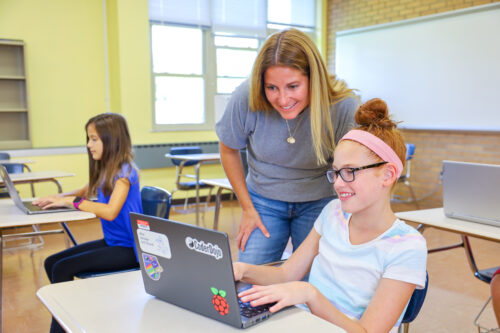
Research from the K-12 Computer Science Framework suggests that early exposure to computational thinking—the ability to break down problems, recognize patterns, and design algorithms—is a predictor of success in later STEM subjects. By introducing these concepts in the third and fourth grades, the Nechanickys are providing their students with a significant head start. Furthermore, data indicates that integrated CS can help close the "digital divide." When CS is part of the core curriculum, it ensures that all students, regardless of their background or elective choices, receive exposure to these critical 21st-century skills.
Impact on Inclusivity and Leadership
Perhaps the most significant finding from the Nechanickys’ experience is the impact of integrated CS on classroom social structures. Mark Nechanicky observed that coding often creates leadership opportunities for students who are traditionally marginalized or overlooked in other academic settings.
"Because it is a new experience for almost everyone, it changes the dynamic in the classroom," Mark noted. He observed that students with Individualized Education Plans (IEPs), English Language Learners (ELLs), and introverted students frequently emerged as "class experts." In one instance, an introverted student was the first to master the use of variables in the "Digit Dash" unit. This technical mastery translated into social capital, as he became the primary resource for his peers, modeling problem-solving techniques and fostering a collaborative environment.
This phenomenon aligns with broader educational research on "constructionism," which posits that students learn best when they are actively making tangible objects—in this case, digital programs. The process of debugging—finding and fixing errors in code—teaches resilience and shifts the teacher’s role from a "sage on the stage" to a facilitator of discovery.
Analysis of Implications for National Education
The Albert Lea case study provides a roadmap for other districts grappling with how to introduce computer science without sacrificing time for core subjects. There are several key implications for national educational policy and practice:
- Sustainability of Free Resources: The use of Experience CS, a free resource, highlights the importance of eliminating financial barriers for school districts. For many rural or underfunded schools, the cost of specialized CS software can be prohibitive.
- Teacher Empowerment: The Nechanickys’ success underscores the need for professional development that focuses on integration rather than isolation. When teachers see CS as a tool that makes their math or science instruction more effective, they are more likely to adopt it.
- Redefining Literacy: As digital tools become ubiquitous, the definition of "literacy" is expanding to include the ability to read and write code. Integrated models suggest that these skills can be taught in tandem with traditional reading and writing.
The CSTA Annual Conference and Future Directions
The upcoming presentation in New Orleans, titled "Foster Student Engagement, Confidence, and Collaboration through Integrated CS," represents a critical moment for the dissemination of these findings. The CSTA conference is a global gathering of educators, researchers, and policymakers dedicated to the advancement of CS education.
During the session on July 17, the Nechanickys will provide a deep dive into specific units, including "Weather Watchers," "Logic and Lore," "Picture This!", and "Digit Dash." They aim to provide other educators with practical strategies for overcoming the logistical hurdles of integrated learning.
As school districts across the country look toward the 2024–2025 academic year, the lessons from Albert Lea offer a compelling argument for the "integrated" approach. By fostering joy, creativity, and leadership through computer science, educators can prepare students not just for careers in technology, but for a world where computational thinking is a universal requirement for civic and professional life. The work of Mark and Taryn Nechanicky suggests that when students are given the tools to create, they don’t just learn the curriculum—they lead it.