On August 12, 2026, the Moon’s umbra, the darkest part of its shadow, swept across Earth, casting a fleeting twilight upon select regions of our planet. This celestial spectacle, a total solar eclipse, provided a breathtaking opportunity for observers situated within its narrow path of totality to witness the Sun’s corona, the ethereal outer atmosphere, a sight rarely visible to the naked eye. The path of totality, beginning its terrestrial journey in the Arctic Ocean, traced a course that traversed parts of Greenland, Iceland, the Atlantic Ocean, Portugal, and concluded in northern Spain.
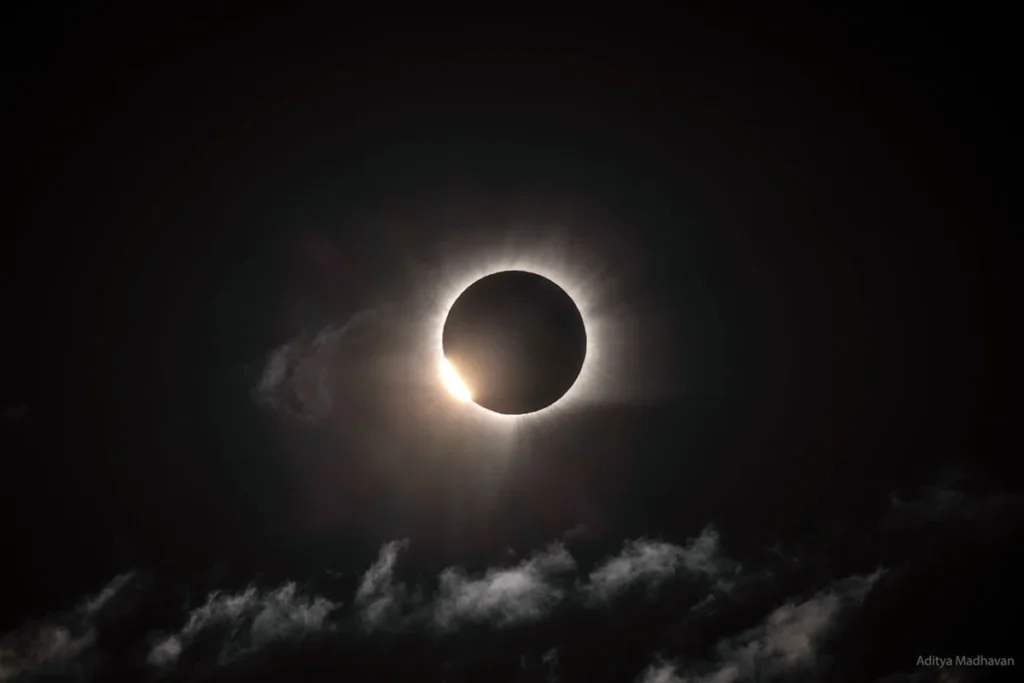
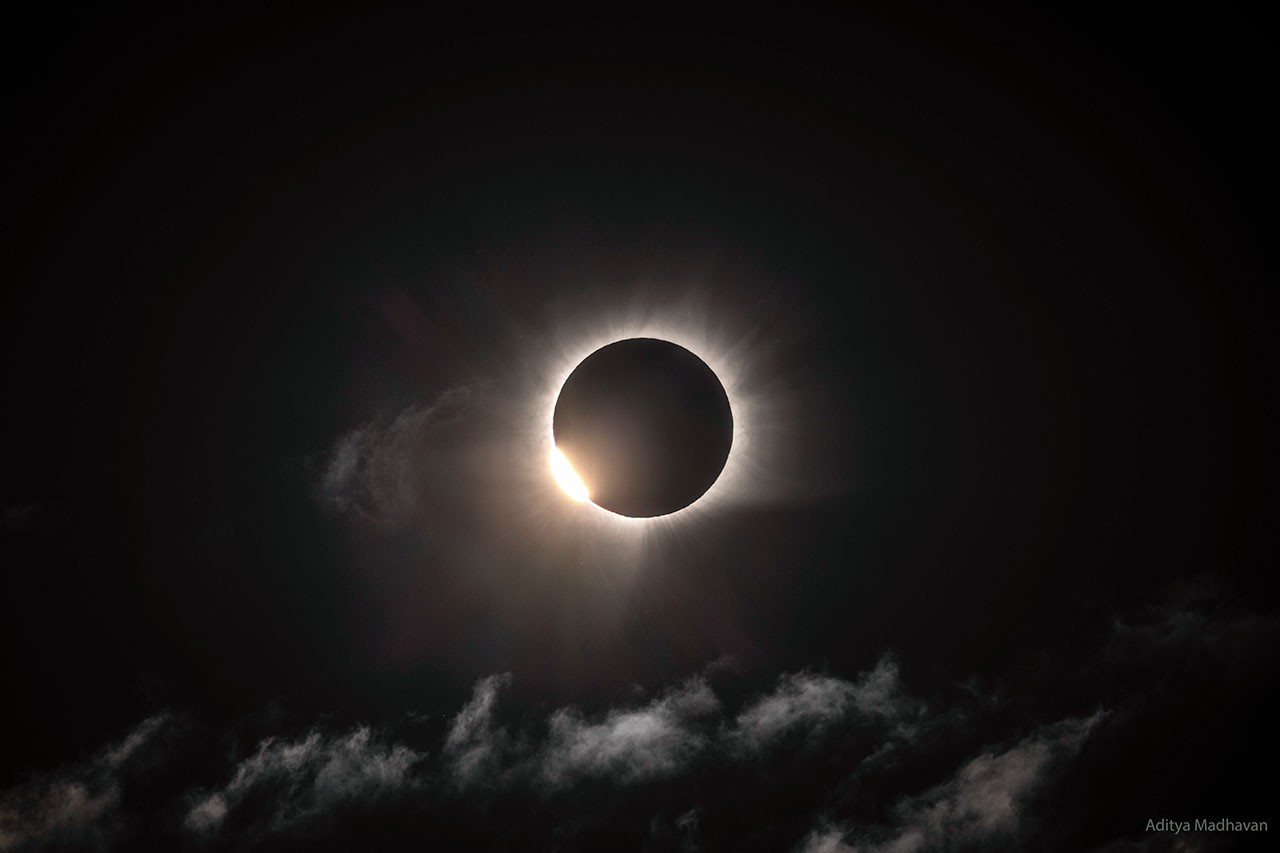
The image featured by Astronomy Picture of the Day (APOD) captures a pivotal moment from this extraordinary event. Taken at 17:33:26 UTC, near the initial emergence of clear skies along the path of totality, this photograph is believed to be among the earliest unobstructed views of the totally eclipsed Sun. The vantage point for this remarkable shot was Rype Fjord on the east coast of Greenland, specifically at coordinates 71.07055°N, 27.71252°W. This location, after the Moon’s shadow had navigated the complexities of weather patterns over the sea and made landfall, offered a precious window into the heart of the eclipse.
The Celestial Dance: A Chronicle of the 2026 Total Solar Eclipse
The total solar eclipse of August 12, 2026, was a highly anticipated astronomical event, meticulously tracked by scientists and amateur astronomers alike. The Moon’s shadow began its terrestrial encounter in the Arctic Ocean, a vast expanse where few observers were present. From there, the path of totality moved southeast, making its first significant landfalls in Greenland. The remote and often cloud-covered landscapes of Greenland presented a challenge for eclipse watchers, yet for those fortunate enough to find clear skies, the reward was immense.
Timeline of the Eclipse’s Terrestrial Path (UTC):
- Start of Totality in the Arctic Ocean: Approximately 17:14 UTC.
- Greenland: Totality began to become visible in parts of Greenland shortly after its initial terrestrial contact. The specific location of the APOD image, Rype Fjord, experienced totality around 17:33 UTC, indicating the rapid movement of the lunar shadow.
- Iceland: The shadow swept across parts of Iceland, offering viewing opportunities for its inhabitants and visitors.
- Atlantic Ocean: The eclipse continued its journey over the vast Atlantic.
- Portugal: Totality reached the Iberian Peninsula, with Portugal experiencing the spectacle.
- Northern Spain: The eclipse concluded its terrestrial transit across northern Spain, with the final sliver of totality visible before the Moon’s shadow moved back over the Mediterranean Sea.
- End of Totality on Earth: Approximately 18:05 UTC.
The precision with which these paths are predicted is a testament to centuries of astronomical observation and the development of sophisticated orbital mechanics. The path of totality for the 2026 eclipse was approximately 60 kilometers (37 miles) wide at its widest point.
Capturing Cosmic Majesty: The APOD Photograph and Its Significance
The APOD image, captured at Rype Fjord, Greenland, is more than just a photograph; it’s a scientific and artistic record of a rare celestial alignment. The photographer, having "dodged the weather by sea and making a landing," successfully positioned themselves for this unique vantage point. The image showcases several key features of a total solar eclipse:
- The Eclipsed Sun: The central, dark disk of the Moon completely obscures the Sun’s bright photosphere.
- The Solar Corona: Emanating from behind the Moon, the ethereal glow of the Sun’s outer atmosphere, the corona, is vividly displayed. This phenomenon is only visible during totality because the blinding light of the Sun’s surface is blocked. The corona is typically composed of plasma and magnetic fields, extending millions of kilometers into space.
- Diamond Rings: The photograph also records one of the eclipse’s "transient diamond rings." This spectacular visual effect occurs in the final moments before totality begins and the first moments after it ends. It is created by the last rays of sunlight passing through valleys on the Moon’s edge, appearing as a brilliant point of light resembling a diamond.
- Baily’s Beads: While not explicitly detailed in the brief explanation, diamond rings are often accompanied by Baily’s Beads, which are bead-like points of light formed by sunlight shining through lunar valleys and craters just before and after totality.
The timing of the APOD image, near the "initial reach of clearing skies along the path of totality," suggests that the photographer was among the very first to witness the full totality of the Sun from land in this region. This makes the image particularly valuable from a scientific perspective, offering an early record of the eclipse’s progression under relatively clear atmospheric conditions.
Supporting Data and Scientific Context
Total solar eclipses are not random occurrences. They are predictable events governed by the precise orbits of the Earth around the Sun and the Moon around the Earth. The Sun is approximately 400 times larger than the Moon, but it is also about 400 times farther away. This remarkable coincidence in relative size and distance allows the Moon to appear almost exactly the same size as the Sun in our sky, enabling total eclipses.
The duration of totality during an eclipse varies depending on the observer’s position within the path of totality and the Moon’s distance from Earth. During the August 12, 2026, eclipse, the maximum duration of totality was approximately 2 minutes and 7 seconds, occurring in the Atlantic Ocean. Locations closer to the edges of the path of totality experience shorter durations.
The study of the Sun’s corona is crucial for understanding solar activity, including solar flares and coronal mass ejections (CMEs). These phenomena can have significant impacts on Earth, affecting satellite operations, communication systems, and even power grids. By observing the corona during eclipses, scientists can gather data on its structure, temperature, and magnetic field, providing insights into the Sun’s behavior.
Broader Impact and Implications
The total solar eclipse of August 12, 2026, while a fleeting event for those directly in its path, holds broader significance:
- Scientific Research: Eclipses provide unique opportunities for scientific observation that cannot be replicated by artificial means. Data collected on the Sun’s corona during these events contribute to our understanding of solar physics and space weather.
- Public Engagement and Education: Events like this capture the public’s imagination, fostering interest in astronomy and science. The widespread dissemination of images and information, like that provided by APOD, plays a vital role in educating the public about our universe.
- Tourism and Local Economies: While the path of totality for this eclipse crossed remote areas, the presence of such astronomical events can draw tourists to regions that might otherwise receive less attention, potentially benefiting local economies. Portugal and Spain, with their more accessible viewing locations, likely experienced a surge in eclipse tourism.
- Technological Considerations: Understanding the impact of solar eclipses on technological systems, such as GPS and satellite communications, is an ongoing area of research. While the brief period of totality poses minimal risk to most systems, the underlying phenomena related to solar activity are critical to monitor.
Official Responses and Community Reactions
While specific official statements directly tied to the APOD image’s release are not detailed in the provided text, the publication of such an image by NASA’s Astronomy Picture of the Day signifies an official recognition of the event’s scientific and public interest. NASA, along with other space agencies and astronomical organizations worldwide, actively promotes eclipse awareness and safety.
The astronomical community, from professional researchers to amateur enthusiasts, would have been actively engaged in observing, photographing, and analyzing the eclipse. Social media platforms and scientific forums would have been abuzz with shared experiences and data. The mention of "More spectacular eclipse images: Solar Eclipse of 2026 August 12" on Facebook indicates a coordinated effort to collect and disseminate visual records of the event, likely managed by scientific institutions or dedicated astronomy groups.
The brief mention of "Tomorrow’s picture: perhaps a Perseid" suggests the ongoing nature of APOD’s mission, highlighting the continuous stream of fascinating celestial events that capture humanity’s attention. The Perseids are a well-known annual meteor shower, indicating that APOD’s coverage extends beyond solar eclipses to encompass a wide range of astronomical phenomena.
Looking Ahead: The Legacy of the 2026 Eclipse
The total solar eclipse of August 12, 2026, served as a powerful reminder of the dynamic and awe-inspiring nature of our solar system. The photograph from Greenland, a testament to perseverance and the pursuit of cosmic beauty, offers a tangible link to this celestial event. It underscores the importance of continued scientific observation, public engagement, and the enduring human fascination with the wonders of the universe. As scientists continue to study the data gathered from this and future eclipses, our understanding of the Sun and its profound influence on our planet will undoubtedly deepen. The cosmos continues to offer its grand spectacles, inviting us to look up and marvel.