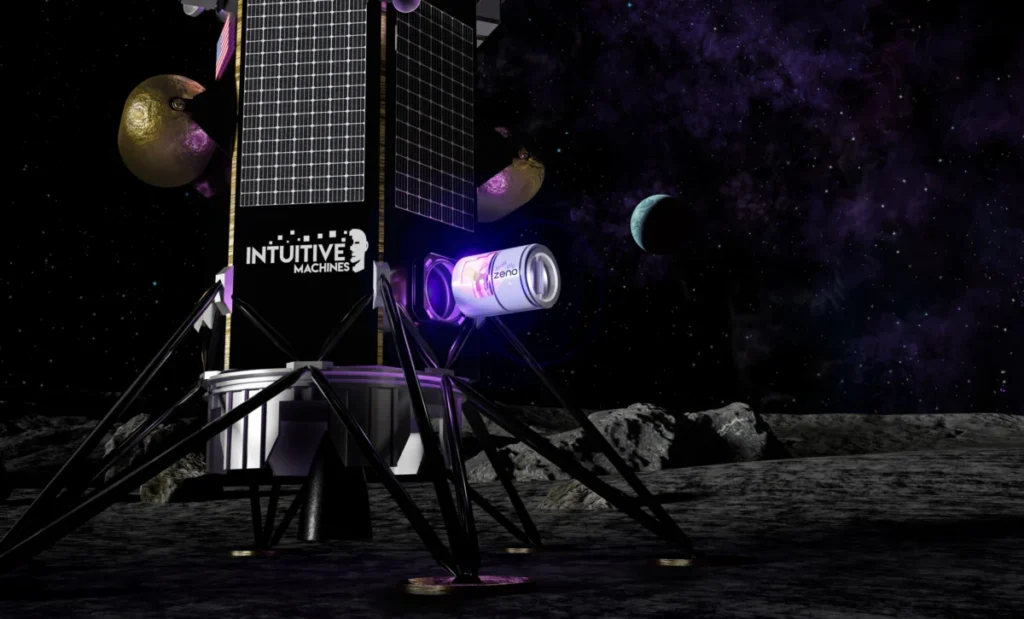
The ambitious push towards establishing a sustained human presence on the Moon and venturing further into the solar system with nuclear-powered spacecraft hinges on overcoming significant financial obstacles, particularly concerning the cost of radioactive materials and the development of robust insurance frameworks for private missions. This critical challenge was underscored by experts at the U.S. Space Nuclear Industry Symposium, where discussions revolved around NASA’s strategic roadmap for nuclear power and propulsion systems.
The Lunar Frontier: Surviving the Night and the Price Tag
Vince Bilardo, executive director of nuclear space programs for Intuitive Machines, a Houston-based company at the forefront of lunar exploration technology, articulated the formidable environmental demands of the Moon’s south pole. "The lunar surface at the south pole, where we want to land, is a very challenging environment where you need to be able to survive the lunar night," Bilardo stated. He emphasized that Radioisotope Power Systems (RPS), designed to generate power through radioactive decay, are considered indispensable for this survival. These "survive-the-night generators" are crucial for maintaining operational capabilities during the prolonged periods of darkness on the lunar surface, which can last for up to 14 Earth days.
Intuitive Machines is part of a broader collaborative effort, led by Zeno Power, that secured a significant $15 million award from NASA in 2023. This funding is dedicated to the development of a novel radioactive generator intended for integration into lunar landers. A key innovation in this project is the proposed use of americium-241 as the primary isotope, a departure from NASA’s long-standing reliance on plutonium-238 for its deep-space missions, most notably powering the Multi-Mission Radioisotope Thermoelectric Generators (MMRTGs) that have enabled the enduring exploration of Mars by rovers like Curiosity and Perseverance.
The Plutonium Shortage and the Americium Alternative
The rationale behind exploring alternatives to plutonium-238 is rooted in supply chain limitations. Bilardo explained, "It is produced by the Department of Energy for NASA’s outer planetary deep space science exploration missions, and we do not believe that plutonium 238 is going to be made available in sufficient quantities for the number of commercial generators we would need to support Moon Base." This sentiment directly addresses NASA’s ambitious goal of establishing the foundational elements of a lunar surface base by 2030. The projected demand for reliable power sources to sustain a permanent or semi-permanent lunar outpost far outstrips the current production capacity and allocation of plutonium-238, which is primarily reserved for high-priority scientific missions to the outer solar system.
The shift towards americium-241, while offering a potential solution to the supply deficit, introduces its own set of economic challenges. Bilardo candidly pointed out the inherent expense of this isotope, stating, "Americium is expensive." He stressed the need for a concerted effort involving government agencies, NASA, the Department of Energy, and the commercial sector to "drive the price down for that material if we’re going to be able to use it in a sustainable fashion on the lunar surface." This economic barrier is a significant hurdle that requires proactive policy and industrial engagement to resolve.
The Uninsured Frontier: Risk and Liability in Commercial Space
Beyond the material cost, another critical, and as yet unresolved, challenge is the absence of a viable mechanism for insuring or indemnifying private commercial missions that transport radioactive materials. This gap in risk management poses a substantial deterrent for private companies looking to engage in the commercialization of space nuclear technologies. Without clear frameworks for liability and insurance, the financial risks associated with accidents or incidents involving radioactive payloads remain prohibitively high for commercial ventures.
NASA’s Roadmap: Fission Reactors and the Path to 2030
NASA’s commitment to nuclear power extends beyond RPS, with the agency targeting 2030 for the launch of its first fission reactor designed for the planned Moon Base. This ambitious timeline signifies a strategic pivot towards higher-power nuclear solutions necessary for sustained human operations, including life support systems, in-situ resource utilization, and advanced scientific experimentation.
Nujoud Merancy, NASA’s Moon Base chief architect, echoed Bilardo’s concerns, emphasizing the agency’s role in addressing these critical enablers. "Uncovering these production gaps is where we need to focus," Merancy stated during the symposium. She highlighted the imperative for NASA to actively facilitate not only the use and production of these materials but also the development of indemnification processes. "And being able to do things like incentivizing things to get launched, to work through the production, to work through the launch indemnification – we have to start attacking these problems. And americium is one that comes up frequently" in the planning stages for lunar bases. This indicates that the challenges associated with americium-241 are a recurring theme in the agency’s strategic discussions for lunar development.
The White House Mandate: Accelerating In-Space Nuclear Capabilities
The urgency to advance in-space nuclear power and propulsion is also being driven from the highest levels of government. Aaron Miles, coordinator for strategic capabilities at the White House Office of Science and Technology Policy, revealed the Trump administration’s directive to see initial tests of in-space nuclear power and propulsion systems within the next two years. This aggressive timeline reflects a broader national strategy to solidify U.S. leadership in space nuclear technologies.
Miles specifically referenced the Space Reactor-1 Freedom (SR-1F) initiative, a nuclear-electric spacecraft slated for a 2028 launch. This mission is designed to transport three scientific helicopters to Mars, showcasing the potential of nuclear electric propulsion for rapid transit and advanced payload delivery to distant planetary bodies. The success of such missions is viewed as a critical indicator of American prowess in this technologically advanced sector.
Miles articulated the administration’s perspective: "We believe the general success of American space nuclear power efforts may depend on making this significant achievement during this term." This statement underscores the political and strategic importance placed on demonstrating tangible progress in space nuclear capabilities within the current administration’s tenure.
Broader Implications and Future Trajectories
The convergence of these challenges—cost of materials, production scalability, insurance frameworks, and governmental directives—paints a complex picture of the future of space nuclear power. The success of NASA’s lunar base ambitions and its broader interplanetary exploration goals is intrinsically linked to the ability to surmount these economic and regulatory hurdles.
The development of a sustainable and cost-effective supply chain for isotopes like americium-241 will require significant investment in production infrastructure and process optimization. This could involve partnerships between national laboratories and private industry, as well as potential government incentives for isotope production.
Furthermore, the establishment of clear legal and financial frameworks for insuring commercial space nuclear missions is paramount. This may necessitate new legislative actions or the creation of specialized insurance pools to underwrite the unique risks associated with carrying radioactive materials into space. Without such frameworks, the private sector’s ability to contribute meaningfully to space nuclear development will remain constrained.
The timeline laid out by the White House, with a focus on near-term testing, suggests a strategic imperative to build momentum and demonstrate technological viability. The successful execution of these early-stage missions will not only validate the underlying technologies but also provide crucial data for scaling up future applications.
In essence, the journey to powering the cosmos with nuclear energy is not just a scientific and engineering endeavor; it is a multifaceted challenge that demands innovative solutions in economics, policy, and risk management. The symposium served as a critical platform for stakeholders to acknowledge these complexities and to begin charting a collaborative path forward, one that aims to transform ambitious visions of lunar bases and deep-space exploration into tangible realities, powered by the immense potential of nuclear energy. The coming years will be pivotal in determining whether these financial and regulatory roadblocks can be successfully navigated, paving the way for a new era of space exploration.