The Massachusetts Institute of Technology (MIT) is poised to play a central role in the United States Department of Energy’s (DOE) ambitious Genesis Mission, following the announcement that 15 collaborative projects involving the university have been selected for Phase I funding. This initiative, designed to integrate artificial intelligence, supercomputing, and quantum systems into the fabric of American scientific research, represents a strategic shift in how the nation approaches complex challenges in energy, national security, and fundamental science. The DOE officially unveiled the selection of these projects during the inaugural Genesis Summit held in Washington, D.C., marking the beginning of a multi-year effort to build what the department describes as the world’s most powerful integrated science discovery platform.
The Genesis Mission is a cornerstone of the DOE’s broader strategy to maintain U.S. leadership in global innovation. By incentivizing cross-sector partnerships between academia, industry, and national laboratories, the program aims to dissolve traditional silos that often slow the transition from theoretical discovery to practical application. MIT’s involvement spans a diverse array of scientific frontiers, with six projects led by MIT principal investigators and another nine featuring MIT researchers as key collaborators alongside other prestigious institutions and private sector partners.
The Strategic Framework of the Genesis Mission
The Genesis Mission was conceived as a response to the rapidly evolving landscape of global technology, where the convergence of massive datasets and high-performance computing is redefining the limits of human inquiry. According to the DOE, the mission’s primary goal is to accelerate the "time-to-discovery" by creating a seamless digital and physical infrastructure. This infrastructure allows researchers to utilize AI-driven simulations, real-time data analysis from advanced scientific instruments, and quantum-enhanced sensing to solve problems that were previously considered computationally or experimentally insurmountable.
Phase I of the mission focuses on "research workflows." Rather than immediately moving toward large-scale manufacturing or final deployment, the selected teams are tasked with demonstrating how AI can be rigorously integrated into the scientific method. This involves creating "digital twins" of physical systems, using generative AI to design new materials at the atomic level, and automating complex laboratory processes. If these Phase I projects can successfully prove their methodology and scientific merit, they may be eligible for significant follow-on funding to scale their capabilities.
Ian A. Waitz, MIT’s vice president for research, emphasized the university’s commitment to this collaborative model. "MIT researchers are proud to be leading and contributing to projects under the Genesis Mission, in vital areas of research that support national priorities," Waitz stated. "The Genesis Mission represents a fantastic opportunity to catalyze the power of universities, industry, and the U.S. national laboratories to advance science, technology, and innovation for the benefit of the nation and the world."
A Deep Dive into MIT’s Research Portfolio
The 15 projects involving MIT cover a broad spectrum of high-impact scientific domains. While the specific financial details of each award are currently under negotiation, the scope of the work highlights the multidisciplinary nature of MIT’s research ecosystem.
Fusion Energy and Plasma Physics
A significant portion of the MIT-involved projects focuses on the advancement of fusion energy, often referred to as the "holy grail" of clean energy. Fusion, the process that powers the sun, offers the potential for virtually limitless carbon-free electricity. However, maintaining the extreme temperatures and pressures required for fusion is an immense engineering challenge.
MIT researchers will lead and support projects aimed at modeling plasma behavior within tokamaks—doughnut-shaped devices that use magnetic fields to confine plasma. Using AI and supercomputing, these teams intend to predict and control plasma instabilities in real-time, a necessity for the operation of future commercial fusion reactors. Additionally, the development of "digital twins" for fusion magnet systems will allow engineers to simulate the stresses and performance of superconducting magnets without the need for costly physical prototypes, significantly shortening development timelines.
Quantum Sensing and Fundamental Physics
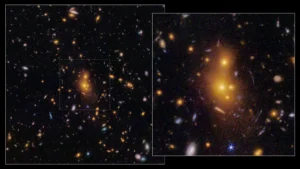
Another key area of focus involves the development of ultra-sensitive quantum sensors. These instruments leverage the principles of quantum mechanics to detect minute changes in gravity, magnetic fields, or light. Under the Genesis Mission, MIT researchers aim to use these sensors to explore fundamental questions about the universe, including the search for dark matter and the study of subatomic particles. By integrating AI with quantum data, researchers can filter through "noise" to identify rare signals that would be invisible to traditional sensors.
Sustainable Materials and Rare Earth Extraction
The mission also addresses critical supply chain vulnerabilities. Rare earth elements are essential components in everything from electric vehicle motors to advanced defense systems. Currently, the extraction of these elements is often chemically intensive and environmentally damaging. MIT-led projects will explore chemical-free methods to extract rare earth elements, potentially using biological pathways or advanced physical separation techniques optimized by AI.
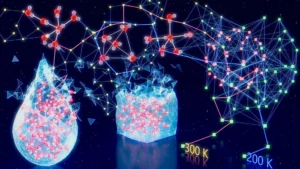
Furthermore, researchers are investigating the "self-assembly" of biomolecules. By understanding how nature builds complex structures at the microscopic level, scientists hope to generatively design new materials with specific properties, such as extreme heat resistance or high conductivity, tailored for specific industrial applications.
Chronology of the Genesis Initiative
The path to the Genesis Mission reflects a growing consensus in the U.S. government regarding the need for a unified national research strategy.
- Initial Conception (2023): Following the passage of the CHIPS and Science Act, the DOE began internal discussions on how to leverage the nation’s high-performance computing (HPC) assets more effectively for general scientific discovery.
- Mission Launch (Early 2024): The DOE officially announced the Genesis Mission, calling for proposals that bridged the gap between AI and physical sciences.
- Proposal Evaluation (Mid-2024): A rigorous peer-review process evaluated hundreds of submissions from across the country, focusing on technical feasibility, the strength of the collaborative team, and the potential for transformative impact.
- Phase I Announcement (Wednesday): Secretary of Energy Jennifer Granholm and Under Secretary for Science and Innovation Darío Gil announced the first cohort of projects at the Genesis Summit in Washington.
- Award Negotiations (Current): MIT and other selected institutions are currently finalizing the terms of their award agreements, with work expected to commence shortly after.
Leadership and Institutional Vision
The announcement of the Genesis Mission projects was met with enthusiasm by Department of Energy leadership. Under Secretary Darío Gil, an MIT alumnus (SM ’00, PhD ’03), highlighted the cultural shift the mission represents for the scientific community.
"The extraordinary response to this Genesis Mission application process demonstrates that America’s scientific community is ready to reimagine how discovery happens," Gil said. "Through the Genesis Mission, we are bringing together the nation’s leading researchers, institutions, and technology partners to build the next generation of scientific capability. We look forward to seeing these teams demonstrate new research workflows that accelerate discovery and reveal what is possible when AI and science advance together."
For MIT, the Genesis Mission is an extension of its long-standing relationship with the DOE and its national laboratories, such as the Plasma Science and Fusion Center (PSFC) and the Lincoln Laboratory. The collaborative requirement of the mission ensures that MIT’s academic rigor is paired with the industrial scale of corporate partners and the specialized infrastructure of the national labs.
Technical Analysis: The Role of AI in Scientific Discovery
The integration of AI into scientific research—the core tenet of the Genesis Mission—marks a transition from "Edisonians" trial-and-error to "In Silico" prediction. In traditional research, discovering a new material might require testing thousands of physical samples. With the AI-driven workflows proposed by the MIT teams, researchers can use machine learning models to simulate millions of variations in a virtual environment, identifying the most promising candidates before a single physical experiment is conducted.
This approach is particularly vital in fields like "rotating blades for machinery systems," another project involving MIT. By using generative design, AI can suggest aerodynamic shapes that human engineers might never conceive, optimizing for efficiency and durability in jet engines or power turbines.
However, the DOE and MIT researchers acknowledge the challenges of this transition. AI models are only as good as the data they are trained on, and scientific data is often sparse or difficult to standardize. Phase I of the Genesis Mission is specifically designed to address these hurdles, ensuring that AI-generated hypotheses are grounded in physical laws and subject to rigorous experimental verification.
Broader Implications for National Security and the Economy
Beyond the immediate scientific outputs, the Genesis Mission has profound implications for U.S. national interests. In an era of increasing global competition, the ability to rapidly innovate in sectors like quantum computing and clean energy is a matter of economic and strategic importance.
- Energy Independence: By accelerating fusion and improving the efficiency of existing energy systems, the mission contributes to long-term energy security and the transition to a net-zero economy.
- Resource Sovereignty: Developing new ways to extract and process rare earth elements reduces dependence on foreign supply chains, particularly those dominated by geopolitical rivals.
- Workforce Development: The projects provide a training ground for the next generation of scientists and engineers, who must be proficient in both their specific scientific disciplines and the tools of data science and AI.
- Scientific Sovereignty: Maintaining the world’s most advanced integrated science platform ensures that the U.S. remains the preferred destination for global talent and the primary hub for breakthrough discoveries.
Looking Ahead: The Path to Phase II
As the MIT-led and collaborative teams begin their work in Phase I, the focus will be on delivering "proof-of-concept" workflows. The DOE has indicated that projects demonstrating the most significant potential for "transformative capabilities at scale" will be prioritized for further funding in Phase II.
The success of the Genesis Mission will ultimately be measured by its ability to turn the "integrated science discovery platform" from a concept into a reality. For the researchers at MIT, the selection for these 15 projects is both a recognition of their current expertise and a mandate to push the boundaries of what is possible. As the projects move from negotiation to implementation, the scientific community will be watching closely to see how the marriage of AI and traditional science reshapes the future of innovation.
A complete list of the first Genesis Mission projects selected for award negotiations remains available through the U.S. Department of Energy’s Office of Science, providing a roadmap for the technological milestones the nation hopes to achieve in the coming decade.