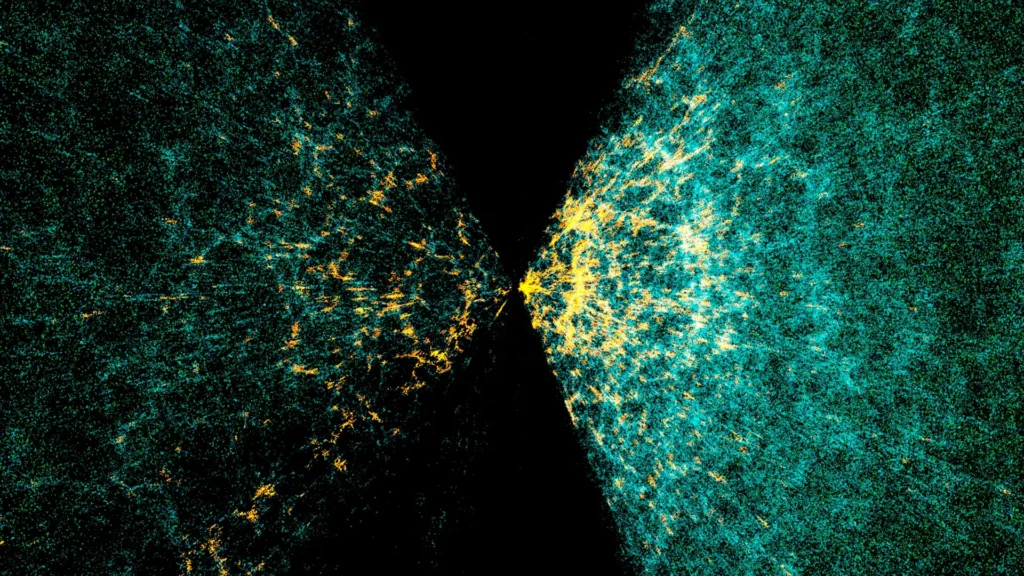
The Sloan Digital Sky Survey V (SDSS-V) has achieved a significant milestone in its ambitious quest to map the cosmos on an unprecedented global scale with the release of Data Release 20 (DR20). This pivotal release marks a profound expansion of the survey’s reach, incorporating the first optical spectra collected from the Southern Hemisphere, a crucial step that extends SDSS-V’s observational capabilities far beyond the foundational work established in its earlier phases. DR20 represents not just an increase in data volume but a fundamental shift in the survey’s scope, enabling a more comprehensive and nuanced understanding of the universe.
A Panoptic View of the Cosmos
DR20 integrates these groundbreaking southern hemisphere observations with the extensive data previously gathered from the north. This fusion creates a "panoptic" spectroscopic map, a comprehensive view that spans both hemispheres. The result is an unparalleled broad perspective on stars, the intricate tapestry of interstellar gas, and the distant luminous galaxies that populate the universe. This release is a significant component of the ever-expanding panoptic spectroscopic map that the ongoing SDSS-V survey is diligently constructing, promising a deeper and more holistic understanding of cosmic phenomena.
The scientific imperative behind this comprehensive approach is clear: studying both the nearby and the distant universe is fundamental to unraveling the complex physical processes that have shaped and continue to shape the cosmos. DR20 actively advances this critical scientific endeavor, propelling SDSS-V into a new era characterized by multi-wavelength and multi-epoch observations across the optical and infrared spectrum. This integration of diverse observational techniques is essential for capturing the dynamic nature of celestial objects and phenomena.
Key Innovations and Expansions in Data Release 20
Data Release 20 is a treasure trove of resources designed to empower both professional astronomers and the wider public with an interest in the cosmos. Among its key offerings are comprehensive catalogs focusing on black holes, stars, and the diffuse interstellar gas. Complementing these datasets are newly developed visualizations and sophisticated scientific tools, meticulously crafted to assist users in navigating and extracting insights from the immense volume of data.
Dr. Emily Griffith of the University of Colorado Boulder, the spokesperson for the SDSS-V collaboration, articulated the significance of this release: "DR20 represents an enormous leap in the scale of SDSS data products—today we release over three million spectra of stars and galaxies along with 18 value-added catalogs. It’s the product of years of work by a dedicated, international team of astronomers. We’re excited to share DR20 with the world and see what the community discovers with it." This statement underscores the collaborative spirit and the immense effort that underpins such a monumental scientific undertaking.
The Inaugural Southern Hemisphere BOSS Spectra
A cornerstone of DR20 is the inclusion of the first-ever optical spectra of stars and extragalactic objects obtained in the Southern Hemisphere by SDSS-V. These crucial observations were facilitated by the du Pont 2.5m Telescope situated at the Las Campanas Observatory (LCO) in Chile. This new southern data is meticulously combined with updated observations from the Sloan Foundation 2.5m Telescope at the Apache Point Observatory (APO) in New Mexico.
The synergistic operation of these two geographically distinct observing sites dramatically broadens the survey’s observational footprint. This dual-hemisphere capability allows SDSS-V to scrutinize the night sky from a more complete vantage point, minimizing biases and enhancing the accuracy of cosmic measurements. The ability to observe from both hemispheres is a game-changer for astronomical research, enabling more robust studies of galactic structure, stellar populations, and the distribution of matter across the universe.
Bridging Optical and X-Ray Perspectives
DR20 also heralds the delivery of the first substantial data stream resulting from coordinated observations between the eROSITA X-ray telescope and SDSS-V. This initiative is part of the SPectroscopic IDentification of ERosita Sources (SPIDERS) program and is intricately linked with the second release of the eROSITA X-ray All-Sky Survey (eRASS DR2).
The convergence of these observational datasets provides critical identifications and precise optical redshift measurements for hundreds of thousands of active galactic nuclei (AGN) emitting X-rays, galaxy clusters, and active stars. By correlating X-ray detections with detailed optical spectroscopic data, researchers can now more accurately characterize the nature and precise cosmic locations of these highly energetic celestial objects. This multi-wavelength approach is vital for understanding the physical processes that power these phenomena, from the accretion disks around supermassive black holes to the intracluster medium in galaxy clusters.
A Significant Augmentation of Key SDSS-V Scientific Programs
DR20 represents a substantial enhancement of several core SDSS-V scientific programs, delivering unprecedented volumes of data and expanding the frontiers of astrophysical research.
The Black Hole Mapper’s Exponential Growth
The Black Hole Mapper (BHM) component of SDSS-V experiences a dramatic expansion in DR20, boasting a three-to-four-fold increase in data compared to the previous release, DR19. This release now contains approximately 1.1 million optical BOSS spectra, representing an estimated 500,000 distinct objects. This burgeoning dataset is crucial for understanding the demographics and evolution of supermassive black holes that reside at the centers of galaxies.
Beyond the SPIDERS program, the expanded BHM dataset benefits significantly from contributions from the All-Quasar Multi-Epoch Spectroscopy (AQMES) program and the Reverberation Mapping (RM) program. These ambitious projects involve repeated observations of quasars and other target objects over extended periods. The primary goal is to study the dynamic behavior of supermassive black holes and their immediate cosmic environments, providing insights into accretion processes, feedback mechanisms, and the co-evolution of black holes and their host galaxies.
Mapping the Milky Way with Unprecedented Detail
The Milky Way Mapper (MWM) also sees a substantial expansion in DR20, with the addition of a vast collection of optical stellar targets. This comprehensive dataset is instrumental in building a detailed three-dimensional map of our own galaxy, the Milky Way, and understanding the diverse populations of stars that inhabit it.
Across both the Black Hole Mapper and the Milky Way Mapper surveys, DR20 collectively presents over 3 million spectra, encompassing observations of 1.5 million individual stars. Notably, this collection includes the first identified carbon-enhanced metal-poor stars within the Magellanic Clouds, as well as the first identified intermediate-mass stripped star. Both of these stellar archetypes are of immense scientific interest because they offer critical clues about the earliest phases of star formation and the complex evolutionary pathways that stars undergo throughout their lifetimes. The discovery of such rare objects in significant numbers signifies a leap forward in stellar astrophysics.
New Spectral Maps of Nebulae and Nearby Galaxies
The Local Volume Mapper (LVM) has undergone a transformative expansion in DR20, far surpassing the limited single-tile preview that was made available with DR19. The current release features detailed integral field spectroscopy maps of six distinct target regions, collectively covering 169 tiles and yielding approximately 300,000 spectra.
These high-resolution maps provide unprecedented spatial detail of Galactic HII regions, planetary nebulae, and nearby galaxies. This granular data allows astronomers to examine well-known celestial objects, such as the iconic Rosette and Orion nebulae, with a level of spectroscopic detail previously unattainable across such vast sky areas. The LVM’s ability to capture the intricate structure and chemical composition of gas and dust in these regions is vital for understanding star formation processes and the chemical evolution of galaxies.
Innovative Tools for Data Exploration
To facilitate the exploration of the ever-growing LVM dataset, the SDSS-V collaboration has introduced LVMvis. This interactive, browser-based visualization tool serves as a powerful complement to the next-generation user interfaces, Zora and Valis, which have also been significantly updated for DR20. LVMvis features an RGB HiPS (Hierarchical Progressive Surveys) emission-line map, allowing users to intuitively explore the distribution and intricate structures of glowing gas across the celestial sphere.
In addition to these visualization tools, DR20 incorporates 18 brand-new or comprehensively updated Value-Added Catalogs (VACs). These meticulously curated catalogs are designed to streamline specialized scientific investigations by organizing and enhancing the raw data derived from the main survey, making complex analyses more accessible.
Accessing the Universe: Open and Usable Data
In alignment with the principles of open science, DR20 is cumulative, building upon the foundations of all previous SDSS releases. It encompasses all newly processed BOSS spectroscopic observations collected from both hemispheres up to February 2, 2025, alongside all spectroscopic data from every prior phase of the Sloan Digital Sky Survey.
The entirety of this vast dataset is readily accessible through the SDSS Science Archive Server (SAS). To further empower researchers and enthusiasts, updated Python Notebook Tutorials are also available, designed to run server-side within SciServer Compute. These resources are openly provided under open-use principles, aiming to democratize access to astronomical data.
Dr. Anne-Marie Weijmans, the SDSS Data Products Coordinator from the University of St Andrews, emphasized this commitment to accessibility: "We want everyone to make use of the SDSS data products, whether they are a professional astronomer doing their research, a student learning how to work with data, a teacher looking for classroom material, or someone who is just interested in astronomy in general. That is why we have so many different platforms for people to interact with the data, and we take care to provide numerous examples and tutorials for each of these. The data should not just be publicly available but be publicly usable."
Looking ahead, Dr. Juna Kollmeier, the SDSS-V Director at Carnegie Science, expressed optimism and a forward-looking perspective: "This data release provides some spectacular SDSS-V data that we are sure people will make excellent use of. But we aren’t stopping here. We just spent a week talking about what will go into DR21 and DR22! We’re going to need bigger computers!" This statement highlights the ongoing nature of the SDSS project and its continuous pursuit of expanding the frontiers of astronomical knowledge.
Background and Future of SDSS
The Sloan Digital Sky Survey, initiated in 1998, has been a cornerstone of modern astronomy, systematically mapping vast portions of the night sky and providing an unparalleled resource for studying galaxies, quasars, and stars. SDSS-V, the fifth iteration of this monumental project, aims to continue this legacy with enhanced capabilities and a broader scientific scope. The survey utilizes a suite of telescopes, primarily located at the Apache Point Observatory in New Mexico and the Las Campanas Observatory in Chile, to collect vast amounts of spectroscopic and imaging data.
The funding for the Sloan Digital Sky Survey V is a testament to a broad coalition of scientific institutions and foundations. Key financial support comes from the Alfred P. Sloan Foundation, the Heising-Simons Foundation, the National Science Foundation, and numerous participating institutions. SDSS also gratefully acknowledges the essential support and computational resources provided by the Center for High-Performance Computing at the University of Utah.
The infrastructure for SDSS is managed by the Astrophysical Research Consortium, representing a collaborative effort among a diverse array of international institutions. These include, but are not limited to, Caltech, the Carnegie Institution for Science, various Chilean National Time Allocation Committee (CNTAC) ratified researchers, The Flatiron Institute, Harvard University, Heidelberg University, The Johns Hopkins University, L’Ecole polytechnique fédérale de Lausanne (EPFL), Leibniz-Institut für Astrophysik Potsdam (AIP), Max-Planck-Institut für Astronomie (MPIA Heidelberg), Max-Planck-Institut für Extraterrestrische Physik (MPE), Nanjing University, National Astronomical Observatories of China (NAOC), New Mexico State University, The Ohio State University, Pennsylvania State University, Smithsonian Astrophysical Observatory, Space Telescope Science Institute (STScI), the Stellar Astrophysics Participation Group, Universidad Nacional Autónoma de México, University of Arizona, University of Colorado Boulder, University of Illinois at Urbana-Champaign, University of Toronto, University of Utah, University of Virginia, Yale University, and Yunnan University. This extensive network of collaboration underscores the global nature of modern astronomical research and the vital role of SDSS in its advancement.