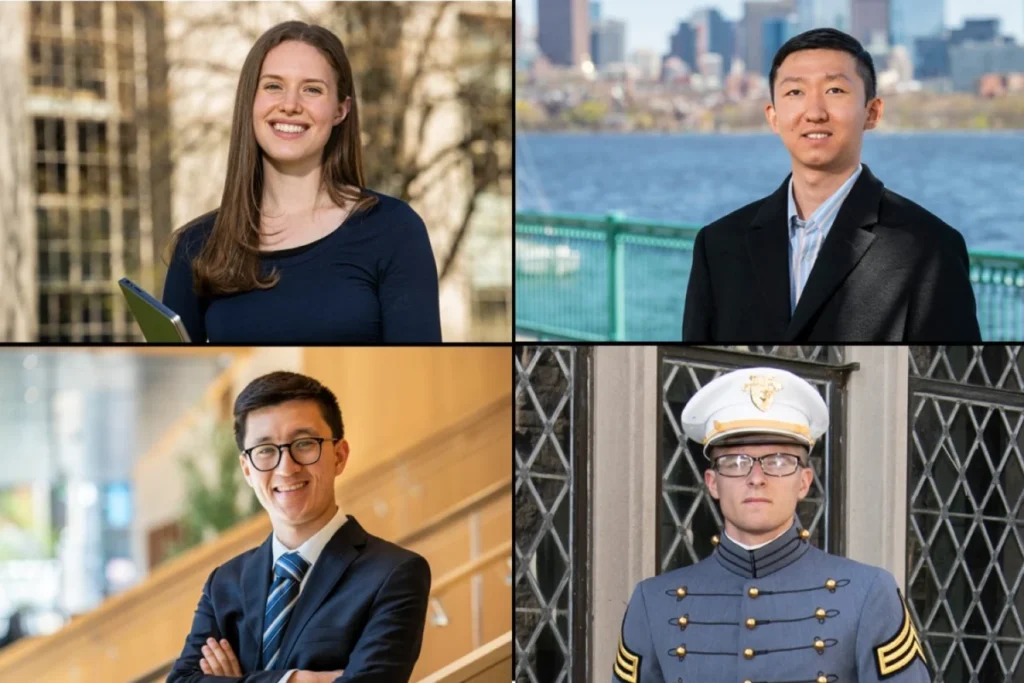
The Fannie and John Hertz Foundation, a leading philanthropic organization dedicated to advancing scientific and technological leadership, has officially announced the selection of its 2026 fellowship recipients, including four exceptional individuals affiliated with the Massachusetts Institute of Technology (MIT). This year’s prestigious honor has been bestowed upon current MIT students Annika Marschner, Alvin Q. Meng, and Zachary S. Siegel, alongside Matthew Wanta, an incoming graduate student poised to join the institution in the fall. These scholars represent a vital infusion of talent into the nation’s scientific and engineering landscape, chosen for their demonstrated potential to drive transformative innovation.
The Hertz Foundation: A Legacy of Innovation and Impact
Established in 1963 by entrepreneur and philanthropist John D. Hertz, the Fannie and John Hertz Foundation was conceived with a singular, ambitious vision: to identify and empower America’s most promising scientific and technological innovators. Hertz, a self-made magnate who founded the Hertz Corporation and played a significant role in the automotive and transportation industries, understood that sustained national prosperity and security hinged on nurturing exceptional intellect. His foundation was designed to offer an unparalleled level of support, freeing gifted individuals from financial constraints to pursue high-risk, high-reward research at the doctoral level.
Over its six-decade history, the Hertz Fellowship has become one of the most competitive and esteemed graduate fellowships in the United States. Its unique mandate is to support graduate students in the applied physical, biological, and engineering sciences, providing them with the intellectual freedom necessary to tackle the most challenging problems facing humanity. Unlike many other fellowships that focus on specific research areas, the Hertz Foundation prioritizes the individual’s potential for creative leadership and breakthrough discoveries, allowing fellows to define their own research trajectories. This philosophy has fostered a remarkable legacy of innovation, with Hertz Fellows contributing to some of the most significant scientific and technological advancements of the modern era.
Unparalleled Support for Pioneering Research
The Hertz Fellowship is distinguished not only by its prestige but also by the substantive and enduring support it offers. Each recipient is awarded up to five years of comprehensive financial backing, encompassing a substantial stipend and the full equivalent of tuition costs. This significant investment is designed to provide what the Foundation describes as "an unusual measure of autonomy," a crucial element in enabling fellows to embark on truly ground-breaking research without the typical pressures of securing grants or conforming to pre-established research agendas. This financial liberation allows them to explore unconventional ideas, pivot their research as new insights emerge, and pursue long-term, high-impact projects that might otherwise be deemed too speculative for traditional funding mechanisms.
Beyond the financial provision, the Hertz Fellowship cultivates a lifelong community of scholars. Fellows gain exclusive access to the Hertz Foundation’s extensive network, which includes over 1,300 distinguished individuals named since the fellowship’s inception. This network facilitates invaluable opportunities for mentorship, collaboration, and professional development through events, workshops, and informal connections. The synergy within this community has historically catalyzed the formation of collaborative startups, groundbreaking research initiatives, and successful commercialization ventures across a vast array of technology, science, and engineering fields. This unique ecosystem ensures that the impact of a Hertz Fellowship extends far beyond the individual’s graduate studies, fostering a continuous cycle of innovation and mutual support.
The Rigorous Selection Process: Identifying Fearless Innovators
The selection of Hertz Fellows is an exceptionally rigorous and multi-stage process, designed to identify candidates who possess not only outstanding academic credentials but also an uncommon blend of creativity, resilience, and vision. Philip Welkhoff, a distinguished Hertz Fellow himself and the director of the malaria program at the Gates Foundation, co-led this year’s selection committee. His observations underscore the caliber of the chosen cohort. "What particularly impresses me about this cohort is their fearlessness in taking on new challenges and advancing the frontiers of science," Welkhoff stated. He further lauded their "tremendous creativity, grit, and vision," expressing eager anticipation for the innovations they will undoubtedly achieve with the freedom afforded by the fellowship.
The process typically involves a competitive application, multiple rounds of interviews, and a deep dive into candidates’ research proposals, academic achievements, and leadership potential. The committee seeks individuals who demonstrate not just intellectual prowess but also a profound curiosity, an ability to think critically across disciplines, and a genuine desire to make a significant impact on the world. The 19 scholars selected nationwide this year, including the four MIT-affiliated recipients, emerged from a highly competitive pool, signifying their exceptional promise.
MIT’s Stellar Cohort: Profiles in Excellence
MIT, consistently recognized as a global leader in science and engineering, frequently sees its students and alumni among the ranks of Hertz Fellows. This year’s four affiliated recipients exemplify the institute’s commitment to fostering interdisciplinary research and pushing the boundaries of knowledge.
Annika Marschner: Engineering the Future of Bio-Robotics
Annika Marschner, an incoming doctoral student, is set to begin her PhD in Mechanical Engineering at MIT in the fall of 2026. A recent graduate with a strong foundation in mechanical engineering, Marschner’s undergraduate career was marked by a deep engagement in developing novel technologies at the intersection of biology and engineering. Her research has spanned biointerfacing and bio-inspired systems, showcasing a remarkable ability to translate theoretical concepts into tangible, functional prototypes.
During her undergraduate studies, Marschner contributed to several cutting-edge projects. At MIT’s Raman Lab, she was instrumental in the development of a custom benchtop stereoscope-compatible incubator and an extrusion-based desktop bioprinter, tools critical for advancing cellular and tissue engineering research. Her expertise extended internationally to ETH Zurich’s Tissue Engineering and Biofabrication Lab, where she designed a light-based filamented bioprinting system, further demonstrating her proficiency in advanced manufacturing techniques for biological applications. Back at MIT, within the Biomimetic Robotics Lab, Marschner focused on large-scale hardware designs for robotic systems, honing her skills in creating sophisticated mechanical structures. Her undergraduate thesis specifically addressed the challenging problem of improving the speed and dexterity of dynamic motions in bio-inspired robotic limbs, a critical step towards creating more agile and adaptable robots. As a graduate student, Marschner plans to continue her pioneering work on both hardware and control system design within biologically relevant contexts, with a particular emphasis on developing assistive medical technologies and surgical robotics—fields poised for transformative advancements that could revolutionize patient care and surgical precision.
Alvin Q. Meng: Unraveling Chemical Mysteries
Alvin Q. Meng is a doctoral student in inorganic chemistry at MIT, where his research delves into the fundamental interactions that govern chemical structure and reactivity. Under the guidance of Professor Daniel L.M. Suess, Meng is currently engaged in the intricate study of iron-sulfur clusters. These clusters are ubiquitous in nature, playing crucial roles in a wide array of biological processes, including electron transfer, catalysis, and gene regulation. Understanding their complex chemistry is vital for advancements in bioinorganic chemistry, enzyme mimics, and sustainable energy solutions.
Meng’s academic journey began in Tianjin, China, before his family immigrated to the United States when he was 10 years old. He went on to earn dual undergraduate degrees in chemistry and mathematics from the University of Virginia, a testament to his interdisciplinary intellectual curiosity. During his time at UVA, he conducted significant research in the group of Professor W. Dean Harman. His work there involved the synthesis and characterization of dihapto-coordinated tungsten complexes of cyclopentadiene. Specifically, he focused on a class of unusual binuclear species characterized by a carbon–carbon bond linking two metal-bound five-membered rings. This research contributed to a deeper understanding of organometallic chemistry, paving the way for the development of new catalysts and materials with tailored properties. Meng’s current work on iron-sulfur clusters continues his trajectory of probing complex chemical systems to uncover foundational principles that can have far-reaching practical applications.
Zachary S. Siegel: Bridging AI, Robotics, and Cognition
Zachary S. Siegel is an electrical engineering and computer science graduate student pursuing a PhD within MIT’s renowned Computer Science and Artificial Intelligence Laboratory (CSAIL). His research occupies the fascinating and rapidly evolving intersection of robotics, cognitive science, and artificial intelligence, aiming to develop machines that exhibit more human-like intelligence and learning capabilities.
Siegel graduated summa cum laude from Princeton University with a BSE in computer science and a minor in philosophy, an unusual but highly synergistic combination that reflects his interest in the fundamental aspects of intelligence. His exceptional undergraduate record earned him numerous honors, including Tau Beta Pi, Sigma Xi, and the prestigious Outstanding Computer Science Independent Work Prize. His senior thesis, co-advised by leading researchers Tom Griffiths and Jacob Andreas, investigated how humans infer the goals of others in open-ended, real-world environments. Siegel demonstrated that Bayesian inference serves as an accurate model for people’s goal predictions, achieving this by comparing partial observations to a learned library of possible plans weighted by their prior likelihood. This work has significant implications for developing more intuitive and adaptable AI systems. For his doctoral research, Siegel is driven by the ambition to build machines that learn and reason more like people—systems capable of learning from limited data and generalizing effectively to novel situations by integrating robot planning with Bayesian inference. He is particularly focused on combinatorial generalization: the innate human capacity to combine known skills in innovative ways to solve previously unseen problems without requiring additional demonstrations. At MIT, Siegel benefits from the guidance of a stellar advisory committee comprising Leslie P. Kaelbling, Tomáš Lozano-Pérez, and Joshua B. Tenenbaum, all prominent figures in AI and cognitive science.
Matthew Wanta: Advancing National Security Through Autonomous Systems
Matthew Wanta is an incoming doctoral student who will embark on his operations research studies at MIT in the fall. A distinguished graduate of the United States Military Academy at West Point, Class of 2026, Wanta earned bachelor’s degrees in computer science and mathematical sciences, both with honors. His academic and research career at West Point was deeply centered on machine learning for autonomous systems, with a clear focus on applications relevant to national security and defense.
Wanta’s work integrated probabilistic modeling and computer vision into frameworks for cooperative drone search and swarm control. These capabilities are crucial for modern defense operations, enabling more efficient reconnaissance, surveillance, and target acquisition. In collaboration with the DEVCOM Armaments Center, he developed sophisticated computer vision models specifically designed for detecting energetic defects in artillery munitions. This innovation has profound implications for defense manufacturing, enabling rapid, nonintrusive quality control that can enhance safety and reliability. His engagement with the U.S. Special Operations Command (USSOCOM) and various Army C5ISR (Command, Control, Communications, Computers, Cyber, Intelligence, Surveillance, and Reconnaissance) organizations further solidified his expertise in autonomous aerial search and sensing. For these initiatives, Wanta built advanced simulation architectures for probabilistic target localization and multi-agent coordination, critical for optimizing the deployment and effectiveness of autonomous assets in complex operational environments. Beyond his technical achievements, Wanta also demonstrated exceptional leadership at West Point, serving as company commander for Bravo Company, 2nd Regiment, and holding leadership positions in academic honor societies such as president of Upsilon Pi Epsilon and vice president of Phi Kappa Phi. His accomplishments also include being named an Astronaut Scholar and a Sapper School graduate. Upon commissioning as an Army officer in the Cyber Corps, Wanta brings a unique blend of cutting-edge technical expertise, leadership experience, and a commitment to national service to his doctoral studies at MIT, where he is poised to make significant contributions to the field of operations research with a strong defense-oriented perspective.
Broader Implications and the Hertz Network
The selection of these four MIT-affiliated scholars into the Hertz Foundation’s elite fellowship program holds significant implications, not only for their individual careers but also for the broader scientific and technological landscape. The historical impact of Hertz Fellows is undeniable, with alumni having made foundational contributions in diverse fields ranging from advanced medical therapies to the development of global defense networks and instrumental roles in projects like the James Webb Space Telescope. Their collective achievements underscore the foresight of the Foundation’s mission and the profound ripple effect of supporting exceptional talent.
The continuous fostering of this network ensures that the intellectual capital generated by Hertz Fellows is amplified through collaboration and mentorship. This communal aspect is vital in an era where interdisciplinary approaches are increasingly necessary to solve complex global challenges, from climate change and public health crises to the ethical development of artificial intelligence. By connecting these emerging leaders with established pioneers, the Hertz Foundation is actively shaping the future trajectory of scientific discovery and technological innovation.
A Commitment to Scientific Advancement
The recognition of Annika Marschner, Alvin Q. Meng, Zachary S. Siegel, and Matthew Wanta by the Hertz Foundation reaffirms MIT’s standing as a crucible for scientific and engineering excellence. It also highlights the critical importance of philanthropic organizations like the Hertz Foundation in providing the necessary resources and freedom for the next generation of researchers to pursue audacious ideas. As these four scholars embark on their doctoral journeys, supported by this unparalleled fellowship, they carry the promise of pushing the boundaries of human knowledge and developing solutions that will ultimately benefit society at large, reinforcing the nation’s leadership in science and technology for decades to come.