In a landmark achievement for the field of quantum optics, an international team of researchers has successfully demonstrated that natural sunlight can be harnessed to generate quantum entanglement between photons. This discovery, a collaborative effort between the University of Ottawa in Canada and the Max Planck Institute for the Science of Light (MPL) in Germany, represents a significant departure from traditional quantum methodologies that rely on energy-intensive, highly specialized laser systems. By proving that the incoherent, multi-colored light of the sun can produce the "spooky action at a distance" that defines quantum mechanics, the team has opened a new pathway for sustainable, space-based quantum communications and energy-efficient quantum computing.
The Shift Toward Sustainable Quantum Infrastructure
The rapid advancement of quantum technologies—ranging from ultra-secure communication networks to high-performance sensors—has historically been tethered to the development of powerful laser sources. These lasers are essential for creating the coherent light required to manipulate quantum states. However, as quantum systems scale from laboratory experiments to global infrastructures, the energy footprint of these systems has become a point of concern. High-end lasers require significant electrical input and sophisticated cooling systems, posing a challenge for deployment in remote areas or on resource-constrained platforms like small satellites.
The research, recently published in the prestigious journal Optica, provides a compelling solution to this bottleneck. By utilizing the sun—an abundant and free energy source—the team has demonstrated that the fundamental building blocks of quantum networking can be generated without the heavy power requirements of artificial light sources.
"Quantum entanglement is crucial for applications such as secure communication, ultra-precise sensing, and high-performance computation," stated Cheng Li, a lead researcher and recent graduate of the University of Ottawa. "Our work shows that abundant natural light sources can be used for quantum entanglement, opening the possibility of more energy-efficient and accessible quantum technologies."
Challenging the Necessity of Coherent Light
For decades, a central tenet of quantum optics was the belief that high-quality entanglement required coherent light. Coherence refers to a state where light waves are synchronized in phase, time, and space, a characteristic most perfectly embodied by lasers. Because sunlight is inherently "noisy"—composed of a broad spectrum of colors (temporal incoherence) and traveling in myriad directions (spatial incoherence)—it was long dismissed as a viable candidate for driving complex nonlinear optical processes.
The journey toward this breakthrough began in the laboratory of Robert Boyd at the University of Ottawa. Boyd’s team sought to challenge the assumption that coherence was a prerequisite for entanglement. In preliminary experiments, the researchers utilized Light Emitting Diodes (LEDs), which, like the sun, are incoherent light sources. They successfully demonstrated that by focusing on specific properties of light, such as polarization, they could generate entangled photon pairs despite the underlying disorder of the source.
The transition from LEDs to sunlight, however, represented a massive leap in complexity. While an LED can be controlled in a lab setting, sunlight is subject to atmospheric interference, extreme spectral breadth, and the physical challenge of collection and concentration.
Engineering the All-Glass Solar Concentrator
To bridge the gap between theoretical possibility and experimental reality, the Ottawa team collaborated with Hanieh Fattahi’s group at the Max Planck Institute for the Science of Light. The primary technical hurdle was the "brightness" problem: quantum entanglement via Spontaneous Parametric Down-Conversion (SPDC) requires a high density of photons to interact with a nonlinear crystal.
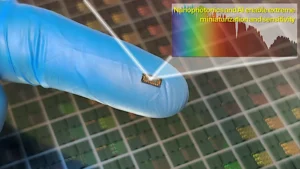
The crystal used in the experiment is remarkably small, measuring only about one millimeter. To pump this tiny target with enough solar energy to trigger the quantum process, the MPL team engineered a bespoke all-glass solar concentrator. The system functions as follows:
- Collection: A Fresnel lens, roughly the size of a standard household window, tracks and collects raw sunlight.
- Focusing: The lens concentrates the light into a high-intensity beam.
- Transmission: This concentrated light is channeled into a specialized optical fiber, no thicker than a human hair.
- Interaction: The fiber delivers the intense solar flux directly onto the nonlinear crystal, where the SPDC process occurs.
This engineering feat allowed the researchers to achieve the necessary photon density without the heat-related degradation that often plagues high-power optical setups.
The Mechanics of Solar SPDC
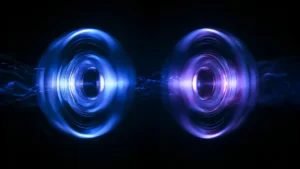
The core of the experiment relies on Spontaneous Parametric Down-Conversion. In this process, a high-energy photon (the "pump") enters a nonlinear crystal and occasionally splits into two lower-energy photons, known as the "signal" and "idler." Due to the laws of conservation, these two photons are born with correlated properties, effectively becoming entangled.
The innovation of the Ottawa-MPL team lay in their ability to isolate the entanglement from the "chaos" of the sun. They designed the experimental setup to ensure that the entanglement was strictly confined to the polarization of the photons. Polarization refers to the direction in which the light waves oscillate.
"We designed our experimental setup so that differences introduced by the different colors and propagation directions didn’t influence the photons’ polarization," Li explained. "As our theory predicts, if the entanglement lives only in polarization, then it should only depend on the pump’s orderliness in its oscillation direction and not on its direction or color."
By strongly polarizing the incoming sunlight before it hit the crystal, the researchers ensured that the resulting photon pairs were entangled in their polarization states, regardless of the fact that they originated from a multi-colored, spatially disordered source.
Experimental Results and Validation
The team conducted their proof-of-concept experiments outdoors at the Max Planck Institute in Erlangen, Germany. Using quantum state tomography—a process akin to a medical CT scan but for quantum states—they analyzed the output of their solar-driven system.
The results were definitive:
- Fidelity: The quantum state produced by the sunlight showed a 94% similarity to a mathematically perfect entangled state. This level of fidelity is comparable to results typically achieved with high-end laboratory lasers.
- Bell’s Inequality: The photons demonstrated correlations that violated Bell’s inequality. This is a crucial benchmark in physics; a violation proves that the correlations are truly quantum in nature and cannot be explained by classical physics or "hidden variables."
These results proved that the sun could indeed serve as a reliable "pump" for quantum systems, overcoming the skepticism of many in the scientific community who doubted that a signal could even be detected above the background noise of solar radiation.
Implications for Global and Space-Based Networks
The successful generation of sunlight-driven entanglement has profound implications for the future of the "Quantum Internet." One of the most immediate applications is in the realm of satellite-based Quantum Key Distribution (QKD).
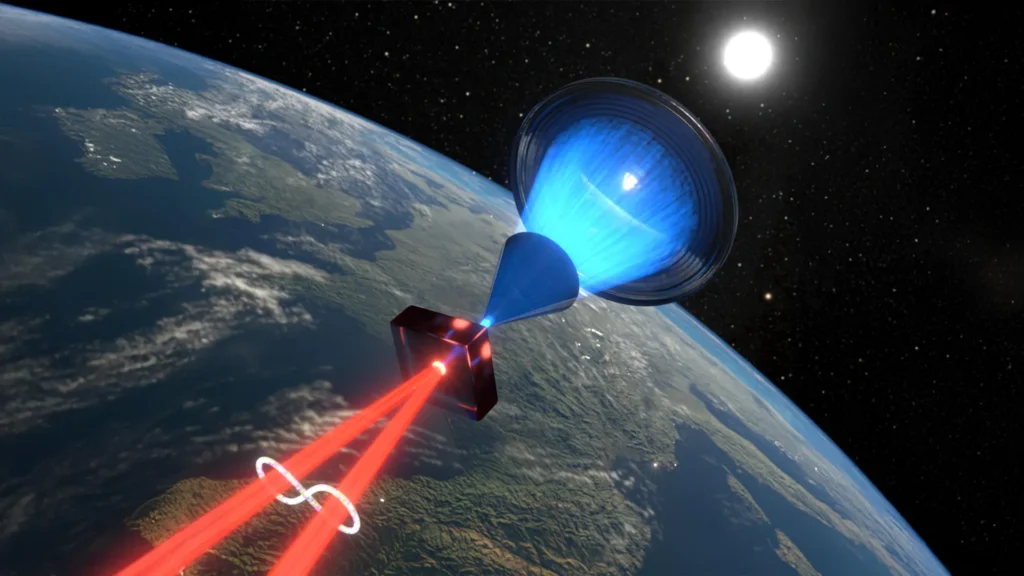
Currently, quantum satellites must carry heavy, power-hungry laser systems to generate the entangled photons used for secure encryption keys. This adds significant weight, cost, and complexity to satellite missions. By using the sun—which is even more intense and consistent in the vacuum of space than on Earth—satellites could potentially discard their onboard lasers.
"This technology could one day enable satellites to create secure encryption keys using the sunlight already abundant in space," said Li. This would not only reduce the size and weight of the hardware but also extend the operational lifespan of quantum satellites by reducing the strain on their electrical systems.
Furthermore, the research suggests that sunlight-driven systems could be used to scale up terrestrial quantum networks. In regions with high solar exposure, quantum "nodes" could be powered by the sun, providing a green alternative to traditional data centers and helping to mitigate the environmental impact of the burgeoning quantum industry.
Future Research and Overcoming Skepticism
Despite the success of the experiment, the researchers acknowledge that there is more work to be done before this technology is ready for commercial deployment. The current focus is on increasing the "brightness" or the rate of entangled photon production. While the 94% fidelity is impressive, the absolute number of entangled pairs generated per second needs to increase to support high-speed data transmission.
The team is also exploring the use of other nonlinear processes, such as four-wave mixing, which could allow for the generation of entanglement in different types of materials and at different wavelengths.
The project also serves as a testament to scientific perseverance. Cheng Li noted that the idea was initially met with significant resistance. "Since the inception of this project, our idea has met with repeated doubt and pushback," he recalled. "Some world-renowned researchers in the field even questioned whether it would be possible to detect any photons… from sunlight-driven nonlinear optical processes."
By trusting their mathematical models and refining their optical engineering, the Ottawa and MPL teams have not only silenced the skeptics but have also laid the groundwork for a more sustainable and accessible quantum future. As the world moves toward a quantum-enabled society, the ability to harvest the power of the stars may prove to be the key to unlocking the full potential of the subatomic world.