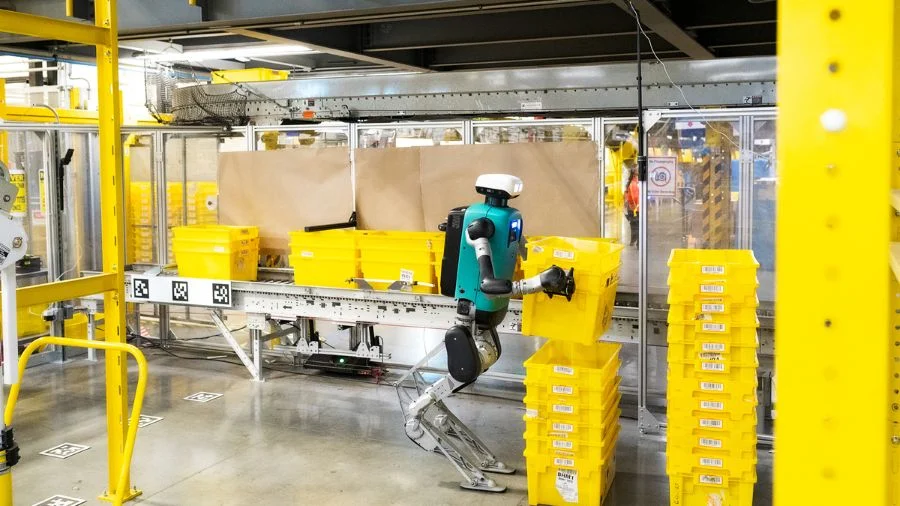
Agility Robotics Inc., a pioneer in the development of bipedal humanoid robots, has officially inaugurated a new 60,000-square-foot facility in Fremont, California, marking a significant strategic expansion aimed at accelerating its research and development in physical AI and advanced humanoid robotics technology. This new Silicon Valley presence complements the company’s existing manufacturing factory in Salem, Oregon, where its flagship Digit robot is assembled, positioning Agility at the nexus of both cutting-edge AI innovation and high-volume robot production. The move underscores a broader industry trend towards integrating sophisticated artificial intelligence with advanced mechanical systems to create intelligent, autonomous robots capable of operating effectively in human-centric environments.
The decision to establish a major development hub in Fremont, a city renowned for its robust manufacturing base and burgeoning technology sector, reflects Agility’s commitment to leveraging the rich talent pool and innovative ecosystem of Silicon Valley. Peggy Johnson, CEO of Agility Robotics, emphasized the strategic imperative of this location. "Being in the heart of Silicon Valley brings us into one of the world’s leading AI talent and innovation ecosystems, allowing us to develop new capabilities for Digit faster and put them to work for customers immediately," Johnson stated. She highlighted Agility’s unique position as one of the few companies actively deploying humanoids in real-world enterprise environments. "Our Fremont facility will play a critical role in driving innovation that anticipates and delivers on the capabilities our customers need." This direct feedback loop from operational deployments to rapid development is crucial for refining humanoid capabilities, especially in complex and dynamic settings like warehouses and manufacturing facilities.
The Strategic Imperative of Silicon Valley
Silicon Valley has long been the epicenter of technological innovation, particularly in software, AI, and venture capital. For robotics companies, proximity to this ecosystem offers unparalleled advantages. Access to top-tier AI researchers, software engineers, and machine learning specialists is paramount for developing the sophisticated algorithms that enable robots like Digit to perceive, navigate, manipulate, and learn within unstructured environments. Furthermore, the region’s concentration of venture capital firms and strategic investors provides critical funding for capital-intensive ventures like advanced robotics. Agility Robotics, which was spun out of Oregon State University in 2015, has attracted significant investment, including from the Amazon Industrial Innovation Fund, underscoring the commercial interest in its bipedal robot solution.
The Fremont facility is not merely an office space; it is designed to be a dynamic laboratory for physical AI development. This involves integrating advanced perception systems, sophisticated motion control algorithms, and machine learning models that allow Digit to perform complex tasks, adapt to new situations, and safely interact with human co-workers. The concept of "physical AI" goes beyond traditional AI, requiring the intelligence to manifest and operate effectively in the physical world, contending with real-time sensor data, unpredictable obstacles, and the physics of movement and manipulation. This distinction is critical for humanoid robots, which are designed to mimic human form and function, necessitating an AI that can understand and interact with human-designed spaces and tools.
Digit’s Evolution and Commercial Deployment
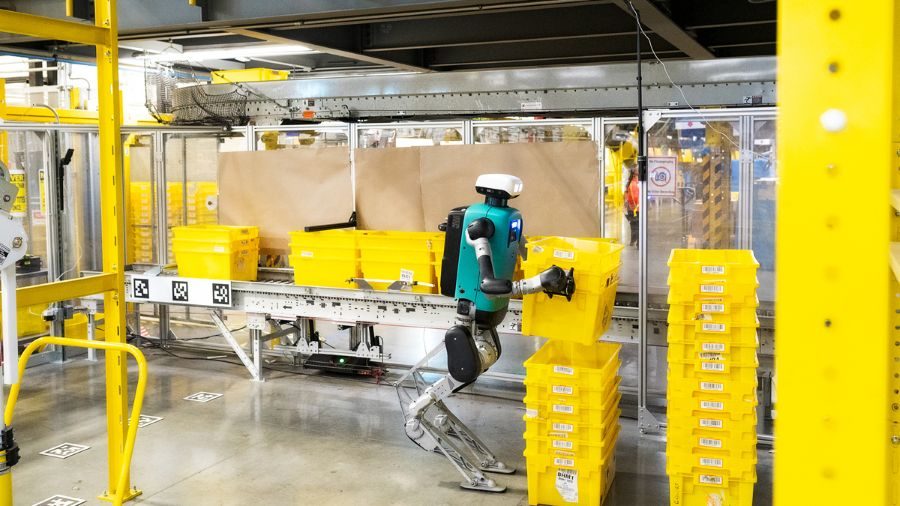
Agility Robotics’ flagship product, Digit, represents a significant leap forward in humanoid robotics. Standing at approximately 5 feet 9 inches tall and weighing around 140 pounds, Digit is designed to operate in environments built for humans, tackling repetitive and physically demanding tasks. Its bipedal locomotion allows it to navigate stairs, uneven terrain, and confined spaces, making it uniquely suited for logistics, warehousing, and manufacturing applications where traditional wheeled or tracked robots might struggle.
The development of Digit has been a multi-year endeavor, evolving from early prototypes like "Cassie" (a bipedal research robot) to the commercially viable Digit. Key milestones in its chronology include:
- 2017: Introduction of Cassie, demonstrating agile bipedal locomotion.
- 2019: Unveiling of Digit, the first commercial product, featuring a torso, arms, and improved perception.
- 2020s: Pilot programs and initial deployments in customer warehouses and logistics centers, gathering crucial real-world data for refinement.
- 2023: Announcement of the "Robots as a Service" (RaaS) model and scaled production at the Salem, OR factory.
- Late 2023/Early 2024: Strategic decision and subsequent opening of the Fremont AI development hub.
Current deployments see Digit performing tasks such as moving totes, loading and unloading trailers, and assisting with order fulfillment. These early applications are vital for validating the robot’s capabilities, ensuring safety, and demonstrating tangible productivity gains. The Fremont facility’s role is to leverage the data and insights from these deployments to rapidly iterate on Digit’s software, enhancing its autonomy, adaptability, and overall performance.
Fremont: A Hub for Advanced Manufacturing and Robotics
Fremont Mayor Raj Salwan warmly welcomed Agility Robotics to the city, highlighting its growing reputation as a center for advanced manufacturing and robotics. "Fremont is where the future is built. Agility Robotics’ decision to establish its AI development hub here reflects the strength of our talent, our culture of innovation, and our leadership in advanced manufacturing and robotics," Mayor Salwan remarked. He also noted the significant economic benefits, adding, "We’re proud to welcome Agility to our community, along with nearly 200 high-quality jobs and continued investment in Fremont."
Fremont’s appeal to companies like Agility Robotics is multifaceted. The city hosts a diverse industrial base, including the sprawling Tesla Inc. EV factory, which has been extensively retooled for mass production and is also a hotbed for robotics innovation, famously developing the Optimus humanoid robot. This creates a synergistic environment where skilled labor, advanced infrastructure, and a culture of innovation converge. The presence of multiple robotics companies and advanced manufacturing operations fosters a rich talent ecosystem, making it easier for Agility to recruit engineers and technicians with specialized skills in robotics, AI, and automation. Furthermore, Fremont’s strategic location within the Bay Area provides access to a broader network of universities, research institutions, and technology partners.
The Broader Humanoid Robotics Landscape
Agility Robotics’ expansion comes amidst a burgeoning interest and significant investment in the humanoid robotics sector. The global humanoid robot market is projected to grow substantially in the coming decade, driven by increasing labor shortages, rising wages, and the imperative for greater efficiency and safety in industrial operations. Market research firms estimate the market size could reach tens of billions of dollars by the early 2030s.
Agility is a key player in a competitive field that includes several well-funded and innovative companies:
- Tesla (Optimus): Elon Musk’s ambitious project aims for mass-produced, affordable humanoid robots for a wide range of applications, including domestic use. Tesla’s manufacturing prowess and AI expertise give it a unique advantage.
- Figure AI: This startup recently secured significant investment from tech giants like Microsoft and OpenAI, and has partnered with BMW to deploy its Figure 01 humanoid in automotive manufacturing facilities.
- Boston Dynamics (Atlas): While renowned for its highly agile Atlas robot, Boston Dynamics has historically focused more on research and spectacular demonstrations rather than immediate commercial deployment of humanoids, though its Spot robot has seen commercial success.
- Sanctuary AI: Focused on developing general-purpose humanoid robots with human-like intelligence for various tasks.
- Apptronik (Apollo): Another contender aiming for commercial deployment in logistics and manufacturing.
Agility Robotics differentiates itself through its emphasis on robust, commercially ready solutions designed specifically for logistics and warehouse environments. Its focus on "human-centric" design ensures that Digit can seamlessly integrate into existing human workspaces without requiring extensive reconfigurations. This pragmatic approach to deployment is critical for rapid adoption and demonstrating tangible return on investment for customers.
Impact on Industry and Workforce
The proliferation of humanoid robots like Digit is poised to have profound implications for various industries, particularly manufacturing, logistics, and retail.
- Addressing Labor Shortages: Many sectors are facing acute labor shortages, especially for physically demanding and repetitive jobs. Humanoid robots can fill these gaps, allowing human workers to focus on more complex, supervisory, or creative tasks.
- Increased Productivity and Efficiency: Robots operate consistently without fatigue, potentially leading to higher throughput and reduced errors in tasks like material handling, sorting, and packaging.
- Enhanced Safety: By taking on hazardous tasks, robots can reduce workplace injuries, contributing to safer working environments.
- Supply Chain Resilience: Automated facilities are less susceptible to disruptions caused by labor availability fluctuations, improving supply chain stability.
However, the integration of humanoids also raises important considerations regarding the future of work. While some jobs may be automated, new roles will emerge in robot supervision, maintenance, programming, and ethical oversight. Education and workforce retraining initiatives will be crucial to ensure a smooth transition and maximize the societal benefits of this technological advancement. Agility Robotics’ commitment to "working safely alongside people" underscores the importance of human-robot collaboration rather than outright replacement.
The Road Ahead: Innovation and Integration
The Fremont facility is critical for Agility Robotics to meet the escalating demand for advanced automation solutions. Johnson noted that the facility is "vital to meet this demand and spark even greater uptake by delivering ongoing safety and productivity advantages built on AI that can increasingly take on more repetitive, physically demanding tasks in warehouses and manufacturing facilities while working safely alongside people." This highlights the continuous development cycle—where real-world performance informs AI advancements, leading to more capable and safer robots.
The future trajectory of humanoid robotics will depend heavily on advancements in AI, particularly in areas like reinforcement learning, natural language processing for human-robot interaction, and enhanced robotic manipulation. The ability for robots to learn new tasks quickly, adapt to unforeseen circumstances, and make nuanced decisions will be key determinants of their widespread adoption. Agility Robotics’ investment in its Fremont AI development hub positions it at the forefront of this evolution, signaling a clear intent to lead in the integration of sophisticated AI with robust physical platforms.
As humanoid robots become more sophisticated and economically viable, their presence will become increasingly common across various sectors. The opening of Agility Robotics’ Fremont facility is not just an expansion for one company; it is a testament to the accelerating pace of innovation in robotics and physical AI, heralding a future where intelligent, bipedal machines play an integral role in shaping the global economy and the nature of work.