Welcome to this week’s edition of "What’s Selling Where," your curated dispatch from the dynamic world of watch auctions and sales. As the seasons shift and cultural moments unfold, the pre-owned watch market continues to offer a fascinating glimpse into collector trends and the enduring allure of horological craftsmanship. This week, we delve into a diverse array of timepieces, from historically significant chronographs to avant-garde designs and iconic dress watches, each with its own story and market appeal.
A Tapestry of Timepieces: This Week’s Notable Sales and Finds
The horological landscape is constantly evolving, with new discoveries and resales offering a vibrant ecosystem for enthusiasts and collectors alike. This week’s selection highlights pieces that span decades and design philosophies, demonstrating the breadth of the vintage and pre-owned watch market. From the functional elegance of maritime-focused chronographs to the bold statements of 1970s design and the understated luxury of Patek Philippe, these watches represent significant moments in watchmaking history and continue to command attention from discerning buyers.
Reviewing Last Week’s Market Performance
Last week’s featured offerings provided an interesting snapshot of market demand. The Lucien Piccard Telephone and the Mappin and Webb watches, initially available, remain on the market, indicating a potential opportunity for interested buyers. Conversely, the Omega Admiralty and the Jaeger-LeCoultre Master Mariner have found new owners, underscoring the swift turnover for sought-after models in these brands. This consistent activity highlights the robust nature of the pre-owned watch market, where desirable pieces are often acquired rapidly.
Exploring This Week’s Featured Watches
This week’s collection presents a compelling mix of historical significance, design innovation, and sheer desirability. We begin with a watch that embodies a unique blend of utility and aesthetic appeal, a testament to the ingenuity of mid-20th century watchmaking.

The Orvis Solunagraph: A Maritime Marvel
One of the standout pieces this week is an Orvis Solunagraph, a timepiece that encapsulates a rich history of Heuer’s pioneering work in tide-tracking chronographs. This particular example, appearing at auction, represents a significant entry for collectors of specialized complications. The development of watches capable of tracking tidal patterns speaks to a period when functionality was paramount, particularly for those engaged in maritime pursuits.
Heuer’s journey into tide-tracking technology began in earnest around 1949. The brand, known for its robust chronographs, sought to incorporate a complication that would be invaluable to sailors, fishermen, and anyone whose life was dictated by the ebb and flow of the oceans. The resulting watches, often featuring a three-register chronograph layout, replaced the traditional running seconds subdial with a tide tracker. This innovative complication, driven by a complex mechanism, displayed the predicted state of the tide.
Over the subsequent quarter-century, various iterations of this tide-tracking chronograph were produced, appearing under different brand names. Most notably, these watches were signed by Heuer, Abercrombie & Fitch, and eventually Orvis. This multi-brand strategy reflected the collaborative nature of watch distribution and marketing during that era, allowing different retailers to offer the same technically sophisticated timepiece under their own marque.
The history of these watches is meticulously documented by horological historians. Jeff Stein, a renowned expert on Heuer watches, provides extensive coverage of the complication’s development and historical context on his website, OnTheDash. His research details how the same watch could be purchased as the "Mareograph," "Seafarer," or "Solunagraph," depending on the retailer. Eric Wind, another respected authority, has also shed light on specific Abercrombie & Fitch references, further illuminating the nuances of these collectible pieces.
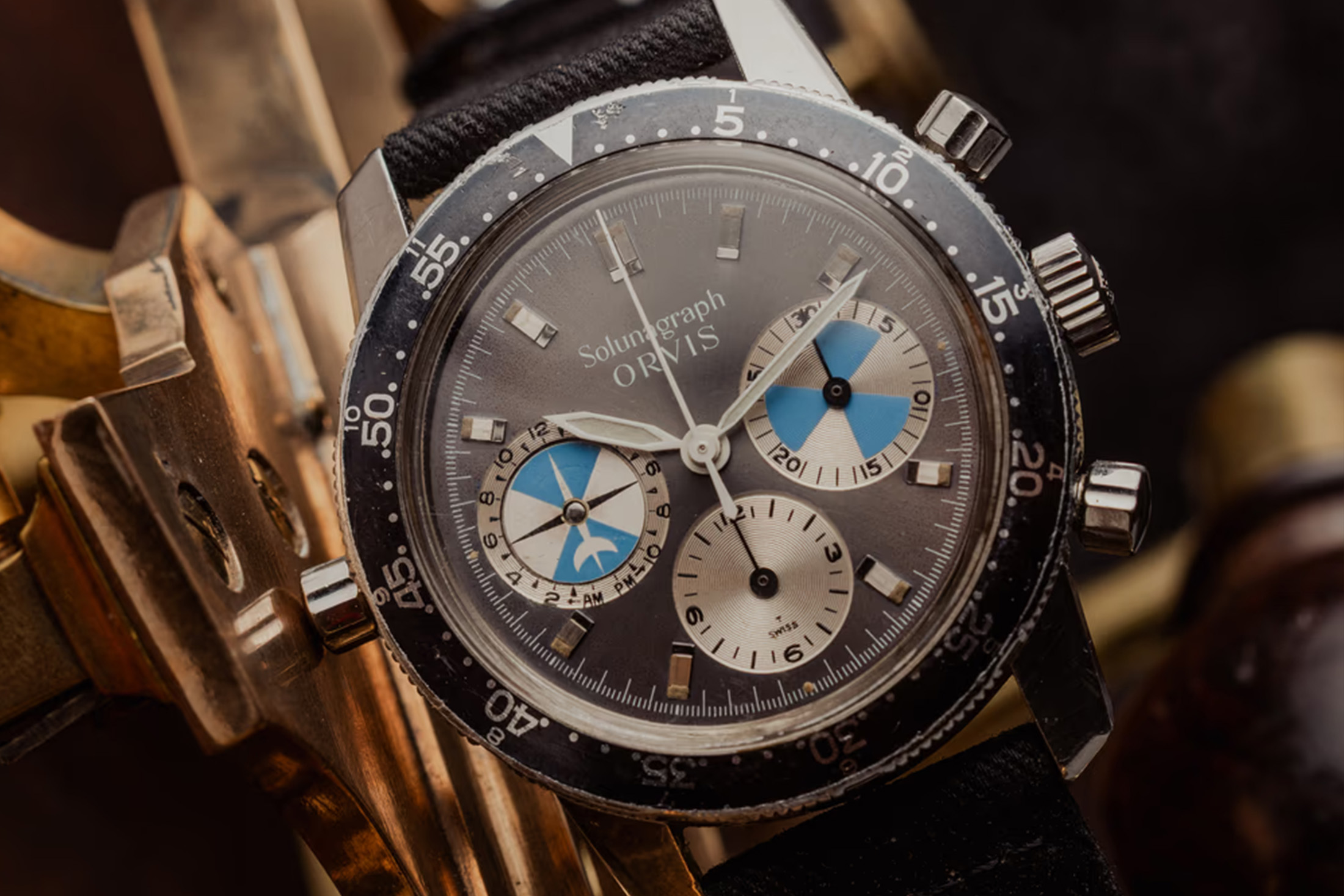
Despite their technical brilliance and historical significance, these tide-tracking watches were not runaway bestsellers. The demographic requiring such a specialized complication was, relatively speaking, not overwhelmingly large. However, this limited production and specialized appeal have contributed to their desirability among dedicated collectors who appreciate their unique functionality and historical narrative.
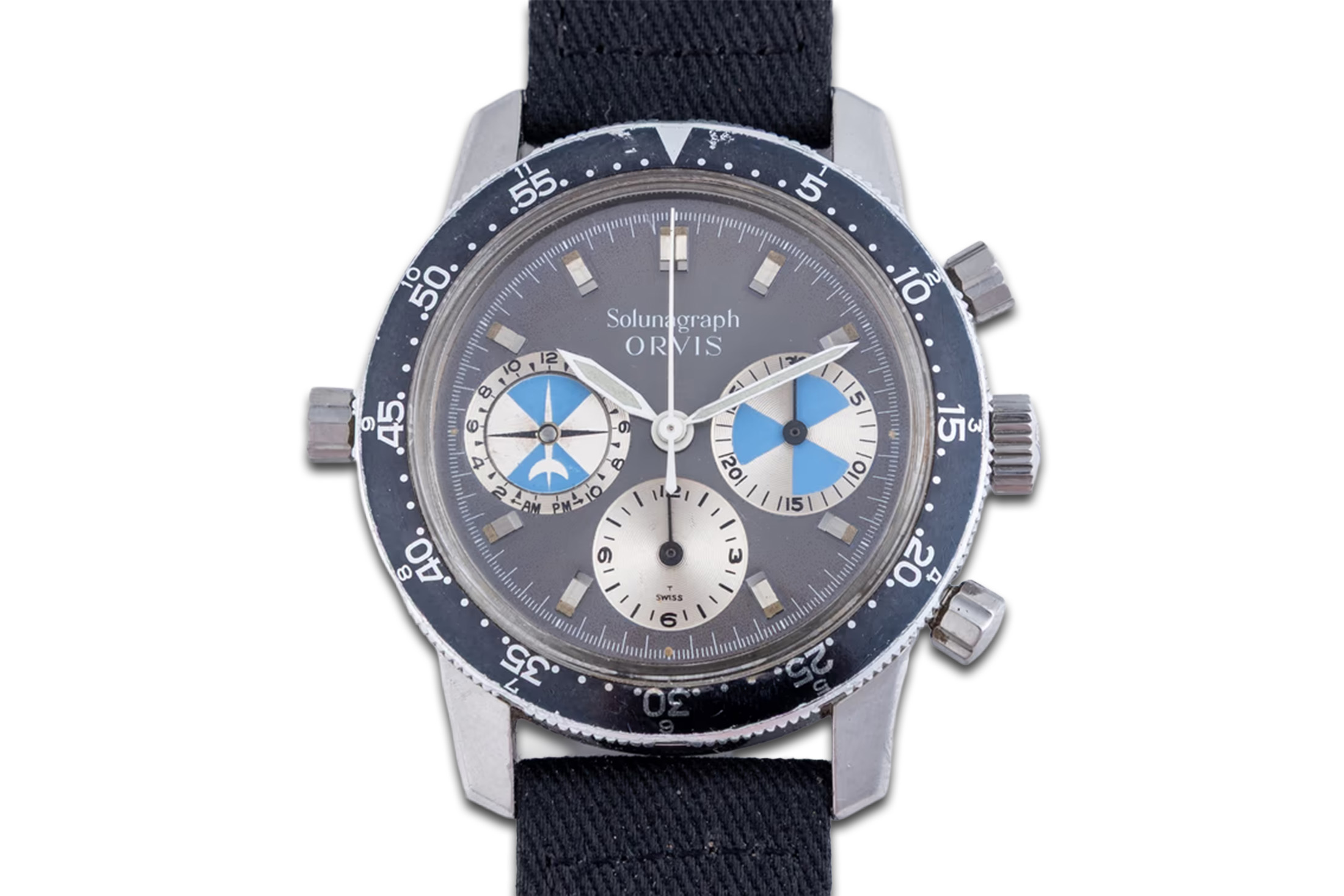
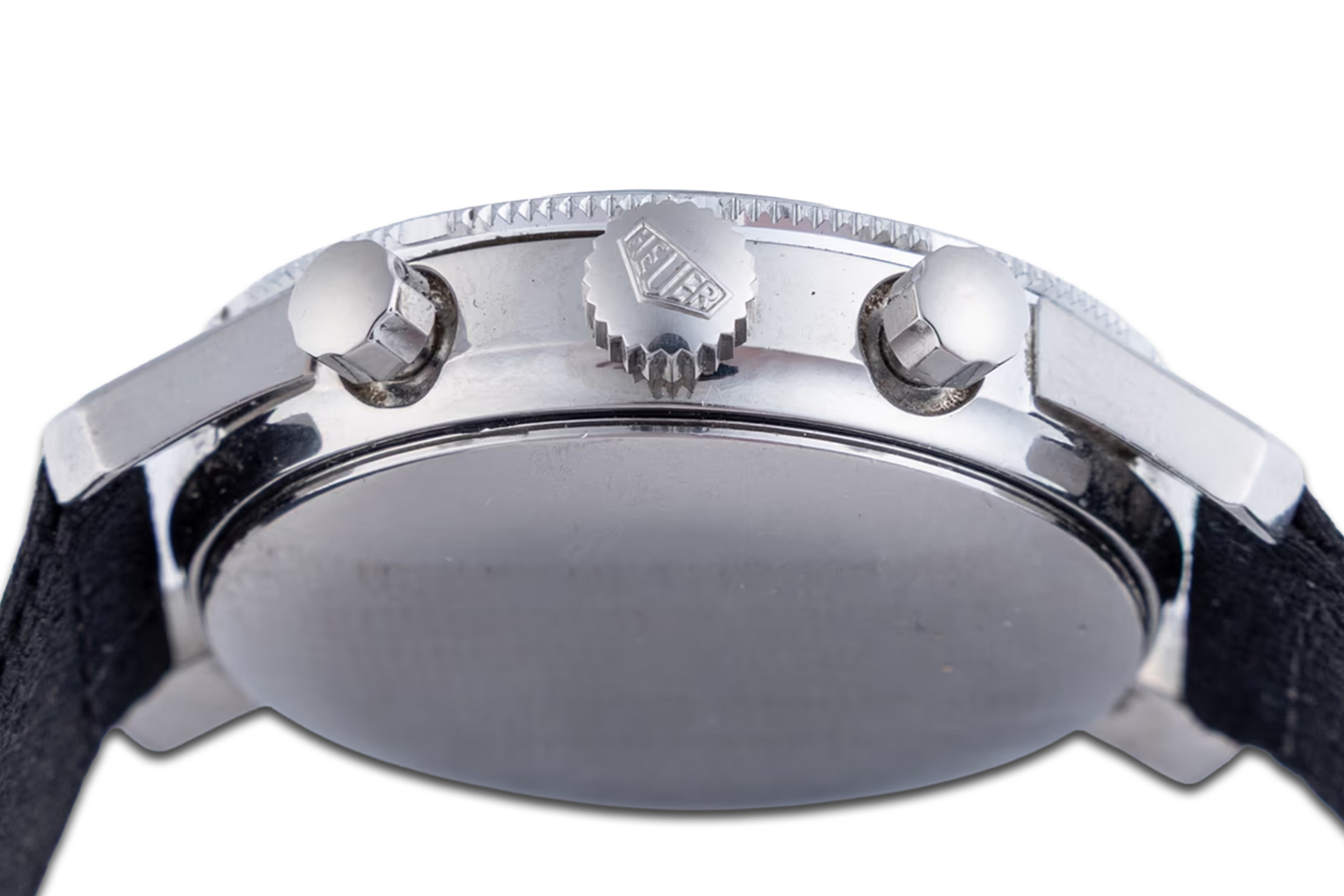
The Orvis Solunagraph currently up for auction features a reference 2446C case, a robust 40mm stainless steel housing that, while possessing a more substantial profile than the sleeker Carrera models, still wears exceptionally well. The listing notes that the watch has undergone polishing at some point, a common occurrence for vintage pieces, but the work appears to have been executed judiciously, preserving the integrity of the case. The true highlight of this particular example lies in its dial and hands, which are original and in excellent condition. The presence of fluted pushers further enhances its appeal, situating the watch at a fascinating intersection of classic manual-winding Heuer chronographs from the early 1960s and the more forward-looking designs of the late 1960s and early 1970s. This period also saw Heuer, alongside industry giants like Seiko and Zenith, introduce some of the world’s first automatic chronographs, marking a pivotal era in watchmaking innovation.
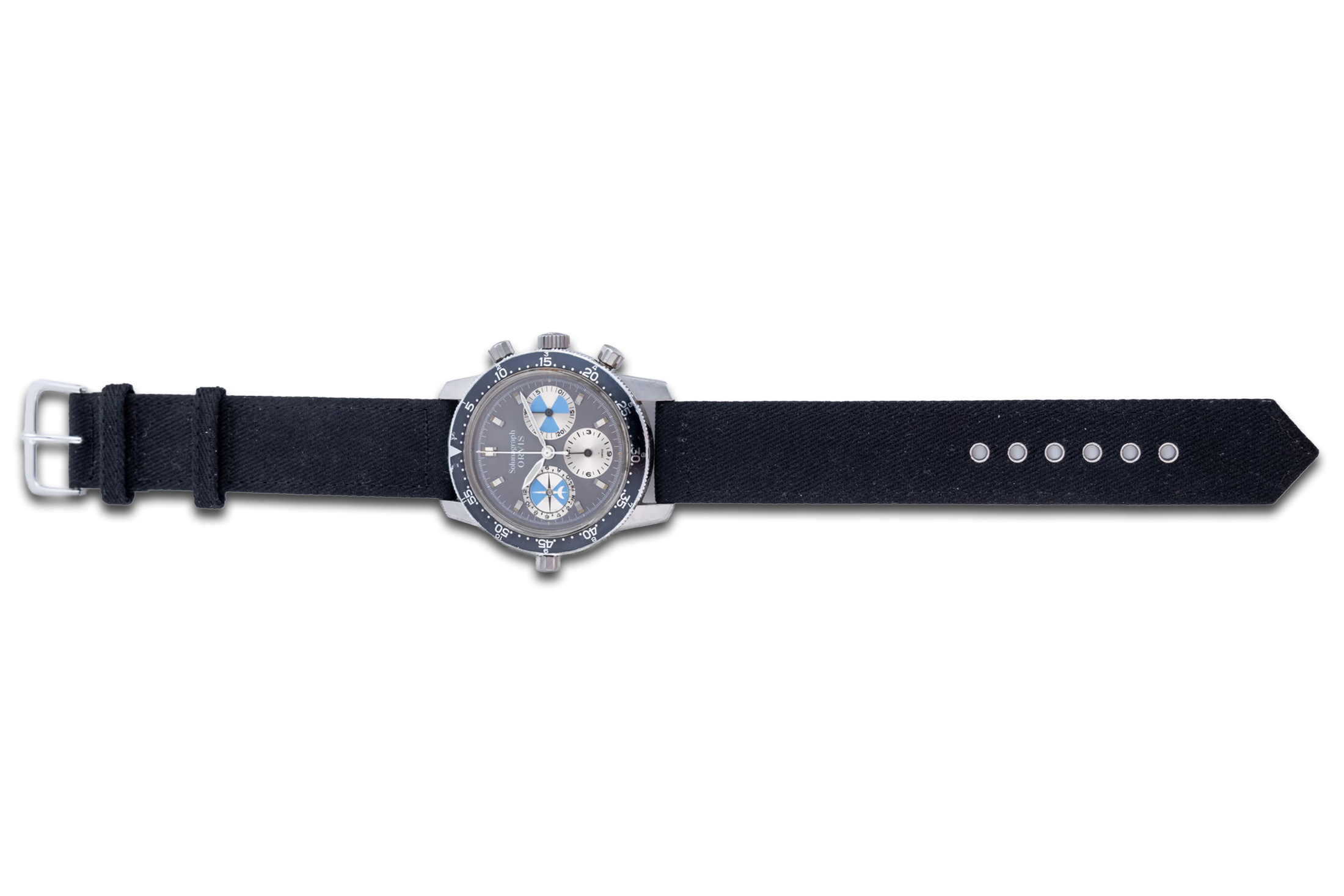
According to the Heuer Price Guide by Crosthwaite and Gavin, the Orvis 2446C is considered the least valuable among the various iterations of Heuer’s tide watches. However, "value" in the collector’s market is often subjective and driven by rarity, condition, and specific collector interest. Jones & Horan’s October auction is set to conclude later this month, providing ample time for interested parties to strategize. At the time of reporting, the Orvis Solunagraph had attracted bids up to $4,300 against an estimated range of $8,000-$12,000. This suggests a potentially strong buying opportunity for a collector who appreciates its historical context and distinctive complication. The auction is scheduled to close on the 22nd of the month.
The Omega DeVille Emerald: A Fusion of Timekeeping and Artistry
Transitioning from the functional prowess of the Solunagraph, we turn our attention to a timepiece that boldly bridges the worlds of watchmaking and jewelry design: the Omega DeVille Emerald. This watch is a product of a unique collaboration between Omega and the renowned designer Andrew Grima.
Andrew Grima, often hailed as "the father of modern jewelry," was an avant-garde figure whose work redefined the boundaries of adornment. His influence extended beyond traditional jewelry, and in 1969, Omega extended an invitation for him to design a watch collection. This collaboration, the "About Time" collection, comprised 55 watches and was characterized by Grima’s distinctive approach, which included the stipulation that neither his name nor Omega’s would appear on the dial. This unusual condition, coupled with Grima’s prior lack of experience in watch design—he famously quipped, "If you need to know the time, ask your chauffeur"—made the project somewhat of a gamble. However, the collection proved to be a surprising success, challenging conventional notions of what a wristwatch could be.
Following the success of the "About Time" collection, Omega revisited Grima’s design ethos for the "Time In Style" series. Unlike the initial collection, these later watches bore the Omega name on their dials and were produced as full production pieces, making them more accessible to a broader audience.
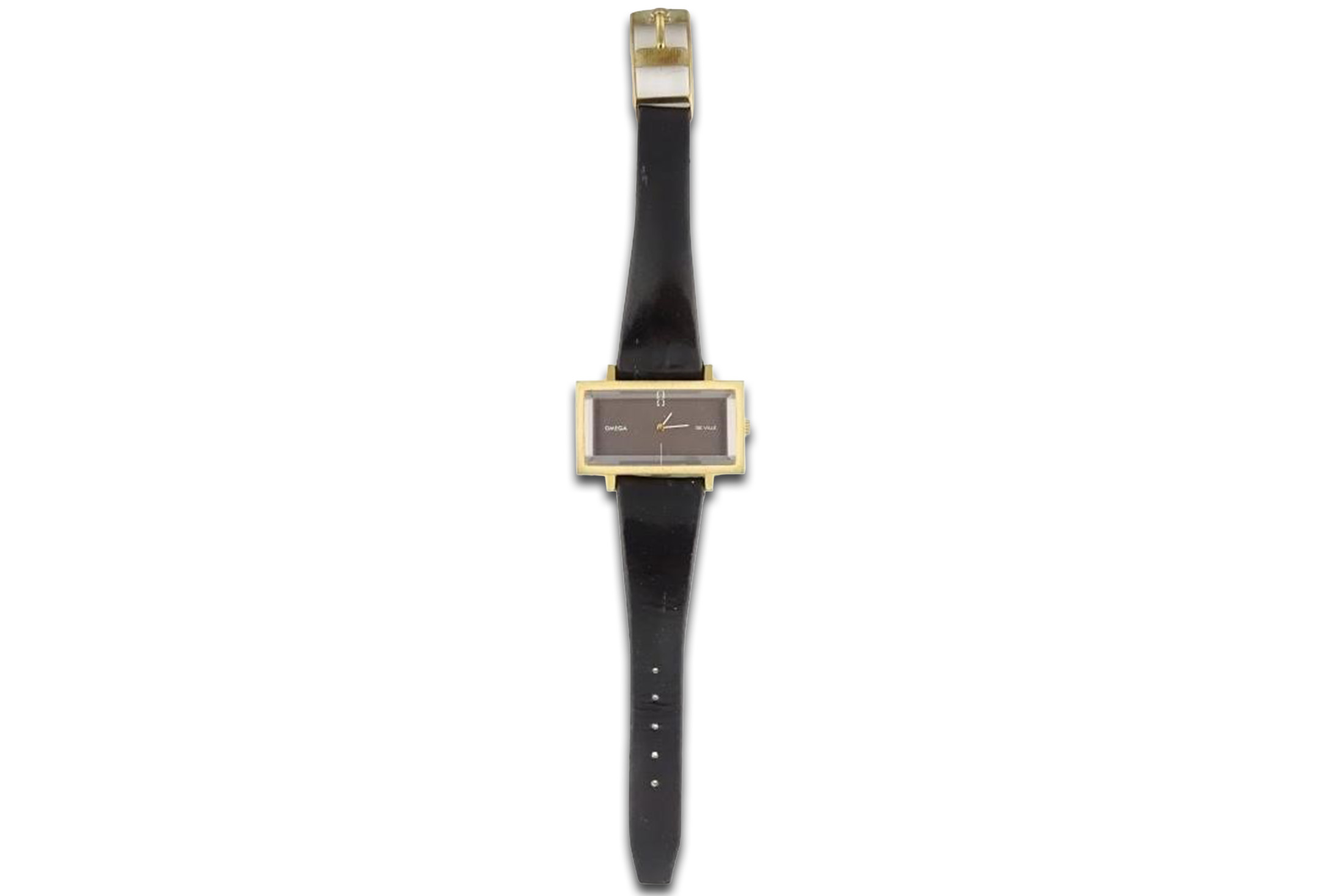
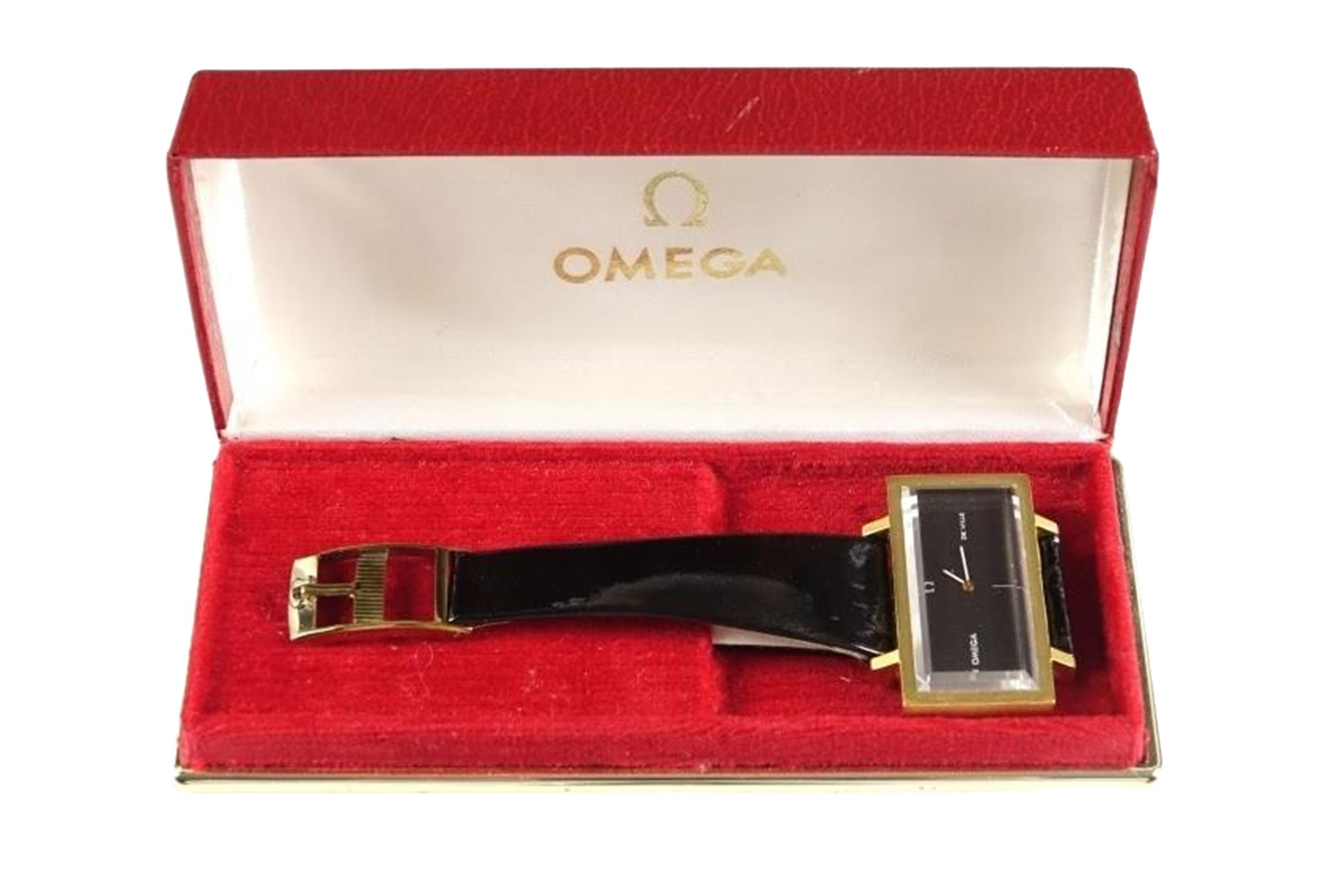
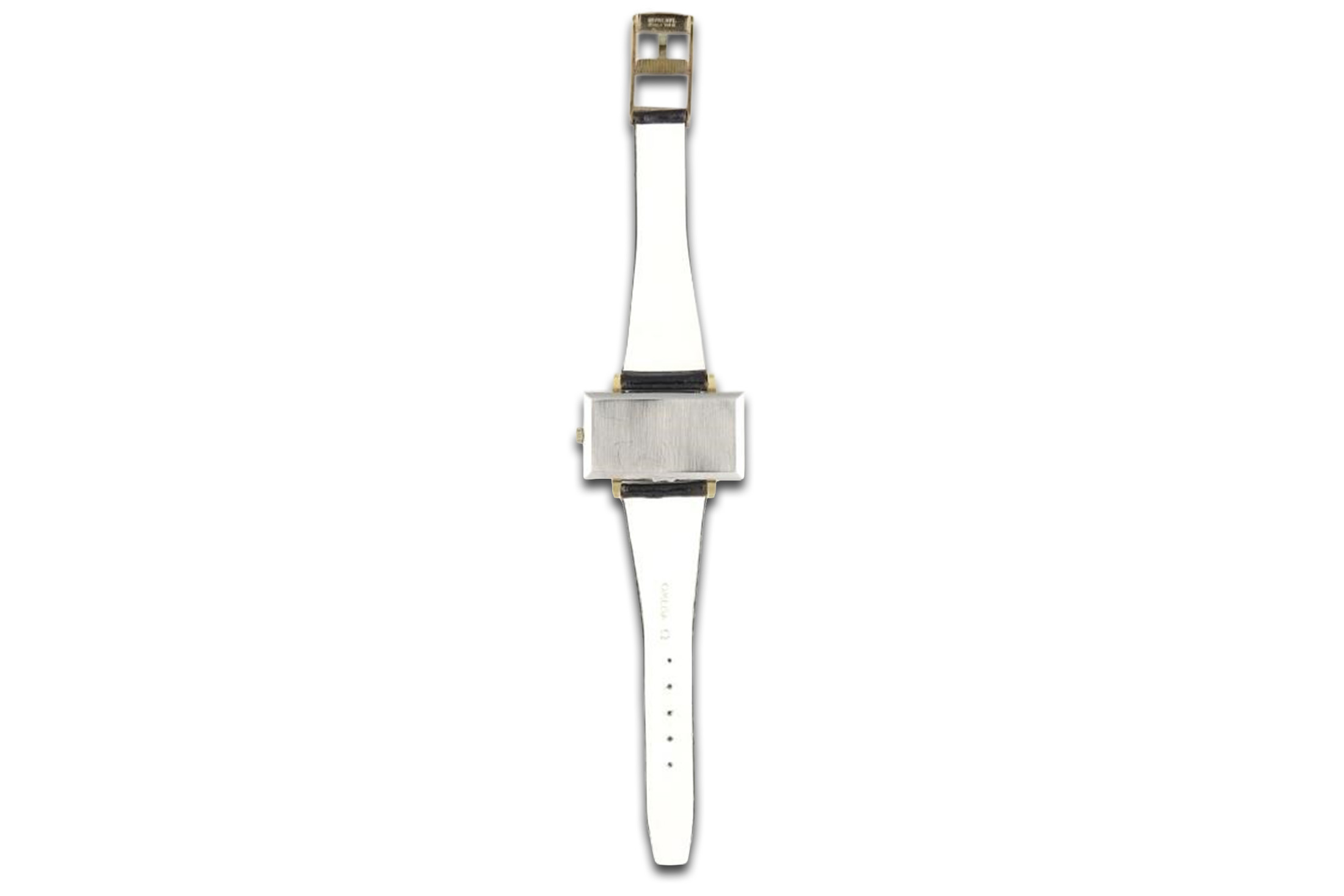
The Omega DeVille Emerald currently being offered exemplifies the "Time In Style" series. It earns its name from the distinctive faceted crystal that gives the watch a jewel-like appearance. While not technically "new old stock," this particular example appears to be in exceptionally well-preserved condition, showing minimal signs of wear. Evidence of this can be seen in the original Omega strap and buckle, which appear remarkably intact. The watch is accompanied by its original box, further enhancing its collector appeal.
Visually, the watch presents exceptionally well. It features a markless brown dial that provides a warm, sophisticated backdrop. The gold-plated case exhibits no wear-through, a testament to its careful preservation. The caseback retains its original brushing, a detail often lost on frequently worn vintage watches. The description notes an unusual case dimension: 38mm in width and only 21mm in length. This unique proportion suggests a watch that wears differently from conventional timepieces, likely presenting a more avant-garde silhouette on the wrist.
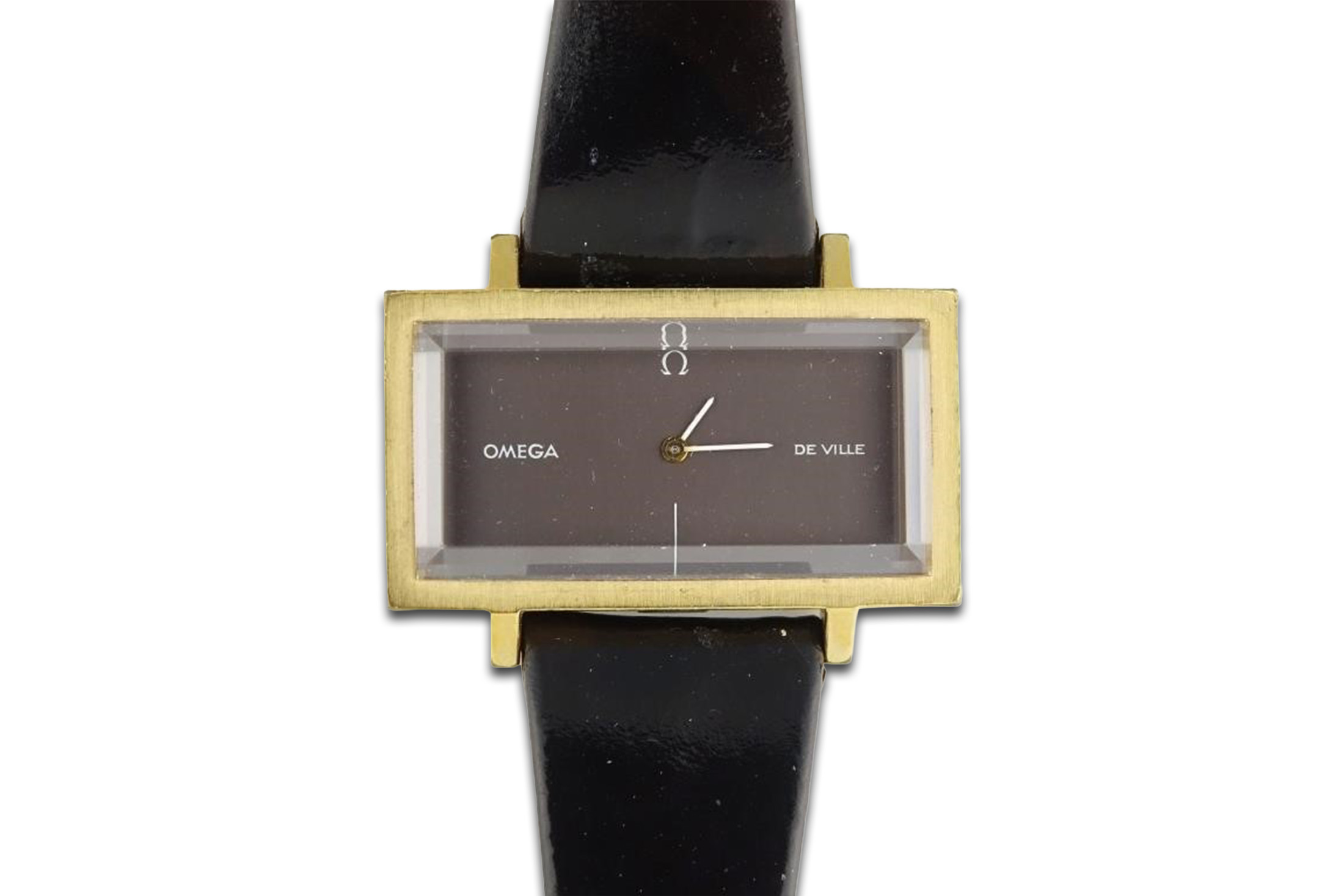
The significance of Grima’s designs for Omega extends beyond their aesthetic novelty. They represent a moment when luxury watch brands were exploring the intersection of horology and high fashion, pushing the boundaries of design to create pieces that were as much objets d’art as they were timekeepers. In an era where many contemporary watches are exploring similar territories, the Grima-designed Omegas feel remarkably relevant, not only as collectibles but also as precursors to modern design trends that seek to integrate jewelry-like qualities with watchmaking functionality. The Omega DeVille Emerald, with its bold crystal and unique case shape, stands as a testament to this innovative spirit.
This particular Omega DeVille Emerald is scheduled for auction on the 15th of the month. As of this writing, it has received no bids, with an estimated price range of $500 to $1,000. This presents a compelling opportunity for collectors interested in unique designer watches from a major Swiss manufacturer.
The Lip Mach 2000 Chronograph: A Design Icon of the 1970s
Shifting gears to the vibrant and often audacious design landscape of the 1970s, we encounter the Lip Mach 2000 Chronograph. This watch is a product of a period when French watchmaker LIP, like many of its peers, was grappling with the seismic shift brought about by the advent of quartz watch technology. In search of innovative solutions, LIP turned to renowned designers for a refresh of their product line.
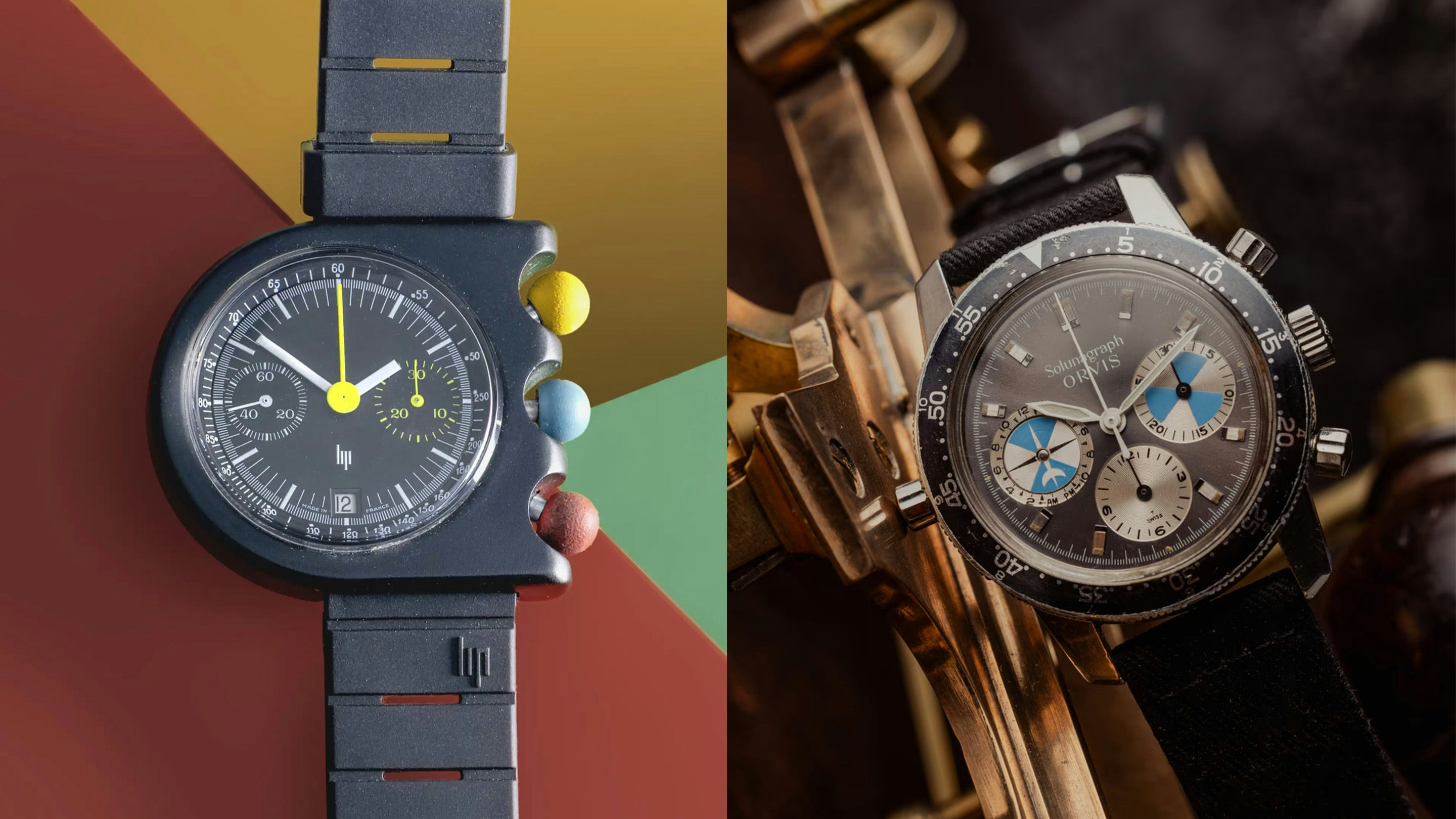
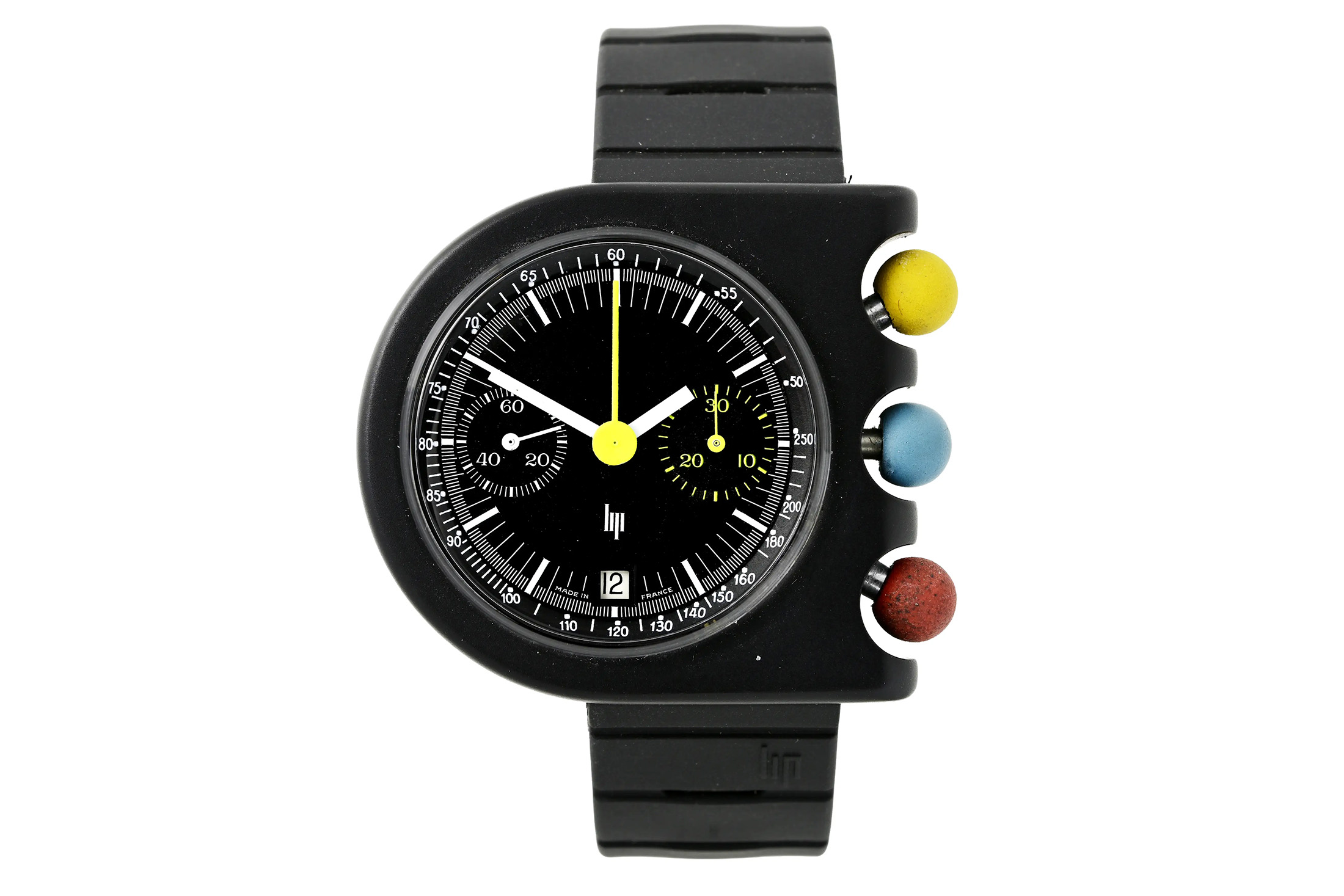
In 1973, LIP enlisted the expertise of Roger Tallon, a prominent French industrial designer. Tallon’s brief was to reimagine the LIP watch collection, infusing it with a contemporary sensibility. The result was the Mach 2000 line, a collection of watches that immediately became recognizable for their distinctive aesthetic. These timepieces masterfully balanced a thoroughly buttoned-down, utilitarian design with unexpected, playful pops of color.
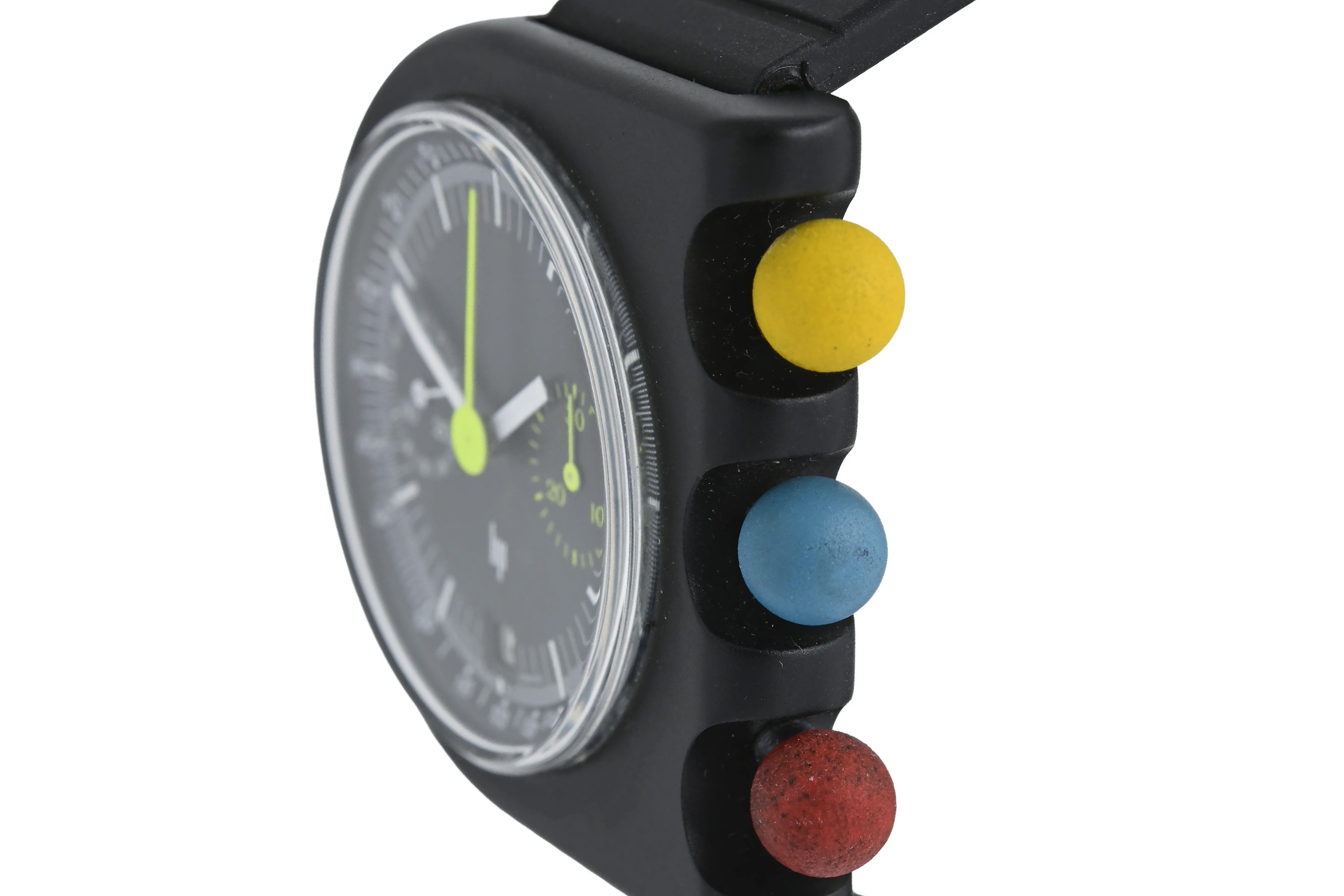
At first glance, and especially when viewed from a distance, the Mach 2000 watches possess an air of adult seriousness. However, upon closer inspection, elements of whimsy emerge, such as brightly colored pushers and crowns that appear almost as playful embellishments, reminiscent of a child’s artistic additions. This juxtaposition of conservative form and vibrant accent created a unique design language that set the Mach 2000 apart.
While the Mach 2000 line, despite its design merit, did not ultimately save LIP from its financial difficulties (the company’s history is intertwined with significant labor movements and a fascinating period known as the "Lip Affair"), the design itself endured. The Mach 2000 remains a celebrated icon of 1970s industrial design, and the resurrected LIP brand has since brought back updated versions of this celebrated model.
The specific watch featured this week is an original "Dark Master" variant. This is a manual-wind chronograph powered by the robust Valjoux 7734 movement, a workhorse caliber that epitomizes the era. The "Dark Master" designation likely refers to its darker, more subdued color palette, which still incorporates the signature colorful pushers and crown.
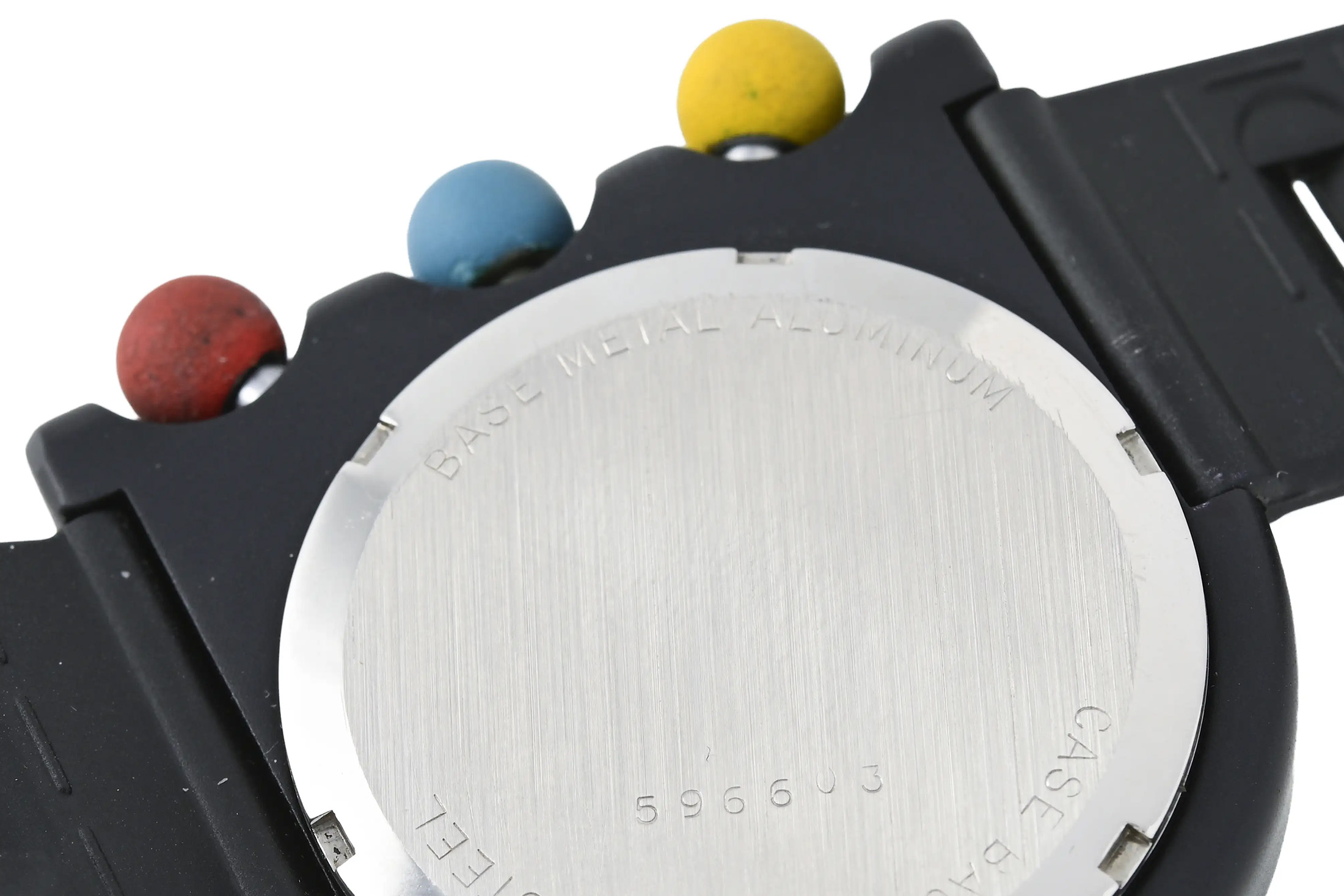
A key concern with vintage watches from this period, particularly those with plated cases, is wear-through. However, this particular example appears to have been well-cared for, with no significant wear-through evident. It is presented on its original signed rubber strap, a detail that significantly adds to its authenticity and collector value. The dial and hands appear immaculate, and the vibrant pushers and crown ensure that this watch will never blend into the background.
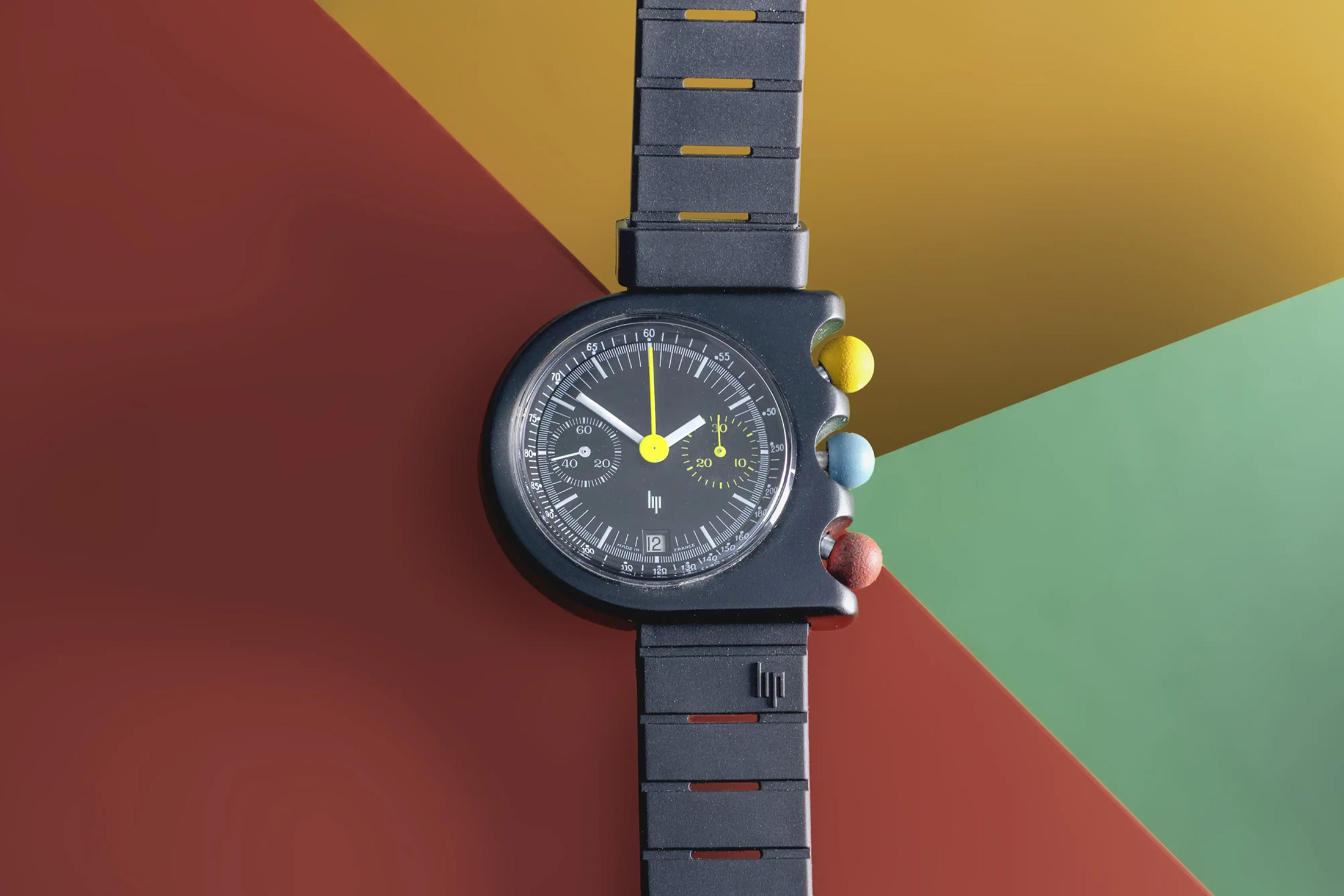
This Lip Mach 2000 Dark Master is slated for auction on the 16th through Fellows. At the time of reporting, it had garnered bids reaching 900 GBP, with an estimated price range of 1,000 to 1,500 GBP. This positions it as an accessible entry point for collectors interested in iconic 1970s design and mechanical chronographs.
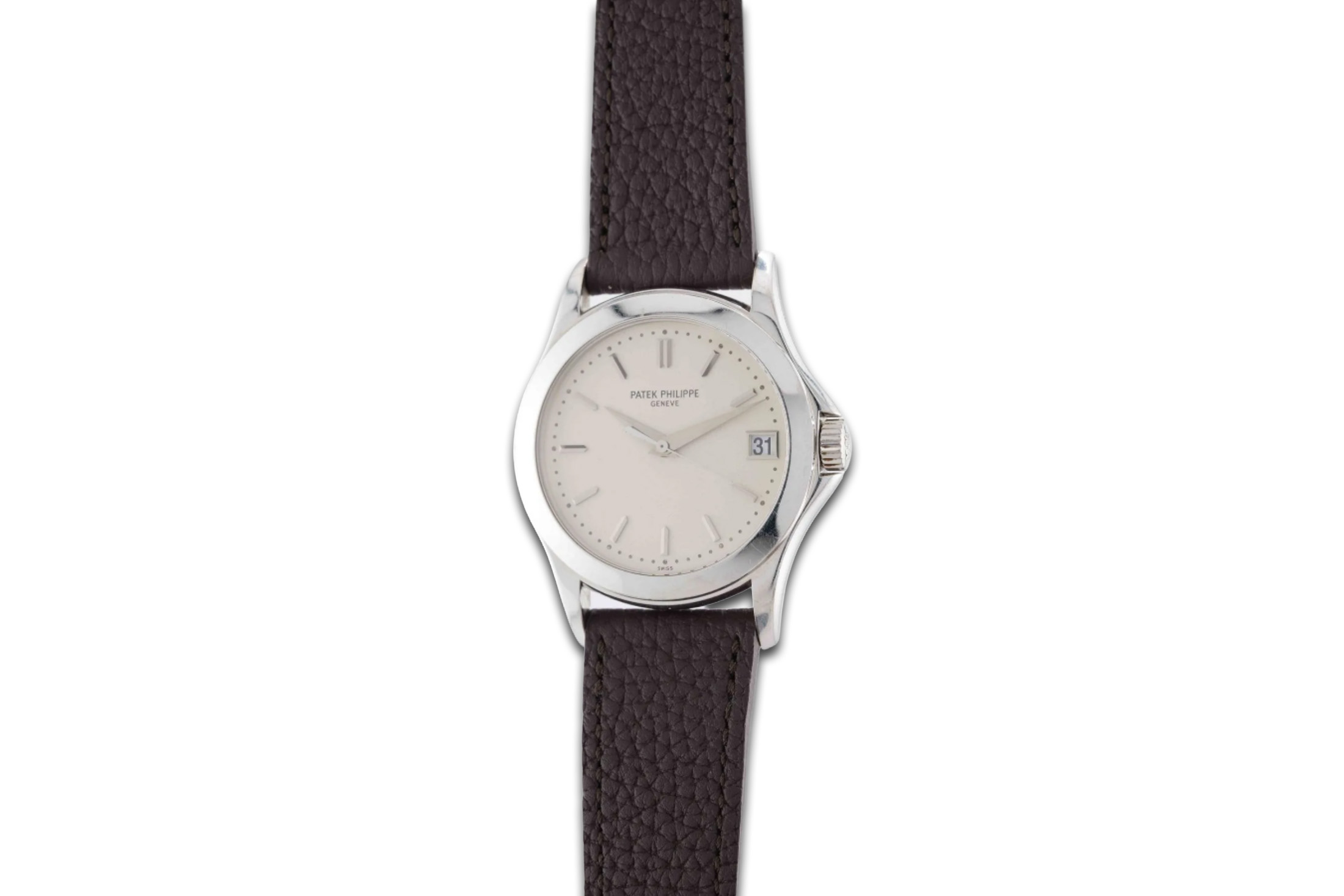
The Patek Philippe Calatrava Ref. 5107: A Dialectical Masterpiece
Our final featured timepiece represents a fascinating exploration of horological philosophy: the Patek Philippe Calatrava Ref. 5107. This watch challenges the traditional definitions of its iconic lineage by incorporating elements typically associated with sportier timepieces.
The concept of dialectics, the interplay of opposing forces leading to a synthesis, can be applied to understanding the evolution of watch design. While historically, dress watches and sport watches occupied distinct categories, the modern market often sees these lines blurred. The Patek Philippe 5107, in its unique way, embodies this dialectical tension.
The Calatrava, by definition, is a quintessential dress watch, characterized by its refined elegance and understated sophistication. Patek Philippe’s commitment to this aesthetic is legendary. However, the Ref. 5107 introduces a notable deviation: crown guards. The presence of crown guards, typically found on watches designed for rugged use and intended to protect the winding crown from impact, is an unusual feature for a precious metal dress watch. This characteristic immediately sets the 5107 apart from its more traditionally styled Calatrava brethren.
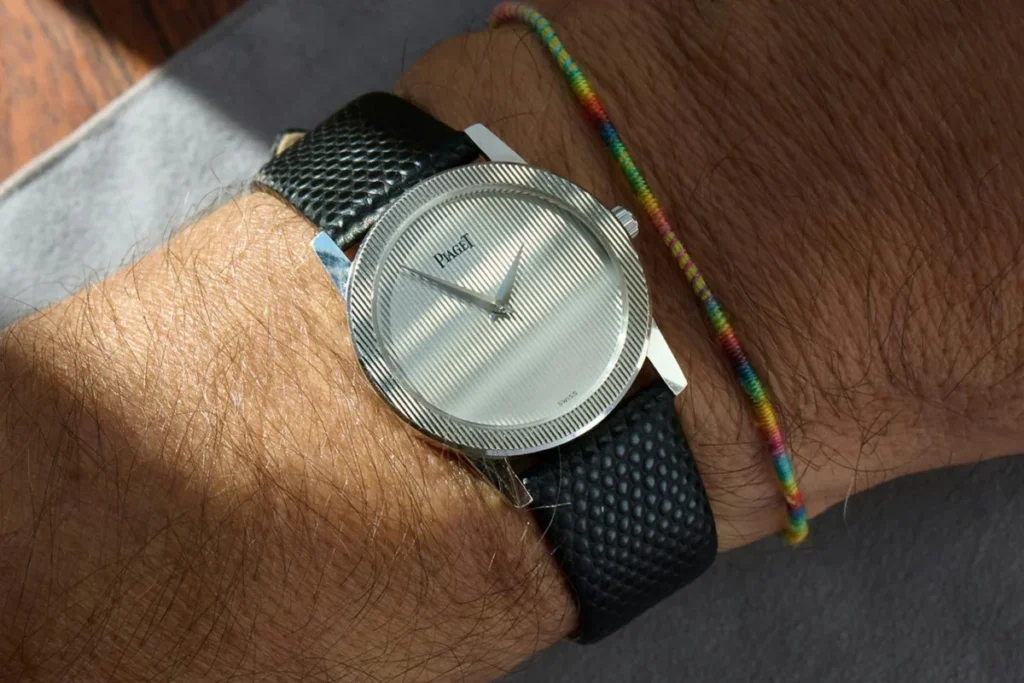
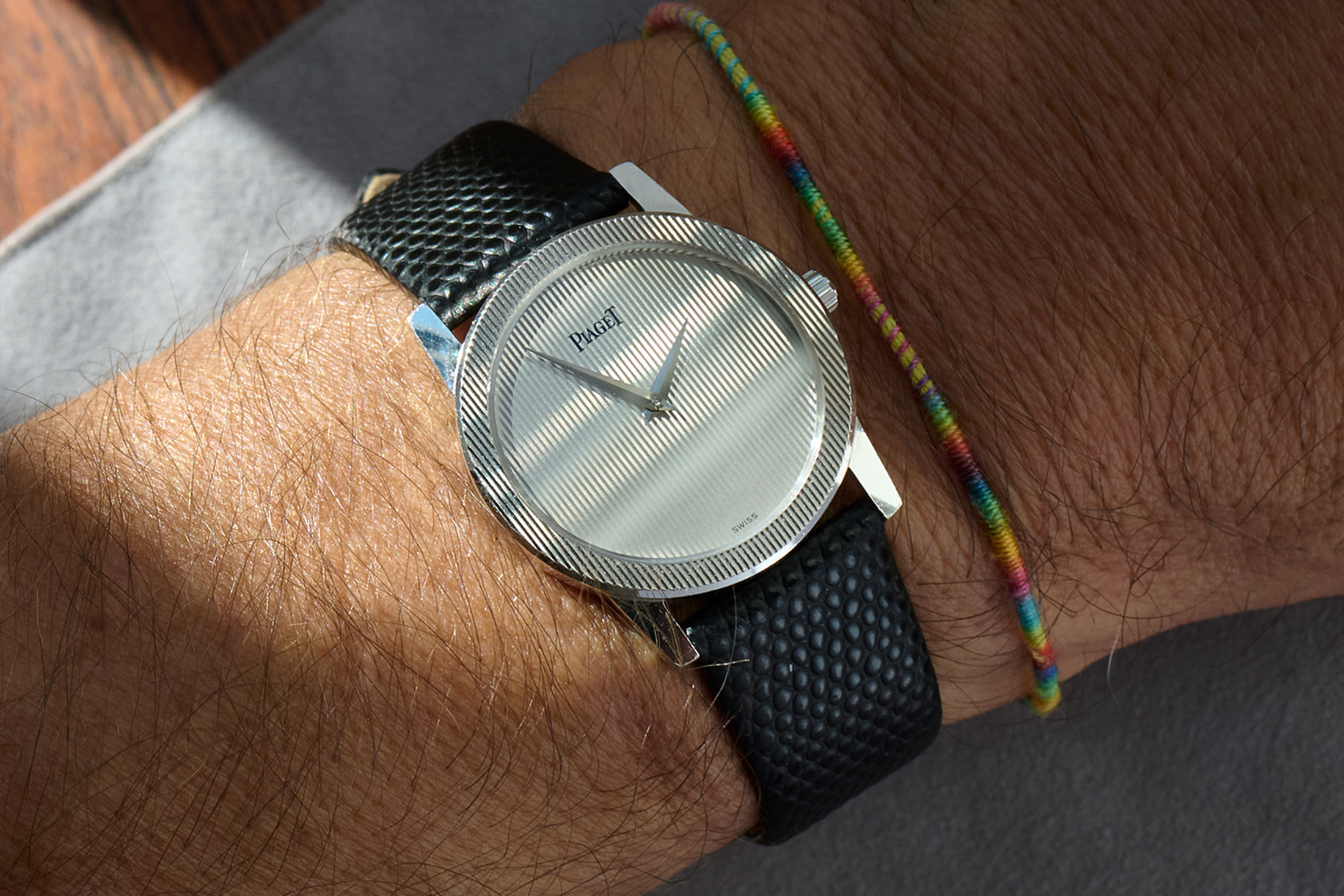
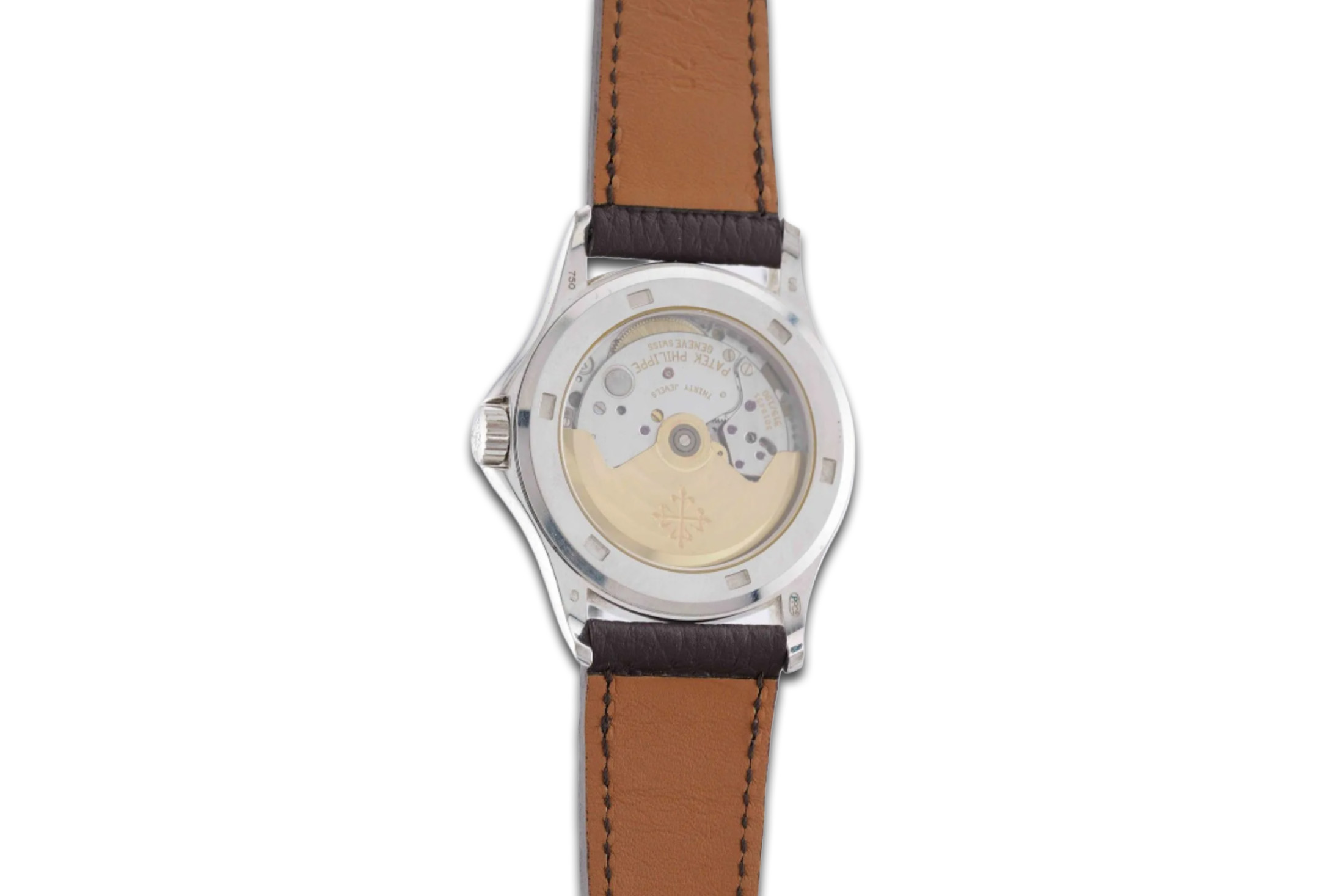
This particular example is crafted in white gold and measures 37mm in diameter. While opinions on ideal watch sizes can vary, the 37mm dimension of the 5107 is often considered perfectly proportioned, allowing the date window to sit elegantly at the edge of the dial without appearing too crowded or too distant. The reference was produced between 2000 and 2005, and this example hails from the latter year. Its design can be seen as a fascinating mashup of seemingly contradictory ideas, embodying the turn-of-the-millennium spirit of innovation and reinterpretation.
Internally, the watch is powered by the Caliber 315 movement. This was a slower-beat (3 Hz) predecessor to the 4 Hz Caliber 324, which Patek Philippe now uses in many of its watches, including the Ref. 5227. The 5227, while sharing a similar aesthetic to the 5107, lacks crown guards and, at 40mm, presents a larger presence on the wrist, resulting in a date window that sits further from the dial’s edge. It is noteworthy that the Ref. 5107 stands as the only Calatrava model ever produced by Patek Philippe to feature crown guards.
While this specific example does not come with its original box and papers, it is evident that the watch has been worn, as is typical for timepieces of this nature. However, its inherent spectacular nature lies in its conceptual design. By combining the dress watch DNA of the Calatrava with the protective element of crown guards, Patek Philippe created a timepiece that is both an homage to tradition and a bold statement of innovation. This fusion can be seen as analogous to the historical development of the Nautilus, another Patek Philippe icon from the 1970s, which itself represented a dialectical synthesis of a luxury dress watch with the robust characteristics of a sports watch.
This Patek Philippe Ref. 5107 is scheduled for auction on the 14th, with an estimated price range of €14,000 to €18,000. The entire Osenat catalog is worth exploring for discerning collectors. For instance, a gold Rolex GMT-Master Ref. 1675 from approximately 1964 is also featured; however, it’s important to note that its crown guards have been modified to resemble those of a Ref. 6542. Buyers are advised to carefully examine the details of each lot to ensure they align with their collecting interests and expectations.
Broader Market Implications and Trends
The selection of watches presented this week—the functionally specialized Orvis Solunagraph, the artistically bold Omega DeVille Emerald, the design-forward Lip Mach 2000, and the conceptually intriguing Patek Philippe Calatrava 5107—reflects several key trends in the current watch market.
Firstly, there is a continued and growing appreciation for historically significant and niche complications. The Orvis Solunagraph, with its tide-tracking function, appeals to collectors who value mechanical ingenuity and a direct connection to a specific historical application. This interest often drives prices for rare and well-preserved examples of such specialized watches.
Secondly, the market continues to embrace watches that blur traditional category lines. The Omega DeVille Emerald, a collaboration between a major watch manufacturer and a prominent jewelry designer, highlights the increasing acceptance of watches as wearable art. Similarly, the Patek Philippe 5107, by integrating sport-watch elements into a dress-watch platform, demonstrates a willingness among collectors to embrace unconventional designs that challenge established norms. This trend suggests a maturing market where aesthetic and conceptual innovation are valued alongside traditional horological excellence.
Thirdly, the enduring appeal of 1970s design continues to be a significant market driver. The Lip Mach 2000 Chronograph is a prime example of this, showcasing the era’s bold aesthetic and experimental approach to watchmaking. As collectors increasingly seek out unique and characterful pieces, watches from this decade are experiencing renewed interest and appreciation.
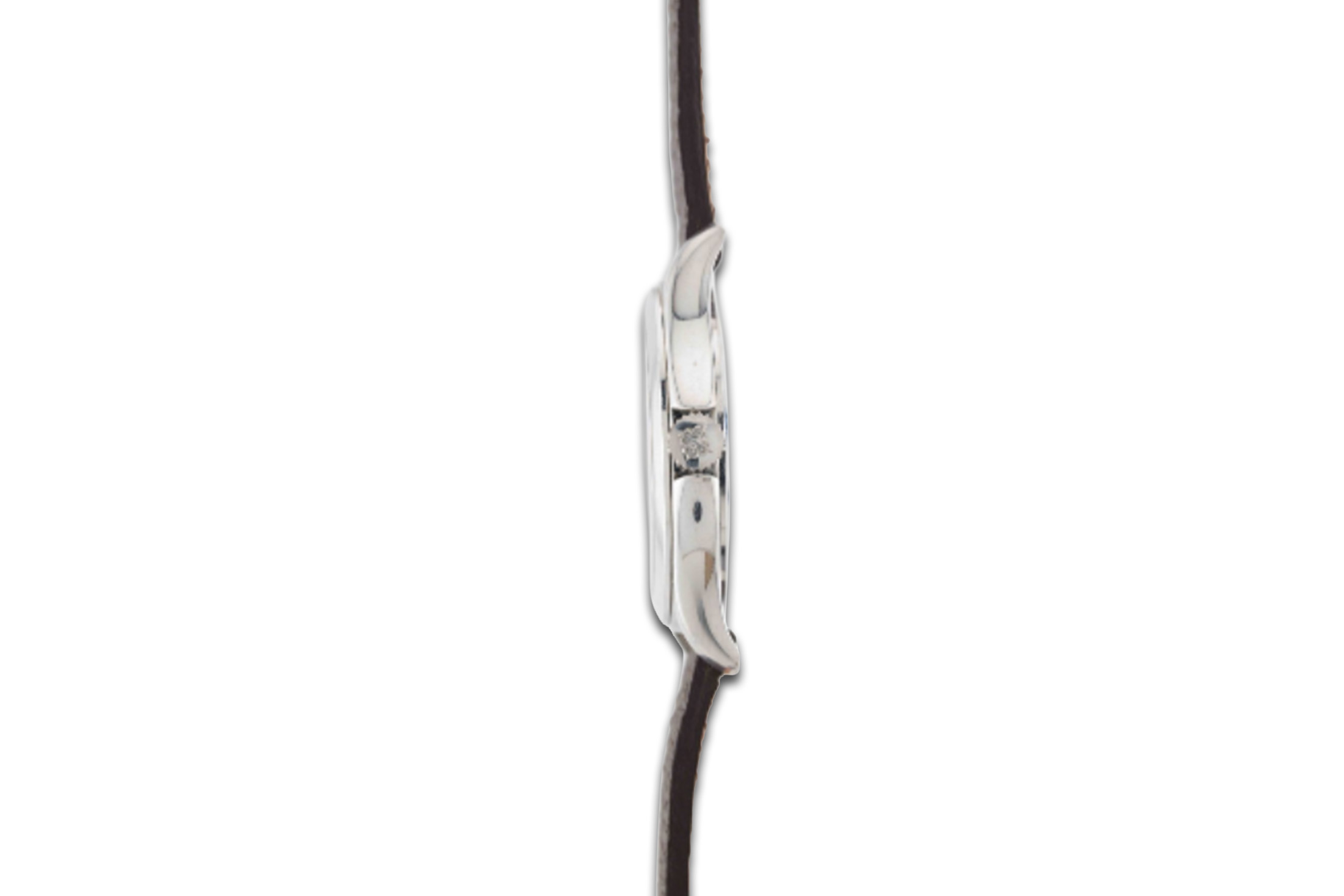
Finally, the presence of a Patek Philippe Calatrava, even with its unconventional features, underscores the timeless demand for the brand’s creations. While the Ref. 5107 might appeal to a more niche segment of Patek collectors, its unique position within the Calatrava lineage makes it a compelling piece for those seeking something outside the brand’s most common offerings. The auction estimates, while substantial, reflect the inherent value and desirability associated with the Patek Philippe name.
In conclusion, this week’s "What’s Selling Where" offers a rich narrative of horological diversity. From the depths of the ocean to the avant-garde studios of renowned designers and the hallowed halls of Patek Philippe, these timepieces tell stories of innovation, artistry, and the enduring human fascination with timekeeping. As the market continues to evolve, the appreciation for watches that possess historical depth, unique design, and compelling mechanical narratives remains a constant.