The fundamental nature of the physical world is often defined by symmetry, yet at the molecular level, some of the most critical components of life exist in asymmetric forms known as chiral molecules. These molecules come in two distinct versions—mirror images of each other that cannot be superimposed, much like a person’s left and right hands. While these "enantiomers" share identical chemical formulas and many physical properties, their biological and chemical behaviors can differ drastically. Identifying and separating these forms has long been a cornerstone of modern science, particularly in the development of safe and effective medicines. Recently, a collaborative team of researchers from the Tata Institute of Fundamental Research (TIFR) Hyderabad, the Indian Institute of Technology (IIT) Bombay, and the Indian Institute of Technology Hyderabad has unveiled a groundbreaking method to distinguish these molecular twins using "twisted" laser light. This innovation promises to simplify a notoriously complex process, potentially transforming fields ranging from pharmacology to astrobiology.
The Fundamental Challenge of Molecular Mirror Images
To understand the significance of this discovery, one must first grasp the concept of chirality. The term, derived from the Greek word for hand, describes a property of asymmetry. In chemistry, a chiral molecule and its mirror image are called enantiomers. They are labeled as "R" (rectus, or right) and "S" (sinister, or left) based on the spatial arrangement of their atoms.
In a vacuum or a standard laboratory setting, these two forms often behave identically. They have the same boiling points, melting points, and densities. However, the moment they interact with another chiral environment—such as the human body—the difference becomes profound. Because biological receptors, enzymes, and DNA are themselves chiral, they interact with enantiomers in specific ways. One version of a molecule might cure a disease, while its mirror image might be inert or, in tragic cases, toxic.
The most infamous example of this is the thalidomide tragedy of the 1950s and 60s. One enantiomer of the drug effectively treated morning sickness in pregnant women, but the other caused severe birth defects. This historical context underscores why the ability to accurately and simply detect the handedness of a molecule is not merely a scientific curiosity but a public health necessity.
A New Paradigm: Engineering Twisted Laser Beams
Traditional methods for detecting chirality, such as circular dichroism (CD), rely on how molecules absorb circularly polarized light. In these scenarios, the light’s electric field rotates in a circle as it travels. However, the difference in absorption between two enantiomers is often incredibly small—frequently less than one part in a thousand—making it difficult to detect without highly sensitive and expensive equipment.
The research team from TIFR and the IITs approached this problem by adding a new dimension to the light itself. Instead of using standard laser pulses, they engineered "structured light." This light does not just spin (spin angular momentum); it also twists as it moves forward, a property known as orbital angular momentum (OAM).
The researchers utilized a "nut and screw" analogy to explain this interaction. A right-handed screw easily enters a right-handed threaded nut because their geometries match. Conversely, a left-handed screw would meet resistance or fail to engage with the same nut. By shaping the laser beam into a "threaded" probe, the scientists created a tool that fits the geometry of one enantiomer better than the other. When this twisted light strikes a chiral molecule, the resulting interaction is highly dependent on whether the light’s twist matches the molecule’s natural handedness.
Experimental Framework at the TIFR Hyderabad Facility
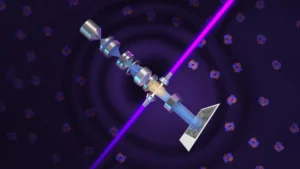
The experiments were conducted at the state-of-the-art laser facility at TIFR Hyderabad, involving a sophisticated setup designed to capture the split-second interactions between light and matter. The team targeted gaseous samples of camphor ($C10H16O$), a classic chiral molecule used frequently in chemical studies due to its well-defined R- and S- forms.
The methodology employed ultrashort laser pulses, lasting only a few hundred femtoseconds (one femtosecond is one-quadrillionth of a second). These pulses are so brief and intense that they can strip electrons away from molecules and cause them to break apart into charged fragments, a process known as dissociative ionization.
What set this experiment apart was the precise control over the laser’s structure. The researchers didn’t just fire a beam; they carefully modulated its twist and spin. As these structured pulses collided with the camphor gas, the molecules fragmented. The resulting ions were then analyzed using a time-of-flight mass spectrometer (TOFMS).
Breaking Down the Data: Ion Signals and Mass Spectrometry
The TOFMS is a critical instrument in this process. It works by accelerating the charged fragments through an electric field toward a detector. Because all fragments receive the same amount of energy, their speed is determined by their mass. Lighter fragments reach the detector first, while heavier ones follow. This allows scientists to create a "mass spectrum" that acts as a fingerprint for the molecule.
The team’s breakthrough came from observing the quantity of these fragments. They discovered a clear correlation: the number of ions produced changed significantly depending on whether the light’s twist was "in sync" or "out of sync" with the molecule’s handedness.
Specifically, when the "handedness" of the twisted light matched the handedness of the camphor enantiomer, the ionization efficiency was different than when they were mismatched. This resulted in a measurable difference in the ion signal intensity. Unlike traditional methods that require measuring the specific angles at which electrons are ejected (photoelectron circular dichroism), this new technique relies on a much simpler metric: the total count of ions.
A Comparative Advantage Over Conventional Methods
The scientific community has historically relied on several techniques to probe chirality, but each comes with significant limitations:
- Circular Dichroism (CD): Measures the difference in the absorption of left- and right-circularly polarized light. The signal is often extremely weak and requires high concentrations of the sample.
- Photoelectron Circular Dichroism (PECD): A more sensitive technique that measures the forward-backward asymmetry of electrons emitted from chiral molecules. While powerful, PECD requires complex detector setups, precise alignment, and often "coincidence detection," where multiple particles must be tracked simultaneously.
- X-Ray Crystallography: Can determine absolute configuration but requires the sample to be in a solid, crystalline form, which is not always possible.
The TIFR-IIT technique bypasses these complexities. By utilizing ion signals from a mass spectrometer—a standard tool in most chemistry labs—the researchers have made chirality detection more accessible. Furthermore, the use of twisted light significantly amplifies the difference between the signals of the two enantiomers. The "twist" of the light provides a better geometric match for the three-dimensional structure of the molecule, leading to signals that are much larger and easier to distinguish than those produced by traditional optical methods.
Studying Molecules in the Gas Phase
A vital aspect of this research was the decision to study molecules in the gas phase. In a liquid solution, molecules are surrounded by solvent molecules that can interfere with their structure and the way they interact with light. Similarly, on a solid surface, the orientation of the molecule is restricted.
By examining camphor in a gaseous state, the researchers ensured that the molecules were isolated and "clean." This allowed for a direct observation of the interaction between the structured light and the intrinsic shape of the molecule. The absence of outside interference means the data reflects the fundamental physics of the light-matter interaction, providing a clearer picture of how OAM influences molecular behavior.
Broader Implications for the Pharmaceutical Industry
The most immediate application for this technology lies in the pharmaceutical sector. Modern drug development is increasingly focused on "single-enantiomer" drugs. In 2022, a significant majority of the top-selling drugs globally were chiral, and many were sold as pure enantiomers rather than racemic mixtures (equal parts of both).
Ensuring that a drug contains only the beneficial enantiomer is a rigorous process that involves constant monitoring during synthesis and quality control. A faster, more sensitive, and simpler method to verify molecular handedness could reduce costs and improve the safety profiles of new medications.
Beyond safety, this technique could aid in the discovery of new drugs. By providing a more sensitive way to probe how molecules interact with light, researchers can better understand the spatial configurations of complex biological targets, leading to more precise molecular engineering.
Chronology of the Discovery and Collaboration
The development of this technique is the result of a multi-year effort involving some of India’s premier scientific institutions. The timeline of this achievement highlights the synergy between theoretical physics and experimental chemistry:
- Phase 1: Theoretical Foundation: Researchers at IIT Bombay and IIT Hyderabad began exploring the mathematical possibilities of how orbital angular momentum in light could interact with molecular symmetry.
- Phase 2: Facility Integration: The team partnered with TIFR Hyderabad to utilize their advanced femtosecond laser labs, which are capable of producing the ultrashort pulses necessary for the experiment.
- Phase 3: Experimental Execution: Over several months, the team refined the process of "shaping" the laser beams and successfully applied them to camphor gas samples.
- Phase 4: Data Validation: Using mass spectrometry, the team confirmed that the ion count differences were statistically significant and reproducible, marking a successful proof of concept.
Analysis of Future Potential and Scientific Impact
The success of this method opens the door to a new era of "OAM-enhanced spectroscopy." While the current study focused on camphor, the principles can be applied to a vast array of chiral molecules, including amino acids, sugars, and complex proteins.
One intriguing potential application is in the field of astrobiology. Scientists have long wondered why life on Earth uses only left-handed amino acids and right-handed sugars—a phenomenon known as homochirality. Some theories suggest that polarized light from space may have played a role in favoring one enantiomer over the other. The ability to use twisted light to interact with chiral molecules could provide new insights into these cosmic origins.
Furthermore, the technique’s sensitivity could allow for the detection of "chiral impurities" in extremely low concentrations, which is vital in forensic science and environmental monitoring.
Conclusion: A Milestone for Indian Science
The collaboration between TIFR Hyderabad, IIT Bombay, and IIT Hyderabad represents a significant milestone for the Indian scientific community. By combining expertise in laser physics, molecular chemistry, and advanced instrumentation, the team has solved a problem that has challenged researchers for decades.
As the method moves from the laboratory to potential commercial application, it stands as a testament to the power of structured light. By literally adding a "twist" to conventional wisdom, these researchers have provided a clearer view of the asymmetric building blocks of our world. The "nut and screw" of molecular science has finally found its match, promising a future where the distinction between mirror images is no longer a hurdle, but a window into the deeper mechanics of nature.