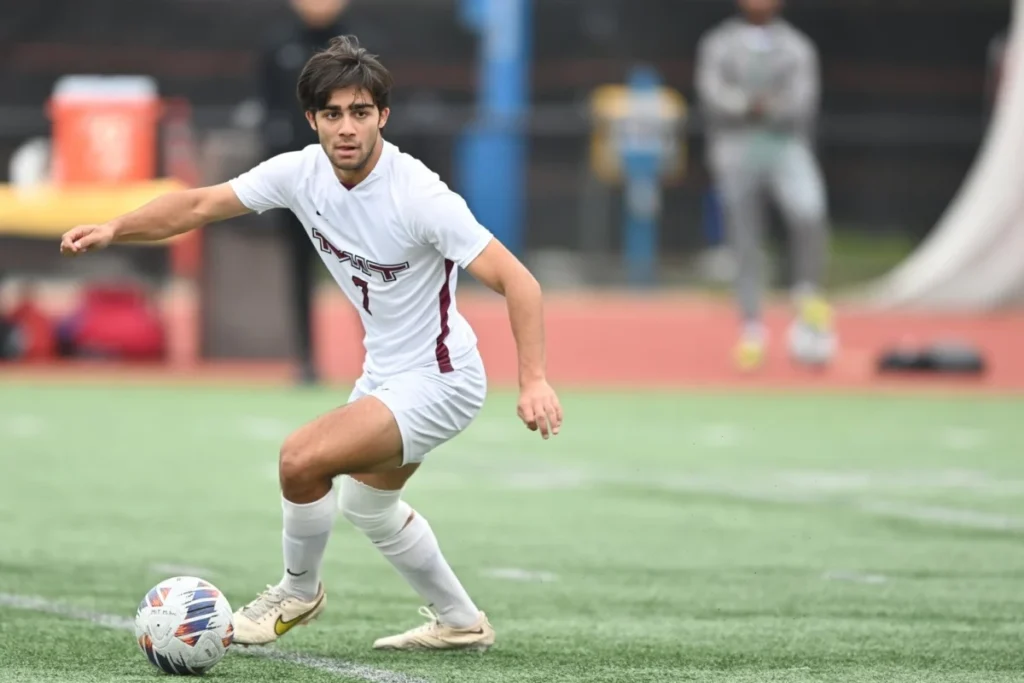
Dilin Meloni represents a unique intersection of elite competitive athletics and high-level scientific inquiry, a combination that defines the student-athlete experience at the Massachusetts Institute of Technology. As a rising senior at MIT, Meloni has successfully navigated the rigorous demands of a double major in Nuclear Science and Engineering (Course 22) and Physics (Course 8), while simultaneously serving as a key player for the MIT men’s soccer team and a leader within the university’s Student Athlete Advisory Committee (SAAC). His journey from a standout high school athlete in Needham, Massachusetts, to a burgeoning nuclear engineer illustrates the symbiotic relationship between disciplined physical competition and complex academic problem-solving.
From Needham High School to the Plasma Science and Fusion Center
Meloni’s trajectory toward MIT began well before his enrollment. As a student at Needham High School, he was recognized as the Massachusetts Boys Soccer Player of the Year and earned All-American honors. While his athletic prowess garnered attention from various collegiate programs, his decision-making process was heavily influenced by a specific academic spark. During his junior year of high school, Meloni read a research paper published by MIT’s Plasma Science and Fusion Center (PSFC). This encounter with cutting-edge fusion research solidified his ambition to pursue engineering at the highest level.
The decision to attend MIT was driven by the desire to be an "Engineer" in two distinct capacities: as a member of the MIT varsity soccer team, known as the Engineers, and as a professional engineer contributing to the future of sustainable energy. This dual identity is a hallmark of Meloni’s tenure at the institute, where he has transitioned from a high school prospect to a critical contributor in both the laboratory and on the pitch.
Academic Rigor and Professional Development in Fusion Energy
At MIT, Meloni’s academic workload is notably intense. Pursuing a double major in Course 22 (Nuclear Science and Engineering) and Course 8 (Physics) places him in a small cohort of students tackling some of the most mathematically and conceptually challenging curricula offered by the institute. Course 22 focuses on the applications of nuclear processes, including fission and fusion energy, radiation detection, and nuclear policy, while Course 8 provides the fundamental theoretical framework for understanding the physical universe.
Meloni’s academic interests are not merely theoretical; they have translated into high-impact professional experience. During the summer of his junior year, he secured an internship at Commonwealth Fusion Systems (CFS), an MIT spinoff company dedicated to commercializing fusion energy. CFS is currently working on SPARC, a compact, high-field fusion device designed to achieve net energy gain. Meloni’s role at CFS involves applying his classroom knowledge of plasma physics and nuclear engineering to real-world challenges in the pursuit of a clean, virtually limitless energy source.
Meloni has noted that while his academic and athletic lives are distinct, they offer complementary perspectives. In the laboratory, he collaborates with researchers from diverse backgrounds who may not share his athletic history, providing him with a broad intellectual network. Conversely, the soccer field offers a community of peers who share his dedication to sport, creating a balanced social ecosystem that prevents him from being siloed within a single discipline.
Leadership in the Student Athlete Advisory Committee (SAAC)
Beyond the classroom and the soccer field, Meloni has taken on a significant leadership role as a member of the Student Athlete Advisory Committee (SAAC). The SAAC serves as a bridge between the student-athlete population and the university administration, including the Department of Athletics, Physical Education, and Recreation (DAPER). At MIT, which supports 33 varsity sports—one of the largest programs in the nation—the task of representing the diverse needs of student-athletes is a complex logistical and diplomatic challenge.
Meloni’s involvement in student governance dates back to his high school years, where he served on his town’s school committee and participated in statewide student leadership organizations. This experience prepared him for the nuances of institutional advocacy. In his role with SAAC, Meloni works to identify "pain points" for athletes, ranging from preseason scheduling and food quality to the allocation of time in the Sports Performance Facility.
One of the primary challenges Meloni faces is managing the competing interests of 33 different teams. For instance, the seven varsity teams that utilize the major turf fields must coordinate schedules not only with each other but also with club sports and general student activities. Meloni’s approach involves fostering open communication and finding compromises that satisfy both student demands and administrative constraints. He emphasizes that while students often ask for more than is logistically possible, the act of voicing those needs is essential for maintaining a positive student-athlete experience.
Institutional Context: Athletics at a Division III Powerhouse
MIT’s athletic program is unique within the landscape of American higher education. Despite being world-renowned for its scientific and technological research, approximately 25% of its undergraduate population participates in varsity athletics. As a Division III institution, MIT emphasizes the "student" in student-athlete, ensuring that competitive sports do not come at the expense of academic excellence.
The Department of Athletics, Physical Education, and Recreation (DAPER) manages an extensive infrastructure, including the Zesiger Sports and Fitness Center, the Johnson Athletics Center, and numerous outdoor fields. The logistical complexity of managing these facilities for 33 varsity teams, dozens of club sports, and thousands of intramural participants is immense. Meloni’s work with SAAC has been instrumental in refining how these resources are allocated.
Recent developments at MIT indicate a shift toward greater integration of student feedback in administrative decision-making. Meloni has observed that DAPER and Student Life staff are increasingly proactive in seeking input from SAAC leadership on matters beyond athletics, suggesting that the committee’s influence is expanding into the broader realm of student life. This collaborative atmosphere has turned the current academic year into a "tipping point" for student-athlete advocacy at the institute.
Chronology of Meloni’s MIT Experience
The timeline of Meloni’s journey at MIT reflects a steady progression of responsibility and achievement:
- Freshman Year: Meloni joins the MIT men’s soccer team as an attacking midfielder. Following a suggestion from his coach, he begins attending SAAC meetings to learn the ropes of student governance alongside senior captains.
- Sophomore Year: He deepens his involvement in the Course 22 and Course 8 curricula, establishing a foundation in nuclear physics and engineering. He continues to be a regular contributor on the soccer field.
- Junior Year: Meloni takes on more significant responsibilities within SAAC, helping to organize outreach to coaches and athletes to identify institutional issues. He secures a summer internship at Commonwealth Fusion Systems.
- Senior Year (Current): As a rising senior, Meloni serves as a leader within SAAC and continues his work at CFS. He remains a key player for the Engineers as they compete in the New England Women’s and Men’s Athletic Conference (NEWMAC).
Impact and Broader Implications
Meloni’s story is a testament to the viability of the "scholar-athlete" model at the highest levels of academia. His ability to balance the rigors of nuclear science with the demands of varsity soccer provides a roadmap for future students who wish to pursue excellence in multiple fields.
The implications of his work extend beyond his personal achievements. By advocating for better facilities, fairer scheduling, and improved communication between students and administrators, Meloni is helping to enhance the institutional framework of MIT. His efforts ensure that the athletic community remains a vibrant and integrated part of the university’s social fabric.
Furthermore, Meloni’s career path in fusion energy highlights the importance of developing "soft skills"—such as leadership, teamwork, and negotiation—through athletics. As the global energy sector moves toward sustainable solutions like fusion, the ability to lead diverse teams and navigate complex organizational structures will be just as important as technical proficiency. Meloni’s experience on the SAAC and the soccer field has equipped him with these essential tools.
Conclusion: The Future of the Engineer-Athlete
As Dilin Meloni approaches his final year at MIT, his focus remains on the "small changes that’ll lead to big changes eventually." Whether he is refining a plasma physics model or negotiating field time for the soccer team, his approach is characterized by a commitment to excellence and a pragmatic understanding of institutional dynamics.
His dual role as an attacking midfielder and a nuclear science student serves as a reminder that at institutions like MIT, the pursuit of knowledge and the pursuit of athletic victory are not mutually exclusive. Instead, they are two sides of the same coin, each requiring a level of dedication, discipline, and passion that defines the modern "Engineer." Through his leadership in SAAC and his academic contributions, Meloni is leaving a lasting impact on the MIT community, ensuring that the next generation of student-athletes will have the support and resources they need to succeed both on the field and in the lab.