In a landmark achievement for the field of thermodynamics and materials science, a collaborative team of researchers from the University of Illinois Urbana-Champaign (UIUC) and the Technical University of Denmark has successfully engineered the world’s first three-dimensional, omnidirectional thermal invisibility cloak. This sophisticated device, capable of shielding objects from infrared detection while simultaneously protecting them from extreme temperature fluctuations, marks a significant leap from previous two-dimensional models. The research, spearheaded by UIUC civil and environmental engineering professor Shelly Zhang, postdoctoral researcher Weichen Li, and graduate student Yibo Wang, in partnership with Professor Ole Sigmund, was recently detailed in the prestigious journal Nature Communications. This breakthrough promises to redefine thermal management in high-stakes industries, ranging from aerospace and defense to microelectronics and deep-sea exploration.
The core of this innovation lies in its ability to manipulate the flow of heat with unprecedented precision. Unlike traditional insulation, which merely slows the transfer of thermal energy, the new cloak utilizes the principles of transformation thermotics to redirect heat around a designated volume. To an external observer equipped with an infrared camera, the heat appears to move through the space as if the object and the cloak were not there at all, maintaining a seamless thermal profile of the background environment. This "invisibility" is not merely a visual trick but a fundamental redirection of energy that leaves the internal temperature of the concealed space stable and unaffected by external thermal gradients.
The Evolution of Thermal Cloaking: From 2D Constraints to 3D Freedom
To appreciate the magnitude of this discovery, one must look at the chronology of thermal manipulation. The concept of thermal cloaking emerged as a derivative of optical cloaking, which gained scientific prominence in the mid-2000s following the development of metamaterials. While optical cloaks focus on bending light, thermal cloaks focus on bending the diffusion of heat. The first experimental thermal cloaks, developed roughly a decade ago, were largely limited to two-dimensional planes. These early iterations were "anisotropic," meaning they could only redirect heat if it approached from a specific, predetermined direction. If the heat source moved or if the object was viewed from a different angle, the "illusion" failed, and the object became thermally visible.
The transition from 2D to 3D has been the "holy grail" of the field. In a three-dimensional environment, heat can approach from an infinite number of angles. Creating a material that can respond to this complexity requires a level of structural sophistication that natural materials do not possess. Previous attempts to scale up to 3D often resulted in bulky, impractical devices that could only hide simple spheres or cylinders. The UIUC team’s approach differs by employing topology optimization—a mathematical method that optimizes material layout within a given space—to design a lattice structure that achieves the specific thermal properties required for omnidirectional cloaking.
The Material Science: Lattice Engineering and 3D Printing
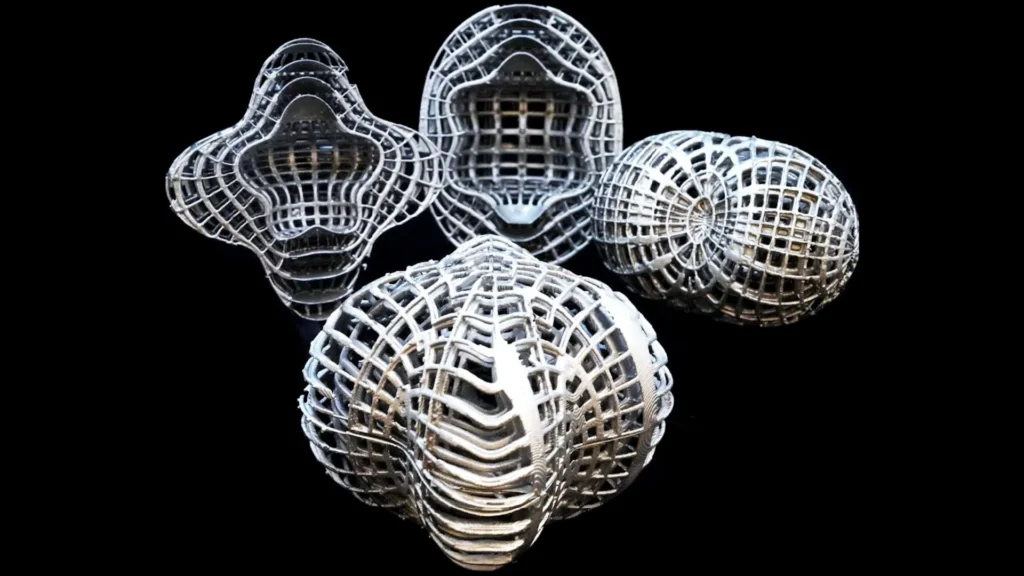
The breakthrough was made possible by the creation of a new class of lattice-based metamaterials. The researchers identified that a "perfect" cloak requires a material with thermal conductivity that can be independently tuned along three different axes. To achieve this, the team designed a complex, repeating geometric structure known as a unit cell. By adjusting the thickness and orientation of the connections within these cells, the researchers could precisely control how heat conducted through the material in the X, Y, and Z directions.
The manufacturing process involved a sophisticated hybrid approach. The primary skeleton of the cloak was produced using 3D metal printing, specifically utilizing an aluminum alloy. Aluminum was chosen for its high thermal conductivity, providing the "highways" through which heat could be channeled around the object. Once the intricate metal lattice was printed, the researchers used a mold-casting process to fill the interstitial voids with a specialized rubber-like polymer. This polymer acts as a thermal insulator, preventing heat from leaking into the central protected zone.
This combination of a high-conduction metal frame and a low-conduction polymer filler created a composite material with "effective thermal conductivity" values that were previously thought to be impossible to manufacture. This material allows the cloak to mimic the thermal properties of its surrounding environment (such as air, soil, or water) while simultaneously guiding external heat around the hidden core.
Experimental Validation and the "Human Head" Test
To prove the efficacy of their design, the research team subjected the cloak to a series of rigorous laboratory tests. They placed the device in a controlled environment between a heat source and a heat sink, creating a steady flow of thermal energy. Using high-resolution infrared thermography, the team monitored the temperature distribution across the surface of the cloak.
The results were definitive. The infrared images showed that the heat flow lines remained undisturbed as they passed the cloaked region. Even when the researchers placed highly complex, asymmetrical objects inside the cloak—including a miniature 3D-printed model of a human head—the infrared signature showed no trace of the object’s geometry. Inside the concealed chamber, the temperature remained remarkably uniform, shielded from the external temperature gradient.
"A real thermal cloak should work no matter where the heat comes from," Professor Shelly Zhang noted during the announcement of the findings. "Our device can hide a complex 3D object in an infinite number of directions while keeping the temperature inside stable and protected. This level of geometric complexity in cloaking has never been demonstrated before."
Strategic Implications: From Stealth to Supercomputing
The practical applications for this technology are vast and multifaceted. In the realm of electronics, the "thermal bottleneck" is currently one of the greatest hurdles to increasing computing power. As microchips become smaller and more powerful, they generate immense amounts of heat that can damage sensitive components. A 3D thermal cloak could be integrated into circuit designs to "tunnel" heat away from critical processors, effectively creating thermal "safe zones" for delicate hardware. This could lead to a new generation of more durable and high-performing consumer electronics and industrial servers.
In the defense and security sectors, the implications are equally profound. Modern surveillance relies heavily on infrared sensors to detect vehicles, personnel, and installations by their heat signatures. A functional 3D thermal cloak could theoretically render military assets invisible to thermal imaging, even in environments with fluctuating temperatures. Furthermore, the technology could be used to protect satellites from the extreme thermal radiation encountered in space, where the side facing the sun can reach hundreds of degrees while the shaded side remains near absolute zero.
Industry analysts suggest that the market for advanced thermal management materials is expected to grow significantly over the next decade. With the rise of electric vehicles (EVs), which require precise temperature control for battery longevity, and the expansion of 5G infrastructure, the demand for materials that can "steer" heat is at an all-time high. The UIUC discovery positions transformation thermotics as a viable solution for these commercial challenges.
Addressing the Next Frontier: Active Heat Generation
Despite the success of the current prototype, the researchers are already looking toward the next evolutionary step in thermal cloaking. The current device is "passive," meaning it is designed to hide objects that do not generate their own heat. However, many real-world objects—such as running engines, active computer chips, or living organisms—produce internal thermal energy.
"The next challenge is hiding objects that generate heat," Zhang explained. To hide an active heat source, the cloak would need to not only redirect incoming external heat but also manage and dissipate the internal heat without letting it escape in a detectable pattern. This would require "active" materials that can change their properties in real-time or incorporate internal cooling mechanisms that remain thermally neutral to outside observers.
This future research will likely involve the integration of phase-change materials or microfluidic channels within the lattice structure. By circulating fluids or triggering phase transitions, researchers hope to create a "dynamic" cloak that can adapt to changing internal and external thermal environments.
Collaboration and Support
The success of this project highlights the importance of international scientific collaboration. By combining UIUC’s expertise in structural optimization and 3D printing with the Technical University of Denmark’s long-standing leadership in topology optimization, the team was able to solve a problem that had stalled for years.
The research was supported by a coalition of high-level funding bodies, including the National Science Foundation (NSF), the Air Force Office of Scientific Research (AFOSR), and the Villum Foundation in Denmark. Professor Zhang’s multidisciplinary affiliation with the National Center for Supercomputing Applications (NCSA) further emphasizes the computational intensity required to model these complex 3D thermal flows.
As the scientific community digests the findings published in Nature Communications, the focus shifts from theoretical possibility to industrial scalability. The ability to manufacture these cloaks using standard 3D printing technology suggests that specialized thermal shielding could soon move from the laboratory to the production line, providing a new layer of protection and invisibility in an increasingly heat-sensitive world. This breakthrough does more than just hide objects; it provides a new set of tools for the "thermal architects" of the future, allowing for the precise manipulation of one of nature’s most chaotic and pervasive forces.