The field of condensed matter physics has reached a significant milestone with the publication of a groundbreaking study in the journal Nature Nanotechnology, detailing the first-ever real-time observation and manipulation of magnetic skyrmion lattice melting. This discovery, spearheaded by researchers at the Institute of Physics at Johannes Gutenberg University in Mainz, Germany, in collaboration with the Norwegian University of Science and Technology (NTNU), offers a transformative look into the behavior of nanoscale magnetic vortices. By filming these structures as they transition from an orderly lattice into a disordered state, while simultaneously adjusting their physical properties, the research team has provided a blueprint for the next generation of "brain-like" computers and ultra-efficient data storage solutions.
Understanding the Skyrmion: The Future of Information Architecture
To appreciate the magnitude of this breakthrough, one must first understand the nature of skyrmions. Named after the British physicist Tony Skyrme, who theorized their existence in a different context in the 1960s, skyrmions are microscopic, swirl-like topological defects in the magnetization of certain materials. In simpler terms, they are tiny magnetic vortices where the magnetic moments point in different directions, twisting into a stable, knot-like structure.
These vortices are extraordinarily small, often measuring only a few nanometers in diameter. Their primary appeal to scientists lies in their "topological protection." Because of the way their magnetic fields are twisted, they are incredibly stable and resistant to external perturbations. In the context of computing, a skyrmion can represent a "1" in binary code, while its absence represents a "0." Because they are so small and can be moved with very low electrical currents, they promise a density of data storage and a level of energy efficiency that traditional silicon-based transistors and current hard drive technologies cannot match.
The Breakthrough: Real-Time Visualization and Manipulation
The recent study published in Nature Nanotechnology moves skyrmion research from the theoretical and static into the dynamic and controllable. Historically, observing skyrmions has been a challenge due to their size and the speeds at which they react to stimuli. Most previous research relied on "before and after" snapshots or computer simulations to infer how skyrmion lattices—orderly, crystal-like arrangements of these vortices—behaved.
The team in Mainz, supported by Professor Asle Sudbø and his colleagues at NTNU’s Centre for Quantum Spintronics (QuSpin), utilized advanced imaging techniques to film the melting of these lattices in real time. This "melting" refers to the process where the orderly, repeating pattern of skyrmions breaks down into a more fluid, disordered state, similar to how solid ice turns into liquid water.
The most significant aspect of this experiment was the researchers’ ability to intervene during the process. "For the first time, researchers have managed to film how a magnetic skyrmion lattice melts in real time, while simultaneously being able to manipulate each individual skyrmion directly as they film it," explained Sudbø. This manipulation included changing the shape and size of the vortices "on the fly," a feat that demonstrates a level of control previously thought to be years away.
Chronology of Skyrmion Research and the Path to the Present
The journey toward this discovery has been decades in the making. The timeline of spintronics and skyrmion research provides essential context for the current breakthrough:
- 1988: Discovery of Giant Magnetoresistance (GMR) by Albert Fert and Peter Grünberg, which laid the foundation for the field of spintronics (spin transport electronics).
- 2006: Theoretical predictions suggest that skyrmions could exist in magnetic materials with specific chiral symmetries.
- 2009: The first experimental observation of a skyrmion lattice is made in a crystal of manganese silicide (MnSi) using neutron scattering at the Technical University of Munich.
- 2011-2013: Researchers demonstrate that skyrmions can be moved using electrical currents that are five to six orders of magnitude smaller than those required to move traditional magnetic domain walls.
- 2016-2020: Research shifts toward room-temperature skyrmions and the development of "racetrack memory" concepts, where skyrmions are pushed along a nanowire to read and write data.
- 2024: The Mainz-NTNU collaboration successfully films the real-time melting and manipulation of skyrmion lattices, marking a transition from observing static structures to controlling dynamic phases.
Advancing Neuromorphic and Quantum Computing
The implications of being able to control skyrmions individually are profound, particularly for the development of neuromorphic computing. Modern computers use the von Neumann architecture, which separates the processing unit (CPU) from the memory. This leads to the "von Neumann bottleneck," where energy and time are wasted moving data back and forth.
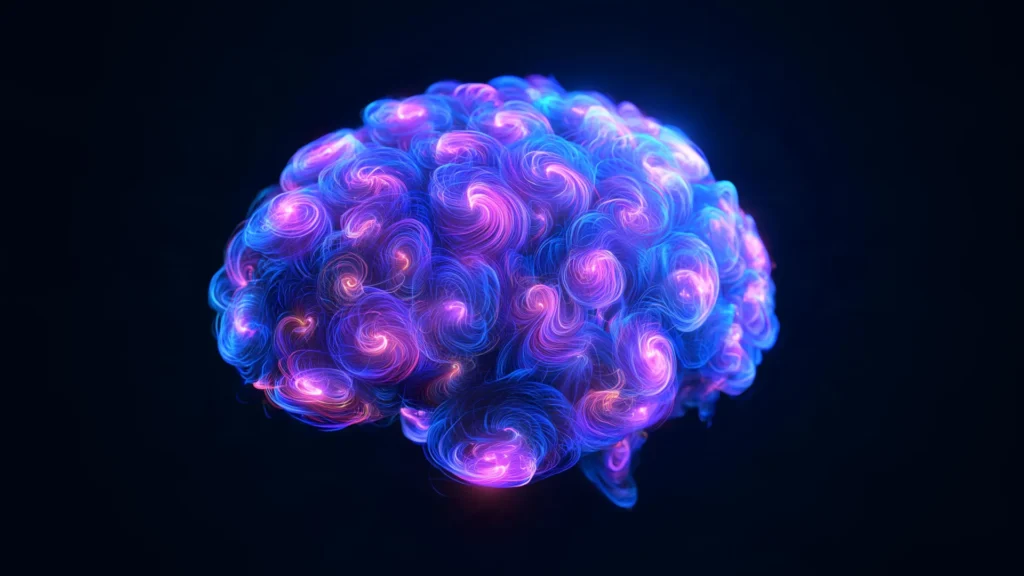
In contrast, the human brain processes and stores information in the same place—the synapses. Neuromorphic computing aims to mimic this biological efficiency. Because skyrmions can be manipulated to change shape, size, and position, they can act as artificial synapses. Their ability to "melt" and "re-crystallize" into different patterns allows for a plastic, adaptable hardware system that can learn and evolve, much like a biological neural network.
"These nanoscale vortices could help develop computers that resemble biological brains," said Sudbø. By utilizing the magnetic properties (the "spin") of electrons rather than just their charge, spintronic devices can perform complex logic operations with a fraction of the electricity required by current semiconductor technology.
Supporting Data: The Energy Crisis in Global Computing
The push for skyrmion-based technology is driven by a looming energy crisis in the digital world. According to data from the International Energy Agency (IEA), data centers currently account for approximately 1% to 1.5% of global electricity consumption. As artificial intelligence (AI) and large language models (LLMs) continue to proliferate, this figure is projected to grow exponentially.
Current transistor-based chips generate significant heat due to electrical resistance. As components get smaller, this heat becomes harder to manage, leading to thermal throttling and high cooling costs. Skyrmions, however, move via spin-orbit torques, which require very little current. Experimental data suggests that skyrmion-based devices could operate at speeds in the terahertz range while consuming up to 90% less energy than current high-performance computing systems.
The ability to manipulate skyrmion size and shape directly, as demonstrated in the Mainz study, provides a mechanism for "multi-state" logic. Instead of being limited to binary 0s and 1s, a single skyrmion could potentially represent multiple values based on its physical configuration, further increasing data density.
Expert Perspectives and Future Implications
While the scientific community has reacted with enthusiasm to the Nature Nanotechnology report, experts caution that several hurdles remain. Professor Sudbø noted that while the findings provide "new insight into how these types of particles behave," translating these lab-scale observations into consumer electronics will require further innovation in material science.
One of the primary challenges is ensuring that skyrmions remain stable at room temperature and in the presence of the electromagnetic interference common in everyday environments. The Mainz study was conducted under highly controlled conditions, but the ability to film the melting process gives engineers the data needed to design materials that can "anchor" skyrmions more effectively.
From a broader industrial perspective, the success of this research highlights the importance of international collaboration. The synergy between the experimental facilities in Germany and the theoretical expertise at NTNU’s QuSpin in Norway has been pivotal. It suggests that the future of quantum technology and next-generation computing will depend on a multi-disciplinary approach involving physics, material science, and computer engineering.
Conclusion: A Revolution in Computing Design
The real-time filming of magnetic skyrmion lattice melting represents more than just a feat of high-resolution microscopy; it is a fundamental shift in how we understand magnetic matter at the nanoscale. By proving that these magnetic vortices can be manipulated "on the fly" during a phase transition, researchers have unlocked a new degree of freedom for information technology.
As we move toward an era where AI and big data demand more processing power than our current infrastructure can sustainably provide, skyrmions offer a path forward. They represent the potential for a world where computers are not only faster and smaller but also fundamentally more aligned with the efficient, adaptive processes of the human brain.
The findings of the Mainz and NTNU teams provide the foundational knowledge required to overcome the final barriers to skyrmion-based applications. As Professor Sudbø concluded, this research "could revolutionize the way we think about computers," moving us away from the rigid, energy-hungry architectures of the 20th century and toward a more fluid, intelligent, and sustainable digital future.