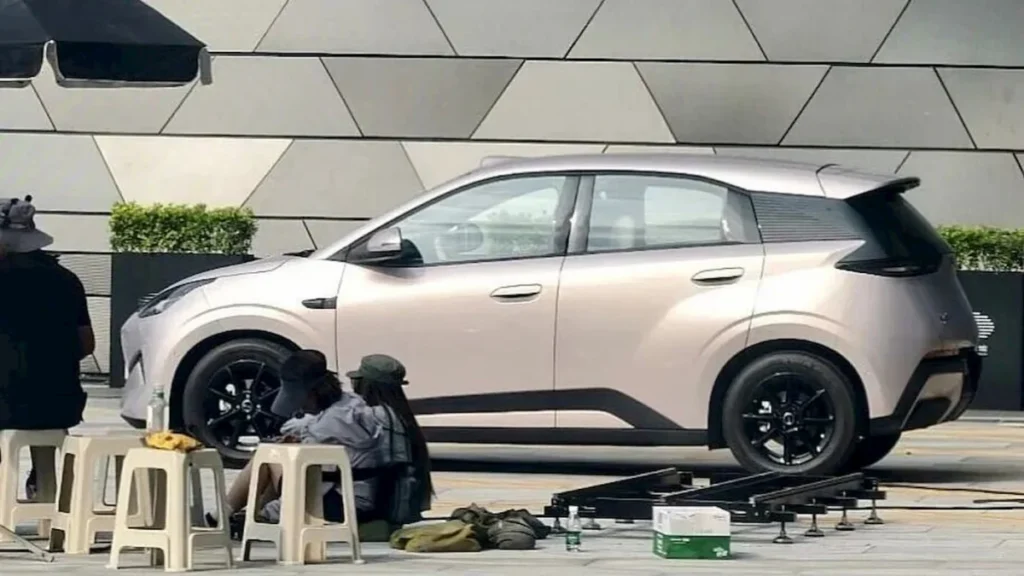
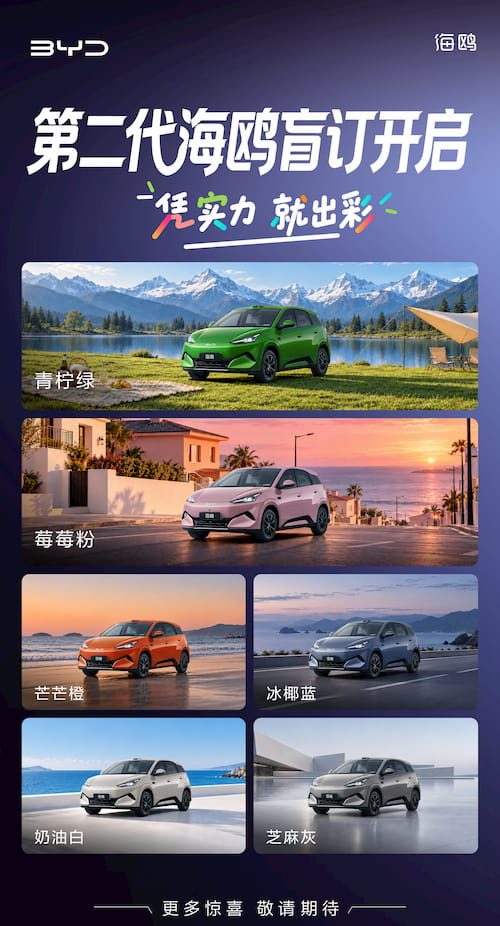
BYD, a global leader in new energy vehicles, has officially opened pre-orders for the highly anticipated second-generation Seagull EV, set to launch as the "Great Seagull" by the end of 2026. This upgraded iteration of BYD’s most affordable electric vehicle promises a significant leap forward in size, technology, and interior refinement, aiming to solidify its position as a dominant force in the entry-level EV market both domestically in China and internationally. While specific pricing details remain undisclosed for the pre-order phase, the evolution of the Seagull suggests a continued commitment to delivering accessible electric mobility with an enhanced premium feel.
The Seagull has already carved out a significant niche in the automotive landscape, distinguishing itself as BYD’s most budget-friendly electric offering. In its home market of China, the current model starts at an attractive 69,900 yuan, approximately $10,000 USD. This aggressive pricing strategy positions it far below the entry-level offerings in many Western markets, where the cheapest new vehicles, such as the 2026 Hyundai Venue, hover just above the $20,000 mark. Even in international markets where it is sold under different monikers, the Seagull’s affordability remains a key selling point. In Europe, it is marketed as the Dolphin Surf, with prices commencing around €22,900 (approximately $25,000 USD). In regions like Brazil and Mexico, it adopts the name Dolphin Mini, further expanding its global reach.
This strategic pricing and accessible design have translated into remarkable sales success. The Seagull, along with its international variants, has consistently ranked among the world’s best-selling electric vehicles. Recent data from CleanTechnica indicates that through August of the current year, BYD’s entry-level EV secured the sixth position globally, with over 212,000 units sold. This impressive figure places it ahead of numerous established models and behind only a select group of BYD’s own successful vehicles and the ever-popular Tesla Model Y and Model 3. This strong sales performance underscores the global demand for affordable, practical electric transportation.
The unveiling of the second-generation Seagull signifies BYD’s proactive approach to evolving market demands and intensifying competition in the compact EV segment. The company is not merely refreshing an existing model but undertaking a substantial redesign to meet and exceed consumer expectations for a modern, entry-level electric car. This strategic move anticipates the influx of new competitors and aims to maintain the Seagull’s competitive edge.
A "Bigger" and "Smarter" Evolution
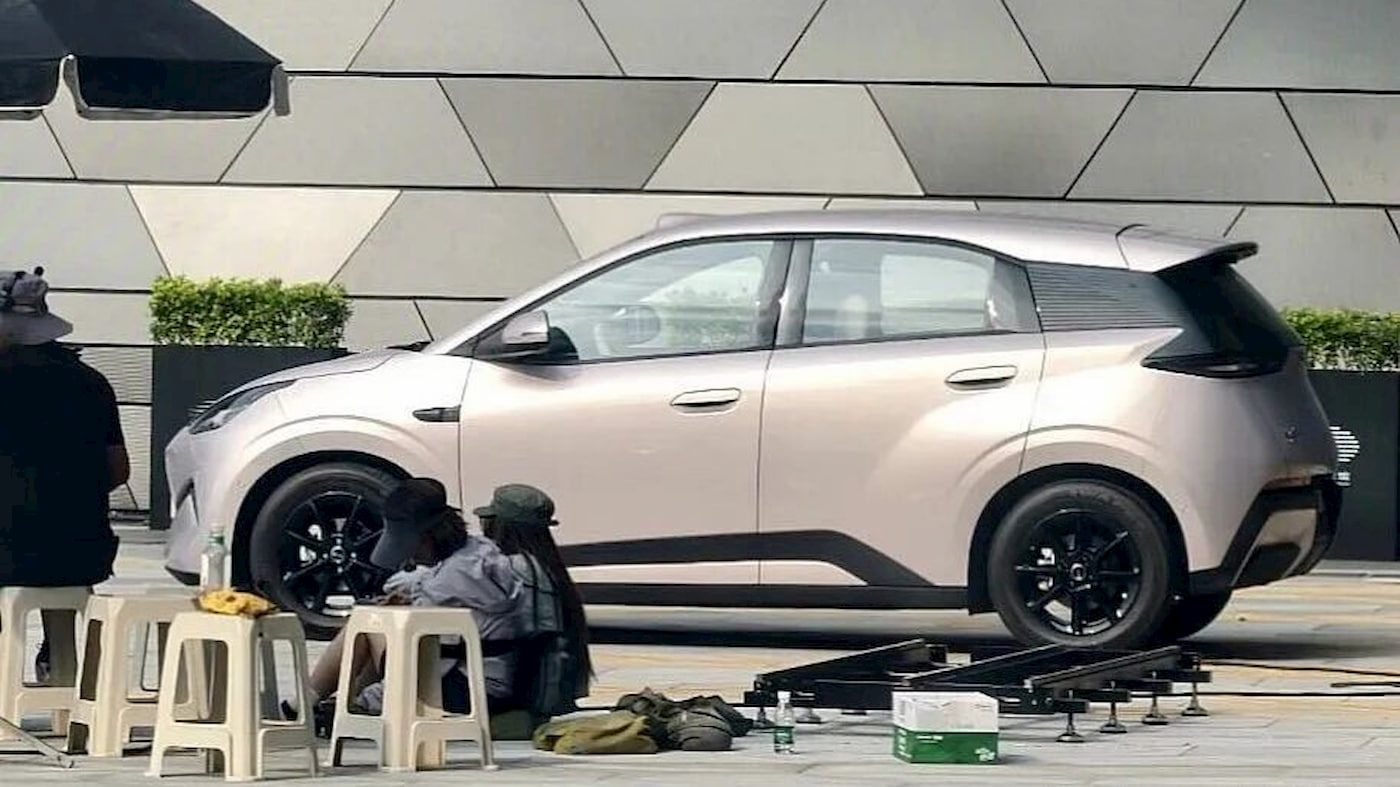
BYD’s commitment to enhancing the Seagull was previewed earlier this year when Zhang Zhuo, general manager of BYD’s Ocean series, released the first official images of the second-generation model. The company aptly described the evolution as "Growing Up," indicating a transition towards a more mature and feature-rich vehicle. This philosophy is evident in the significant upgrades incorporated into the new Seagull.
The exterior dimensions have been notably increased, addressing a common consumer desire for more interior space and a more substantial road presence. Regulatory filings with China’s Ministry of Industry and Information Technology (MIIT) have provided concrete figures: the new Seagull measures 4,205 mm in length, 1,810 mm in width, and 1,570 mm in height, boasting a wheelbase of 2,650 mm. This represents a substantial increase of 425 mm in length and 150 mm in wheelbase compared to the outgoing model, which measures 3,780 mm in length. This expansion is expected to translate into a more comfortable experience for occupants, particularly for rear-seat passengers who will benefit from increased legroom.
The interior has also undergone a significant transformation, moving beyond basic functionality to incorporate elements of modern luxury. Premium features such as ambient lighting, a feature often found in higher-segment vehicles, are now integrated into the cabin design. Further enhancing passenger comfort, the front seats are now equipped with a massaging function, offering a touch of pampering during journeys. The overall cockpit design has been refined to be more immersive and user-friendly.
Technological Advancements and Interior Refinements
In line with contemporary automotive trends, the new Seagull features a larger, more prominent infotainment display. This central screen will serve as the primary interface for vehicle information and entertainment, including the instrument cluster display, which will be integrated into the central unit, eschewing a traditional behind-the-wheel instrument panel. This minimalist approach to interior design is becoming increasingly common in new EV releases.
Complementing the large central screen are physical buttons strategically placed below the infotainment system and on the steering wheel. This inclusion of physical controls is a welcome addition for many drivers who prefer tactile feedback for essential functions, offering a balance between modern digital interfaces and traditional usability. The steering wheel itself has been redesigned into a two-spoke configuration, contributing to the refreshed aesthetic. Furthermore, the center console has been reconfigured to offer enhanced storage solutions, addressing practical everyday needs.
Under the hood, or rather, beneath the chassis, the new Seagull receives a significant powertrain upgrade. The electric motor output has been boosted to 95 kW (approximately 127 horsepower), a substantial increase from the current model’s 55 kW (75 horsepower). This enhanced power output promises more spirited acceleration and improved overall performance. Notably, the motor configuration has also been revised. Unlike the current front-mounted motor, the second-generation Seagull will adopt a rear-mounted electric motor. This change in drivetrain layout can influence handling characteristics and potentially optimize weight distribution.
Advanced Driver-Assistance Systems and Future Technologies
The integration of advanced driver-assistance systems (ADAS) is another key area of enhancement for the new Seagull. The inclusion of a roof-mounted LiDAR sensor signals BYD’s intent to equip the vehicle with a more sophisticated ADAS suite. This technology is crucial for enabling advanced features such as adaptive cruise control, lane-keeping assist, and potentially autonomous driving capabilities in the future. It is anticipated that the new Seagull will feature BYD’s "God’s Eye B" intelligent driving system, leveraging this advanced sensor technology to improve safety and convenience.
While official specifications for battery technology and charging capabilities are yet to be fully disclosed, industry speculation points towards the integration of BYD’s latest advancements. It is highly probable that more premium trims of the Great Seagull will offer BYD’s advanced Blade Batteries 2.0, known for their safety and energy density, alongside their rapid Flash Charging technology. These innovations would further enhance the vehicle’s appeal by offering longer range and significantly reduced charging times, addressing key consumer concerns in the EV market.
Global Rollout and Market Implications
Following its official launch in China by the end of 2026, BYD is expected to introduce a larger version of the Great Seagull to international markets. This global expansion will likely see it offered as an enhanced variant of the Dolphin Surf and Dolphin Mini, adapting to regional naming conventions and consumer preferences.
The introduction of the Great Seagull is poised to have significant implications for the global automotive market, particularly in the affordable EV segment. BYD’s consistent ability to deliver compelling vehicles at highly competitive price points has already disrupted established players. The enhanced Great Seagull, with its improved dimensions, advanced technology, and premium interior features, will further challenge rivals to innovate and potentially lower their own entry-level EV pricing.

The company’s strategy of progressively upgrading its successful models while maintaining affordability demonstrates a keen understanding of market dynamics. The success of the initial Seagull has provided BYD with invaluable data and customer feedback, which are now being directly applied to the development of the Great Seagull. This iterative approach to product development, combined with BYD’s robust manufacturing capabilities and vertically integrated supply chain, positions the company for continued growth and influence in the rapidly expanding electric vehicle sector.
The opening of blind pre-orders on Friday, as announced by Zhang Zhuo on Weibo, signifies a strong market confidence and consumer interest in the forthcoming model. While the exact pricing and detailed specifications will be revealed closer to the official launch, the trajectory of BYD’s development and the initial glimpses of the Great Seagull suggest a vehicle that will continue to redefine expectations for affordable electric mobility worldwide. The automotive industry will be closely watching as BYD continues its aggressive expansion and product innovation, particularly in the crucial entry-level segment.