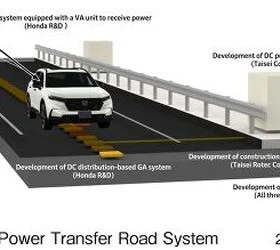
Honda is embarking on an ambitious endeavor to fundamentally alter the electric vehicle (EV) charging landscape by developing a system that can replenish EV batteries while the vehicles are in motion at highway speeds. This groundbreaking technology, utilizing induction coils embedded in roadways, is slated for on-road demonstration testing on a purpose-built road in Japan’s Saitama Prefecture, with initial trials commencing on April 1, 2027. The initiative represents a significant leap forward in addressing range anxiety and the logistical challenges associated with widespread EV adoption.
The Long Road to Wireless Charging: A Historical Perspective
The concept of wireless power transfer for electric vehicles is not a novel one. While Honda’s current push is generating considerable excitement, the path to realizing this vision has been paved with both innovation and setbacks. A notable precursor to Honda’s project was Qualcomm’s "Halo" initiative. In 2017, Qualcomm showcased prototype EVs being charged wirelessly as they traversed a specially constructed road laced with induction technology in France. This demonstration, while technologically impressive, highlighted the substantial infrastructure investment required. Despite the initial promise, Qualcomm ultimately discontinued its efforts in this area, divesting the project two years later. Even Formula E, a prominent all-electric racing series that Qualcomm once considered for in-motion charging integration, continues to rely on conventional stationary charging methods.
Honda’s renewed commitment to this technology signifies a determined effort to overcome the hurdles that have previously impeded its progress. Recognizing the complexity and scale of the undertaking, Honda has strategically partnered with Taisei Corporation and Taisei Rotec Corporation. This collaboration brings together specialized expertise in infrastructure development and advanced power systems, forming a formidable consortium for the "magnetic coupling wireless power transfer road system."
Technological Underpinnings and Partnership Strengths
The division of labor within this tripartite partnership underscores a well-defined approach to technological development. Honda is responsible for the design and implementation of the receiver and transmitter units. These components are engineered for high power density, a critical factor for efficient energy transfer, and are designed to be compatible with DC power distribution systems, which are becoming increasingly prevalent in EV charging infrastructure.
Taisei Corporation contributes its expertise in high-response DC power systems, ensuring that the energy delivered to the moving vehicles is stable and readily usable. Taisei Rotec Corporation, on the other hand, focuses on the critical task of integrating the necessary hardware – the induction coils and associated components – seamlessly into the road surface. This requires robust engineering to withstand the rigors of constant traffic, including heavy-duty vehicles.
According to Honda, the consortium has already achieved significant milestones, having "verified the effectiveness of their technologies." The current power output achieved in their tests reaches an impressive 150 kW, a figure that, if consistently delivered in a real-world scenario, could significantly impact charging times and the feasibility of in-motion charging. This level of power output is comparable to many high-speed DC fast chargers currently available.
Navigating the Practicalities: Enthusiasm Meets Economic Realities
Despite the promising technological advancements and the substantial power output demonstrated, Honda remains cautiously optimistic, acknowledging the significant practical and economic questions that remain unanswered. The automaker has not yet disclosed crucial details regarding the practical benefits for EV drivers. Specifically, the amount of range a moving EV could realistically gain from a given stretch of wirelessly charged road remains an open question. The efficiency of energy transfer and the cumulative effect of traveling over miles of such infrastructure are key variables that will determine the real-world utility of this system.
Furthermore, the substantial cost associated with embedding induction coils into extensive stretches of roadway is a significant factor that has historically posed a barrier to widespread adoption. Honda has not provided any projections or indications regarding the economic viability and potential cost of implementing this technology on a large scale. This remains a critical area that will require extensive research and development, as well as significant investment from both public and private sectors.
Research and Development Milestones and Long-Term Vision
The research underpinning Honda’s in-motion wireless charging system dates back to 2021. This initiative aligns directly with Honda’s overarching corporate objective of achieving carbon neutrality by 2050. The company views this technology as a pivotal element in decarbonizing the logistics and transportation sectors, which are major contributors to global carbon emissions.
Before the technology can be rolled out to the public, several significant engineering challenges must be definitively addressed. A primary concern is the containment of stray magnetic fields, which could potentially interfere with other electronic systems or pose environmental concerns. Honda is actively working to mitigate these emissions, ensuring the system’s safety and compatibility with its surroundings.
Equally important is the durability of the buried hardware. The induction coils and associated infrastructure must be engineered to withstand the immense pressure exerted by 20-ton trucks and the general wear and tear of constant vehicular traffic. This necessitates robust protective casings and resilient materials that can endure harsh environmental conditions and prolonged use.
Honda has clearly articulated that its vision for in-motion charging is not intended to completely replace existing charging methods. Instead, the company frames it as a supplementary solution designed to reduce the frequency of stops for charging at home or at public charging stations. This approach acknowledges the current limitations of the technology and focuses on enhancing the convenience and practicality of EV ownership.
Future Showcases and Industry Impact
Honda plans to provide the public and industry professionals with an early glimpse of its advancements in wireless power transfer technology. The company will be showcasing its innovations at two prominent upcoming events:
- Japan Mobility Show Bizweek: Scheduled to take place from October 13-16 in Chiba, Japan, this event will offer an opportunity for Honda to present its vision for the future of mobility.
- ITS World Congress 2026: This global forum for intelligent transport systems will be held from October 19-23 in South Korea. It will serve as a platform for Honda to engage with international experts and policymakers on the potential of in-motion charging.
The successful development and implementation of Honda’s in-motion wireless charging system could have profound implications for the future of electric mobility. It holds the potential to significantly alleviate range anxiety, a persistent barrier to EV adoption for many consumers. By enabling vehicles to charge continuously during travel, it could effectively extend the operational range of EVs and reduce the need for lengthy charging stops, particularly for long-distance journeys.
Broader Implications for Infrastructure and Grid Management
The widespread adoption of in-motion charging would necessitate a paradigm shift in infrastructure planning and investment. The integration of charging capabilities into existing roadways would require substantial upgrades and new construction, presenting a significant logistical and financial undertaking for governments and private entities. However, the long-term benefits, including reduced emissions and increased energy efficiency, could justify these investments.
Furthermore, the dynamic nature of in-motion charging could introduce new complexities for grid management. The ability to draw power continuously from the grid while vehicles are in motion would require sophisticated energy management systems to ensure grid stability and prevent overloads. This could spur innovation in smart grid technologies and demand-response mechanisms.
The initiative also underscores the growing importance of public-private partnerships in driving technological advancements in the automotive sector. Honda’s collaboration with Taisei Corporation and Taisei Rotec Corporation exemplifies how pooling expertise and resources can accelerate the development and deployment of complex solutions. As the automotive industry continues its transition towards electrification, such collaborations will likely become increasingly crucial for overcoming technical and economic challenges.
While the road ahead for Honda’s in-motion wireless charging technology is undoubtedly long and filled with challenges, the company’s commitment and the recent advancements signal a significant step toward a future where electric vehicles can be charged seamlessly and continuously, fundamentally reshaping the way we think about and utilize electric transportation. The successful realization of this vision could indeed revolutionize the EV landscape, making electric mobility more accessible, convenient, and sustainable for all.