The Defense Advanced Research Projects Agency (DARPA) is gearing up for a significant escalation in its pursuit of advanced drone capabilities, announcing plans for a second DARPA Lift Challenge (DLC-2) in 2028. This follows a successful inaugural event that pushed the boundaries of what was thought possible in drone payload-to-weight ratios. While the first challenge, DLC-1, aimed to prove the feasibility of drones lifting four times their own weight, the upcoming DLC-2 will mandate this ratio as a minimum threshold, coupled with a significantly expanded operational range. This strategic move underscores DARPA’s commitment to fostering radical innovation in unmanned aerial systems (UAS), with profound implications for military logistics, disaster relief, and a wide array of civilian applications.
The Genesis of the DARPA Lift Challenge: Redefining Drone Capabilities
The DARPA Lift Challenge was conceived to address a critical limitation in current drone technology: the payload-to-weight ratio. Historically, most drones have operated with a payload capacity roughly equivalent to their own weight, a ratio of 1:1. This inherent limitation restricts their utility in many demanding scenarios where heavier equipment or supplies need to be transported. DARPA’s initiative sought to incentivize the development of novel designs and propulsion systems that could dramatically overcome this hurdle.
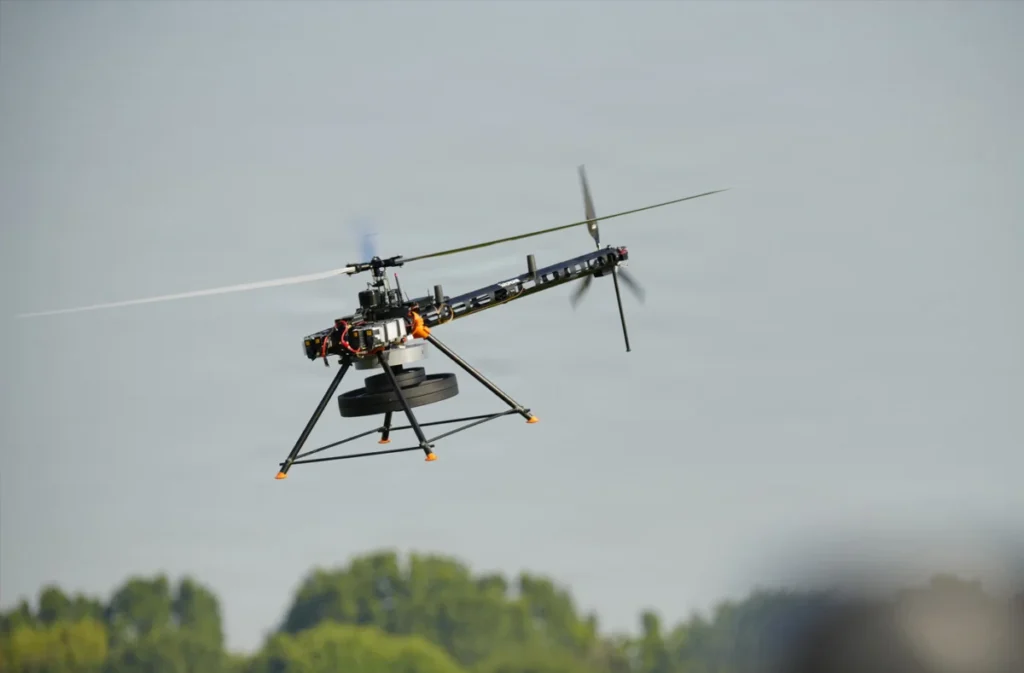
DLC-1, held in August of this year, challenged competitors to design and build drones capable of achieving a 4:1 payload-to-weight ratio. The culmination of this effort was a live-flight competition in Dayton, Ohio, where dozens of teams showcased their innovative creations. The objective was to navigate a challenging 5-nautical-mile course while carrying standardized weightlifting plates, simulating real-world payload transport.
DLC-1: Proving the 4:1 Ratio and Unveiling Emerging Technologies
While no team managed to complete the entire 5-nautical-mile course with the ambitious 4:1 lift ratio, the results of DLC-1 were deemed a significant success by DARPA program managers. Lieutenant Colonel Phillip Smith, the DARPA Lift Challenge program manager, expressed satisfaction with the outcomes, stating, "We consider that we proved that 4:1 is possible, even though no one actually completed the 5 miles at that ratio." This assertion highlights the agency’s belief that the theoretical ceiling for drone lift capacity has been demonstrably raised.
The top honors in DLC-1 were awarded to AVIDrone Inc., which achieved an impressive 3.84:1 lift ratio and secured the $1.25 million prize. This achievement, while falling slightly short of the 4:1 target, represented a substantial leap forward in practical drone lift capabilities.
Another team, DefendTex, garnered attention and won the "Most Promising Technology" category for its innovative "string-based" drone. This unique design achieved an astonishing 9.63:1 lift ratio, the highest recorded during the event. Although it did not complete the course, its exceptional lift performance underscored the potential for unconventional approaches to drone design. This particular technology, which utilizes a tethered system of multiple rotorcraft working in concert, hinted at future possibilities for exceptionally heavy-lift applications.
Escalating Ambitions: DLC-2 Sets a New Bar
The success and insights gleaned from DLC-1 have directly informed the planning for DLC-2. DARPA is significantly increasing the challenge’s difficulty, setting the 4:1 lift ratio not as a target, but as the absolute minimum requirement for qualification. Furthermore, the operational distance has been doubled. Drones competing in DLC-2 will be tasked with completing a more demanding 10-nautical-mile course while carrying at least four times their own weight.
DARPA plans to release high-level information regarding the DLC-2 course and operational parameters in the coming weeks. However, final details will be contingent upon the selection of a suitable venue, a process that is currently underway. The application window for teams is expected to open in early 2027, with the fly-off competition slated for 2028. This extended timeline, nearly double that of DLC-1’s nine-month preparation period, is intended to provide competitors with ample opportunity to refine their designs, integrate breakthrough technologies, and conduct rigorous testing.
Lessons Learned from DLC-1: The Importance of Design and Time
Lieutenant Colonel Smith shared valuable insights derived from analyzing the technologies and performance of the DLC-1 participants. He observed that the drones that came closest to achieving the target ratio often employed "basic designs." These included familiar configurations such as helicopters and multi-rotor (quadcopter or octocopter) designs, which have been in use for a considerable time.
While there was no shortage of creative and unconventional drone concepts, Smith noted that many of these innovative designs struggled to complete the course due to the limited design and development timeline. "We didn’t see a lot of innovation complete that course because of that short design timeline," he stated.
Competitors in DLC-1 typically had around nine months to prepare for the challenge. This compressed timeframe meant that many teams were pushing the boundaries of what was technologically feasible, attempting to develop "breakthrough engine, powertrain or aerodynamic function or feature" in the final stages of development. Unfortunately, these ambitious endeavors often fell short of completion due to the inherent complexities and the short development cycle.
Unlocking the Future of Heavy-Lift Drones: Broader Implications
The DARPA Lift Challenge is not merely an academic exercise; it represents a strategic investment in technologies with transformative potential. The insights gained from DLC-1 suggest that the maximum payload-to-weight ratio for heavy-lift drones could be significantly higher than previously estimated by experts. "We don’t know what that [limit] is," Smith remarked, emphasizing the vast, unexplored potential of this field.
DARPA’s objective with DLC-2 is to encourage and accelerate the development of these untapped potentials. "We’re excited for more innovative designs to get out there," Smith added, expressing anticipation for novel approaches that could redefine the landscape of drone capabilities.
Smith highlighted specific areas of technology that emerged from DLC-1 and that he hopes will see further development for DLC-2. These include:
- Propeller-Driven Rotors with Integrated Propulsion: This concept involves modifying main drone rotor blades to incorporate smaller propellers at their tips. This hybrid approach could potentially enhance both lift and forward thrust efficiency.
- Engines with Integrated Gearboxes: Streamlining engine design by integrating the gearbox aims to reduce component count, thereby increasing overall efficiency and potentially reducing weight.
- Multi-Unit Drone Systems: As demonstrated by DefendTex, tethering multiple drones together to collectively lift a payload offers a scalable solution for extremely heavy loads. Coordinated flight patterns, such as synchronized circular motions, could enable unprecedented lifting capacities.
Smith articulated a vision where these diverse technological advancements and conceptual approaches converge. "If all of these different groups and ideas and subcomponents can get together and form the next generation [of drones], I think that’s going to be even better and more impactful to the aviation world than DLC-1 was," he explained.
A New Era of Unmanned Aerial Systems
The implications of achieving higher payload-to-weight ratios in drones are far-reaching. In a military context, these advanced drones could revolutionize logistics, enabling rapid and efficient delivery of supplies, equipment, and even personnel to remote or contested areas. They could also enhance reconnaissance and surveillance capabilities by carrying more sophisticated sensor packages.
Beyond military applications, the impact on humanitarian aid and disaster relief is immense. Drones capable of carrying substantial payloads could deliver critical supplies like food, water, medicine, and shelter materials to disaster-stricken regions inaccessible by conventional means. They could also assist in search and rescue operations by deploying specialized equipment or carrying personnel to otherwise unreachable locations.
In the civilian sector, these advancements could spur new industries and services. Imagine drones delivering heavy construction materials to remote building sites, transporting large agricultural equipment for specialized tasks, or even facilitating new forms of high-capacity aerial cargo transport.
Lieutenant Colonel Smith expressed optimism about the future trajectory of drone technology, stating, "In two years, I’m hoping that 4:1 [lift ratio] is not looked at as a one-off novelty. Maybe the novelty is 20x or 10x." This statement encapsulates DARPA’s long-term vision: to move beyond incremental improvements and foster truly disruptive innovations that redefine the capabilities and applications of unmanned aerial systems.
The journey towards achieving these ambitious goals is complex, requiring significant breakthroughs in materials science, battery technology, propulsion systems, and autonomous control algorithms. However, the DARPA Lift Challenge serves as a powerful catalyst, bringing together leading researchers, engineers, and entrepreneurs to tackle these challenges head-on. The success of DLC-2 promises to usher in a new era of aerial mobility, where the sky is no longer the limit for what unmanned systems can achieve.