The Federal Aviation Administration’s (FAA) Electric Vertical Takeoff and Landing (eVTOL) Integration Pilot Program (eIPP) is progressing at a pace that meets or even surpasses initial expectations, signaling a significant step forward in the integration of advanced air mobility (AAM) technologies into the national airspace. Upcoming flight demonstrations are slated to take place in Florida, New Mexico, and the New York-New Jersey metropolitan area, according to Tina Buelo, the program director. This expansion underscores the program’s commitment to gathering crucial data and fostering a repeatable operational framework for these novel aircraft.
"Flights have been conducted in a handful of states, and some companies have flown several times," Buelo stated in a recent interview. "Now we want to move from having just one flight or series of flights to establishing some kind of regular schedule, or repeatable operations, to gather the data on that." This transition from initial testing to more routine operations is critical for validating the safety, efficiency, and reliability of eVTOL aircraft and their integration into existing aviation infrastructure.
Genesis and Objectives of the eIPP
The FAA established the eIPP last year with the explicit goal of "demystifying" advanced air mobility. By facilitating real-world flight demonstrations across the United States, the program aims to provide invaluable data and insights to both regulators and industry stakeholders. This initiative is designed to address the complex regulatory, technical, and operational challenges associated with introducing a new class of aircraft into the skies. The first flight under the eIPP occurred approximately three months prior to the program’s inception, marking the initial foray into practical demonstration flights. To date, demonstrations have been successfully conducted in a diverse range of states including Louisiana, Maryland, New Jersey, North Carolina, Pennsylvania, Texas, Utah, and Virginia, showcasing the program’s broad reach and commitment to testing in various geographical and operational environments.
Early Successes and Operational Diversity
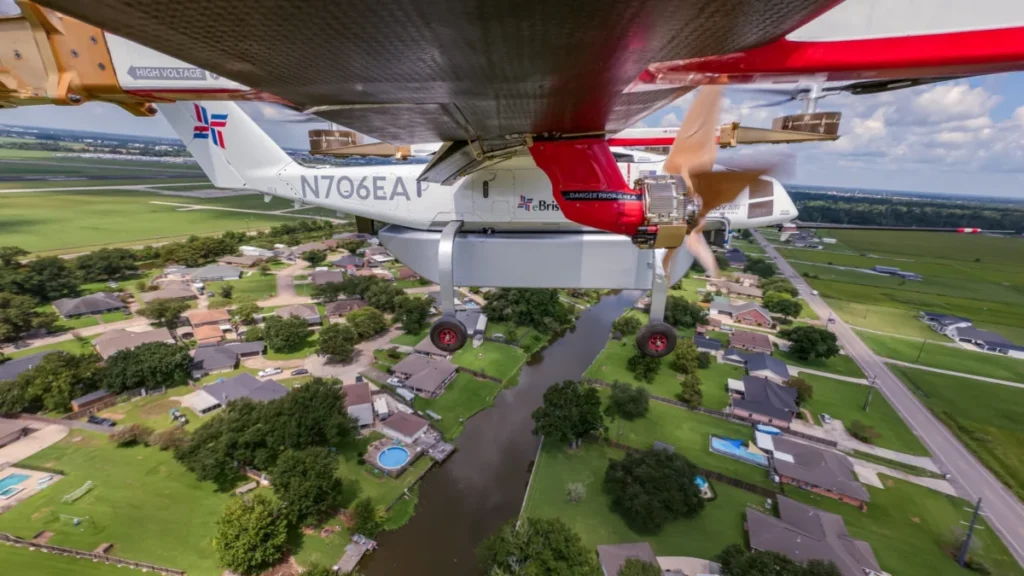
Thus far, the majority of eIPP flights have featured onboard pilots and have been utilized for the transport of cargo or vital medical supplies. This approach allows for a direct assessment of human-machine interaction and the operational capabilities of eVTOL aircraft in scenarios that demand precision and reliability. However, a notable exception to this trend has been the autonomous cargo flights conducted by California-based company Elroy Air. Utilizing their Chaparral drone, Elroy Air successfully completed autonomous and uncrewed flights under the eIPP in Louisiana, demonstrating the potential for unmanned cargo delivery operations. This dual approach—piloted and autonomous—provides a comprehensive understanding of the spectrum of AAM applications.
Public Perception and Economic Implications
Program Director Tina Buelo highlighted a particularly impactful public reaction to a flight conducted in September by BETA Technologies. In this demonstration, one of BETA’s electric aircraft landed at the Dare County Regional Airport in North Carolina, carrying much-needed medical supplies. "People were gathered to watch the flight, and they were really excited about not just the delivery of medical supplies and that benefit, but also the jobs that this could bring to their town," Buelo remarked. This observation underscores a crucial aspect of AAM development: its potential to not only revolutionize transportation but also to stimulate local economies through job creation and the establishment of new industries. The public’s enthusiasm suggests a positive reception to the tangible benefits of advanced air mobility, moving beyond theoretical discussions to real-world applications.
Future Trajectories: Towards Routine Service
The eIPP is designed as a multi-year program, slated to continue for at least three years. While current demonstrations focus on cargo and medical supply transport, the program director indicated that routine cargo or passenger service for paying customers remains a distinct possibility later in its lifecycle. This forward-looking perspective suggests that the eIPP is not merely a research initiative but a strategic pathway towards the commercialization of AAM. The data and operational experience gained during these pilot phases will be instrumental in shaping the regulatory framework and operational standards necessary for widespread public adoption.
Industry Perspectives: Navigating Real-World Challenges
Companies participating in the eIPP are actively leveraging the program to address and overcome real-world operational challenges. Kristen Costello, BETA Technologies’ head of government and regulatory affairs, emphasized the invaluable learning opportunities presented by these flights. "It’s one thing to say we can make these things happen in a perfect environment, but that’s not aviation," Costello stated. "Now we apply some real-world parameters and show over a course of time what this will look like to our operators." This candid assessment highlights the practical realities of aviation, where unpredictable weather, varied terrain, and existing infrastructure constraints must be factored into aircraft design and operational planning.
Specifically, BETA Technologies is gaining crucial insights into the optimal placement of charging stations and cargo offloading docks, elements that are critical for the efficient and seamless operation of eVTOL fleets. Understanding these logistical requirements is paramount for developing a robust and scalable AAM ecosystem. Costello further elaborated on the value proposition for customers: "These flights have tremendous value to customers because they’re getting to actually see how this technology is going to integrate into their fleet." This direct engagement allows potential operators to visualize the practical implementation of eVTOLs within their existing logistics and transportation networks, fostering confidence and accelerating adoption.
Supporting Data and Technological Advancements
The eIPP is designed to generate a wealth of data that will inform future regulatory decisions and technological advancements. This data encompasses a wide range of parameters, including:
- Flight Performance Metrics: Altitude, speed, endurance, energy consumption, and payload capacity under various environmental conditions.
- Operational Efficiency: Turnaround times, charging/refueling durations, and logistical integration challenges.
- Safety and Reliability Data: System performance, failure modes, and emergency procedures.
- Environmental Impact: Noise levels, emissions (though eVTOLs are largely electric, their energy sources are relevant), and visual impact.
- Infrastructure Requirements: Landing pad dimensions, charging infrastructure needs, and air traffic management integration.
- Human Factors: Pilot workload, passenger experience, and public perception.
While specific performance figures from individual flights are often proprietary, the aggregate data collected by the FAA is expected to contribute to the development of standardized operational procedures and certification pathways. Industry analysts predict that the global AAM market could reach hundreds of billions of dollars in the coming decades, with cargo delivery being a significant early driver of adoption due to its clear economic benefits and less complex regulatory hurdles compared to passenger transport.
Expanding Horizons: Future Flight Locations
The planned flights in Florida, New Mexico, and the New York-New Jersey area represent a strategic expansion of the eIPP’s operational scope. Florida, with its favorable climate and significant logistics hubs, offers opportunities for testing in a busy, commercially oriented environment. New Mexico provides a different geographical context, potentially involving longer-range flights or operations in more remote areas. The New York-New Jersey region, a densely populated urban corridor, presents the most complex challenges, requiring sophisticated air traffic management and close integration with existing transportation networks. Successfully demonstrating operations in these diverse settings will be crucial for validating the scalability and adaptability of eVTOL technology.
Broader Implications for Aviation and Society
The FAA’s eIPP is more than just a flight testing program; it is a catalyst for a paradigm shift in aviation. The successful integration of eVTOLs promises to:
- Alleviate Ground Congestion: By offering an alternative to road-based transportation for goods and potentially people, eVTOLs can help reduce traffic jams and shorten delivery times.
- Enhance Emergency Response: Rapid deployment of medical supplies, personnel, and even organs for transplant can be facilitated by the speed and direct access offered by eVTOLs.
- Create New Economic Opportunities: The development, manufacturing, operation, and maintenance of eVTOL aircraft and associated infrastructure will generate new jobs and industries.
- Promote Sustainability: As electric-powered aircraft, eVTOLs offer a cleaner alternative to traditional fossil-fuel-dependent transportation, contributing to environmental goals.
- Improve Accessibility: eVTOLs could provide vital transportation links to underserved or remote communities, enhancing connectivity and economic development.
The eIPP’s methodical approach, focusing on real-world demonstrations and data collection, is crucial for building public trust and ensuring that advanced air mobility develops in a safe, efficient, and responsible manner. The program’s current pace and planned expansions suggest a strong momentum towards realizing the transformative potential of eVTOL technology in the years to come. The insights gained from these ongoing flights will be instrumental in shaping the future of air travel and cargo logistics, ushering in a new era of aerial mobility.