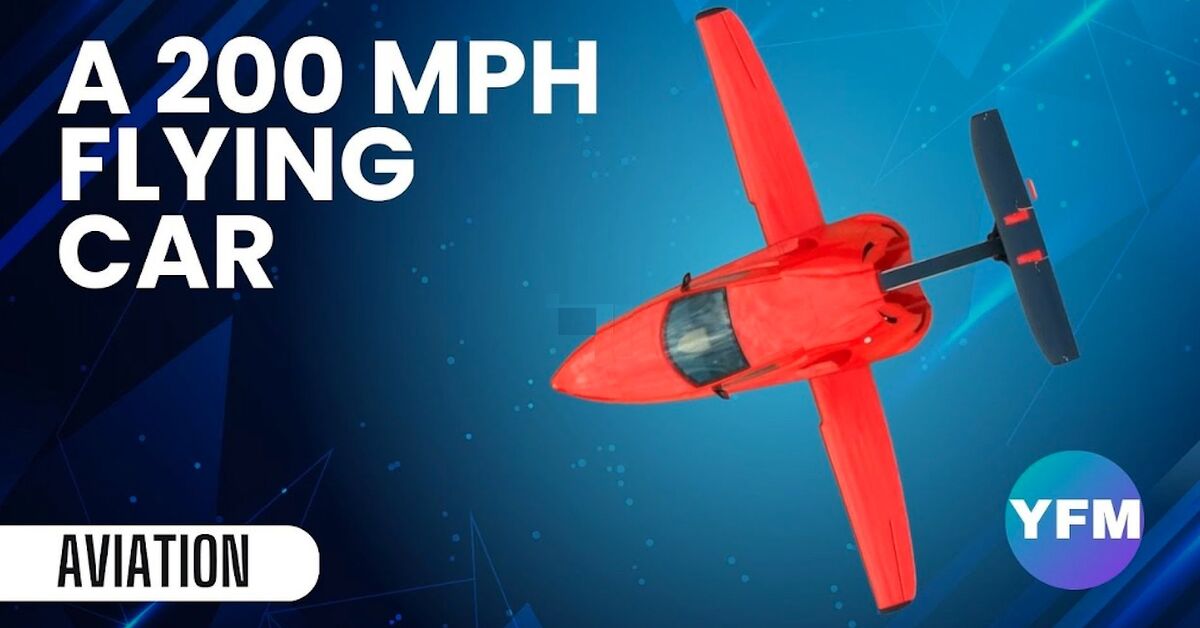
The concept of a flying car, once confined to the realms of science fiction, is steadily inching closer to reality with innovations like the Samson Switchblade. This remarkable three-wheeled vehicle is designed to be street-legal, capable of transforming into an aircraft in under three minutes. Aimed at aviation enthusiasts and early adopters of cutting-edge technology, the Switchblade promises to bridge the gap between personal transportation and private aviation, offering a unique solution for regional commuting, pilot recreation, and overcoming traffic congestion.
A Hybrid Vision for Personal Mobility
At its core, the Samson Switchblade represents a bold fusion of automotive and aeronautical engineering. Its design prioritizes versatility, allowing users to seamlessly transition from driving on public roads to soaring through the skies. This dual capability is powered by a sophisticated hybrid drive system, which incorporates advanced features such as regenerative braking for efficient energy capture during ground travel and even reverse thrust capabilities when in flight mode. These technological advancements aim to optimize performance, fuel efficiency, and overall user experience for both driving and flying scenarios.
The target demographic for the Switchblade includes personal aviation enthusiasts who seek the freedom of flight without the constraints of traditional airport infrastructure. It also appeals to those looking for efficient regional commuting solutions, potentially cutting down travel times significantly compared to conventional road travel. Furthermore, pilot recreation is a key market, offering a novel way for licensed pilots to enjoy their passion. Finally, the vehicle is positioned for tech-minded early adopters who are eager to embrace and invest in the next generation of transportation.
From Road to Runway: The Transformation Process
The defining characteristic of the Samson Switchblade is its ability to transform from a road-worthy vehicle into an aircraft. This metamorphosis is designed to be swift and efficient, reportedly taking less than three minutes. While specific details of the transformation mechanism are proprietary, it is understood to involve deploying wings and a tail assembly that are neatly integrated into the vehicle’s chassis when in driving mode. This compact design is crucial for its street-legal status and ease of storage.
Once transformed, the Switchblade is capable of reaching speeds of up to 200 miles per hour in its aerial configuration. This performance metric places it in the category of fast personal aircraft, offering a significant speed advantage over ground transportation for medium-distance journeys. The aircraft’s propulsion system is designed to provide adequate power for takeoff, sustained flight, and landing, while the hybrid drive system likely contributes to its operational efficiency in both modes.
Engineering and Performance Specifications
The Samson Switchblade is engineered with a focus on delivering a compelling performance envelope. While precise specifications may vary with final production models, the company has highlighted key attributes:
- Top Speed: 200 mph (in flight mode)
- Transformation Time: Under 3 minutes
- Drive System: Hybrid drive system
- Ground Braking: Regenerative braking
- Flight Systems: Reverse thrust in flight mode
- Configuration: Three-wheeled vehicle
These specifications underscore the vehicle’s ambition to offer a practical and exhilarating experience. The regenerative braking system is a nod to modern automotive efficiency, while the reverse thrust capability in flight is an advanced feature typically found in more sophisticated aircraft, suggesting a well-developed flight control system. The three-wheeled configuration is a common choice for some light aircraft and specialized road vehicles, often contributing to lighter weight and improved aerodynamics.
A Visionary Company: Samson Motorworks
The development of the Switchblade is spearheaded by Samson Motorworks, a company dedicated to pushing the boundaries of personal transportation. Founded with the vision of creating accessible and innovative vehicles, Samson Motorworks has been working on the Switchblade concept for a considerable period. The company’s commitment to realizing the dream of the flying car is evident in its persistent development efforts and its approach to making such technology available to a wider audience.
Samson Motorworks has positioned the Switchblade not just as a product, but as an opportunity for individuals to become part of a new era of mobility. The company has indicated that the Switchblade is designed to be built by enthusiasts, suggesting a kit or component-based approach that could potentially reduce manufacturing costs and regulatory hurdles. This DIY aspect is a significant differentiator and aligns with a growing trend in the aerospace industry where experimental aircraft and kit planes are popular.
Regulatory Landscape and Future Outlook
The path for any flying car to reach mass production and widespread use is paved with significant regulatory challenges. Aviation authorities, such as the Federal Aviation Administration (FAA) in the United States, have stringent requirements for aircraft certification, encompassing safety, airworthiness, and operational standards. Similarly, automotive regulations govern the safety and roadworthiness of vehicles.
For the Samson Switchblade to be successful, it must satisfy the certification processes of both aviation and automotive regulatory bodies. This typically involves rigorous testing, design validation, and adherence to a complex set of rules. The fact that Samson Motorworks is pursuing a path that includes a "street-legal" designation suggests they are actively engaging with these regulatory frameworks.
The implications of a successful flying car like the Switchblade are far-reaching. It could revolutionize personal travel, offering an alternative to congested highways and long commutes. The ability to bypass ground traffic could lead to increased productivity and leisure time. Furthermore, it could open up new possibilities for rural connectivity and emergency services, allowing for rapid deployment in areas with limited road infrastructure.
However, the widespread adoption of flying cars also raises questions about air traffic management, noise pollution, pilot training requirements, and the infrastructure needed to support such vehicles (e.g., vertical takeoff and landing pads). These are complex issues that will require careful planning and collaboration between manufacturers, regulators, and urban planners.
The Broader Context: A Resurgent Interest in Flying Cars
The Samson Switchblade is not an isolated endeavor; it is part of a broader resurgence of interest and investment in the concept of flying cars. Several companies globally are working on similar projects, ranging from electric vertical takeoff and landing (eVTOL) aircraft designed for urban air mobility to more traditional roadable aircraft. This renewed focus is driven by advancements in battery technology, lightweight materials, sophisticated avionics, and a growing demand for faster, more efficient transportation solutions.
The current landscape of flying car development includes various approaches:
- eVTOL Aircraft: These are typically electric-powered, designed for short-hop flights within urban environments, and often envisioned as air taxis.
- Roadable Aircraft: These are vehicles that can both drive on roads and fly, much like the Samson Switchblade, emphasizing versatility for longer-distance travel and personal ownership.
The success of any of these ventures will depend not only on technological innovation but also on their ability to navigate the complex economic, regulatory, and societal factors that influence the adoption of new transportation paradigms.
A Glimpse into the Future of Mobility
The Samson Switchblade stands as a compelling testament to human ingenuity and the enduring aspiration to conquer the skies. By blending the practicality of a car with the freedom of an airplane, it offers a tantalizing glimpse into a future where personal mobility is no longer confined to the horizontal plane. While challenges remain, the progress demonstrated by Samson Motorworks and others in this field suggests that the flying car, once a distant dream, is steadily taking flight. The question for many will not be if flying cars will become a reality, but when and how seamlessly they will integrate into our lives. The Switchblade, with its ambitious design and performance targets, is certainly a strong contender to be a pioneer in this transformative journey.
The development of the Switchblade has likely involved significant investment in research and development, spanning aerodynamics, structural engineering, propulsion systems, and avionics. The company’s approach to making it a buildable kit for enthusiasts could also be seen as a strategic move to decentralize manufacturing and foster a community of early adopters who can provide valuable feedback. This democratized approach to aerospace innovation is relatively uncommon but holds the potential to accelerate development cycles and reduce the overall cost of entry for consumers.
The timeline for the Switchblade’s journey from concept to widespread availability is likely to be measured in years, if not decades, considering the rigorous certification processes involved. However, each milestone, from successful test flights to regulatory approvals, will mark significant progress towards realizing this ambitious vision. The potential impact on regional travel, personal freedom, and the very definition of a commute could be profound, reshaping our understanding of what’s possible in personal transportation.