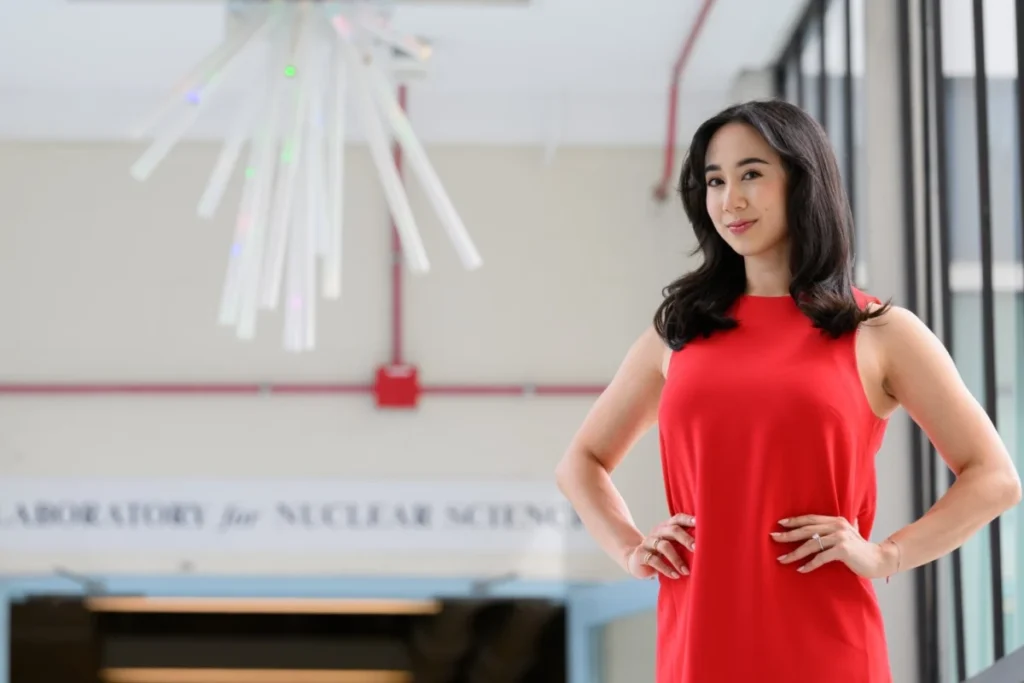
Physicists across the globe are currently engaged in a high-stakes quest for a particle that constitutes nearly 85 percent of all matter in the universe, yet remains elusive to direct detection. Jessica Fry, a fifth-year physics PhD candidate in the Laboratory for Nuclear Science (LNS) at the Massachusetts Institute of Technology (MIT), stands at the forefront of this international pursuit. Her journey to the heights of particle physics is as unconventional as the "ghost" particles she hunts, weaving through the rigorous world of professional dance and the high-intensity environment of Broadway.
The Foundation of a Dual Identity
Jessica Fry’s trajectory began in the San Francisco Bay Area, a region synonymous with technological innovation and home to the SLAC National Accelerator Laboratory. This proximity to one of the world’s premier research facilities provided an early, if subconscious, backdrop to her development. However, her first discipline was not mathematics or mechanics, but movement. Fry began dancing at the age of three, and by elementary school, she was competing on a national level.
A photograph on her current office desk serves as a testament to her early commitment: a young Fry on stage in a ham costume, arms flung wide in a gesture of total engagement. For Fry, this image is a reminder of a personal ethos that has defined her career in both the arts and the sciences: she does not approach any endeavor with half-measures.
This intensity transitioned into the classroom during her high school years. When a physics teacher provided her with a pair of defunct detectors from SLAC, Fry did not merely tinker with them. She conducted archival research, locating a scientific paper from the 1960s that utilized similar equipment. She successfully replicated the original experiment and documented her findings. This experience served as the catalyst for her career, offering a tangible link between abstract philosophical questions regarding time and space and the physical world.
A Crossroads Between CERN and Broadway
Fry’s academic journey continued at Stanford University, where she pursued a double major in physics and theater and performance studies. During her sophomore year, a significant opportunity arose that forced a confrontation between her two passions. A talent agent she had met through the dance circuit informed her of a casting call for a Broadway revival of David Henry Hwang’s "M. Butterfly."
The timing was precarious, coinciding with her midterm examination season. Fry flew to New York for the audition and returned immediately to California to complete her exams. After a month of silence, she assumed the opportunity had passed and secured a prestigious summer research position at CERN, the European Laboratory for Particle Physics in Switzerland. However, the call eventually came: she had been cast in the Broadway production. In a remarkable display of stamina and organization, Fry completed her research in Geneva before flying directly to New York to begin rehearsals.
Fry took a two-year hiatus from Stanford to perform professionally. During this period, she expanded her repertoire beyond ballet, contemporary, and jazz to include traditional Māori dance, Peking opera-style movement, and stage combat. She views these diverse skills through the lens of communication, noting that every discipline contributes to the central goal of telling a story in the most effective manner possible.
Despite her success on stage, the professional theater environment introduced a new set of challenges. Fry observed that the constant cycle of auditions and external judgment often led performers to trust the opinions of strangers over their own self-perception. This "occupational hazard" prompted a period of deep reflection, leading her to the difficult decision to return to Stanford and eventually transition into a full-time career in physics.
The Scientific Environment at MIT
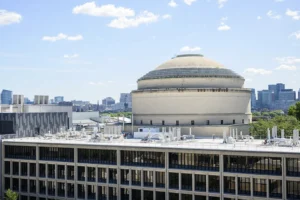
Upon completing her degrees at Stanford, Fry sought a graduate program that mirrored the "scientific energy" she had experienced at CERN. She found this at MIT’s Laboratory for Nuclear Science. The LNS is a massive entity within the university, rivaling the size of entire physics departments at other institutions.
Fry joined the Neutrino and Dark Matter Group, led by Professor Lindley Winslow. The group is characterized by a collaborative structure involving four principal investigators, a model Fry credits with expanding her expertise beyond her specific subfield. Winslow, who also experienced a "life-not-lived" choice between two passions, recognizes in Fry a unique combination of discipline, a demand for feedback, and the fearlessness required to deliver results when "the curtain rises."
Searching for the Axion: The Quest for Dark Matter
Fry’s current research addresses one of the most significant mysteries in modern astrophysics: the nature of dark matter. For nearly a century, observations of galactic rotation and formation have indicated that the universe contains far more mass than can be accounted for by visible matter. This "dark" matter does not emit, absorb, or reflect light, making it invisible to traditional telescopes. Its existence is inferred solely through its gravitational effects on visible matter.
While many theories have been proposed to explain dark matter, Fry is focused on the axion. Originally theorized in the late 1970s to solve the "strong CP problem" in quantum chromodynamics, the axion has emerged as a leading dark matter candidate. Unlike the once-popular Weakly Interacting Massive Particles (WIMPs), axions are ultralight and behave more like a coherent wave than a discrete particle.
Fry is currently involved in two major experimental efforts to detect these particles:
- ABRACADABRA (A Broadband/Resonant Approach to Cosmic Axion Detection with a Bayesian B-Ring Apparatus): This experiment, based at MIT, utilizes a toroidal magnetic field. If axions exist and pass through this field, they are predicted to generate a tiny, oscillating magnetic field at the center of the torus, which can be detected by a sensitive magnetometer.
- DMRadio (Dark Matter Radio): Currently being constructed at Stanford, this experiment operates on similar principles. It aims to scan a wide range of frequencies to find the specific "signal" of the axion.
The detection process is analogous to tuning a car radio. Different theoretical masses for the axion correspond to different frequencies. The experiments use resonance to amplify potential signals, though the challenge remains significant due to the presence of thermal noise and environmental interference. Fry notes that while the mass and interaction strength of the axion are unknown, the "shape" of the signal is theoretically distinctive, making the search a "tractable" problem.
Supporting Data and Theoretical Context
The search for dark matter is supported by a vast body of data from missions such as the European Space Agency’s Planck satellite, which mapped the cosmic microwave background. This data suggests that the universe’s energy density is composed of approximately 5% ordinary matter, 27% dark matter, and 68% dark energy.
The axion is particularly compelling because it addresses multiple problems in physics simultaneously. If detected, it would not only account for the universe’s missing mass but also validate the Peccei-Quinn theory. The experiments Fry is involved in are part of a global shift in focus toward "low-mass" dark matter, as higher-mass candidates like WIMPs have so far failed to appear in experiments at the Large Hadron Collider.
Broader Impact and Future Outlook
Jessica Fry’s contributions have already gained national recognition; she was recently named to the Forbes 30 Under 30 Science list for 2026. As she approaches the final stages of her PhD program, her focus remains on the data analysis for DMRadio.
The implications of her work extend beyond the laboratory. Fry’s journey highlights the value of interdisciplinary backgrounds in STEM. The discipline and spatial awareness honed in the dance studio translate into the precision required for experimental physics. Furthermore, her experience in theater informs her ability to communicate complex scientific concepts to broader audiences—a skill increasingly vital in an era where scientific literacy is paramount.
Fry remains certain that dark matter will be discovered within her lifetime, framing the discovery as a matter of "when" rather than "if." She continues to dance at a studio near Harvard, using the physical practice as a necessary counterweight to the intellectual demands of her research.
As the scientific community continues to "tune" its detectors to the hidden frequencies of the universe, Fry’s unique perspective—forged on the stage and refined in the lab—positions her as a pivotal figure in the next generation of physicists. Her story suggests that the quest to understand the cosmos is not just a mathematical challenge, but a narrative one, requiring both the rigor of the scientist and the vision of the artist.